Last updated:
Disclosure: As an Amazon Associate we earn from qualifying purchases. This does not change what we recommend. See our affiliate disclaimer.
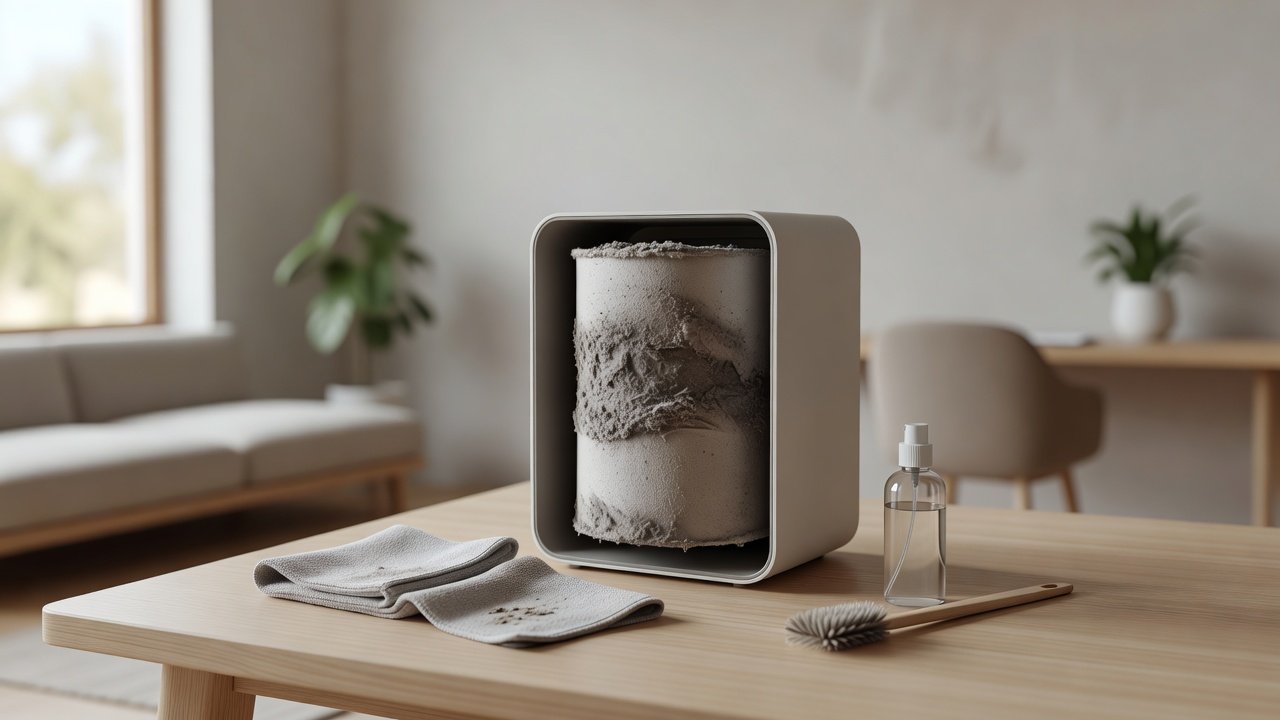
Wildfire smoke can load an air purifier’s filters quickly. After the event, the pre-filter, main filter and housing may be coated in fine ash and soot, and the unit may smell of smoke. The right response is to clean what can be cleaned, replace what cannot and restart the unit carefully.
We have not tested these products ourselves, so follow your manual. Unplug the unit before cleaning, wear gloves and a mask when handling ash-covered parts and keep liquids away from electronics. Follow local guidance for cleanup after smoke events.
Clean
- Exterior housing
- Vents
- Washable pre-filter
Replace
- HEPA filter
- Carbon filter
- Ash-clogged or smoky filters
Key Takeaways
- Replace HEPA and carbon filters after heavy smoke
- Clean the housing and washable pre-filter
- Wear gloves and a mask and avoid shaking ash indoors
- Keep spare filters ready for the next season
Step-by-Step Post-Wildfire Cleaning
Unplug the unit and move it to a ventilated area or outdoors. Wear gloves and a mask. Open the cover and remove the filters carefully, placing them straight into a sealed bag if they are being replaced. Vacuum the housing and vents with a soft brush attachment. Wipe the interior surfaces with a barely damp cloth, keeping liquid away from the fan and electronics. Let everything dry, install fresh filters, close the cover and test the unit. Log the date and replace the vacuum bag or empty the canister outdoors.
Understanding Filter Life After Smoke
A filter that would normally last several months may be spent in a few weeks of heavy smoke. Look for dark discoloration, a smoky smell, reduced airflow or an indicator light. If you are in doubt, replace it. Running a loaded filter can strain the motor and offer less protection. Keep a log of smoke days and filter changes to plan replacements.
Choosing Filters for Smoke
A true HEPA filter captures fine particles, and a decent amount of activated carbon helps with some smoke odors. Check the filter’s stated efficiency and the CADR for smoke. Confirm the filter model for your unit and avoid unverified generic filters that may not fit. Buy from reputable sellers, especially during smoke events when supplies are tight.
Health and Safety Notes
We cannot make medical claims. If you have respiratory conditions or are sensitive to smoke, talk to a healthcare professional about protecting yourself during smoke events. Follow local air quality guidance, limit outdoor activity when air is poor and keep indoor air as clean as practical.
Check Your Home’s Air Pathways
Smoke can enter through gaps around doors, windows, vents and fireplaces. Check seals and close dampers where it is safe. If you have central heating and cooling, ask a qualified technician about filters and recirculation settings. A purifier works best when the room is closed and the unit is correctly sized. Avoid using exhaust fans that pull smoky air in.
Gentle Cleaning of Fan Areas and Gaskets
After heavy ash exposure, the area around the filter, the gasket and the fan guard can hold fine soot. With the unit unplugged, vacuum these areas with a soft brush attachment and wipe the gasket with a barely damp cloth. Do not touch the fan blades or push tools into the housing. Let everything dry before installing the new filter so the seal is clean.
Spare Filters and Supply Planning
During major smoke events, filters can sell out. Keep one or two spare filters sealed in a dry place, note the model number and check the manufacturer’s guidance for smoke conditions. Do not buy suspicious low-cost filters from unknown sellers, since poor fit or fake media can reduce protection. Plan purchases before the season starts.
After the Event: Clean Air Habits Indoors
Once outdoor air improves, ventilate the home, wash bedding and vacuum with a good filter. Check the pre-filter and run the purifier for several days to clear remaining particles. Avoid adding indoor sources such as smoking, burning candles or frying. When conditions are normal again, return to your regular maintenance routine.
Air Purifiers for Smoke Seasons
These picks come from the Hostinger affiliate plugin. Specs change by model year, so confirm filter type, CADR and replacement costs on the product page before you buy.






Why Filters Load Fast During Smoke Events
Wildfire smoke contains fine particles, ash and gases. HEPA filters capture the particles, and carbon filters adsorb some of the gases. During heavy smoke, both can fill quickly, especially if the unit runs at high speed for many days.
Before You Open the Unit
Unplug it and let it cool. Work outdoors or in a ventilated area if there is ash on the unit. Wear gloves and a mask. Place a plastic sheet underneath to catch debris. Avoid shaking ash-covered filters in the house.
Clean the Housing and Pre-Filter
Vacuum the vents and exterior with a soft brush attachment and a vacuum with a good filter. Wipe the housing with a barely damp cloth. Clean a washable pre-filter as the manual says, and dry it fully. Replace it if it is saturated with soot.
Replace the Main Filters
After a heavy smoke event, replace HEPA and carbon filters. Smoke-laden filters may not perform as new, and carbon may release stored odors. Do not wash HEPA or carbon filters or blow them with compressed air. Dispose of used filters in a sealed bag.
Restart and Check
Install fresh filters, reassemble and run the unit in a ventilated room. Check airflow, noise and smell. A faint smoke smell may fade over a few days. If a strong smell persists, check for ash left in the housing or another source of smoke odor in the room.
Handling Ash Safely
Ash is fine and irritating. Avoid creating dust. Use a vacuum with a good filter and damp cloths rather than dry sweeping. Bag used filters and ash debris and dispose of them according to local guidance. Wash your hands afterwards.
Cleaning the Room and Fabrics
Smoke odor lives in fabrics, carpets and surfaces. Wash bedding, vacuum floors and wipe surfaces. A purifier alone will not remove odor from soft furnishings. Ventilate when outdoor air improves.
Preparing for the Next Smoke Season
Buy spare filters ahead of time, learn your unit’s filter model, set a reminder to check the pre-filter weekly during smoke and keep a log. Check the unit’s CADR against your room size so it can handle smoke loads.
Windows, Doors and Sealing
Keep windows and doors closed during smoke. Seal gaps if you can, and run the unit continuously. Avoid indoor sources of particles such as frying, candles and smoking. A purifier works best in a closed room of the right size.
When to Replace the Unit
If the unit has run for weeks in heavy smoke, has a noisy fan or no longer reaches its previous performance after new filters, consider replacing it. Check the warranty and compare repair costs with a new unit.
How to Choose
- Look for true HEPA filters
- Check for generous carbon
- Compare replacement filter costs
- Match the CADR to the room
Do
- Match the unit’s rated coverage to your room first
- Run it consistently, not only when the air feels bad
- Leave space around the unit for airflow
- Replace filters on the maker’s schedule
Don’t
- Do not buy on looks or price alone
- Do not block the intake or exhaust
- Do not skip filter changes
- Do not expect a purifier to fix every source of pollution
Honest Limits
- This guide uses manufacturer information and public guidance from the EPA and AHAM, not our own lab tests.
- Features and room ratings change between model years, so confirm on the listing before you buy.
- A purifier is not a medical device and does not replace medical advice or treatment.
Who Should Skip This
When to See a Professional
Frequently Asked Questions
Should I replace filters after a wildfire?
Usually yes after heavy smoke, since filters load quickly.
Can I wash the filters?
Do not wash HEPA or carbon filters.
Why does it still smell of smoke?
Check for ash in the housing and smoke odor in the room’s fabrics.
How do I handle ash?
Use a vacuum with a good filter and damp cloths, with gloves and a mask.
Bottom Line
After a wildfire, clean the housing and washable pre-filter, replace HEPA and carbon filters rather than washing them and restart the unit in a ventilated room. Wear gloves and a mask when handling ash-covered parts and keep spare filters on hand for the next smoke season.
Related reading: sens,fan,bed
Sources: EPA, Guide to Air Cleaners in the Home; AHAM Verifide.