Last updated:
As an Amazon Associate we earn from qualifying purchases. This does not change what we recommend. See our affiliate disclaimer.
People with sleep apnea spend a lot of effort on the bedroom. The CPAP is tuned, the mask fits, the pillow is right, and still the question comes up of whether the air itself could help or hurt. Purifier marketing is quick to attach itself to the condition. The reality deserves a more careful statement.
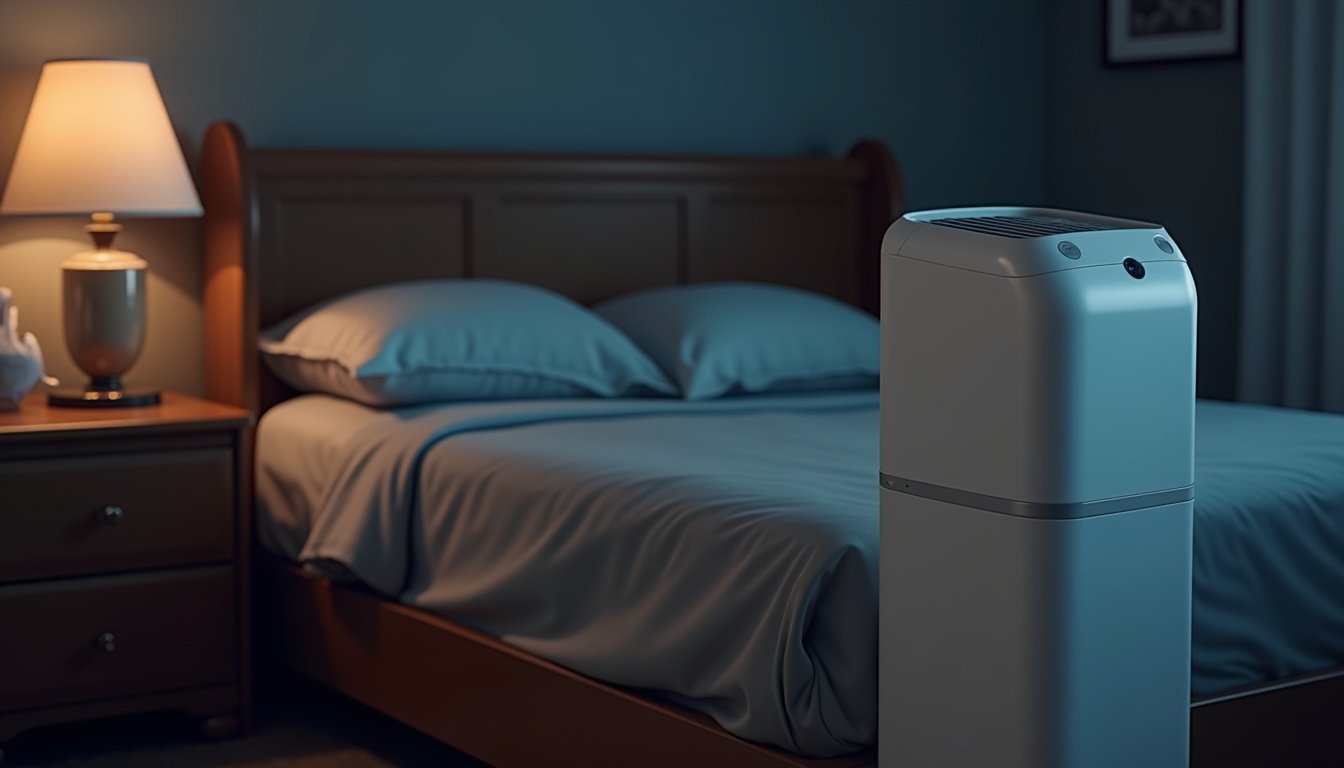
An air purifier does not treat sleep apnea. Obstructive sleep apnea is an airway collapse during sleep, treated with CPAP, oral appliances, positional therapy, weight management or surgery under a doctor’s care, and no filter changes that mechanics. What a purifier can do is make the bedroom air cleaner: a true HEPA filter removes dust, dander, pollen, mold spores and smoke particles, activated carbon takes the edge off odors, and both run quietly enough on low to share a room with a CPAP. Cleaner air is a reasonable goal for anyone who breathes it for eight hours, and particularly for people whose allergic congestion makes a mask harder to tolerate, a point to raise with a sleep physician rather than assume. The best purifier for a sleep apnea household is therefore the best quiet bedroom purifier: HEPA and carbon, no ionizer or ozone feature, sized by CADR so it runs on low, placed away from the CPAP intake so the two machines do not fight over the same air, display off. Nothing here is medical advice; CPAP settings, mask problems and apnea itself belong with a sleep physician.
In short: the purifier cleans the air, the CPAP treats the apnea, and the two should sit a few feet apart. Choose HEPA and carbon, quiet on low, no ozone, display off.
The American Academy of Sleep Medicine describes CPAP as first-line treatment for obstructive sleep apnea and does not list air purification among treatments. The EPA notes that HEPA filtration lowers airborne particles and cautions against ozone-producing devices indoors. CPAP makers recommend keeping the intake clear and its filter clean and dry.
This guide is research-based, drawn from sleep medicine guidance, EPA air cleaner guidance, CPAP maker manuals and purifier specifications. We have not tested the units in the comparison table and quote no prices or ratings. Nothing here is medical advice.
A purifier can help a sleep apnea bedroom by
- Lowering dust, dander, pollen and spores in the air you breathe for eight hours
- Reducing smoke and traffic particles that drift in from outside
- Taking the edge off odors with activated carbon
- Running quietly enough on low to coexist with a CPAP
A purifier cannot
- Treat or reduce sleep apnea, which is an airway mechanics condition
- Replace CPAP, an oral appliance or any prescribed therapy
- Filter the air going into a CPAP, which has its own filter
- Make up for a dusty mattress, bedding or carpet, which need cleaning
Key Takeaways
- A purifier does not treat sleep apnea; CPAP and other therapies under a sleep physician do.
- Cleaner bedroom air is a reasonable goal in itself; a HEPA unit lowers dust, dander, pollen, spores and smoke while it runs.
- Choose HEPA and carbon with no ionizer, plasma or ozone feature, sized by CADR so it runs on low.
- Quiet matters: look for low-speed noise around 25 to 35 dB and a display that switches off.
- Place the purifier a few feet from the CPAP so its outlet does not blow across the CPAP intake or your face.
- Keep the CPAP’s own filter clean and dry; the purifier does not replace it.
- Nothing here is medical advice; nasal congestion, mask problems and apnea belong with a sleep physician.
Quiet HEPA Purifiers for a CPAP Bedroom
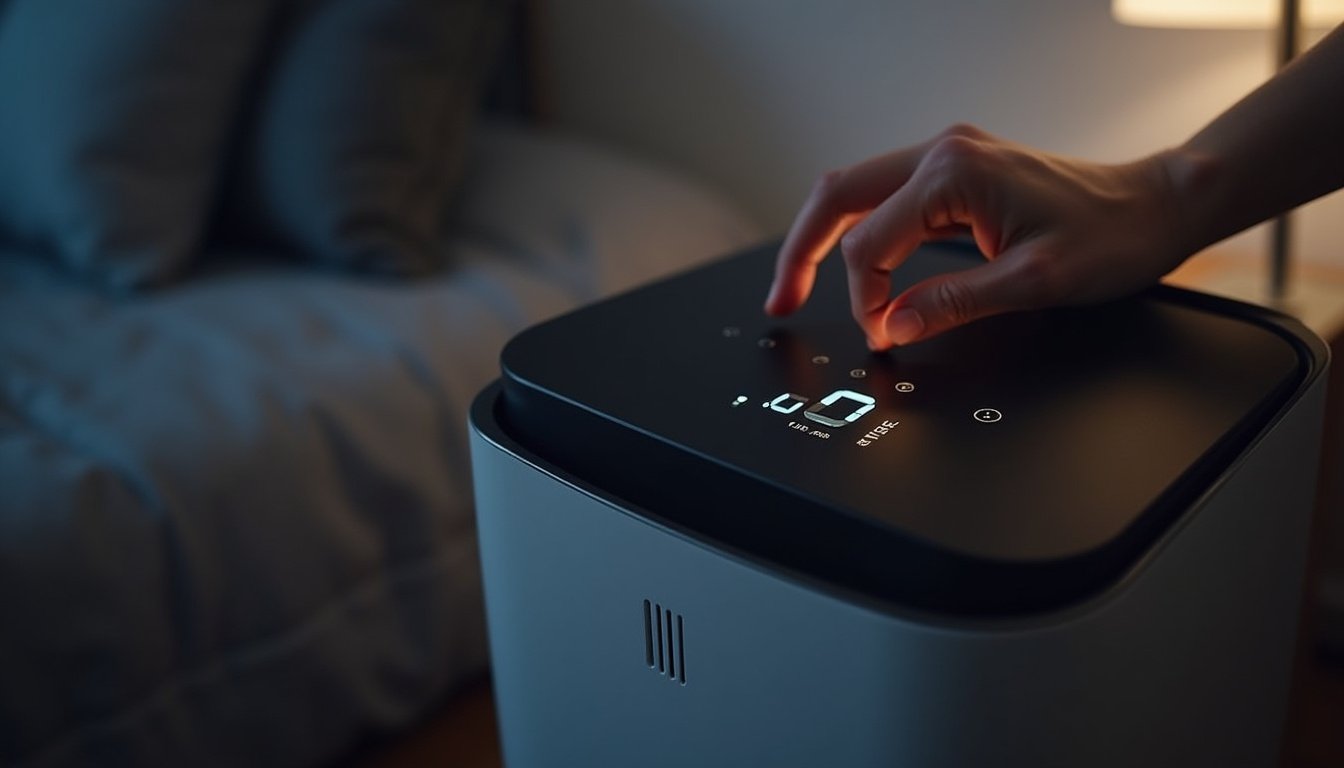
These widely reviewed bedroom units combine true HEPA and carbon with low-speed noise quiet enough to sit beside a CPAP, no ionizing stage or one that switches off, and displays that go dark. Compare the maker-listed CADR against your bedroom and leave a few feet between the two machines.






How This Guide Approaches the Question
We looked at what sleep apnea is and how it is treated, at what a bedroom purifier can and cannot contribute, at how to choose a quiet unit that coexists with a CPAP, and at placement and maintenance. Product details in the table come from maker specifications.
The honest framing is simple: two machines, two jobs. The CPAP keeps the airway open; the purifier keeps the room’s air cleaner. Neither does the other’s work.
What a Purifier Does and Does Not Do for Sleep Apnea
Obstructive sleep apnea is a mechanical condition: the airway narrows or collapses during sleep, breathing pauses, and the sleeper rouses. CPAP holds the airway open with gentle pressure; oral appliances, positional therapy, weight management and surgery address the mechanics in other ways. An air purifier filters particles from the room’s air and has no effect on airway mechanics. Anyone presenting a purifier as an apnea treatment is selling, not informing.
What a purifier does is lower the concentration of airborne particles in the bedroom while it runs. For a person who spends eight hours there, breathing partly through a mask whose intake draws room air, cleaner air is a reasonable goal on its own terms. Whether lower allergen levels ease nasal congestion for a given person, and whether that affects mask tolerance, is a question for their sleep physician; it is plausible, it is individual, and it is not something a product page can promise.
| Concern | Purifier | Who or what addresses it |
|---|---|---|
| Airway collapse during sleep | No effect | CPAP, oral appliance, other therapy; sleep physician |
| Dust, dander, pollen, spores in bedroom air | Lowers them while running | HEPA purifier plus washed bedding and vacuuming |
| Smoke or traffic particles from outside | Lowers them | HEPA purifier; sealed windows during events |
| Bedroom odors | Reduces with carbon | Activated carbon stage; source control |
| Nasal congestion affecting mask use | Not a treatment | Sleep physician; may discuss allergen control |
| Air entering the CPAP | Not filtered by the purifier | CPAP’s own filter, kept clean and dry |
| Humidity for comfort | No effect | CPAP humidifier; room humidifier at 30 to 50 percent |
What to Look For
Because the purifier’s job is cleaner air in a room where someone is trying to sleep, the specification is the same as for any good bedroom unit, with extra weight on quiet.
- True HEPA filter with an activated carbon stage and a washable pre-filter.
- No ionizer, plasma, UV or ozone feature, or one that switches fully off; the EPA cautions against ozone indoors.
- CADR of at least two thirds of the bedroom’s square footage, ideally more, so low speed suffices.
- Low-speed noise around 25 to 35 dB, a steady broadband sound rather than a whine.
- A sleep mode that fixes the lowest speed and turns the display off.
- Upward or rear discharge, so the outlet does not blow across the bed or the CPAP.
| Bedroom size | Square feet | Minimum CADR | Comfortable choice for running on low |
|---|---|---|---|
| Small | 120 | About 80 | 150 to 200 |
| Typical | 150 | About 100 | 180 to 250 |
| Large | 200 | About 135 | 250 to 320 |
| Primary suite | 250 | About 170 | 300 plus, or two units |
Choosing a unit well above the minimum CADR is the trick for quiet: a 250 CFM unit on low may deliver what a 120 CFM unit manages only on high, at a fraction of the noise.
Living Alongside a CPAP
A CPAP draws room air through its own small filter and delivers it under pressure; the purifier does not filter that air and the CPAP does not need it to. Two practical rules keep the machines from interfering. First, do not point the purifier’s outlet at the CPAP intake or across the bed; a stream of moving air at the mask and face dries eyes and nose and can unsettle a sleeper, and some CPAPs read ambient airflow as a leak. Second, do not put the CPAP’s intake directly behind the purifier’s exhaust or on the floor where dust is thickest; the nightstand is right. Keep both a few feet apart with clear space around each.
CPAP humidifiers add moisture to the delivered air, not the room, and are unaffected by a purifier. If the bedroom is dry, a hygrometer and a room humidifier set to 30 to 50 percent, placed across the room from the purifier so mist does not reach its filters, address that separately.
Noise and Light
A CPAP bedroom already has one machine making a soft sound, and adding a second has to be done carefully. Steady broadband noise from a purifier on low is often described as masking rather than disturbing, and some sleepers find the combination more restful than silence; a unit that cycles up and down in auto mode is the opposite, because changes in sound are what wake people. Fix the speed at low or medium rather than auto at night, and choose a unit whose display switches off entirely, since a lit panel at eye level across from a bed is a real sleep disruptor.
| Setting | Typical sound | Effect in a CPAP bedroom |
|---|---|---|
| Low, fixed | 25 to 35 dB | Steady; blends with CPAP; usually fine |
| Medium, fixed | 35 to 45 dB | Acceptable for many; test for a few nights |
| Auto mode | Varies, may surge | Changes wake sleepers; avoid at night |
| Sleep mode | Lowest speed, display off | Best default for most |
| High | 50 to 60 dB | Daytime or empty room only |
Placement and Routine
Put the purifier a few feet from the bed on the side away from the CPAP, with intake and outlet clear and the outlet aimed upward or away. Run it continuously on low or medium; a bedroom only cleaned at night starts each evening with the day’s dust. Rinse the pre-filter monthly, change the HEPA and carbon on the maker’s schedule, and change the CPAP filter on its own. Wash bedding weekly in hot water and vacuum the mattress and floor with a HEPA vacuum, because settled allergens in the bed are closer to the sleeper’s face than anything in the air, and no purifier reaches them.
Worked example: a 160 square foot bedroom with a CPAP on the left nightstand gets a 240 CFM HEPA and carbon unit on the right side, four feet from the bed, upward discharge, fixed on low at 27 dB with the display off. The two machines never interact. The bedroom’s dust and pollen are lower by morning; the apnea is managed by the CPAP, as before.
Claims to Ignore
Marketing around sleep conditions attracts features that have nothing to do with clean air and some that work against it. Ionizers and plasma stages can produce ozone, an airway irritant the EPA says to avoid indoors, which is the last thing to add to a room where someone already breathes with difficulty at night. Aromatherapy and scented filter features add volatiles. Claims that a purifier reduces apnea events, improves oxygen saturation or lets a user lower CPAP pressure are not supported by sleep medicine guidance and should prompt a conversation with a physician, not a purchase. Oxygen concentrators are prescribed medical devices and are unrelated to purifiers.
When to Talk to a Physician
Persistent nasal congestion that makes a mask hard to tolerate, mouth breathing around a nasal mask, dry eyes or nose despite CPAP humidification, new snoring or daytime sleepiness despite therapy, or any sense that the therapy is not working are matters for the sleep physician or the CPAP provider, who may adjust pressure, humidity, mask type or investigate allergies. A purifier can be part of a bedroom that supports good sleep; it is never the answer to a therapy that is not working. Nothing here is medical advice.
How to Set Up a Purifier in a Sleep Apnea Bedroom in 6 Steps
- Confirm with yourself and your physician what the purifier is for: cleaner room air, not apnea treatment.
- Measure the bedroom and choose a HEPA and carbon unit with a CADR well above two thirds of the square footage, so low speed is enough.
- Rule out any unit with an ionizer, plasma, UV or ozone feature unless it switches fully off.
- Place it a few feet from the bed on the side away from the CPAP, outlet aimed upward or away, intake and outlet clear.
- Run it continuously on a fixed low speed with the display off; avoid auto mode at night.
- Maintain both machines on their own schedules, wash bedding weekly and HEPA vacuum the mattress and floor.
Do and Do Not
Do
- Treat the purifier as a room-air appliance only.
- Choose quiet, HEPA and carbon, no ozone.
- Keep it a few feet from the CPAP and the face.
- Fix the speed at night; display off.
- Keep the CPAP filter clean and dry on its own schedule.
Do not
- Do not expect any purifier to treat apnea or change CPAP needs.
- Do not aim the outlet at the CPAP intake or the bed.
- Do not use ionizers, ozone or fragrance features.
- Do not run auto mode at night.
- Do not alter therapy without the prescribing physician.
Who Should Skip This
If the question is whether a purifier will reduce apnea events or let you use less CPAP, skip the purchase and ask the sleep physician; no purifier affects airway mechanics, and that conversation is the useful one.
If the bedroom already has a quiet HEPA unit without an ionizer, skip replacing it: check the CADR against the room, move it a few feet from the CPAP, fix the speed at low and turn the display off.
Honest Limits
- Sleep apnea is a medical condition and this guide makes no claims about any person’s symptoms or therapy.
- Whether cleaner air affects nasal congestion or mask tolerance is individual and a matter for a physician.
- CADR and noise figures are maker-listed and unverified by us.
- CPAP behavior around ambient airflow varies by machine; follow the CPAP maker’s guidance.
- Allergens in bedding and mattresses are not reached by any purifier.
- Nothing here is medical advice.
When to See a Professional
Talk to a sleep physician or CPAP provider about congestion, mask tolerance, dryness, persistent sleepiness or any sense that therapy is not working; those are therapy questions, and nothing on this page is medical advice.
Ask an allergist about testing if bedroom allergens seem to be a factor, and a mold professional if the bedroom has visible mold or a musty smell, since mold over about ten square feet is a professional job.
Frequently Asked Questions
Can an air purifier help with sleep apnea?
It does not treat apnea, which is an airway collapse during sleep managed by CPAP and other therapies under a physician. A HEPA purifier lowers dust, dander, pollen, spores and smoke in the bedroom air while it runs, which is a reasonable goal in itself. Whether that affects any person’s sleep is a medical question.
What is the best type of air purifier for a CPAP user?
A quiet bedroom unit: true HEPA with activated carbon, a washable pre-filter, no ionizer or ozone feature, a CADR well above two thirds of the room’s square footage so it runs on low, a sleep mode that darkens the display, and an upward or rear discharge that does not blow across the bed.
Does the air purifier filter the air going into my CPAP?
No. The CPAP draws room air through its own small filter and the purifier does not replace it. Clean or replace the CPAP filter on the maker’s schedule and keep it dry. The purifier lowers particles in the room generally, which means the CPAP’s filter sees cleaner air, but the two filters do separate jobs.
Where should I put the purifier relative to the CPAP?
A few feet from the bed on the side away from the CPAP, with the outlet aimed upward or away so moving air does not cross the mask, face or CPAP intake. Some CPAPs read ambient airflow as a leak.
Will two machines be too loud?
Usually not. A purifier fixed on low produces steady broadband sound around 25 to 35 dB that blends with a CPAP and that many sleepers find masking rather than disturbing. Avoid auto mode at night, since changes in sound wake people, and choose a unit whose display switches off entirely.
Should I avoid ionizers if I have sleep apnea?
Avoid them in any bedroom. Ionizers, plasma and some UV stages can produce ozone, an airway irritant the EPA advises against indoors, which is particularly unwelcome for someone who already breathes with difficulty at night. Mechanical HEPA and carbon filtration needs no such feature; if your unit has one, leave it off.
Can a purifier help nasal congestion that makes my mask hard to wear?
Lower bedroom allergen levels are plausible to help some people with allergic congestion, but that is individual and a question for your sleep physician or an allergist, who may suggest allergen control, mask changes or treatment. A purifier can be part of that plan; it is not a substitute for it.
Can I lower my CPAP pressure if the air is cleaner?
No. CPAP pressure is prescribed for your airway mechanics and has nothing to do with air cleanliness. Any change to pressure, humidity, mask or nightly use goes through the prescribing physician or CPAP provider. A purifier is a room-air appliance and is never a reason to alter therapy.
Does the purifier affect my CPAP’s humidifier?
No. The CPAP humidifier conditions the air delivered through the tube, not the room, and a purifier does not change room humidity. If the bedroom is dry, use a hygrometer and a room humidifier set to 30 to 50 percent, placed across the room from the purifier so mist does not reach its filters.
What matters more than the purifier for a sleep apnea bedroom?
Using the prescribed therapy every night and keeping the CPAP clean and its filter fresh; then washed bedding, a vacuumed mattress and floor, closed windows in pollen or smoke events and humidity at 30 to 50 percent. The purifier handles the remaining airborne share. Talk to a physician about anything concerning sleep or breathing.
Bottom Line
The best air purifier for sleep apnea is the best quiet bedroom purifier, chosen with the clear understanding that it cleans the room’s air and does nothing to the apnea. HEPA and carbon, no ionizer or ozone, sized well above the minimum so it runs on low, display off, placed a few feet from the bed and the CPAP with the outlet aimed away: that configuration lowers dust, dander, pollen, spores and smoke in the air a person breathes for eight hours.
The CPAP keeps the airway open, the purifier keeps the air cleaner, and neither replaces the other. Any question about congestion, mask tolerance, pressure or whether therapy is working belongs with a sleep physician, and nothing on this page is medical advice.
Related reading: Best air purifier for small bedroom, Air purifier vs dehumidifier for asthma, Can air purifiers cause coughing.