Last updated:
Disclosure: As an Amazon Associate we earn from qualifying purchases. This does not change what we recommend. See our affiliate disclaimer.
For most people the best answer is to run an air purifier continuously on a low or medium speed in the rooms you use most, and to turn it up when you have a specific source such as cooking, cleaning, smoke or high pollen. Air cleaners only clean the air that passes through them, so running time matters: shorter runs capture less. Modern units are designed for continuous use and usually draw little power on low speeds.
We have not tested these products ourselves, so follow your manual. Nothing here is medical advice. Never leave a damaged unit plugged in, and unplug it if you notice a burning smell.
Good reasons to run it often
- Allergies and asthma
- Pets and dust
- Smoke and cooking sources
Fine to run less
- Low-pollution homes
- Short-term smoke events
- Travel and unused rooms
Key Takeaways
- Run continuously on low or medium in key rooms
- Turn up for cooking, cleaning, smoke and pollen
- Auto mode saves energy but sensors have limits
- Check wattage for running cost
Estimating Your Annual Running Cost
Find the wattage at each speed on the label or in the manual. Multiply watts by hours of use to get watt-hours, divide by 1,000 for kilowatt-hours and multiply by your electricity rate. For example, a unit using 20 watts for 24 hours uses about half a kilowatt-hour a day. At your local rate you can estimate monthly and annual cost. Most units cost modestly to run at low speed, while high speeds cost more and are noisier. Add the cost of filters to see the full yearly cost. Compare models using these figures, and choose one that balances airflow, noise and efficiency for the way you use it.
How Many Air Changes You Get When Running Continuously
A unit sized for the room can pass the room’s air through its filter several times an hour. Continuous running holds particle levels down as new particles enter. Smaller units on high speed may achieve similar rates but with more noise. Choose capacity and speed that you can live with all day.
Running It With Windows Open
Open windows reduce a purifier’s effect because new particles enter continuously. If you need fresh air, open briefly and then close and let the purifier work. In high-pollen or smoke periods, keep windows closed.
Smart Features and Schedules
App control, voice control and schedules can help. Keep firmware updated, secure your Wi-Fi and understand data policies. Smart features are conveniences and do not change the filtration basics.
Pets, Kids and Safety When Running Constantly
Keep cords and filters out of reach, avoid placing the unit where pets can knock it over and use child locks if available. Check the intake for fur and clean the pre-filter regularly.
Signs You Should Run It More or Less
If dust returns quickly, symptoms flare or the sensor reads high, run it more. If the room is clean, readings are low and noise bothers you, run it less. Adjust and review each season.
Common Questions About Constant Running
People often worry that running a purifier all day wears it out. These units are built for continuous use, and the main wear item is the filter, which you replace on schedule. Another worry is cost, which is usually modest at low speed. Some worry about dry air or noise: purifiers do not dry the air, and quiet low speeds are usually unobtrusive. If you notice a smell, a hot housing or strange noises, unplug the unit and check the manual or contact support.
Matching Run Time to Your Life
If you work from home, run the unit in your office during the day and in the bedroom at night. If you have pets, run it all day on low. If you are mostly away, use a timer or auto mode. If you are managing symptoms, ask your clinician what plan suits you. Make it a habit you can sustain.
Air Purifiers Built for Continuous Use
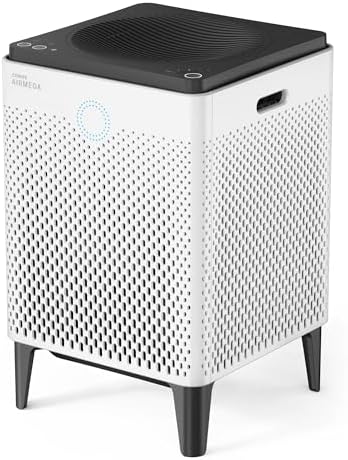
These picks come from the Hostinger affiliate plugin. Specs change by model year, so confirm filter type, CADR, noise and replacement filter costs on the product page before you buy.





The Case for Running It Continuously
Particles are produced and brought in all the time, so continuous low-speed operation holds levels down. A purifier that runs only for an hour may clean the air for that hour while particles accumulate again afterwards. Running on low also tends to be quiet and efficient.
Auto Mode and Sensors
Auto mode uses a particle sensor to adjust the fan. It can save energy and noise, but sensors detect only certain particle sizes and can miss gases and very small particles. If you want consistent cleaning, use a low manual speed or auto with a sensitivity that suits you, and clean the sensor regularly.
When to Turn It Up
Turn up the speed when cooking, cleaning, vacuuming, burning candles or fireplaces, during wildfire smoke or high-pollen days and when you have visitors or pets inside. Turn it back down afterwards. Running on high for an hour or two after dusty tasks helps capture what was stirred up.
Running Cost and Energy
Most home purifiers use modest power, particularly at low speed. Check the wattage on the label and multiply by hours and your electricity rate to estimate cost. Running a larger unit on a lower speed is often quieter and efficient. Consider timers if you want to limit run time.
When It Is Fine to Turn It Off
If you are away, you can turn it off or use a timer. In low-pollution periods with no symptoms, you may run it less. Turn it off during electrical storms if you wish, and unplug it if it malfunctions.
Bedrooms and Overnight Use
Running a quiet purifier overnight lowers allergens while you sleep. Choose a unit with a sleep mode and dim display, place it a few feet from the bed with clearance and avoid direct airflow on you. If noise bothers you, use a lower speed or a larger unit on low.
Filter Life and Running Time
Continuous running uses up filters faster than occasional running, but it also keeps the air cleaner. Plan for the replacement schedule, track filter hours and keep spares. Many units track hours or use sensors to estimate filter life.
Safety When Running 24/7
Keep the unit on a stable surface with clearance, avoid extension cords, keep it away from heat and water and check the cord and plug. Unplug it if it smells burnt, overheats or shows damage. Follow manual guidance.
Seasonal Adjustments
Run higher in pollen and smoke seasons, moderate in winter with closed windows and lower in clean, ventilated periods. Adjust based on symptoms and monitor readings if you have one.
Using Timers and Schedules
Timers and apps let you run the unit while you are home and off when away, or run higher before bedtime. Schedules help match use to your routine. Make sure the timer does not stop the unit when you need cleaning most.
How to Choose
- Efficient motor and quiet low speeds
- Auto mode and sleep mode
- Filter indicator
- Affordable filters
Do
- Match the unit’s rated coverage to your room first
- Run it consistently, not only when the air feels bad
- Leave space around the unit for airflow
- Replace filters on the maker’s schedule
Don’t
- Do not buy on looks or price alone
- Do not block the intake or exhaust
- Do not skip filter changes
- Do not expect a purifier to fix every source of pollution
Honest Limits
- This guide uses manufacturer information and public guidance from the EPA and AHAM, not our own lab tests.
- Features and room ratings change between model years, so confirm on the listing before you buy.
- A purifier is not a medical device and does not replace medical advice or treatment.
Who Should Skip This
When to See a Professional
Frequently Asked Questions
Is it OK to run a purifier 24/7?
Yes, they are designed for continuous use.
Does it use a lot of electricity?
Usually modest, especially on low.
Should I run it when I am away?
Not necessary; use a timer if you prefer.
Should I use auto mode?
It can help; keep the sensor clean.
Bottom Line
Most people should run an air purifier continuously on a low or medium speed in the rooms they use most and turn it up for cooking, cleaning, smoke or pollen. Use auto mode with a clean sensor, check the wattage for cost and replace filters on schedule. You can turn it off when away or during low-pollution periods.
Related reading: sens,fan,bed
Sources: EPA, Guide to Air Cleaners in the Home; AHAM Verifide.