Last updated:
Disclosure: As an Amazon Associate we earn from qualifying purchases. This does not change what we recommend. See our affiliate disclaimer.
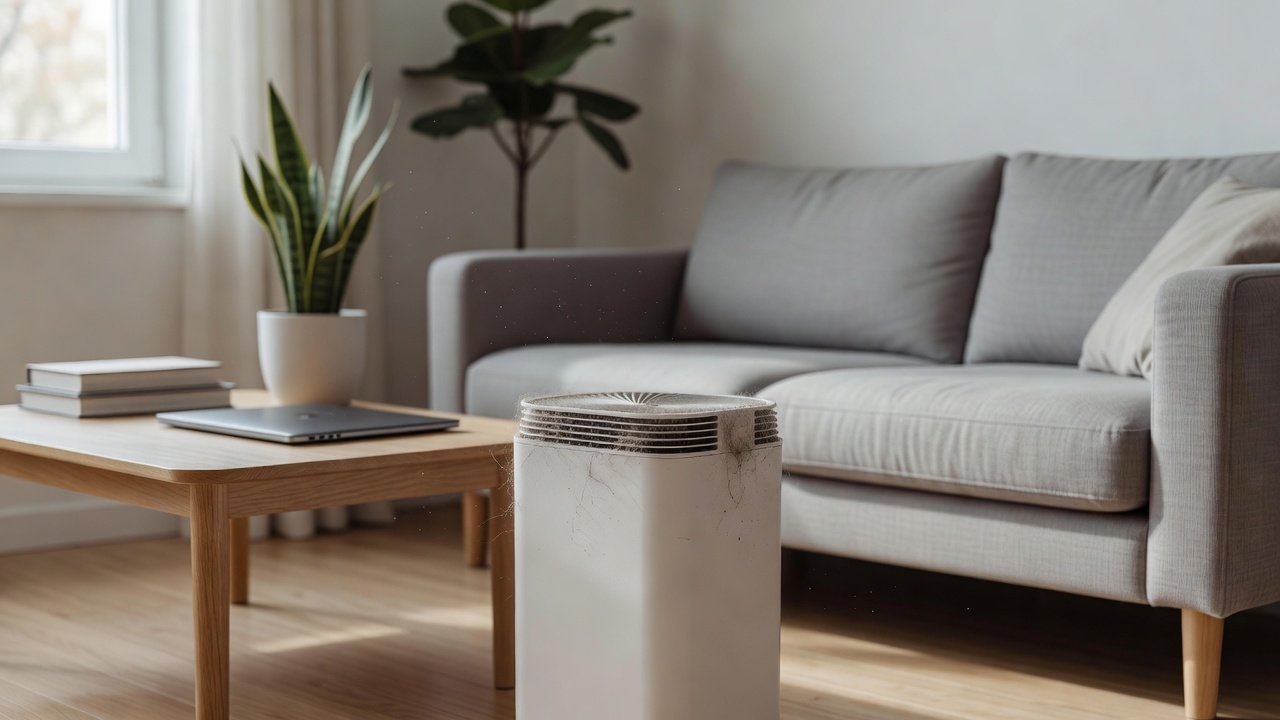
When an air purifier blows less air than it used to, the cause is usually something you can fix in minutes: a clogged pre-filter or main filter, blocked vents, the wrong speed or mode, a filter that is not seated or a missing filter indicator reset. Weak airflow also means weaker cleaning, so it is worth fixing promptly.
We have not tested these products ourselves, so follow your manual. Unplug the unit before checking the interior. If weak airflow comes with grinding, heat or a burning smell, stop using the unit and contact the manufacturer.
Common fixes
- Clean pre-filter and vents
- Replace a loaded filter
- Check mode and speed
Check further
- Weak on all speeds after cleaning
- Grinding or heat
- Display errors
Key Takeaways
- Check mode and speed first
- Clean the pre-filter and vents; replace a loaded main filter
- Reseat filters and remove plastic wrap
- Contact support if airflow stays weak on all speeds
A Quick Weak-Airflow Checklist
Check the mode and speed. Check the vents are clear. Vacuum the grille and pre-filter. Look at the main filter and the indicator. Remove all plastic wrap, seat the filter and close the cover. Check the cord and outlet. Try manual high for a minute and feel the outlet. Make a note of the result at each step. If nothing improves, contact support with your notes. Keep the checklist near the unit for next time.
How Filter Loading Reduces Airflow
As particles collect in the filter, pores fill and air has a harder time passing through. Airflow decreases gradually, so you may not notice until it is quite low. Regular pre-filter cleaning slows the loading. Replacing the filter on schedule restores airflow. Tracking filter dates helps you see how quickly your home loads filters.
Seasonal and Household Causes
Pollen, smoke, renovation and pets can all load filters faster. Check the filter more often at those times. A move to a dustier room or a new pet can change how quickly airflow drops. Adjust your schedule to match.
Other Causes of Weak Output
Other causes include a failing fan, a loose connector, a damaged fan blade or an electrical issue. These show up as weak airflow with noise, heat or error codes. Do not try to repair sealed parts. Ask support about repair or replacement.
Fan Speed Versus Real Airflow
Fan speed settings are not always linear. The jump from low to medium may be larger than from medium to high, and some models limit the top speed to keep noise down. Feel the outlet on each speed and compare with the manual or product page. If two speeds feel the same, the fan or control board may not be switching properly. Note this when you contact support, along with the model number and how long the problem has been going on.
Humidity, Smoke and Heavy Loading
Smoke, cooking particles and damp rooms can coat a filter faster than ordinary dust. A filter that held up for six months in a quiet bedroom may need replacing in half that time in a kitchen or smoker’s home. If airflow dropped quickly after a wildfire event, remodeling or heavy cooking, the filter is the first suspect. Keep spare filters on hand and write the install date on the new one so you can see how long it lasts.
Auto Mode and Sensor Issues
In auto mode the fan follows the air quality sensor. A clean-air reading keeps the fan on its lowest speed, which can feel like weak airflow even though the unit is working as designed. A dusty sensor may also read clean when the air is not. Switch to a manual speed to test the fan itself. If the manual speeds are fine, clean the sensor window as the manual describes, with the unit unplugged and a dry cotton swab, and avoid liquids.
Using Two Units or a Larger Model
If your unit is healthy but the room still feels poorly served, the issue may be capacity rather than a fault. Compare the unit’s CADR with the room size, roughly two thirds of the floor area at an eight foot ceiling. A larger model on a lower, quieter speed often moves more air than a small unit pushed to high. Two smaller units in open-plan spaces can also work. Confirm specifications on the product page before buying.
Air Purifiers With Strong Airflow
These picks come from the Hostinger affiliate plugin. Specs change by model year, so confirm filter type, CADR and replacement costs on the product page before you buy.






First, Check the Settings
Make sure the unit is on a manual speed, not sleep or eco mode, and compare each speed. Auto mode may run low in clean air. Check that the unit is not on a timer and that the display shows the expected speed.
Clean the Pre-Filter and Vents
A clogged pre-filter and dusty intake are the most common causes. Unplug the unit, vacuum the vents and pre-filter with a soft brush attachment and clean or replace the pre-filter as the manual allows.
Check and Replace the Main Filter
A loaded HEPA or carbon filter restricts airflow. If the filter is dark, past due or the indicator is on, replace it with the exact model and reset the indicator. Do not wash HEPA or carbon filters.
Check Seating and Obstructions
A filter that is not seated, a cover not closed fully or a piece of packaging left on the filter can block air. Remove plastic wrap, reseat the filter and close the cover. Check that nothing blocks the outlet or intake.
Check Placement and Power
Place the unit with clearance and away from walls and curtains. Plug it directly into a wall outlet. A weak outlet or strip can reduce fan speed. If airflow is still weak, the fan or motor may be failing.
How to Test Airflow at Home
Hold your hand or a thin piece of tissue a few inches from the outlet at each speed. Note the strength. Compare with how it felt when new, or with a similar unit. A smoke stick is not needed. If high feels like low, there is a restriction.
Why a New HEPA Filter Can Feel Weaker
HEPA filters are dense, so a unit with a new HEPA filter may feel gentler than a bare fan. That is normal. The CADR rating accounts for the filter. Compare against the unit’s own earlier performance rather than a fan.
Filter Indicator and Resets
If the filter indicator is on, the unit may reduce airflow or warn you. After replacement, reset the indicator. Some units have a chip in the filter that the unit reads. Make sure the correct filter is installed.
Room Size and Expectations
In a large room, even a healthy unit can feel weak at a distance. Check the CADR and stated room size. A unit that is too small may seem weak. Consider a larger unit or more than one.
When to Contact Support
If airflow remains weak on all speeds after cleaning, replacing the filter and checking placement, or if there is noise, heat or error codes, contact the manufacturer with the model number and details.
How to Choose
- Check CADR for the room
- Look for multiple speed settings
- Compare replacement filter costs
- Check noise at higher speeds
Do
- Match the unit’s rated coverage to your room first
- Run it consistently, not only when the air feels bad
- Leave space around the unit for airflow
- Replace filters on the maker’s schedule
Don’t
- Do not buy on looks or price alone
- Do not block the intake or exhaust
- Do not skip filter changes
- Do not expect a purifier to fix every source of pollution
Honest Limits
- This guide uses manufacturer information and public guidance from the EPA and AHAM, not our own lab tests.
- Features and room ratings change between model years, so confirm on the listing before you buy.
- A purifier is not a medical device and does not replace medical advice or treatment.
Who Should Skip This
When to See a Professional
Frequently Asked Questions
Why is my purifier weak after a new filter?
A dense HEPA filter feels gentler, or the filter may not be seated.
How do I test airflow?
Feel the outlet at each speed and compare with earlier.
Can a dirty sensor cause it?
In auto mode, yes, it may keep the fan low.
When should I call support?
If airflow stays weak on every speed after basic checks.
Bottom Line
Weak airflow in an air purifier usually comes from a clogged pre-filter or vents, a loaded main filter, the wrong mode or speed or a filter that is not seated. Clean the vents and pre-filter, replace a loaded filter, check the mode and clearance and contact the manufacturer if airflow stays weak on every speed.
Related reading: sens,fan,bed
Sources: EPA, Guide to Air Cleaners in the Home; AHAM Verifide.