Last updated:
Disclosure: As an Amazon Associate we earn from qualifying purchases. This does not change what we recommend. See our affiliate disclaimer.
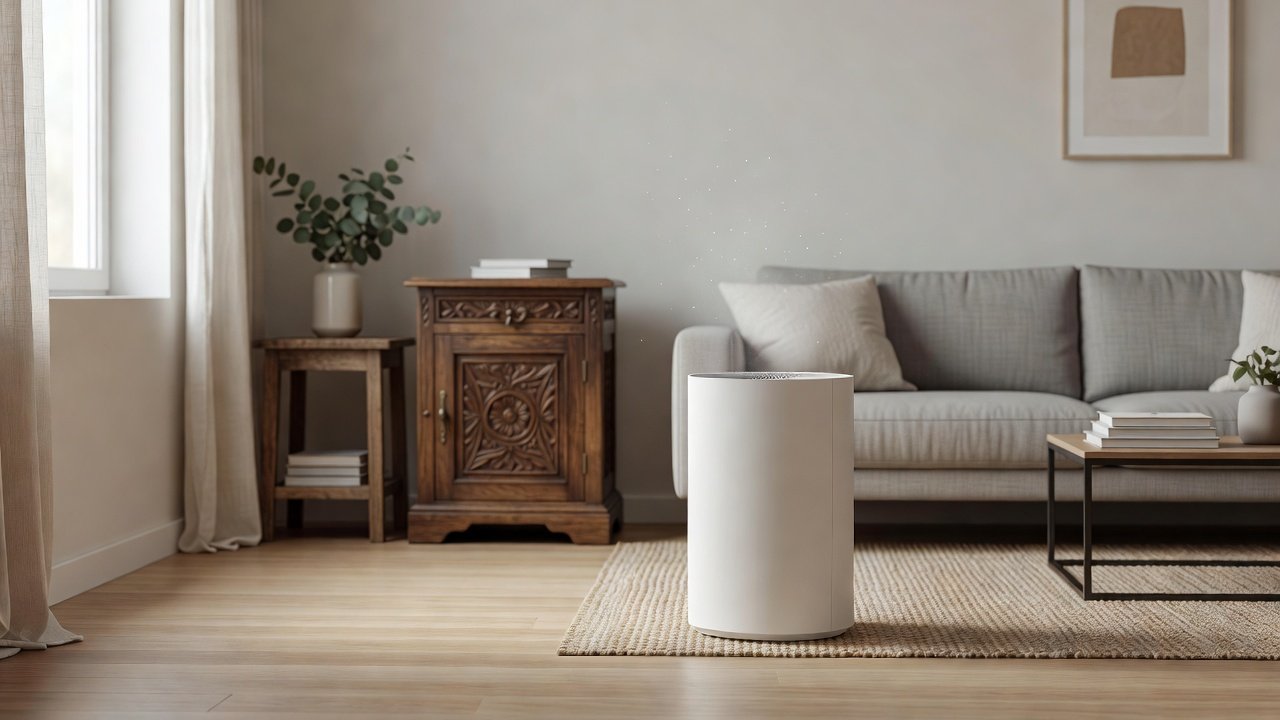
Air purifiers now come in everything from sculptural towers and fabric-wrapped cylinders to plain boxes with a front grille. A modern, design-led purifier is meant to blend into a living room. A traditional one is built around function and usually looks like an appliance. Neither is automatically better at cleaning the air. What matters is whether the design leaves room for a large enough filter and fan, and whether it fits where you will place it.
This guide helps you weigh looks against capacity, filters, noise and cost of ownership. We have not tested these products ourselves, we do not list prices and specifications differ by model, so check each manufacturer’s page for CADR, filter details and dimensions.
Modern design fits
- Open living areas where the unit is visible
- Buyers who value matching decor
- People who will place it in a good spot because they like how it looks
Traditional design fits
- Bedrooms, basements and offices
- Buyers who prioritize CADR per dollar
- Rooms where it can sit out of sight
Key Takeaways
- A design-led purifier is only a bargain if its smoke CADR matches your room.
- Slim or fabric-covered designs may restrict airflow or filter size, so compare specs rather than photos.
- A unit you like is more likely to be placed well and left running.
- Check display brightness, noise and filter access before buying for a bedroom.
- Models change often, so confirm specifications on the current manufacturer page.
Examples of Good Matches
In a small open-plan apartment where the purifier sits in the living area, a tower or cylinder with a pleasant finish and a smoke CADR matching the space can serve as a quiet piece of furniture. In a nursery, a plain, quiet unit with a dim display is a better choice than a flashy one. In a home office, a compact unit on a shelf may be fine if the room is small.
In a large living room, appearance should take second place to capacity. If the best-performing units are plain, consider placing one in a less visible spot and using a smaller, attractive unit elsewhere.
Warning Signs
Be cautious about listings that show beautiful photos but give no CADR, no filter details and no room size. Be cautious about claims of “pure” or “medical” air without data. Treat decorative add-ons such as scented inserts or lights as extras that do not improve cleaning. If a manufacturer is vague about ozone or ionizer output, move on, since the EPA advises against ozone-emitting air cleaners.
Living With Your Purifier Day to Day
A purifier that looks good but is awkward to maintain will be neglected. Check how easy it is to open, whether the filter slides out cleanly and whether you can reach the pre-filter without moving the unit. Wipe the exterior and grille regularly so dust does not build up, and keep the area around it clear of clutter.
If you rearrange furniture often, think about weight and handles. Some stylish units have no carry handle and can be awkward to move. If you plan to use the unit in different rooms, check that it is light enough and that the cord is long enough.
Also think about what you will do with the old filters. Design-led brands sometimes offer subscriptions or reminders, which can be convenient, but you should still know when the filter is due and how to order a replacement if the subscription lapses.
A Final Checklist
Confirm the smoke CADR for your room. Check the filter type, replacement cost and availability. Measure the space and check clearance. Look for display-off and sleep modes. Compare the design among the models that pass. Verify the exact model on the manufacturer’s page, since products change, and treat this article as general guidance rather than medical advice.
Design Trends and What They Mean for Performance
Recent design trends include rounded cylinders, wooden or fabric finishes, minimal buttons and companion apps. Rounded cylinders can draw air from all sides, which often allows a larger filter in a compact footprint. Fabric-wrapped units hide the filter behind a cover, which can look neat but means the cover must breathe. App-controlled units hide the controls, so make sure the unit has a basic physical control in case the app or Wi-Fi fails.
None of these trends guarantees better or worse cleaning. The only reliable way to compare is to look at smoke CADR, filter area, noise and replacement cost for each model. Photos and marketing copy show the style, and the specification sheet shows the performance.
Is a Premium Look Worth It?
It can be, if the purifier lives in a space you use daily and you would otherwise hide a plainer unit in a corner where it works poorly. Paying more for a look you enjoy is a personal choice, but make sure you are not also paying for lower performance. Compare the annual cost of filters and the CADR per dollar with a traditional alternative, and decide whether the difference is acceptable.
If budget is tight, spend on CADR and filters first, and use a simple shelf, plant stand or furniture arrangement that does not block airflow to make the unit less noticeable.
Air Purifiers to Compare
The table below lists purifiers from our affiliate partner. Compare smoke CADR, rated room size, filter details and dimensions alongside the look you prefer.
Quick Comparison
The table summarizes typical differences. Individual models vary.
| Factor | Modern, design-led | Traditional |
|---|---|---|
| Appearance | Blends with decor | Looks like an appliance |
| Placement flexibility | Good in visible spots | Better out of sight |
| CADR for the footprint | Check carefully | Often strong |
| Filter access | Varies | Usually straightforward |
| Cost for the performance | Can be higher | Often lower |
Where Design Helps and Where It Hurts
Good design can improve how well a purifier works, because a unit you like is a unit you are happy to put in a central location and leave on. A purifier hidden behind a sofa or in a corner cannot circulate air well.
Design can also hurt. Slim profiles, fabric covers and narrow vents may reduce the filter area or restrict airflow. Some styled units trade filter size for looks, which can mean a lower CADR for the same footprint. Always compare the specifications rather than the photo.
What to Check Beyond Looks
Look at the smoke CADR and the stated room size at a stated air-change rate. Check that the filter is true HEPA and that replacement filters are available. Look at how air flows: units that draw from the sides and release upward tend to be easier to place than those that blow out of the front.
Read the details on noise and on display brightness. Modern units with bright indicator rings can be distracting in a bedroom unless there is a display-off option.
Materials and Finishes
Modern purifiers often use fabric, wood-look trims, matte plastics or metal accents. These can look good, but check whether the finish is easy to wipe clean, since dust collects on intake grilles. Fabric covers may need occasional vacuuming or washing, and some are removable while others are not. Plastic shells can show fingerprints. Think about how the surface will look after a few months of dust and pet hair.
Also consider the vents. Narrow slots look neat but can collect lint and restrict airflow if blocked. Check whether the manufacturer recommends a particular cleaning method.
Size and Placement
A tall, slim tower can sit in a corner or beside a sofa, but corners restrict airflow. A cylindrical unit that draws air from all sides can sit away from walls but needs more floor space. Measure the spot, check the clearance listed in the manual and make sure the cord reaches the outlet without crossing a walkway.
If you want the purifier to sit on a console or shelf, check its weight and stability. Do not put a purifier where it can be knocked over by pets or children.
Lights, Displays and Controls
Modern units often include touch panels, colored rings and app controls. These are nice, but bedrooms need dark options. Look for a display-off or night mode and check whether the controls can be locked. In a living room, a visible indicator can be useful. In every case, the quality of the fan and filter matters more than the interface.
Cost of Ownership
A stylish unit may cost more up front and use proprietary filters that are priced accordingly. Check the filter price, replacement interval and whether you can buy filters easily. Add the cost of replacement filters over three to five years before deciding. A less pretty unit with cheaper filters can cost less over time, but if you love the look and will keep it running, the premium may be worth it.
How to Decide
List your must-haves: CADR for the room, a quiet low setting, a filter you can buy and a footprint that fits. Then compare design among the models that meet them. If you cannot find a design you like at the CADR you need, consider a plainer unit placed where it is not in the way, or a decorative cover or shelf that does not block airflow.
How to Choose
- Start with the smoke CADR your room needs.
- Compare filter type, replacement cost and access.
- Check dimensions and clearance requirements for your intended spot.
- Look for a display-off option if you want it in a bedroom.
- Avoid ozone-generating modes; the EPA advises against ozone-emitting air cleaners.
Do
- Match the unit’s rated coverage to your room first
- Run it consistently, not only when the air feels bad
- Leave space around the unit for airflow
- Replace filters on the maker’s schedule
Don’t
- Do not buy on looks or price alone
- Do not block the intake or exhaust
- Do not skip filter changes
- Do not expect a purifier to fix every source of pollution
Honest Limits
- This guide uses manufacturer information and public guidance from the EPA and AHAM, not our own lab tests.
- Features and room ratings change between model years, so confirm on the listing before you buy.
- A purifier is not a medical device and does not replace medical advice or treatment.
Who Should Skip This
When to See a Professional
Frequently Asked Questions
Are designer air purifiers less effective?
Not necessarily, but some trade filter size or airflow for looks. Compare the smoke CADR and filter details.
Can I hide a purifier behind furniture?
Not if it blocks the intake or outlet. Leave clearance as the manual advises.
Do fabric-covered purifiers need cleaning?
Possibly. Check the manual for how to clean the cover and grille.
Is a bright display a problem in the bedroom?
It can be. Look for a display-off or night mode.
Should I pay more for design?
Only if the unit meets your CADR needs and you will place it where it works well.
Bottom Line
Choose a design you like, but only among units that meet your CADR target.
If two models match on performance, let looks and placement decide.
Related reading: sens,fan,bed
Sources: EPA, Guide to Air Cleaners in the Home; AHAM Verifide.