Last updated:
Disclosure: As an Amazon Associate we earn from qualifying purchases. This does not change what we recommend. See our affiliate disclaimer.
If you have a toddler or a curious pet, you may wonder whether an air purifier needs a child lock. The feature disables the buttons so that small hands cannot change the settings, turn the unit off or switch a mode by accident. It is a simple idea, and on many units it is useful. But a child lock is only one part of keeping a purifier safe around children and pets, and it does not solve everything.
This guide explains what a child lock does and does not do, which other safety points matter more, and how to decide whether it is worth looking for. We have not tested these products ourselves; follow the manual for any unit you buy, and use the advice here as general guidance.
A child lock is worth having if
- You have a toddler who presses buttons
- The unit is within reach on the floor or a low table
- You do not want settings changed accidentally
You can do without one if
- The unit is placed out of reach
- Your children are older
- You use a simple unit with a single dial or switch
Key Takeaways
- A child lock only disables the controls; it does not make a unit childproof.
- Stable placement and cord safety matter more than the lock.
- Top outlets and secure covers keep fingers away from internals.
- Unplug the unit before opening it or changing filters.
- Pets can tip units or chew cords, so use a heavy base and cord guard.
- Avoid ionizer and ozone modes around children.
- Follow the manual for your specific model.
A Home Safety Walkthrough for Your Purifier
Once the purifier is in place, do a quick walkthrough from a child’s point of view. Can they reach the buttons, the cord or the plug? Can they put fingers or toys into the inlet or outlet? Can they pull the unit over, or climb on it? Is the unit near a curtain, a blanket or a bed where fabric could be drawn into the intake? Is the cord visible and tidy, or does it cross a walkway? Fixing these small points takes minutes and does far more for safety than any single feature.
Repeat the walkthrough when you rearrange furniture, move the unit or when a child reaches a new stage. A toddler who has just learned to climb needs a different layout from a baby who cannot yet crawl. If you cannot make a spot safe, choose another room or another position, or use a barrier such as a baby gate.
Choosing a Model With Safety in Mind
When you shop, look at the base and the weight, the position of the outlet, the way the cover and filter door close and whether the cord can be routed neatly. Read the manual online before buying, since it shows the lock procedure and the safety warnings. Check that the unit has appropriate safety certifications for your region, and check the warranty and return policy. A unit that looks good on a shelf but is unstable on the floor is not a good choice for a home with small children.
Air Purifiers to Compare
The table below lists purifiers from our affiliate partner. Check each listing for a control lock, outlet position and build, and confirm details on the product page.
Pets and Other Considerations
Pets can chew cords, knock units over and sit on top of them. A heavy base, a cord guard and placement on a shelf or in a corner away from the pet’s favorite places all help. If your pet sheds a lot, check the pre-filter more often, since hair can clog the intake. Keep the area around the unit clear of blankets, toys and other items that could block airflow.
| Feature | Why it matters | What to check |
|---|---|---|
| Child lock | Prevents setting changes | How to activate it |
| Stable base | Reduces tipping | Weight and footprint |
| Outlet position | Keeps fingers away | Top or side outlet |
| Cord management | Reduces tripping and chewing | Cord length and routing |
| Cover and filter door | Prevents access to internals | Latch design |
What a Child Lock Actually Does
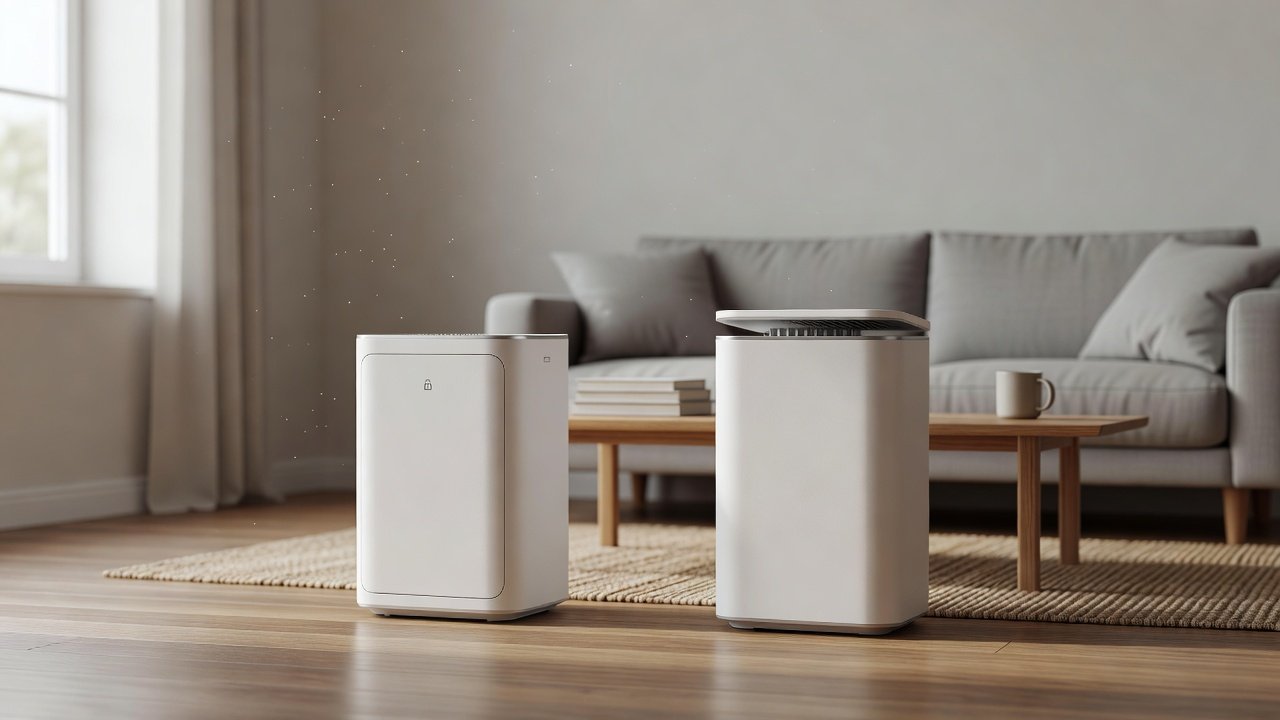
A child lock, sometimes called a control lock or panel lock, disables the control panel after you activate it, usually by holding a button for a few seconds. While it is on, pressing buttons has no effect, so a child cannot turn the unit off, change the fan speed or switch lights and modes. This helps keep the purifier running as you set it, which matters for a bedroom unit that should stay on overnight, and it prevents the frustration of settings being changed repeatedly.
It does not make the unit childproof. A child can still pull on the cord, tip the unit, put objects into openings or open the filter cover on some models. The lock only protects the settings. So think of it as a convenience feature that happens to reduce one kind of tampering, not as a complete safety system.
Other Safety Points That Matter More
Placement and stability are more important than the lock. Put the unit on a stable surface or on the floor where it cannot be tipped, with the cord routed away from walkways and out of reach. Leave the clearance around the unit that the manual asks for, and do not let children climb on it or put objects into the air inlet or outlet. Choose a unit with a sturdy base and a cover that cannot be opened easily.
Check the air outlet. Some units blow air out at high speed or through openings that are easy to reach. Look at the design and, if you are concerned, choose a model with a top outlet, which keeps small fingers farther from the fan. Check the filter door and any lamp or ionizer compartments, which should stay closed unless the unit is unplugged. And avoid ionizer or ozone-producing modes, particularly around children.
Setting Up a Safe Nursery or Playroom
In a nursery, place the purifier out of the baby’s reach, on a stable surface or in a spot behind a barrier, with clearance as the manual advises. Keep the cord away from the crib and run it along a wall so it cannot be pulled. Avoid placing the unit close to bedding or curtains that could be drawn into the intake. Use a low noise setting and a dimmed display so that the unit does not disturb sleep. In a playroom, put the unit on a shelf or in a corner and check regularly that nothing is blocking the airflow.
As children grow, reassess. A toddler who can climb or pull on things needs a different setup from a baby who cannot move yet. Keep the manual and check the maker’s safety notes whenever you move the unit to a new room.
Using the Lock Correctly
Locate the instructions for the lock in the manual, since the method varies. It may be a long press of a button for a few seconds, a combination of buttons or a setting in an app. After you lock the controls, test them to make sure that they respond as expected, and remember how to unlock the unit, because you will need to do this when you adjust settings or change filters. If your unit has a remote or an app, check that those controls are also locked or that children cannot get to them.
Noise, Light and Sleep
A purifier in a child’s room should be quiet and not too bright. Check the noise at the lowest speed and see whether you can dim or turn off the lights. Some children are comforted by a steady sound, while others are disturbed by changes in fan speed, so a fixed low speed may work better than an auto mode that changes with the sensor. Test the unit before bedtime and adjust it until the room is comfortable.
Filters and Maintenance Around Children
Change filters on schedule and handle them carefully, since the dust they have collected can be released if shaken. Put used filters in a bag before carrying them to the trash. Keep spare filters and any cleaning tools out of reach. Wipe the exterior with a dry or slightly damp cloth, and do not use sprays or strong chemicals near the intake. Never allow children to play with the unit or the filters.
Medical Questions
If your child has asthma or allergies, a purifier supports but does not replace the plan the doctor has given you. Ask your doctor what steps to prioritize, such as trigger control, cleaning and ventilation. If a child has symptoms that worsen, seek medical advice rather than relying on a device.
How to Choose
- Look for a control or child lock if the unit will be within reach.
- Check the stability and weight of the base.
- Prefer a top outlet and a secure filter cover.
- Keep cords out of reach and unplug before opening the unit.
- Avoid ozone generating or ionizer modes; the EPA advises against ozone-emitting air cleaners.
Do
- Match the unit’s rated coverage to your room first
- Run it consistently, not only when the air feels bad
- Leave space around the unit for airflow
- Replace filters on the maker’s schedule
Don’t
- Do not buy on looks or price alone
- Do not block the intake or exhaust
- Do not skip filter changes
- Do not expect a purifier to fix every source of pollution
Honest Limits
- This guide uses manufacturer information and public guidance from the EPA and AHAM, not our own lab tests.
- Features and room ratings change between model years, so confirm on the listing before you buy.
- A purifier is not a medical device and does not replace medical advice or treatment.
Who Should Skip This
Skip units with exposed fans, loose covers or poor stability if children are around.
Skip ozone generators and ionizers that emit ozone; the EPA advises against them.
When to See a Professional
If your child has asthma or allergies, talk to the doctor about the best plan; a purifier supports it but does not replace it.
If a unit smells of burning or sparks, unplug it and contact the maker.
Frequently Asked Questions
What does a child lock do?
It disables the control buttons so settings cannot be changed accidentally.
Does a child lock make a purifier safe for toddlers?
No. Placement, stability and cord safety still matter.
Where should I place a purifier in a nursery?
Out of reach, on a stable surface with clearance, and away from bedding and curtains.
How do I activate the lock?
It varies, often by holding a button. Check the manual.
Can pets knock over a purifier?
Yes. Use a stable base and sensible placement.
Are top outlets safer?
They can keep small fingers farther from the fan.
Should I unplug the unit before changing filters?
Yes, always.
Is a night mode useful for children?
Yes, a quiet setting and dimmed lights help sleep.
Can children play with filters?
No. Keep them out of reach.
Are ionizer modes safe?
Some produce ozone, which the EPA advises against.
Bottom Line
A child lock is a handy convenience for homes with small children, but placement, stability and cord safety matter more.
Choose a stable unit with a secure cover, place it out of reach where possible and avoid ozone-producing features.
Related reading: sens,fan,bed
Sources: EPA, Guide to Air Cleaners in the Home; AHAM Verifide.