Last updated:
Disclosure: As an Amazon Associate we earn from qualifying purchases. This does not change what we recommend. See our affiliate disclaimer.
Nail salons produce dust from filing and fumes from products, so air quality depends first on ventilation and source capture, such as downdraft tables and exhaust. A purifier with true HEPA and a substantial carbon filter can add to this, but it does not replace ventilation or protective equipment. Check occupational safety guidance and local rules.
This guide covers ventilation, source capture, filters, placement and where to find safety guidance. We have not tested these products ourselves, so confirm specifications on product pages. Nothing here is medical advice.
Priority
- Ventilation
- Source capture
- Product handling
Purifier adds
- Dust capture
- Some odor reduction
- Extra layer
Key Takeaways
- Ventilation and source capture come first
- True HEPA captures dust
- Carbon may reduce some odors
- Check occupational guidance
Questions for Your Landlord or HVAC Professional
Ask about outdoor air supply, exhaust ducts, balancing and filter grades. Ask whether the system serves other tenants.
Request written confirmation.
Choosing Equipment
Compare source capture tables, portable exhaust units and purifiers. Choose equipment sized for your workstations and ask suppliers for specifications.
Everyday Habits
Close product containers, empty bins often, wipe surfaces and keep floors clear of dust.
Common Mistakes
Relying on a purifier alone, using ozone devices, ignoring carbon replacement and undersizing equipment are common mistakes.
Costs
Include filters, collectors and maintenance in your budget.
What Happens in Salon Air
Nail services release three kinds of pollutant. Filing and buffing produce fine dust from acrylics and gels. Monomers, solvents, and polish release vapors such as ethyl methacrylate, acetone, and toluene. Adhesives and primers add their own. Dust is a particle problem that filters handle well; vapors are a gas problem that needs capture at the source and dilution with fresh air. A purifier contributes to both but is the last layer, not the first.
Occupational health guidance, including OSHA’s resources for nail salons, puts ventilation and source capture ahead of any room air cleaner.
Designing a Layered Setup
- Mechanical ventilation that brings in outdoor air and exhausts salon air
- Local exhaust at each station, such as downdraft tables or source-capture arms
- Lids on all product containers and metal bins with lids for waste
- A true HEPA and heavy carbon purifier per work area for residual dust and odor
- Gloves, masks, and other protective equipment as guidance recommends
Each layer catches what the previous one misses, and the purifier’s job is the residual.
Choosing a Purifier for a Salon
Look for a high dust CADR, a true HEPA stage, and a carbon bed of several hundred grams or more, since thin carbon sheets saturate within days in a salon. A washable or inexpensive pre-filter is essential because filing dust loads it fast. Choose units with easy filter access and a clear replacement schedule, and avoid ozone generators and ionizers, which add irritants to a space already full of them. Several medium units spread across stations usually outperform one large unit in a corner.
Placement in a Working Salon
Put units near the stations, at table height if possible, with intakes facing the work area and outlets aimed away from clients. Keep them out of walkways and clear of product storage. Do not rely on a unit near the entrance to clean the whole floor; air moves slowly across a busy room. Run units continuously during opening hours and on a lower speed for an hour after closing to clear residual vapors.
Maintenance on a Salon Schedule
- Clean pre-filters weekly, daily in busy salons
- Replace carbon when odors return, often every one to two months
- Replace HEPA at roughly half the manufacturer’s stated interval
- Wipe housings and grilles weekly to remove dust film
- Keep a log of filter changes for each unit
Assign the tasks to a named person and keep spare filters on site.
Staff Health and Records
Staff who notice headaches, eye or throat irritation, or breathing difficulty should raise it with management and a clinician, and the salon should review ventilation rather than assuming a purifier has solved the issue. Keep safety data sheets for every product, train staff on lids and waste handling, and follow local regulations on ventilation for personal services businesses. Nothing here is medical or legal advice; consult the relevant authorities and professionals for your location.
Questions to Ask a Ventilation Contractor
Ask how much outdoor air the system supplies per station, whether exhaust is ducted outside rather than recirculated, how source-capture equipment will be integrated, and what maintenance the system needs. Ask for written specifications and a commissioning check after installation. A purifier can then be chosen to fit the remaining gap rather than to compensate for a ventilation system that was never adequate.
Reader Scenario: One Big Unit by the Door
A salon owner placed a single large purifier near the entrance and found the back stations still smelled of monomer by mid-afternoon. Moving to three medium units at table height between stations, replacing the hood filters on the downdraft tables, and keeping product lids closed between clients made a far larger difference than the big unit had. The carbon in the medium units needed changing every six weeks, which the owner now budgets for. Source capture close to the work, with purifiers as the final layer, is the pattern that works.
Final Word
Salon air is a ventilation and source-capture job first, with purifiers as the final layer for residual dust and odor. Several medium true HEPA and heavy carbon units placed near stations, maintained on a logged weekly schedule, do far more than one large unit by the door, and occupational guidance should shape the whole setup.
Air Purifiers for Larger Spaces
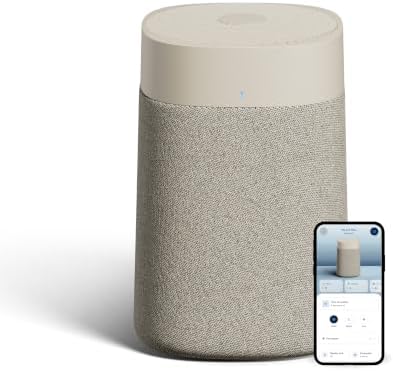
These picks come from the Hostinger affiliate plugin. Specs change by model year, so confirm filter type, CADR, noise and replacement filter costs on the product page.





Ventilation First
Occupational health guidance emphasises ventilation that brings in outdoor air and exhausts fumes. Ask your landlord or an HVAC professional to check airflow, and follow local rules.
Source Capture
Downdraft tables and local exhaust capture dust and vapors near the source, before they spread. They work best when positioned close to the work.
What a Purifier Can Add
A true HEPA filter captures dust particles, and a deep carbon filter may reduce some odors. Carbon capacity is limited and fills over time, so replace it as directed.
Purifiers do not remove all vapors.
Safe Product Handling
Keep containers closed, store products safely and follow safety data sheets. Wear recommended gloves and masks.
Rules and Guidance
Check OSHA and your local health authority for guidance, and ask a professional for advice on your premises.
Dust Control
Use dust collectors at the table, clean surfaces with damp cloths and avoid dry sweeping. Empty collectors safely.
Wear masks as advised.
Odor and Vapors
Keep lids on products and avoid overusing strong-smelling products. Use carbon filters as an addition.
Replace carbon on schedule.
Staff Health
Staff who feel unwell should seek advice from a clinician or occupational health service. Share product safety information.
Follow workplace rules.
Placement
Place purifiers where airflow covers work areas, away from direct drafts. Keep cords safe.
Avoid blocking exits.
Maintenance
Assign someone to check filters monthly. Record replacements.
Stock spare filters.
How to Choose
- True HEPA for dust
- Substantial carbon filter
- CADR suited to the space
- Easy filter replacement
Do
- Match the unit’s rated coverage to your room first
- Run it consistently, not only when the air feels bad
- Leave space around the unit for airflow
- Replace filters on the maker’s schedule
Don’t
- Do not buy on looks or price alone
- Do not block the intake or exhaust
- Do not skip filter changes
- Do not expect a purifier to fix every source of pollution
Honest Limits
- This guide uses manufacturer information and public guidance from the EPA and AHAM, not our own lab tests.
- Features and room ratings change between model years, so confirm on the listing before you buy.
- A purifier is not a medical device and does not replace medical advice or treatment.
Who Should Skip This
When to See a Professional
Frequently Asked Questions
Can a purifier replace ventilation?
No.
Do I need carbon?
A substantial carbon filter may help with odors.
Where do I find rules?
OSHA and your local health authority.
How often to change filters?
Follow the manual and replace carbon when saturated.
Bottom Line
Ventilation and source capture come first. A purifier with true HEPA and carbon can add to them but does not replace them.
Related reading: sens,fan,bed
Sources: EPA, Guide to Air Cleaners in the Home; AHAM Verifide.