Last updated:
Disclosure: As an Amazon Associate we earn from qualifying purchases. This does not change what we recommend. See our affiliate disclaimer.
To get good results from an air purifier, put it in the room where you spend the most time, give it clearance on all sides, run it continuously on a comfortable speed and keep the door closed. Maintain it by cleaning pre-filters and replacing filters on schedule. A purifier works on the air that passes through it, so consistent running matters more than short bursts.
This guide covers placement, settings, daily habits and maintenance. We have not tested these products ourselves, so follow your manual. Nothing here is medical advice.
Do
- Run it continuously
- Give it clearance
- Keep doors closed
Avoid
- Blocking intake and exhaust
- Skipping filter changes
- Using ozone devices
Key Takeaways
- Place with clearance
- Run continuously on a comfortable speed
- Keep doors closed
- Maintain filters
A Week-One Setup Routine
On day one, read the manual, remove packaging from filters and set the unit up in the bedroom or main room. Run it on auto or a medium speed to see how it sounds. On day two, adjust the speed and light settings so it is comfortable. Over the week, note noise, odors and dust, and check that doors are closed and airflow is clear.
By the end of the week you should know the speeds that suit you, how loud it is and whether placement needs adjusting.
Common Setup Mistakes
Placing the unit in a corner, blocking vents, undersizing for the room, leaving doors open, forgetting to remove packaging and skipping filter replacement are common mistakes.
Using It With Other Devices
Keep the purifier away from heaters and humidifiers that could affect sensors, and avoid placing it directly next to a TV or speakers if noise bothers you.
Cleaning the Exterior
Unplug and wipe with a dry or slightly damp cloth. Avoid spraying liquids into vents.
Kids and Pets
Keep cords and controls out of reach and ensure the unit is stable. Use child locks if available.
Checking That It Works
Feel airflow, listen for unusual noises, check indicator lights and look for dust on the pre-filter. Track whether odors or dust improve over weeks.
How Fast Does a Purifier Work?
A purifier does not clean a room instantly. It cleans the air that passes through it, and the room’s air is gradually replaced with filtered air. A unit with a higher CADR does this faster. When you first start a unit, run it at a higher speed for a short while, then reduce it to a quiet setting for continuous operation.
Over days and weeks you may notice less visible dust and fewer lingering odors, though results depend on sources, ventilation and room size. If nothing changes, check sizing, placement, filter condition and whether doors and windows are open.
Using a Purifier During Specific Activities
During cooking, turn the unit up a speed and use the range hood. While cleaning or vacuuming, run the purifier on a higher speed and leave it on afterwards. On high pollen days, keep windows closed and let the unit run steadily. During wildfire smoke, run the highest practical speed in a closed room and replace filters sooner.
After the event, return to your usual speed and check the filter for loading.
A Daily Routine That Works
The most effective way to use a purifier is also the simplest: leave it on. Run it continuously on low in the room where you spend the most time, raise it to medium while cooking, cleaning, or making beds, and set it to sleep mode at night. Keep the door closed when you want the room cleanest, and open windows for a short airing when outdoor air is good, then close up and let the unit work. Particle levels rebound within an hour or two when it is off, so bursts on high are far less effective than steady operation.
Most people stop noticing the low hum within a few days and forget the unit is there, which is exactly how it should be.
Room by Room
- Bedroom: continuous low, sleep mode at night, door closed, outlet aimed away from the bed
- Living room: continuous low or medium, higher when the room is busy
- Kitchen or dining: high during and after cooking with a vented hood; unit a few metres from the stove
- Home office: low, placed with clearance near the desk
- Nursery: quietest unit available, across the room from the cot, lights off, cords secured
If only one unit is available, the bedroom is where it earns the most.
Placement Basics
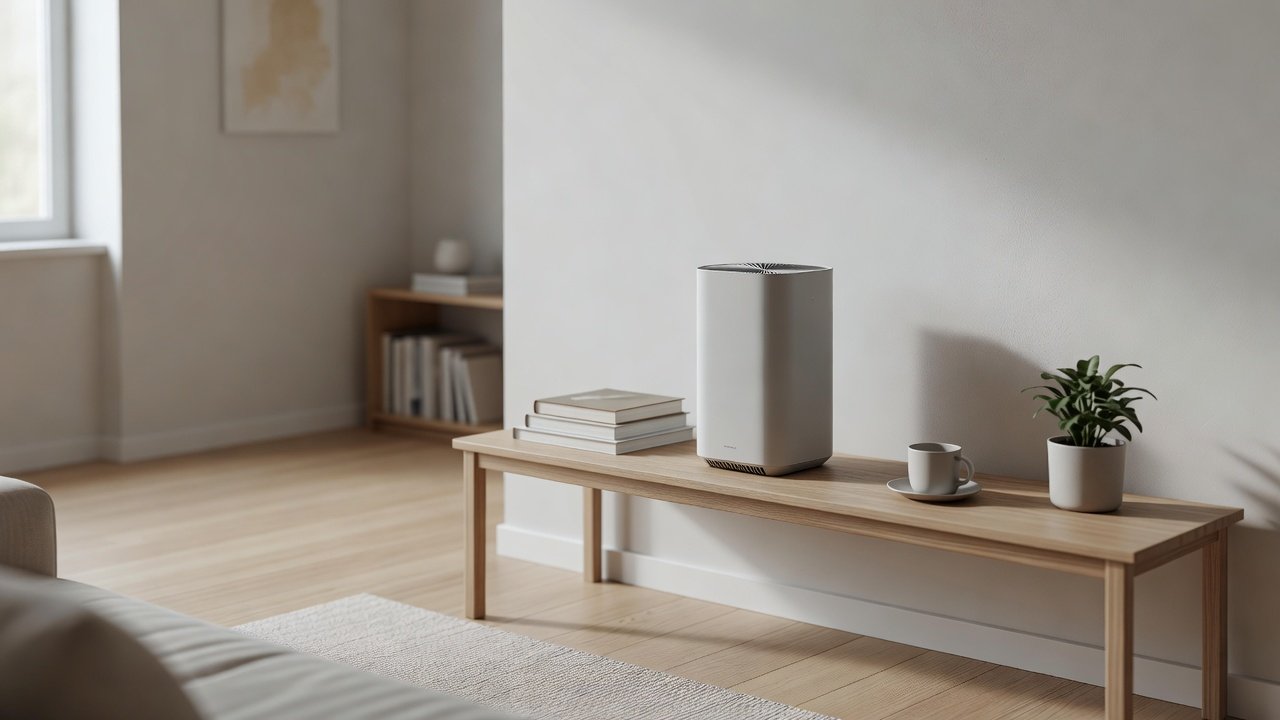
A foot of clearance on all sides, away from walls, curtains, corners, and heat sources, with the outlet aimed toward the room’s centre or the ceiling. Keep it off hollow shelves that amplify noise and on a solid, level surface. Do not hide it behind furniture; it needs to breathe.
Maintenance Habits
Vacuum the pre-filter monthly, inspect the HEPA and replace it when grey or when airflow drops, replace carbon when odors return, and wipe grilles and sensor openings quarterly. Write dates on filters and keep a spare set sealed. The routine takes minutes and keeps the unit performing like new.
Common Mistakes at Home
Switching the unit off to save electricity, running it only when symptoms flare, leaving the ionizer on, placing it in a corner, forgetting the pre-filter, and using an undersized unit for a large room are the usual reasons a purifier disappoints. Each is easy to fix, and together they are the difference between a unit that seems useless and one that quietly improves the home.
Air Purifiers for Everyday Use
These picks come from the Hostinger affiliate plugin. Specs change by model year, so confirm filter type, CADR, noise and replacement filter costs on the product page.






Choose the Right Room
Start with the bedroom, since you spend many hours there, or the room where you spend most of your day. Match the unit’s CADR to the room size.
Place It Well
Leave space around the unit, a few feet from walls and furniture if possible. Do not place it in a corner or behind a couch. Keep it on a stable surface and cords out of the way.
Pick the Right Speed
Run on a speed that is comfortable for noise, and use auto mode if it works well. Raise speed during cooking, cleaning or pollen and smoke events, then lower it afterward.
Keep Doors Closed
Closed doors keep the unit cleaning the same air rather than the whole house. Open doors reduce effectiveness.
Maintain It
Clean pre-filters, wipe the intake and replace filters on schedule. Keep records and spare filters.
Sleep Mode
Use sleep mode to lower speed and dim lights at night.
Check that auto mode does not ramp up loudly.
Pets and Cooking
Raise speed during messy activities and lower afterward.
Clean pre-filters more often.
Allergy Seasons
Keep windows closed on high pollen days and run the unit more actively.
Wash bedding regularly.
Smoke Events
Close windows and run on a higher speed.
Replace filters sooner.
Travel and Vacations
Follow the manual for long absences. Unplug if advised.
Restart gradually when returning.
How to Choose
- True HEPA filtration
- CADR suited to the room
- Quiet speeds
- Easy filter replacement
Do
- Match the unit’s rated coverage to your room first
- Run it consistently, not only when the air feels bad
- Leave space around the unit for airflow
- Replace filters on the maker’s schedule
Don’t
- Do not buy on looks or price alone
- Do not block the intake or exhaust
- Do not skip filter changes
- Do not expect a purifier to fix every source of pollution
Honest Limits
- This guide uses manufacturer information and public guidance from the EPA and AHAM, not our own lab tests.
- Features and room ratings change between model years, so confirm on the listing before you buy.
- A purifier is not a medical device and does not replace medical advice or treatment.
Who Should Skip This
When to See a Professional
Frequently Asked Questions
Where should I put it?
Where you spend the most time, with clearance.
Should I run it all the time?
Often yes, at a comfortable speed.
Do I keep doors closed?
Yes, for best results.
How do I maintain it?
Clean pre-filters and replace filters on schedule.
Bottom Line
Place the unit with clearance, run it continuously on a comfortable speed, keep doors closed and maintain filters. Consistency gives the best results.
Related reading: sens,fan,bed
Sources: EPA, Guide to Air Cleaners in the Home; AHAM Verifide.