Both pet dander and pet hair can affect indoor air quality. Choosing the right air purifier is essential for a cleaner home.
If you live with pets, you know the struggle with dander and hair. Pet dander consists of tiny, often invisible particles that can trigger allergies. Pet hair, on the other hand, is more noticeable but can still carry allergens. Understanding the difference between air purifiers for pet dander and those for pet hair helps you make an informed decision.
This guide will explore the features and benefits of each type. You will learn which purifier suits your needs best, ensuring a comfortable and healthy living space for you and your furry friends.
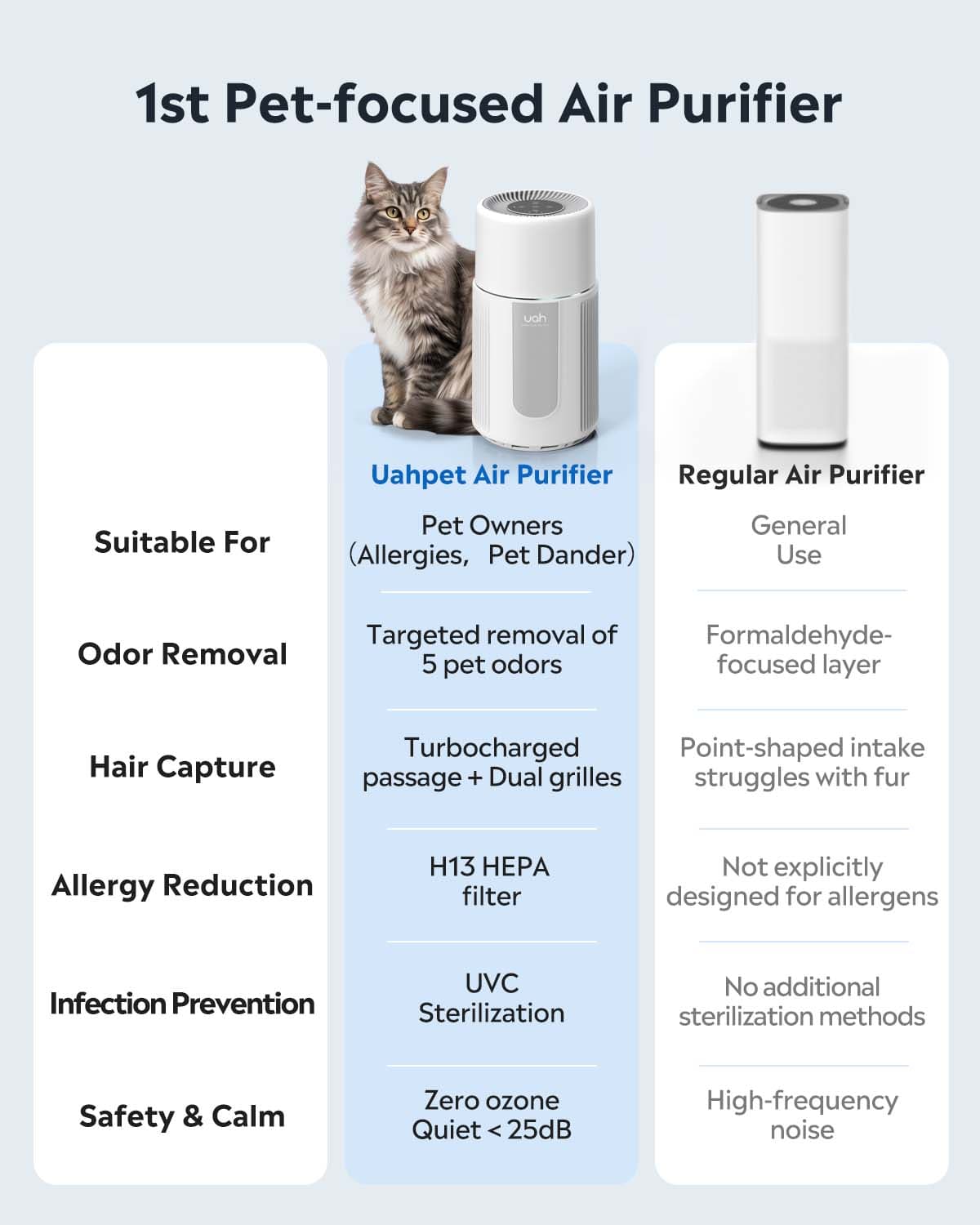
Credit: www.uahpet.com
Introduction To Air Purifiers For Pets
Air purifiers for pet dander help reduce tiny particles that can cause allergies. On the other hand, air purifiers for pet hair capture larger, visible fur. Both types keep your home cleaner and more comfortable.
Having pets at home is a joy. But pets can also bring challenges. Pet dander and pet hair are common issues. They can affect air quality. Many pet owners turn to air purifiers for help. Air purifiers for pets come in two main types. Some target pet dander. Others focus on pet hair. Choosing the right one is important. It can make a big difference in your home.Importance Of Air Quality
Good air quality is vital. It affects our health and well-being. Poor air can cause allergies. It can also lead to breathing problems. Pets can add to these problems. Their dander and hair can fill the air. This makes it harder to breathe. An air purifier helps. It cleans the air. It removes harmful particles.Common Pet-related Allergens
Pet dander is a common allergen. It comes from skin flakes. These flakes float in the air. They can cause allergies. Symptoms include sneezing and itchy eyes. Pet hair is another issue. It can carry dust and pollen. These can trigger allergies too. An air purifier can help. It can remove these allergens. It makes the air cleaner and safer. “`Understanding Pet Dander
Pet dander is a common concern for pet owners. It can affect the air quality in your home. Using an air purifier can help. But understanding the difference between pet dander and pet hair is key. Let’s dive into what pet dander is and its health impacts.
What Is Pet Dander?
Pet dander consists of tiny, even microscopic, flecks of skin shed by cats, dogs, rodents, birds, and other animals with fur or feathers. These particles can remain airborne for a long time. They can stick to furniture, bedding, and many other surfaces.
| Pet Dander | Pet Hair |
|---|---|
| Microscopic skin flakes | Visible strands of fur |
| Can be allergenic | Less likely to cause allergies |
| Hard to see and remove | Easy to see and clean |
Health Impacts Of Pet Dander
Pet dander can trigger allergic reactions. It can cause sneezing, runny nose, and itchy eyes. Some people may develop skin rashes. Those with asthma might experience worsened symptoms. Long-term exposure to pet dander can lead to chronic respiratory issues.
Using an air purifier designed for pet dander can help. These purifiers often have HEPA filters. HEPA filters capture tiny particles. They can remove pet dander from the air. This helps in reducing allergic reactions and improving air quality.
It’s essential to choose the right air purifier. Some are better suited for pet dander. Others work well for pet hair. Knowing your needs can help in making the best choice.
Understanding Pet Hair
Living with pets brings joy, but pet hair can be a challenge. It sticks to clothes, furniture, and floors. Understanding pet hair helps in managing it effectively.
What Is Pet Hair?
Pet hair refers to the visible strands shed by cats, dogs, and other furry animals. It differs from pet dander, which consists of tiny skin flakes. Pet hair is larger and more noticeable.
Pet hair sheds regularly, influenced by factors like breed, diet, and season. Some pets shed more than others. Long-haired breeds tend to shed more noticeable hair.
Challenges Of Pet Hair In Homes
Pet hair accumulates quickly on furniture, carpets, and clothing. This makes cleaning tasks more frequent and time-consuming. It can clog vacuum cleaners and air filters.
Pet hair can cause allergic reactions in sensitive individuals. It can also contribute to indoor air quality issues. Keeping pet hair under control is crucial for a clean, healthy home.
Air Purifiers For Pet Dander
Pet dander consists of tiny, even microscopic, flecks of skin shed by cats, dogs, rodents, birds, and other animals with fur or feathers. These particles can trigger allergies and asthma. Air purifiers designed for pet dander are crucial for pet owners who suffer from these health issues. They help maintain a cleaner, healthier indoor environment.
How They Work
Air purifiers for pet dander use advanced filtration systems to remove these tiny particles from the air. The most common type is the HEPA filter (High-Efficiency Particulate Air filter). HEPA filters can trap particles as small as 0.3 microns with 99.97% efficiency. This makes them highly effective against pet dander.
Some air purifiers also use activated carbon filters. These filters help eliminate odors and gases that can accompany pet dander. Another technology used is UV-C light. This light kills bacteria and viruses that might be present in the air, providing an extra layer of purification.
Key Features To Look For
When choosing an air purifier for pet dander, consider these key features:
- HEPA Filter: Essential for capturing tiny dander particles.
- Activated Carbon Filter: Helps remove pet odors and gases.
- CADR Rating: (Clean Air Delivery Rate) Indicates the volume of filtered air delivered by the purifier. Higher CADR means faster purification.
- Coverage Area: Ensure the purifier is suitable for the room size.
- Noise Level: Look for a quiet model to avoid disturbances.
- Filter Replacement Indicator: Alerts you when it’s time to change the filter.
| Feature | Importance |
|---|---|
| HEPA Filter | High |
| Activated Carbon Filter | Medium |
| CADR Rating | High |
| Coverage Area | High |
| Noise Level | Medium |
| Filter Replacement Indicator | Medium |
Choosing the right air purifier can significantly improve your home’s air quality. This can make it more comfortable for both you and your pets.
Air Purifiers For Pet Hair
Pet hair can create a messy and uncomfortable environment in your home. It can trigger allergies and make it hard to breathe. Using an air purifier specifically for pet hair can help. It can make your home cleaner and more comfortable. But how do these air purifiers work? What features should you look for?
How They Work
Air purifiers for pet hair use special filters. These filters capture and trap pet hair from the air. The most common filter is the HEPA filter. It can trap very small particles, including pet hair. Some air purifiers also use pre-filters. These pre-filters catch larger particles before they reach the HEPA filter. This makes the HEPA filter last longer.
Some air purifiers also use ionizers. Ionizers release charged particles into the air. These particles attach to pet hair, making it heavier. The heavy pet hair then falls to the ground or gets trapped by the filter.
Key Features To Look For
When choosing an air purifier for pet hair, consider the size of the room. Make sure the purifier is powerful enough for your space. Look for a model with a HEPA filter. HEPA filters are very effective at trapping pet hair. Also, check for a pre-filter. A pre-filter can help extend the life of the HEPA filter.
Consider the noise level. Some air purifiers can be loud. Look for a model with a quiet operation. This is especially important if you plan to use the purifier in a bedroom or living room. Lastly, check for easy maintenance. Choose an air purifier with filters that are easy to replace. This will save you time and effort in the long run.

Credit: www.amazon.com
Comparing Air Purifiers
Choosing the right air purifier for your home can be challenging. This is especially true if you have pets. Two common concerns are pet dander and pet hair. Understanding how air purifiers handle these issues is essential. Let’s dive into a comparison.
Efficiency In Removing Dander
Pet dander consists of tiny skin flakes shed by animals. It is a common allergen. Air purifiers with HEPA filters are effective at trapping dander. These filters can capture particles as small as 0.3 microns. This makes them ideal for removing tiny dander particles.
Here is a simple table comparing different types of filters for dander removal:
| Filter Type | Efficiency in Removing Dander |
|---|---|
| HEPA Filter | High |
| Activated Carbon Filter | Moderate |
| Ionizer | Low |
Efficiency In Removing Hair
Pet hair is larger and more visible than dander. It can accumulate on surfaces and in the air. Some air purifiers are better suited for this task. Pre-filters are excellent for capturing larger particles like pet hair. They trap hair before it reaches the main filter.
Here are some key points about filters for hair removal:
- Pre-filters: Capture large particles like hair.
- HEPA filters: Good for fine particles, less effective for hair.
- Carbon filters: Primarily for odors, limited hair removal.
For homes with pets, a combination of filters is best. A pre-filter will catch hair. A HEPA filter will handle dander and other allergens.
Choosing The Right Air Purifier
Pet owners often face a dilemma: should they choose an air purifier for pet dander or for pet hair? Each type of purifier targets specific needs. Pet dander consists of tiny skin flakes shed by pets. Pet hair refers to the fur that pets shed. Both can cause allergies and discomfort. This guide will help you choose the best air purifier for your needs.
Factors To Consider
Selecting the right air purifier involves several factors. Here are the most important ones:
- Filtration System: HEPA filters are essential for removing pet dander.
- Room Size: Ensure the purifier can handle your room’s square footage.
- Noise Level: A quieter purifier is better for bedrooms or living rooms.
- Maintenance: Check how often filters need replacing and the cost.
Top Recommendations
Here are some top air purifiers for pet dander and pet hair:
| Model | Best For | Features | Price |
|---|---|---|---|
| LEVOIT Core P350 | Pet Dander | HEPA filter, quiet operation | $$ |
| Blueair Blue Pure 211+ | Pet Hair | High airflow, washable filter | $$$ |
| Honeywell HPA300 | Large Rooms | HEPA filter, covers large area | $$ |
| Winix 5500-2 | Allergies | HEPA filter, PlasmaWave technology | $$ |

Credit: www.mspurelife.com
Maintenance And Care Tips
Proper maintenance and care of air purifiers for pet dander and pet hair are essential for their efficiency. Regular upkeep ensures your air purifier performs optimally and lasts longer. Here are some tips to keep your air purifier in top shape.
Regular Cleaning
Regular cleaning of your air purifier is crucial. Dust and pet hair can accumulate, reducing its effectiveness. Follow these steps:
- Unplug the air purifier before cleaning.
- Use a soft cloth to wipe the exterior.
- Remove and clean the pre-filter if your model has one.
- Vacuum the intake and outtake vents to remove dust.
Check the user manual for specific cleaning instructions. Some parts may be dishwasher safe.
Filter Replacement
Filters are vital for capturing pet dander and hair. Regular replacement is necessary. Here’s a guide:
| Filter Type | Replacement Frequency |
|---|---|
| HEPA Filter | Every 6-12 months |
| Carbon Filter | Every 3-6 months |
| Pre-Filter | Every 1-3 months |
Always check the filter status indicator if your air purifier has one. Replace filters as needed to maintain air quality.
By following these maintenance tips, your air purifier will efficiently manage pet dander and hair, ensuring clean air in your home.
Frequently Asked Questions
What Is The Main Difference Between Pet Dander And Pet Hair?
Pet dander consists of tiny, even microscopic, flecks of skin shed by cats, dogs, rodents, and birds. Pet hair, on the other hand, is the fur or hair that animals shed naturally.
Do Air Purifiers Help With Pet Dander?
Yes, air purifiers with HEPA filters are effective in removing pet dander from the air. These filters trap tiny particles and allergens, improving air quality.
Are Air Purifiers For Pet Hair Effective?
Air purifiers with pre-filters can capture pet hair and larger debris. They help in reducing hair accumulation and maintaining cleaner air.
How Often Should I Replace The Filter?
HEPA filters should be replaced every 6-12 months for optimal performance. Pre-filters may need more frequent replacement, depending on pet shedding.
Conclusion
Choosing the right air purifier for your needs is essential. Pet dander and pet hair require different solutions. Consider your main concern. Is it allergies or visible hair? Select an air purifier that targets your specific problem. Both types improve air quality.
Both make your home more comfortable. Invest in a good air purifier today. Your home and health will thank you. Enjoy cleaner air and fewer allergens. It’s a simple step towards a healthier living environment.
{ “@context”: “https://schema.org”, “@type”: “FAQPage”, “mainEntity”: [ { “@type”: “Question”, “name”: “What is the main difference between pet dander and pet hair?”, “acceptedAnswer”: { “@type”: “Answer”, “text”: “Pet dander consists of tiny, even microscopic, flecks of skin shed by cats, dogs, rodents, and birds. Pet hair, on the other hand, is the fur or hair that animals shed naturally.” } } , { “@type”: “Question”, “name”: “Do air purifiers help with pet dander?”, “acceptedAnswer”: { “@type”: “Answer”, “text”: “Yes, air purifiers with HEPA filters are effective in removing pet dander from the air. These filters trap tiny particles and allergens, improving air quality.” } } , { “@type”: “Question”, “name”: “Are air purifiers for pet hair effective?”, “acceptedAnswer”: { “@type”: “Answer”, “text”: “Air purifiers with pre-filters can capture pet hair and larger debris. They help in reducing hair accumulation and maintaining cleaner air.” } } , { “@type”: “Question”, “name”: “How often should I replace the filter?”, “acceptedAnswer”: { “@type”: “Answer”, “text”: “HEPA filters should be replaced every 6-12 months for optimal performance. Pre-filters may need more frequent replacement, depending on pet shedding.” } } ] }
Rakib Sarwar is a Registered Pharmacist and a reputed health and wellness blogger. He has a great interest in Air purifiers.