Last updated:
Disclosure: As an Amazon Associate we earn from qualifying purchases. This does not change what we recommend. See our affiliate disclaimer.
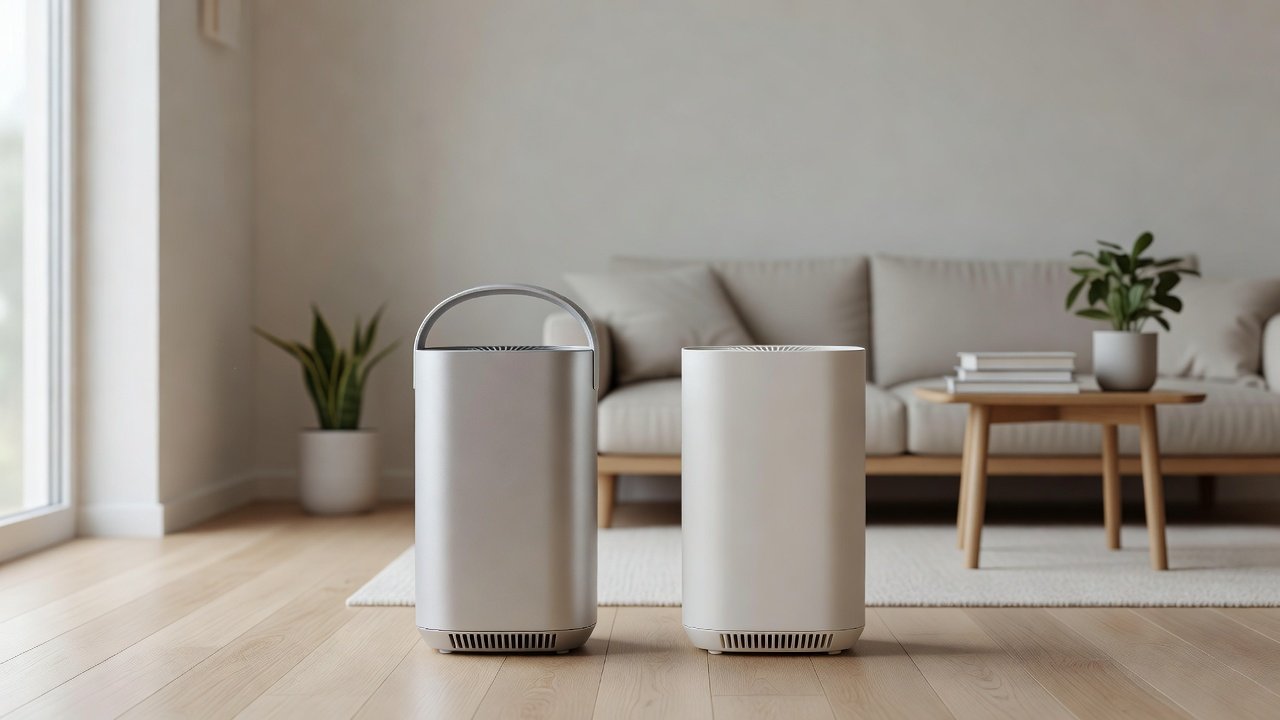
A carry handle looks like a small feature, but on a purifier that you move between rooms it can matter more than a fancy display. A handle makes lifting easier, protects the vents and filter cover from being gripped awkwardly and encourages you to put the unit where it works best. A purifier without a handle can be perfectly fine if it stays in one place or is light enough to carry by the body.
This guide covers when a handle is worth caring about, what to check besides the handle itself and how weight, balance and shape change the experience. We have not tested these products ourselves, we do not list prices and designs vary by model, so check the manufacturer’s page for weight and dimensions.
Handle fits
- Moving between rooms or floors
- Heavier mid-sized and large units
- Households with limited lifting strength
No handle fits
- A fixed spot in one room
- Light, compact units
- Buyers who prefer a clean look
Key Takeaways
- A handle matters most for mid-sized and heavy units you will move between rooms.
- Weight, balance and where you grip the unit matter as much as the handle itself.
- A purifier only cleans the room it is in, so consider a unit per main room.
- Unplug before moving and carry the unit upright, holding the body or handle, not the grille.
- Do not trade CADR and filters for a handle if the unit will stay in one place.
Size Classes and Typical Handling
Compact tabletop purifiers are usually light enough to lift with one hand and often have a small recessed grip or none at all. Mid-sized floor units are heavier and benefit from a molded handle. Tall towers can be awkward to carry by the body and are better off with wheels or a grip near the top. Large console units are rarely meant to be moved often.
When you read the product page, look at the listed weight and a photo from the side. If you cannot tell where you would grip the unit, expect an awkward carry. Reviews often mention how easy or hard it is to move.
Filter Changes and Handles
A handle is useful during filter changes, since you can lift the unit, turn it over if needed and set it down gently. Check how the cover opens: a latch, a twist or a pull panel. A unit that is easy to open is easy to maintain, and a handle adds to that convenience when you need to carry the purifier to a sink or the garage for cleaning the pre-filter.
Keep the manual nearby and note the steps. Do not force a cover that does not open, since you may break a latch.
Safety, Pets and Children
A purifier with a handle is easier to move but also easier for a child to grab. If young children or pets are around, place the unit out of reach and secure the cord. Check for child lock features if the controls are accessible. A top-heavy unit with a handle can be tipped, so check stability.
This article provides general information and is not medical advice. Verify the specifications on the manufacturer’s page, since models change, and confirm that the unit has the CADR, filters and noise levels you need before you consider the handle.
Where to Place a Portable Purifier
Pick a spot with space on all sides, near where you spend time, and not behind furniture. For a bedroom, a few feet from the bed on the side that gets airflow from the room is a good option. For a living area, along a wall near the center of the seating area works well. Because you may move the unit, mark the good spots and leave a gap for the cord. If you move it often, check that your outlets are in convenient places.
Run the unit with doors closed. A portable purifier that moves with you is only as good as the time it has to clean each room. Give it an hour or two before you need the cleaner air, and turn it up while you vacuum or cook.
Final Checklist
Check the weight and the handle design. Confirm the smoke CADR and the rated room size. Check the filter type and replacement cost. Look at noise and display options. Verify the exact model on the manufacturer’s page. Decide whether you need one unit or several. If portability matters, test the carry in your return window and make sure the unit stays stable on the surfaces where you plan to place it.
Air Purifiers to Compare
The table below lists purifiers from our affiliate partner. Compare weight, dimensions, smoke CADR and filter details, and check product photos for handles or carry points.
Quick Comparison
The table summarizes typical differences.
| Factor | With handle | Without handle |
|---|---|---|
| Moving between rooms | Easier | Depends on weight |
| Vent and cover protection | Better | Risk of gripping the grille |
| Look | May add visual bulk | Cleaner lines |
| Stability | Depends on design | Depends on design |
| Typical use | Mid to large units | Compact or fixed units |
What a Handle Actually Changes
A built-in handle gives you a safe grip point away from the intake and outlet. Without one, you may end up gripping the grille, the filter cover or the base, which can loosen parts, bend vents or drop the unit. A handle also helps when you need to carry the purifier up stairs, through doorways or into a car.
Handles do not make a heavy unit light, and a poorly placed handle can make a top-heavy unit awkward. Check the weight, the center of gravity and whether the handle is molded into the body or a flimsy add-on.
Weight and Balance Matter More
Many compact purifiers weigh under ten pounds and are easy to carry without a handle. Mid-sized units can be 10 to 20 pounds, and large units can be heavier still. If you plan to move the unit often, choose a model that is light enough for you to lift comfortably, with a handle placed at the top or side where it balances the weight.
Wheels are another option on some larger units and can make a handle unnecessary. Check that wheels do not roll away on a slope and that they do not leave marks on floors.
Moving a Purifier Safely
Unplug the unit before moving it, let the fan stop and carry it upright. Hold the handle or the body, not the grille or filter cover. Do not tip the purifier on its side unless the manual says it is safe, since dust in the housing can shift. Use both hands for heavier units, and watch the cord so you do not trip.
If you need to carry the purifier on stairs, check its weight first and ask for help if it is heavy. Do not carry it with the filter cover loosely attached, since the cover may fall off.
Does Moving the Unit Hurt Cleaning?
A purifier cleans the room it is in. Moving it from the bedroom to the living room means one room is cleaner while the other is not. For continuous cleaning, assign a unit to each room you use most. Portability suits people who spend the day in one area and the night in another, and who accept that the cleaning happens where the unit is.
If you move the unit regularly, make sure it is in place early enough to clean the room before you need it. Turning it on an hour before bedtime and closing the door helps.
Handle Design Details to Check
Look at whether the handle folds flat or sticks out, whether it is comfortable to hold, and whether it blocks airflow. Top handles can interfere with upward airflow if they are badly placed, and recessed side handles are usually safe. Check the material and the attachment points, since a thin plastic handle can crack under weight.
Alternatives to a Handle
Some units have wheels, carry straps or a lightweight body that makes a handle unnecessary. Others come with a stand or a base that makes them stable but not portable. If you want portability without a handle, check the weight and whether the shape lets you grip the unit securely, and test it in the store or against the return policy.
Who Should Prioritize a Handle
People who share one unit between two rooms, students who move each term, renters and anyone with a larger unit should look for a handle. Those with mobility concerns should check the weight and consider a lighter model or multiple smaller units instead of moving one heavy one. Those who keep a purifier on a shelf or table may not need one, though a handle still helps during filter changes.
How to Choose
- Check the weight and dimensions before buying.
- Look for a handle molded into the body, not a loose strap.
- Make sure intake and outlet stay clear when you carry it.
- Check that the unit sits stably when placed.
- Avoid ozone-generating modes; the EPA advises against ozone-emitting air cleaners.
Do
- Match the unit’s rated coverage to your room first
- Run it consistently, not only when the air feels bad
- Leave space around the unit for airflow
- Replace filters on the maker’s schedule
Don’t
- Do not buy on looks or price alone
- Do not block the intake or exhaust
- Do not skip filter changes
- Do not expect a purifier to fix every source of pollution
Honest Limits
- This guide uses manufacturer information and public guidance from the EPA and AHAM, not our own lab tests.
- Features and room ratings change between model years, so confirm on the listing before you buy.
- A purifier is not a medical device and does not replace medical advice or treatment.
Who Should Skip This
When to See a Professional
Frequently Asked Questions
Do I need a handle on my air purifier?
Only if you plan to move it. For a fixed spot, CADR and filters matter more.
Is it safe to tip a purifier on its side?
Check the manual. Many recommend carrying it upright.
Do wheels replace a handle?
They can, for larger units, but check stability and floor protection.
Should I move a purifier between rooms?
You can, but the room it leaves will be less protected. Consider a unit per room.
What is a good weight for a portable purifier?
It depends on your strength and use. Check the listed weight and whether you can carry it comfortably.
Bottom Line
A handle matters if you will move the purifier regularly and it is heavy enough to need one.
For a fixed spot, spend on CADR and filters instead.
Related reading: sens,fan,bed
Sources: EPA, Guide to Air Cleaners in the Home; AHAM Verifide.