Last updated:
As an Amazon Associate we earn from qualifying purchases. This does not change what we recommend. See our affiliate disclaimer.
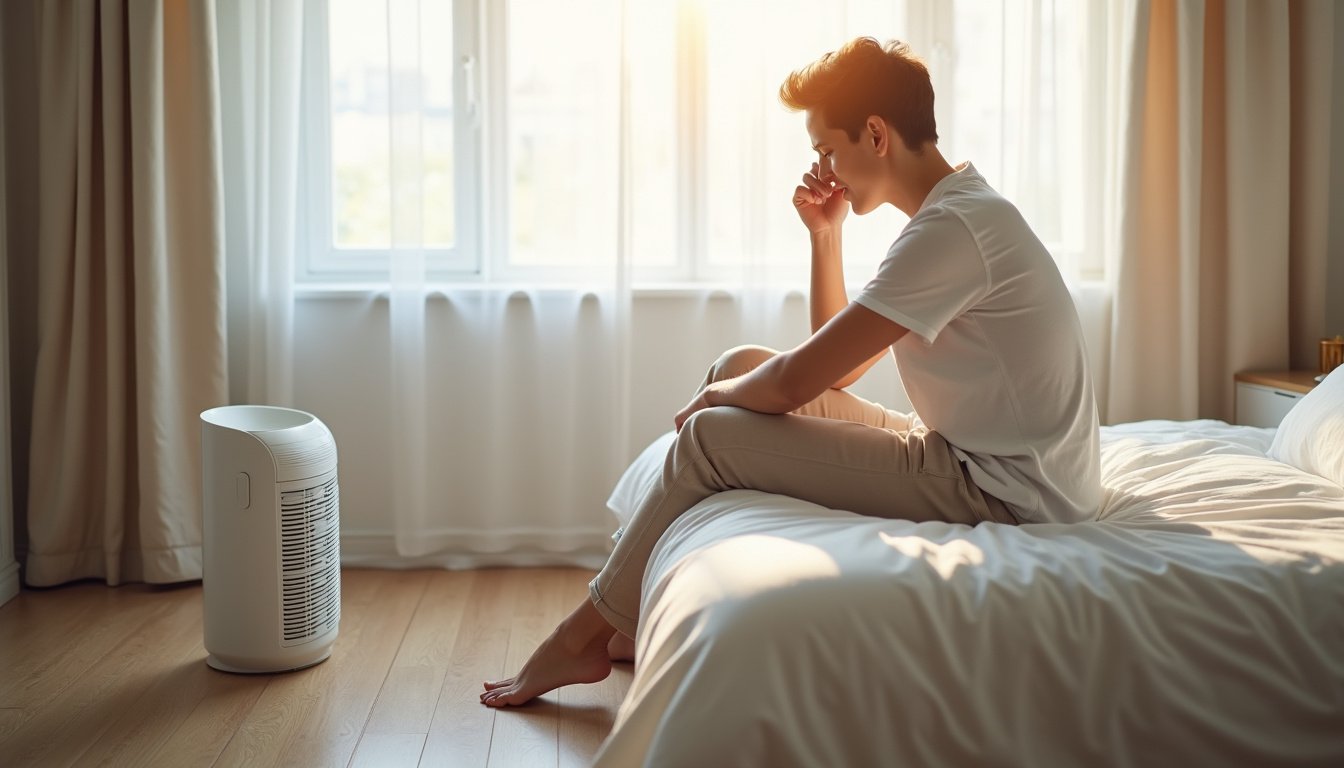
A headache that starts the week a purifier arrives is the kind of coincidence that is hard to dismiss. The machine is new, it runs all night a few feet from your head, and it is the only thing that changed. Whether it is the cause is a fair question with an answer that takes about a week.
A filter-based air purifier with clean filters adds nothing to the air that causes headaches; it removes particles. But purifiers can coincide with headaches through five real routes. Ozone is the first: ionizers, electrostatic, plasma and some UV stages produce it, and ozone is an airway irritant the EPA says has no safe place indoors; headache is among the symptoms it lists. New-unit off-gassing is the second: plastics and adhesives release volatiles for the first days. Noise is the third: a steady hum is restful for many and a trigger for some, and a unit cycling in auto mode is worse than one at a fixed speed. Drafts are the fourth: moving air across the face and neck for eight hours gives some people tension headaches, as a fan does. Dry air is the fifth, not caused by the purifier but coinciding with heating season, when purifiers get bought. Each has a simple test. What the tests cannot do is diagnose anything; a headache that persists after the purifier is ruled out, that is severe, or that comes with other symptoms needs a doctor, and nothing here is medical advice.
In short: switch off any ionizer, air a new unit elsewhere for two days, fix the speed, aim the outlet away, check humidity. If headaches continue with the unit off for a week, it was not the purifier; see a doctor.
The EPA states that ozone, including from ionizing air cleaners, can cause headache, coughing and throat irritation and advises against ozone-generating devices indoors. Maker manuals note initial off-gassing from new units and recommend running them in a ventilated space at first.
This guide is research-based, drawn from EPA guidance on ozone and air cleaners, maker manuals and indoor air quality guidance. We have not tested the units in the table and quote no prices or ratings. Nothing here is medical advice.
The purifier may be involved if
- It has an ionizer, plasma, UV or electrostatic feature switched on
- It is brand new and still smells of plastic
- Its outlet blows across your face or neck at night
- It cycles loudly in auto mode or hums at a pitch that bothers you
Look elsewhere if
- Headaches are unchanged after a week with the unit off
- Heating season has just started and the room is dry
- Caffeine, sleep, screens, posture or a cold changed the same week
- The unit is HEPA-only with fresh filters, aimed away and quiet
Key Takeaways
- Clean HEPA media adds nothing to the air; the filter itself is not a headache cause.
- Ionizers, plasma, electrostatic and some UV stages produce ozone, which the EPA lists as a headache and airway irritant; switch them off.
- New units off-gas plastics and adhesives for a few days; run them in a ventilated room first.
- A steady low hum is fine for most people; cycling in auto mode and high-pitched tones bother some, so fix the speed.
- A draft across the face and neck for eight hours can trigger tension headaches; aim the outlet away.
- Dry heating-season air coincides with purifier purchases and causes headaches on its own; check humidity with a hygrometer.
- A week with the unit off settles the question; a headache that persists, is severe or comes with other symptoms needs a doctor.
Quiet HEPA Purifiers Without Ozone-Producing Features
These widely reviewed units rely on true HEPA and carbon with no ionizer or plasma stage, or one that switches fully off, and run quietly at fixed speeds with outlets that aim upward. Compare the maker-listed CADR against your room and air any new unit before bedroom use.






How This Guide Approaches the Question
We looked at what a purifier adds to or changes about a room, at the features and conditions that are documented headache triggers, and at how to test each in turn without equipment. Product details in the table come from maker specifications.
The tests are a process of elimination. Each takes a few nights, and the last one, a week with the unit off, is the one that tells you whether to keep looking at the purifier or to look at everything else.
What a Purifier Actually Changes in a Room
A filter-based purifier pulls air through HEPA and carbon and pushes it back with fewer particles and the same gases, humidity and temperature. The filter adds nothing. What the appliance as a whole adds is a fan’s noise, a stream of moving air, a little heat, light from its display, and, if it has them, byproducts from ionizing, plasma or UV stages, plus new-appliance volatiles in its first days. Those are the only candidates, and each can be switched off, moved or waited out.
| What the purifier adds or changes | Headache relevance | Test |
|---|---|---|
| Fewer particles | None; a benefit | None needed |
| Ozone from ionizer, plasma, UV or electrostatic stage | Documented irritant; headache listed by EPA | Switch the feature off for a week |
| New-unit volatiles | Smell bothers some people for days | Run in another ventilated room for 48 hours |
| Fan noise, especially cycling | Trigger for some | Fixed low speed instead of auto |
| Moving air across face and neck | Tension and dryness for some | Aim outlet away; move unit |
| Display light | Sleep disruption for some | Sleep mode; display off |
| Slight warmth | Negligible | None |
| Humidity | Unchanged by the purifier | Hygrometer; the room, not the unit |
Suspect One: Ozone
Ozone is the suspect with the clearest paper trail. The EPA lists headache alongside coughing, throat irritation and chest discomfort as symptoms of ozone exposure, and it advises against ozone-generating devices indoors, noting that concentrations low enough to be safe do not clean anything. Purifiers produce ozone through ionizers, electrostatic precipitators, plasma or PlasmaWave-type stages, photocatalytic oxidation and some UV lamps, often marketed as bonus sanitizing features. The sign is a sharp, metallic, chlorine-like smell near the outlet, sometimes described as the air after a thunderstorm. Many units have a separate button for the feature. Switch it off and run the unit as a plain filter for a week; if the headaches and the sharp smell go together, the answer is found, and the feature stays off.
Suspect Two: New-Unit Off-Gassing
Every new appliance off-gasses. Plastics, adhesives, foam gaskets, cable insulation and the binders in a new filter release volatile compounds for the first days, producing the familiar new-electronics smell, and some people get headaches from the smell itself or from the compounds. The levels are low and fall quickly, but a new purifier in a closed bedroom concentrates them near the sleeper. Run a new unit on high in a ventilated room, or near an open window, for one to two days before moving it to the bedroom. The smell fades; if a chemical smell persists for weeks with all optional features off, contact the maker.
- Unbox and run on high in a ventilated room for 24 to 48 hours.
- Remove every scrap of plastic from the filter; a new filter in a sealed bag off-gasses too.
- Do not use scented filters, fragrance cartridges or essential oil features.
- If a strong chemical smell persists beyond a week, contact the maker.
Suspect Three: Noise
A purifier is a fan, and fans make broadband noise that most people find neutral or even restful. Two patterns bother some people: a unit cycling up and down in auto mode, whose changes in sound are more noticeable than a steady level, and a high-pitched whine or motor tone on certain speeds. Sensitivity to noise as a headache trigger is individual. Set the unit to a fixed low or medium speed for a week rather than auto; if the headaches ease, the cycling was the problem. If a particular speed whines, use another, and check that the impeller is clean and the filter is seated, since a loaded filter raises the pitch.
| Sound pattern | Typical experience | Fix |
|---|---|---|
| Steady broadband hum on low | Neutral or restful for most | None |
| Cycling up and down in auto | Noticeable changes; bothers some | Fixed speed |
| High-pitched whine on a speed | Irritating for some | Different speed; clean impeller; fresh filter |
| Rattle or tick | Irritating | Debris or loose panel; fix |
| Beeps and tones | Startling at night | Mute in settings |
Suspects Four and Five: Drafts and Dry Air
A stream of moving air over the face, neck and shoulders for eight hours does two things: it cools and dries the skin and airways, and for some people it tightens neck and shoulder muscles in a way that produces a tension headache by morning. Ceiling fans and air conditioning vents do the same. Aim the purifier’s outlet upward or away from the bed, move it a few feet, and run it on medium rather than high at night. Dry air is the other half: purifiers do not change humidity, but they are often bought when heating season starts and indoor humidity drops below 30 percent, which dries the nasal passages and sinuses and gives many people headaches on its own. A hygrometer costs little; if the room is under 30 percent, a humidifier placed across the room from the purifier at 40 to 50 percent addresses it.
The Week-Off Test
When the targeted tests are inconclusive, the blunt one settles it. Switch the purifier off and unplug it for seven days, changing nothing else. If headaches continue, the purifier was not the cause and attention belongs on everything else that could have changed: sleep, caffeine, screens, posture, a new pillow, heating season, a cold, stress, or a medical cause that needs a doctor. If headaches stop and return when the unit comes back on with all features off and the outlet aimed away, the remaining suspects are noise and off-gassing, and the unit may simply not suit you.
Worked example: headaches began in November with a new bedroom purifier that had an ionizer on by default. Switching the ionizer off ended a faint sharp smell; the headaches eased but did not stop. The hygrometer read 23 percent. A humidifier across the room brought it to 42, and the headaches stopped. The ionizer and the furnace shared the blame; the filter was never involved.
When to See a Doctor
A purifier can be ruled out in a week. A headache that outlasts that, that is severe or sudden, that wakes you, that comes with fever, stiff neck, vision changes, weakness, confusion or vomiting, or that follows a head injury needs medical attention promptly, and a sudden severe headache is an emergency. Headaches that recur without an obvious trigger deserve a doctor’s assessment regardless of any appliance. Nothing here is medical advice, and no test on this page substitutes for one.
| Headache pattern | Likely connection to the purifier | Action |
|---|---|---|
| Morning headache, eases after leaving the room | Draft, dry air or ozone overnight | Aim outlet away; hygrometer; ionizer off |
| Headache only when unit cycles or on one speed | Noise sensitivity | Fixed speed; avoid the whining speed |
| Headache in the first week of a new unit, fading | Off-gassing | Air it out; usually resolves |
| Headache unchanged with unit off for a week | Not the purifier | Other causes; see a doctor if persistent |
| Severe, sudden, or with fever, stiff neck, vision change | Not an appliance question | Medical attention promptly |
How to Test Whether the Purifier Is the Cause in 6 Steps
- Switch off any ionizer, plasma, UV or electrostatic feature and note whether a sharp smell at the outlet disappears.
- If the unit is new, run it on high in a ventilated room for 24 to 48 hours before returning it to the bedroom.
- Set a fixed low or medium speed instead of auto, mute tones and switch the display off.
- Aim the outlet upward or away from the bed and move the unit a few feet from the sleeper.
- Put a hygrometer on the nightstand; if the room reads under 30 percent, add a humidifier across the room at 40 to 50 percent.
- If headaches persist, unplug the unit for seven nights; if they continue, it was not the purifier, and a doctor is the next step.
Do and Do Not
Do
- Switch off ozone-producing features first.
- Air a new unit before bedroom use.
- Use a fixed speed at night.
- Aim the outlet away from the bed.
- Check humidity with a hygrometer.
Do not
- Do not use ozone generators in occupied rooms.
- Do not sleep in the direct outlet stream.
- Do not run a new unit in a closed bedroom on its first night.
- Do not assume dryness is the purifier; it is the season.
- Do not ignore a severe, sudden or persistent headache; see a doctor.
Who Should Skip This
If the unit has an ionizer or plasma feature switched on, skip straight to turning it off; it is the suspect with the clearest evidence, and the test costs nothing.
If headaches continue unchanged through a week with the unit unplugged, skip the purifier entirely; look at sleep, caffeine, screens, posture, humidity and health, and see a doctor if they persist.
Honest Limits
- Headaches have many causes and this guide tests only the purifier’s possible contribution.
- Ozone output from ionizing features differs by model; we measured none.
- Noise and draft sensitivity are individual.
- The week-off test is informal and does not control for weather, illness or other changes.
- Hygrometers vary by a few points.
- Nothing here is medical advice; persistent or severe headaches need a doctor.
When to See a Professional
See a doctor for any headache that persists after the purifier is ruled out, that is severe or sudden, or that comes with fever, stiff neck, vision changes, weakness, confusion or vomiting; a sudden severe headache is an emergency. Nothing on this page is medical advice.
Contact the maker if a unit produces a persistent sharp or chemical smell with all optional features off, and consider a unit certified to the California Air Resources Board ozone limit if anyone in the home is sensitive.
Frequently Asked Questions
Can an air purifier cause headaches?
Not through its filter, which removes particles and adds nothing. But a purifier can contribute through ozone from an ionizer, plasma, UV or electrostatic feature, through new-unit off-gassing, through noise, through a draft across the face at night, or by coinciding with dry heating-season air. Each has a quick test. Nothing here is medical advice.
Why do I get a headache when my air purifier is on?
The likeliest suspects are an ozone-producing feature, which the EPA links to headache and airway irritation; a new unit still off-gassing; a draft across your face and neck; cycling noise in auto mode; or dry air that arrived with heating season.
Does ozone from an air purifier cause headaches?
It can. The EPA lists headache among ozone’s symptoms, along with coughing, throat irritation and chest discomfort, and advises against ozone-generating devices indoors. Ionizers, electrostatic, plasma, photocatalytic and some UV stages produce ozone; a sharp, metallic smell at the outlet is the sign. Switch the feature off and run the unit as a plain filter.
Can the smell of a new air purifier give you a headache?
For some people, yes, for the first days. Plastics, adhesives, gaskets and filter binders off-gas volatiles that produce the new-electronics smell. Run a new unit on high in a ventilated room or by an open window for 24 to 48 hours before using it in a bedroom.
Can the noise from an air purifier trigger headaches?
For noise-sensitive people, especially when the unit cycles up and down in auto mode or whines at a particular speed. A steady low hum is neutral for most. Set a fixed low or medium speed, avoid the speed that whines, mute tones, and check that a loaded filter is not raising the pitch.
Can the airflow from the purifier cause a headache?
A stream of moving air over the face, neck and shoulders for eight hours dries the airways and, for some, tightens neck muscles into a tension headache by morning, as a fan or air conditioning vent does.
Is the purifier drying out the air and causing my headache?
The purifier does not change humidity, but it was probably bought as heating season began, when indoor humidity drops below 30 percent and dry sinuses give many people headaches. A hygrometer on the nightstand tells you; if the room is dry, a humidifier across the room at 40 to 50 percent addresses it.
How do I know if the purifier or something else is causing my headaches?
Make one change a night: ionizer off, outlet aimed away, fixed speed, hygrometer check. If headaches persist, unplug the unit for seven nights. If they continue, it was not the purifier and other changes or a medical cause need attention. If they stop and return with the unit, noise or off-gassing remain.
Should I stop using my air purifier if I get headaches?
Test rather than abandon it. Switch off ozone-producing features, air a new unit, fix the speed, aim the outlet away and check humidity; most headaches that coincide with a purifier resolve at one of those steps.
When should I see a doctor about headaches?
When they persist after the purifier is ruled out, are severe or sudden, wake you from sleep, or come with fever, stiff neck, vision changes, weakness, confusion or vomiting; a sudden severe headache is an emergency. Recurring headaches with no clear trigger deserve assessment regardless of any appliance. Nothing here is medical advice.
Bottom Line
An air purifier does not cause headaches through filtration, and a week of one-change-a-night testing shows whether it is involved at all. The suspect with the clearest evidence is ozone from an ionizer, plasma, UV or electrostatic feature, which the EPA links to headache and advises against indoors; switching it off costs nothing. New-unit off-gassing fades with two days in a ventilated room, cycling noise yields to a fixed speed, a draft to aiming the outlet away, and dry heating-season air to a hygrometer and a humidifier.
If headaches continue through a week with the unit unplugged, the purifier was a bystander, and attention belongs on everything else that changed and, if they persist, on a doctor. Nothing here is medical advice.
Related reading: Can air purifiers cause coughing, Air purifier ozone smell, Do air purifiers dry out the air.