Last updated:
As an Amazon Associate we earn from qualifying purchases. This does not change what we recommend. See our affiliate disclaimer.
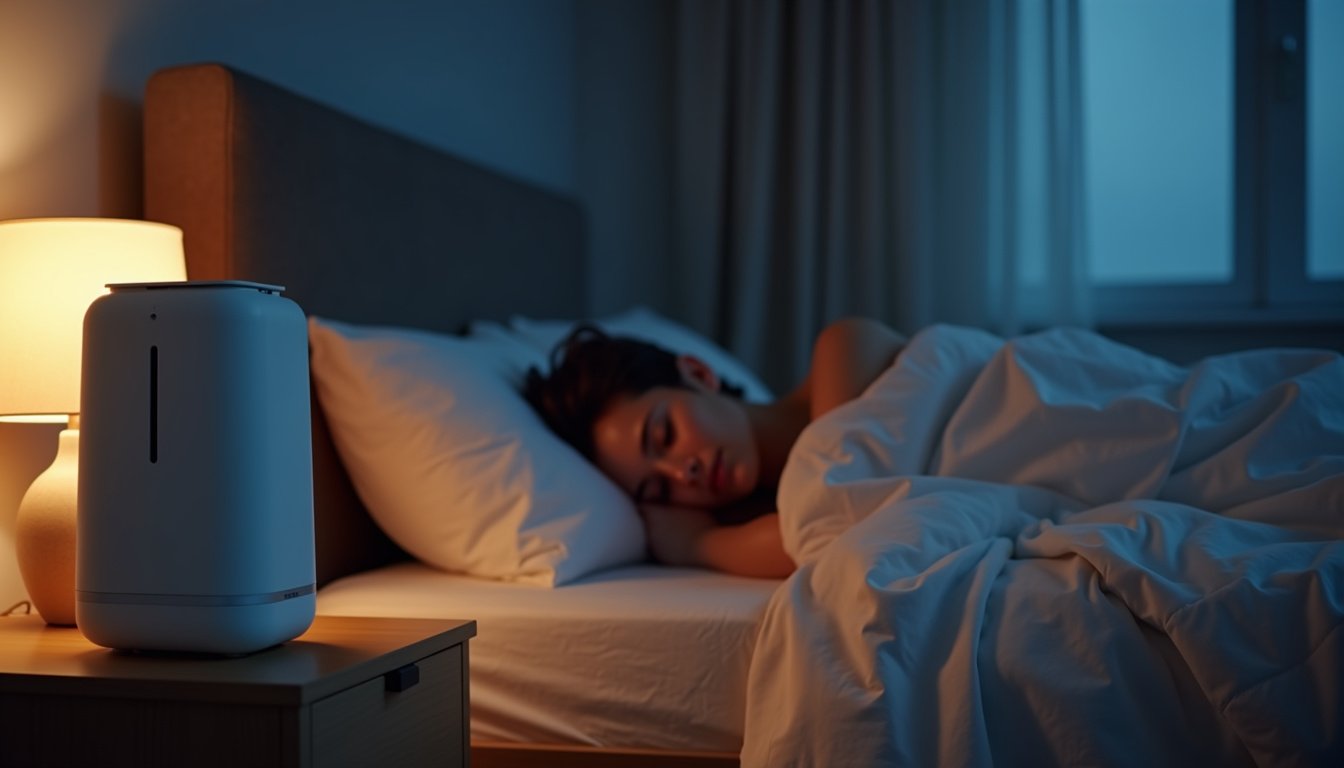
You bought the purifier to breathe easier, switched it on in the bedroom, and within a few nights a cough appeared. The timing is hard to ignore. Either the machine is making the air worse, or something else changed at the same time, and from inside a scratchy throat it is impossible to tell which.
A filter-based air purifier with clean filters adds nothing to the air that would make a person cough. It removes particles. Yet coughing after a new purifier is a common complaint with a handful of real causes. The commonest is the draft: moving air across the face at night dries the throat and triggers coughing, exactly as a fan does, with no change to the air itself. The second is ozone, produced by ionizers, electrostatic stages, UV lamps and plasma features on some units, an airway irritant the EPA cautions against generating indoors. The third is a dirty or damp filter, which can grow mold and shed spores and musty volatiles. The fourth is new-appliance smell from plastics and adhesives in the first days. The fifth is a stirred-up room: a powerful fan placed low can lift settled dust off carpet before the filter catches it. And the sixth is coincidence: dry heating season, a cold, a new detergent or pollen arriving the same week. Each has a quick test. Nothing here is medical advice; a cough that persists, worsens or comes with other symptoms belongs with a doctor.
In short: the filter is not the problem, but the draft, an ionizer, a dirty filter or a stirred-up room might be. Switch off any ionizer, move the unit, check the filter and give it a week.
The EPA notes that HEPA filtration removes particles without adding byproducts, while ozone-generating features can irritate airways and should be avoided indoors. Maker manuals say to replace filters on schedule and never run damp or moldy ones, and allergy organizations describe moving dry air as a common cough trigger.
This guide is research-based, drawn from EPA guidance on air cleaners and ozone, maker manuals and allergy organization material. We have not tested the units in the comparison table and quote no prices or ratings. Nothing here is medical advice.
The purifier may be involved if
- Its outlet blows across your face or bed at night
- It has an ionizer, plasma, UV or electrostatic stage switched on
- The filter is overdue, damp or smells musty
- It is brand new and still has a plastic or chemical smell
Look elsewhere if
- The cough is the same with the unit off for a week
- Heating season has just started and the room is dry
- Someone has a cold or new allergen exposure
- Only one person reacts and the unit is HEPA-only with fresh filters
Key Takeaways
- A HEPA filter with clean media removes particles and adds nothing; it is not itself a cough trigger.
- Moving air across the face dries the throat and causes coughing, the same as a fan; aim the outlet away from the bed.
- Ionizers, plasma, UV and electrostatic features can produce ozone, an airway irritant the EPA says to avoid indoors; switch them off.
- An overdue, damp or musty filter can shed spores and odors; replace it and keep the unit away from humidifier mist.
- New units off-gas plastics and adhesives for a few days; run them in a ventilated room first.
- A strong fan placed low can stir settled dust off carpet; raise it and run on medium.
- Nothing here is medical advice; a cough that persists or worsens belongs with a doctor.
HEPA Purifiers Without Ozone-Producing Features
These widely reviewed units rely on mechanical HEPA and carbon filtration with no ionizer or plasma stage, or allow such features to be switched off, and have outlets that direct air upward rather than across a bed. Compare the maker-listed CADR against your room.






How This Guide Approaches the Question
We looked at what a filter-based purifier does and does not add to room air, at the features that can produce ozone, at how filters themselves become a source, at the physical effect of a draft, and at how to test each possibility in turn. Product details in the table come from maker specifications.
The most useful test is also the simplest: turn the purifier off for a week. If the cough stays, the purifier was a bystander. If it goes and returns when the unit comes back on, work through the causes below.
What the Filter Does and Does Not Do
A true HEPA filter captures 99.97 percent of particles at 0.3 microns and higher proportions of larger and smaller particles. Air passes through fibers and comes out with fewer particles and otherwise unchanged: the same gases, the same humidity, the same temperature. Activated carbon removes some gases and adds none. Neither stage produces anything. If a purifier is making someone cough, the cause is a feature other than the filter, a problem with the filter’s condition, or the moving air itself.
| Purifier component | Adds anything to the air? | Cough relevance |
|---|---|---|
| HEPA filter, clean | No | None |
| Activated carbon, clean | No | None; may remove irritant gases |
| Pre-filter | No | None if clean |
| Fan and outlet | No, but moves air | Draft dries throat and airways |
| Ionizer or electrostatic stage | Can produce ozone | Airway irritant |
| Plasma, PCO or UV lamp | Can produce ozone and byproducts | Airway irritant |
| Dirty or damp filter | Spores, musty volatiles | Possible irritant |
| New plastics and adhesives | Volatiles for a few days | Mild irritant for some |
Cause One: The Draft
The most common reason a new purifier coincides with a cough has nothing to do with filtration. A purifier is a fan, and if its outlet points across a bed, a stream of moving air plays over the sleeper’s face for eight hours. Moving air evaporates moisture from the nose, throat and eyes faster than still air, the lining dries, and a dry throat coughs, especially in heating season when the room is already dry. The same thing happens under a ceiling fan or beside an air conditioning vent. Humidity is unchanged; it is the airflow.
Room humidity matters alongside. The EPA’s target is 30 to 50 percent relative humidity; a hygrometer costs little, and a room under 30 percent dries throats with or without a purifier. A humidifier across the room from the purifier, kept clean and set to hold 40 to 50 percent, addresses it.
Cause Two: Ozone From Ionizers and Similar Features
Many purifiers include an ionizer, an electrostatic precipitator, a plasma or photocatalytic stage or a UV lamp, often as a selling point. Several of these produce ozone as a byproduct, some deliberately. Ozone is a lung irritant; the EPA states that it can cause coughing, throat irritation and chest discomfort at concentrations that do not remove pollutants effectively, and advises against ozone-generating devices indoors. A faint sharp or metallic smell near the outlet, sometimes described as the smell after a thunderstorm, is the sign. People with asthma or sensitive airways notice it first.
| Feature | Ozone? | What to do |
|---|---|---|
| HEPA and carbon only | No | Nothing |
| Ionizer, negative ion, anion | Usually a small amount | Switch off; most units have a separate button |
| Electrostatic precipitator | Some | Switch off or avoid |
| Plasma, PlasmaWave, cold plasma | Some | Switch off |
| Photocatalytic oxidation, PCO | Can produce byproducts | Switch off |
| UV-C lamp | Some lamp types produce ozone | Switch off; check manual |
| Ozone generator | Yes, by design | Do not use indoors |
Switch every such feature off and run the unit as a plain filter for a week. If the cough and the sharp smell go together, that was the cause, and the feature stays off. Units certified to the California Air Resources Board ozone limit are a safer choice for anyone sensitive.
Cause Three: A Dirty or Damp Filter
A filter past its life, or one that has become damp from humidifier mist, bathroom steam or a damp basement, becomes a source instead of a sink. Dust in the media feeds mold and bacteria, the unit develops a musty or sour smell, and the fan pushes spores and microbial volatiles into the room. A yellowed, grey or spotted filter, a musty smell at the outlet, or a filter that has been in place longer than the maker’s interval all point here. Replace the HEPA and carbon, rinse and fully dry the pre-filter, wipe the housing, and keep the unit at least six feet from any humidifier.
Causes Four and Five: New-Unit Smell and Stirred-Up Dust
A new purifier off-gasses from its plastics, adhesives, foam gaskets and the filter’s own binders for the first days, a smell most people notice and some find irritating. Run a new unit on high in a ventilated room, or by an open window, for a day or two before moving it to the bedroom; the smell fades. Separately, a powerful unit placed on a carpet and run on high can lift settled dust, dander and dust mite debris into the air faster than it captures it in the first hours, which stirs rather than cleans. Raise the unit onto a stand, run it on medium, and vacuum the carpet with a HEPA vacuum so there is less to lift.
- Run a new unit in a ventilated room for 24 to 48 hours before bedroom use.
- Place the unit on a stand or table, not directly on carpet, with intake and outlet clear.
- Start on medium; use high only when the room is empty.
- HEPA vacuum carpets and wash bedding in the first week so there is less settled dust to stir.
- Expect a particle meter, if you have one, to spike briefly on first start and then fall.
Cause Six: Coincidence
People buy purifiers when the air bothers them: the start of heating season, a wildfire smoke event, pollen season, a new pet, a renovation or a cold going round. All of these cause coughing on their own, and the purifier arrives at the same moment. Dry heated air in particular dries throats regardless of any appliance. A week with the purifier off is the test; if the cough is unchanged, it was never the purifier, and the fix lies with humidity, allergens or a doctor.
Worked example: a cough began in November with a new bedroom purifier. A week off made no difference; the room’s hygrometer read 24 percent. A humidifier across the room brought it to 42, the cough eased, and the purifier went back on, outlet aimed upward, without trouble. The purifier was a bystander.
Who Notices First
People with asthma, chronic bronchitis, allergic rhinitis or otherwise sensitive airways react to ozone, dry drafts and stirred dust at lower levels than others, and children and older adults can be more sensitive to ozone. For these households a HEPA-and-carbon unit with no ionizing stage, placed with the outlet away from sleepers and the filter changed on schedule, is the sensible configuration. A cough that persists after the purifier has been ruled out, that produces phlegm or blood, that comes with wheeze, fever or breathlessness, or that lasts more than a few weeks, is a reason to see a doctor regardless of any appliance. Nothing here is medical advice.
| Household | Suggested configuration |
|---|---|
| Asthma or sensitive airways | HEPA and carbon only; no ionizer; outlet away from sleeper; CARB-certified unit |
| Children’s bedroom | Upward-discharge unit on a stand; medium at night; filter on schedule |
| Dry winter climate | Hygrometer; humidifier across the room at 40 to 50 percent |
| Allergy season | HEPA vacuuming and washed bedding alongside the purifier |
| Damp home or basement | Purifier away from moisture; check filter monthly for musty smell |
How to Find the Cause in 6 Steps
- Switch the purifier off for a week and note whether the cough changes; if it does not, the purifier is not the cause.
- Switch off any ionizer, plasma, UV or electrostatic feature and sniff for a sharp or metallic smell at the outlet.
- Aim the outlet upward or away from the bed, move the unit a few feet from the sleeper, and run on medium at night.
- Check the filter: replace one that is overdue, damp, spotted or musty, and keep the unit away from humidifier mist.
- Run a brand-new unit in a ventilated room for a day or two, and raise any unit off carpet to avoid stirring dust.
- Check room humidity with a hygrometer; if under 30 percent, add a humidifier across the room, and see a doctor if the cough persists.
Do and Do Not
Do
- Test with the purifier off for a week.
- Switch off ionizing and plasma features.
- Aim the outlet away from the bed.
- Replace overdue or musty filters.
- Keep room humidity at 30 to 50 percent.
Do not
- Do not run an ozone generator indoors.
- Do not run a damp or moldy filter.
- Do not sleep in the direct outlet stream.
- Do not place a strong unit on carpet on high in an occupied room.
- Do not ignore a cough that persists; see a doctor.
Who Should Skip This
If the unit is HEPA and carbon only, the filters are fresh and the outlet points away from the bed, skip the purifier as a suspect and look at humidity, allergens and illness; the filter has nothing to add to the air.
If the unit has an ionizer or plasma feature switched on, skip the other tests first: turn it off, and if the cough and a sharp smell disappear together, you have your answer.
Honest Limits
- Individual sensitivity to ozone, dry air and dust varies widely.
- Ozone output differs by model and setting; we have not measured any unit.
- The one-week test is informal and does not control for weather, illness or allergens.
- Filter condition depends on the home; intervals are maker guidance.
- Hygrometers vary by a few points.
- Nothing here is medical advice; a persistent or worsening cough belongs with a doctor.
When to See a Professional
See a doctor for any cough that lasts more than a few weeks, produces phlegm or blood, or comes with wheeze, fever, chest pain or breathlessness, and for anyone with asthma whose symptoms worsen; air quality is one factor among many, and nothing on this page is medical advice.
Contact the maker if a unit produces a persistent sharp or chemical smell with all optional features off, or if a filter is moldy well before its interval, which may indicate a fault or a damp placement problem.
Frequently Asked Questions
Can air purifiers cause coughing?
Not through filtration; clean HEPA media removes particles and adds nothing. But a purifier can coincide with a cough through its draft drying the throat, through ozone from an ionizer or plasma feature, through a dirty or damp filter shedding spores, or through stirring settled dust. Each has a quick test.
Why did I start coughing after getting an air purifier?
The usual reasons are a draft across your face at night, an ionizing feature producing ozone, a filter that is overdue or damp, new-appliance off-gassing, or coincidence with heating season or a cold. Turn the unit off for a week; if the cough persists, the purifier is a bystander.
Can the air from a purifier dry out my throat?
Yes, if it blows across you. Moving air evaporates moisture from the nose and throat faster than still air, so a stream across a bed dries the lining and triggers coughing, the same as a fan. Room humidity is unchanged.
Do ionizers in air purifiers cause coughing?
They can. Ionizers, electrostatic, plasma, PCO and some UV stages produce ozone, which the EPA identifies as an airway irritant causing coughing and throat irritation, especially for people with asthma. A sharp or metallic smell at the outlet is the sign. Switch the feature off and run the unit as a plain filter.
Can a dirty air purifier filter make me cough?
Yes. A filter past its life or dampened by humidifier mist or steam grows mold and bacteria in trapped dust, and the fan pushes spores and musty volatiles into the room. A musty smell at the outlet or a spotted filter is the sign.
Is the smell from a new air purifier harmful?
New units off-gas from plastics, adhesives, gaskets and filter binders for a few days, which some people find irritating. Run the unit on high in a ventilated room or by an open window for a day or two before using it in a bedroom.
Can an air purifier stir up dust and make things worse?
Briefly. A strong fan on a carpet, run on high, can lift settled dust and dander faster than it captures them in the first hours. Place the unit on a stand, run on medium, and vacuum carpets with a HEPA vacuum so there is less to lift. Particle levels then fall below where they started.
How do I tell if the purifier or something else is causing my cough?
Turn it off for a week. If the cough is unchanged, it is not the purifier: check humidity with a hygrometer, consider allergens and illness, and see a doctor if it persists. If it improves, switch the unit back on with ionizer off, outlet aimed away and a fresh filter.
Should people with asthma avoid air purifiers?
No, but they should avoid ozone-producing features. A HEPA-and-carbon unit with no ionizer, placed with the outlet away from the sleeper and the filter changed on schedule, is the sensible configuration. Anyone whose asthma worsens around a purifier should switch off optional features and talk to their doctor. Nothing here is medical advice.
When should I see a doctor about a cough?
When it lasts more than a few weeks, produces phlegm or blood, or comes with wheeze, fever, chest pain or breathlessness, and whenever asthma symptoms worsen. A purifier can be ruled out in a week; a cough that outlasts that test needs a medical opinion rather than another appliance adjustment. Nothing here is medical advice.
Bottom Line
Air purifiers do not cause coughing through filtration; clean HEPA media takes particles out and puts nothing in. The coughs that arrive with a new purifier come from the draft drying the throat, from ozone made by ionizing and plasma features, from a dirty or damp filter, from new-appliance smell or stirred dust, or from a dry heating season that happened to start the same week.
Each has a test that takes days, not weeks: a week off, then back on with the ionizer off, the outlet aimed away, a fresh filter and a hygrometer on the nightstand. Most coughs resolve at one of those steps. One that does not belongs with a doctor, and nothing here is medical advice.
Related reading: Do air purifiers dry out the air, Air purifier ozone smell, Why does my air purifier smell musty.