Last updated:
Disclosure: As an Amazon Associate we earn from qualifying purchases. This does not change what we recommend. See our affiliate disclaimer.
A 1,000 square foot home or apartment sits in an awkward middle: too big for a single bedroom-size purifier and, in many layouts, just small enough that one strong unit might do. The right answer depends on walls, doors, ceiling height and how you live in the space, not just on the number on the box.
This guide walks through the CADR math for 1,000 square feet, explains when a single large unit is enough and when two mid-size units work better, and covers placement, noise, filters and running costs. Choices come from our affiliate table. Our guidance follows EPA and AHAM information and is not based on our own lab testing.
One large unit works if
- The space is mostly open with few walls
- Ceilings are about 8 feet
- You accept slower cleaning in far corners
Two units work better if
- Bedrooms are behind closed doors
- Ceilings are 9 feet or taller
- You want strong cleaning in two zones
Key Takeaways
- About 650 CADR serves 1,000 square feet with 8 foot ceilings by the two-thirds guideline; taller ceilings need more.
- One large unit suits open plans; two mid-size units suit divided layouts with closed doors.
- Run at medium speed most of the time for quieter operation and lower cost.
- Place units where you spend time and near major sources, with clear airflow.
- A MERV 13 or higher HVAC filter, where supported, adds whole-home filtration while the fan runs.
- Compare filter costs over two years before buying.
- Avoid ozone and ionizer modes, which the EPA advises against.
Top Picks: Air Purifiers for Large Rooms and Open Spaces
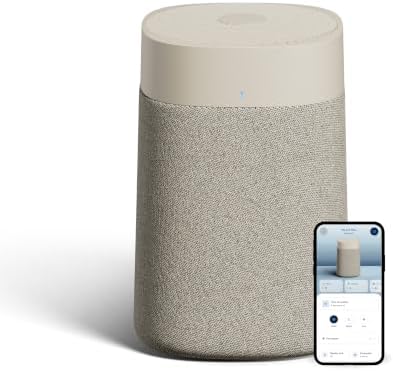
These options come from our affiliate table. Check the listing for the current CADR, filter type and replacement cost.





When Two Units Work Better
In a home with separate rooms, one unit in the living room does little for a bedroom with the door closed. Two mid-size units, one in the main living area and one in the bedroom, put the cleaning where you spend your time. A common split is about 300 to 400 CADR for a living area and 100 to 150 for the bedroom.
Running two smaller units at medium speed is often quieter than one huge unit at high speed, and it gives you redundancy if one needs a filter change.
Open Plans Versus Divided Layouts
Air moves through doorways and hallways, but it moves slowly and unevenly. In divided layouts, treat each important room separately. In open plans, a central unit with clear airflow works best. If a hallway connects bedrooms, keep bedroom doors closed at night if you run a bedroom unit.
Noise at the Output You Need
The CADR you need often means running at medium or high speed. Check noise at medium, not just the lowest setting. A larger fan turning slowly is usually quieter than a smaller fan spinning fast at the same airflow.
Filters and Running Costs
Large units have larger filters, which cost more but often last longer. Add up the cost of filters over two years, including carbon if you need odor control. Electricity use is modest on low and medium and higher on high, so avoid running on high around the clock.
Sources Around the Home
If cooking is your main source, put a unit near the kitchen opening. If pets are the source, put one near their resting area. If outdoor pollen or smoke is the issue, focus on bedrooms and living areas, and keep windows closed.
Pairing With Your HVAC
If you have central air, a MERV 13 or higher filter, where the system supports it, adds whole-home filtration while the fan runs. A purifier adds targeted cleaning when the system is off. Ask an HVAC technician before changing filter grades.
The CADR Math for 1,000 Square Feet
AHAM suggests a CADR of about two-thirds of the floor area for rooms with 8 foot ceilings. For 1,000 square feet, that is about 650. The rule assumes roughly 4.8 air changes per hour, which is a sensible target for particles such as pollen, dust and smoke. If your ceilings are 9 feet, increase the target by about 12 percent, and with 10 foot ceilings by about 25 percent.
Few single consumer units reach 650, which is why many homes use two units. A unit rated 400 to 500 can still make a big difference, particularly if you place it in the room where you spend the most time.
| Ceiling height | Air volume | CADR target |
|---|---|---|
| 8 ft | 8,000 cu ft | About 650 |
| 9 ft | 9,000 cu ft | About 730 |
| 10 ft | 10,000 cu ft | About 810 |
When One Unit Is Enough
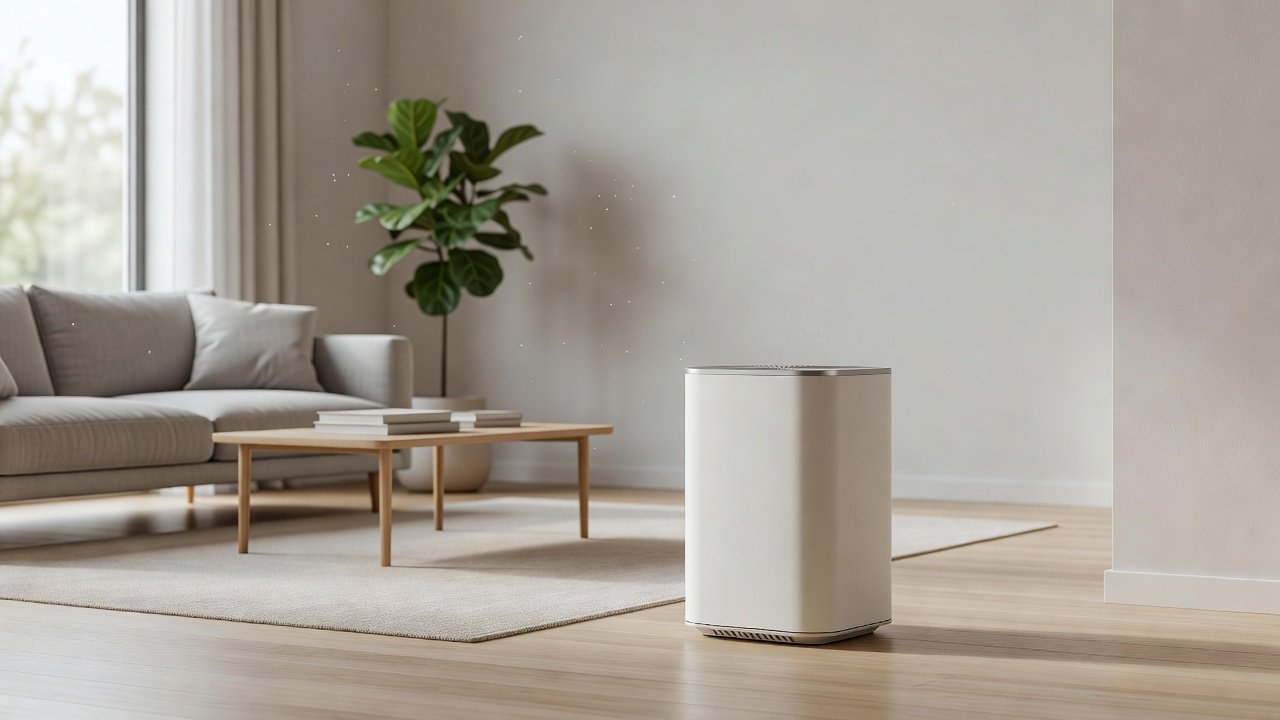
In a studio or open-plan apartment with a single main room and minimal walls, one high-CADR unit placed centrally can serve the whole space. Air moves freely between the kitchen, living and sleeping areas, so the unit sees most of the volume. If you accept that cleaning in the farthest corner will be slower, a single unit in the 450 to 650 range is a practical solution.
Place it away from walls and corners, with a clear path in front of the intake. Avoid putting it behind a sofa or in a nook.
A Worked Example: Three-Bedroom Ranch of 1,000 Square Feet
Imagine a 1,000 square foot ranch with an open living and kitchen area of 400 square feet, a 150 square foot main bedroom, two smaller bedrooms and a hallway. A 300 to 350 CADR unit in the living area handles cooking odors and shared-space dust, and a 100 to 150 CADR unit in the main bedroom runs quietly overnight. If you have a child sleeping in a small bedroom, a third small unit may make sense. This layout costs less than one very large unit and gives better coverage where people actually sleep and relax.
| Zone | Size | Suggested CADR |
|---|---|---|
| Living and kitchen | 400 sq ft | 265 to 350 |
| Main bedroom | 150 sq ft | 100 to 150 |
| Small bedroom | 100 sq ft | 70 to 100 |
Why Rated Coverage Can Mislead
Maker coverage claims for large rooms often rely on a slow rate of air changes, such as one change per hour, which is far less than the 4.8 changes that the AHAM guideline uses. A unit advertised for 1,000 square feet with a CADR of 250 is giving you about one-third of the airflow that the two-thirds rule suggests. Check the CADR behind the claim, and when the CADR is not published, assume the claim is optimistic.
Placement Strategy in a Mid-Size Home
Walk through your home and note where you spend the most time, where pollution enters and where air tends to stagnate. Put the first unit where you spend the most waking hours and the second where you sleep. Leave about a foot of clearance around the unit and avoid corners. If your layout has a long hallway, avoid putting a unit at the dead end, where it only sees a thin slice of the air.
Cooking, Pets and Entryways
Kitchens add fine particles and odors. Run the range hood when cooking and keep a purifier on the living side of the opening. Pets add dander and hair, so place a unit near their bed and use a washable pre-filter. Entryways bring in pollen and outdoor dust, so a doormat and shoe rack at the door reduce what the purifier must handle.
Seasonal Planning
In spring and fall, run units on a higher setting during pollen peaks. In summer, watch for wildfire smoke and run the bedroom unit all night if outdoor air is poor. In winter, when windows stay closed, indoor sources dominate, so keep up with cleaning and filter changes. Replace filters ahead of high seasons and keep a spare set.
Maintenance Schedule
Clean pre-filters every two to four weeks, vacuum the intake grilles, replace HEPA filters on the maker’s schedule and carbon filters when odors return. Mark dates on a calendar, and replace earlier if the unit has run through smoke or heavy dust. A neglected filter reduces airflow, and in a home that needs high CADR, even a modest drop matters.
Costs Over Three Years
Add up purchase prices for the units, filters for three years and electricity. Medium-speed operation keeps power costs modest. A two-unit setup may cost slightly more in filters but gives better coverage. Compare total cost to the benefit of cleaning where you sleep and live.
How to Choose
- Measure the area and ceiling height
- Calculate the CADR target
- Decide between one large unit and two mid-size units
- Check noise at medium speed
- Compare filter cost over two years
- Place with clear airflow
Do
- Match the unit’s rated coverage to your room first
- Run it consistently, not only when the air feels bad
- Leave space around the unit for airflow
- Replace filters on the maker’s schedule
Don’t
- Do not buy on looks or price alone
- Do not block the intake or exhaust
- Do not skip filter changes
- Do not expect a purifier to fix every source of pollution
Honest Limits
- This guide uses manufacturer information and public guidance from the EPA and AHAM, not our own lab tests.
- Features and room ratings change between model years, so confirm on the listing before you buy.
- A purifier is not a medical device and does not replace medical advice or treatment.
Who Should Skip This
Skip small units advertised for 1,000 square feet; check the CADR behind the claim.
Skip ionizer and ozone modes; the EPA advises against ozone-generating devices.
When to See a Professional
If you have asthma or allergies, talk to your doctor about a plan. A purifier supports it but does not replace treatment.
If you suspect mold, gas appliance problems or hidden moisture, get a qualified professional to inspect.
Frequently Asked Questions
What CADR do I need for 1,000 square feet?
About 650 for 8 foot ceilings by the two-thirds guideline, more for taller ceilings.
Can one purifier clean 1,000 square feet?
Only a high-CADR unit in a mostly open space. Many homes work better with two units.
Is it better to buy two smaller units?
Often yes, if rooms are separated by walls and doors.
Will a large purifier be loud?
At high speed, yes. Medium speed is usually quiet enough for living areas.
How often should I change filters?
Follow the maker, usually 6 to 12 months for HEPA and sooner for carbon in kitchens or smoky homes.
Does ceiling height matter?
Yes. Taller ceilings mean more air volume, so you need more CADR.
Do I still need ventilation?
Yes. A purifier recirculates indoor air and does not bring fresh air in.
Where should I place the unit?
In the area where you spend the most time, a few feet from walls, with clear airflow.
Are ionizers good for larger spaces?
Some produce ozone, which the EPA advises against.
How much electricity will it use?
Low and medium speeds use modest power. Compare wattage at the speeds you will run.
Bottom Line
For 1,000 square feet, the right setup depends on walls and doors. Open plans can use one strong unit; divided layouts usually work better with two.
Size by CADR, place for airflow and plan for filters.
Related reading: bed,lw,fan
Sources: EPA, Guide to Air Cleaners in the Home; AHAM Verifide.