Last updated:
Disclosure: As an Amazon Associate we earn from qualifying purchases. This does not change what we recommend. See our affiliate disclaimer.
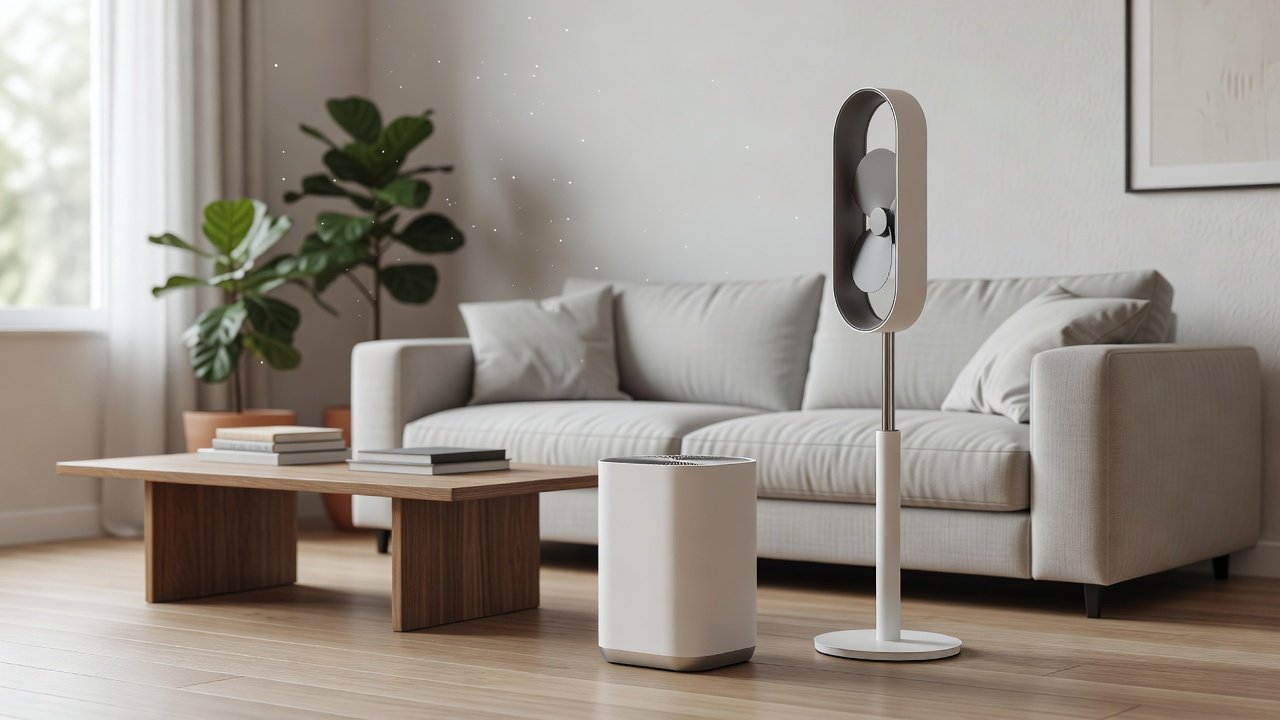
Many people run a fan and an air purifier in the same room, especially in summer or in a bedroom where the air feels stuffy. It is a reasonable idea, but the two devices do different jobs. A fan moves air and cools you; a purifier pulls air through a filter to remove particles. Used well together, a fan can help spread cleaned air around a room. Used badly, it can stir up dust, fight the purifier’s airflow or add noise for no gain.
This guide covers how to combine a separate fan and purifier, how placement matters and when not to bother. It is about using two devices you already own or may buy separately; for all-in-one units see our guide to fan and purifier combos. We have not tested these products ourselves, and models change, so confirm specifications on the product page.
A fan can help when
- The room is large or oddly shaped
- Air feels still in a corner
- You want cooling and cleaning together
Skip the fan when
- It blows straight into the purifier intake
- It stirs up dust you can see
- Noise is already an issue at night
Key Takeaways
- A purifier does not need a fan in a normal room; a fan only helps in large or stagnant spaces.
- Never aim a fan into the purifier intake or outlet, and keep speeds low.
- Size the purifier by smoke CADR first: about two-thirds of floor area at 8 foot ceilings.
- At night, keep both devices on their quietest settings or drop one.
Humidity, Temperature and Comfort
A fan can make a warm room feel more comfortable, but it does not change the temperature or humidity. If the air feels sticky, check the humidity: aim for roughly 30 to 50 percent. Higher humidity encourages dust mites and mold, and a purifier does not remove moisture. A dehumidifier or air conditioner is the right tool for that job, and the fan and purifier can run alongside them.
Do not use a fan to blow humid air onto damp surfaces such as walls with visible mold. If you see mold, follow EPA guidance: small areas under about 10 square feet can often be cleaned by the homeowner with proper precautions, while larger areas call for a professional. A purifier does not fix the cause of mold, which is moisture.
Maintenance for Both Devices
Both devices need regular cleaning. Wipe fan blades and grills monthly, since dust builds up and gets thrown into the room. Vacuum the purifier pre-filter on its schedule, and replace the main filter as the manual directs. Unplug each device before cleaning.
If you notice that the room feels dustier after turning on the fan, clean the fan and the surfaces nearby, then re-test. If airflow from the purifier drops, check the filter. A little regular upkeep keeps both devices quiet and effective, and keeps the combination worth running.
Air Purifiers to Compare
The table below lists purifiers from our affiliate partner. Compare smoke CADR, room size ratings and noise levels, and size the purifier for your room before adding a fan.
Noise and Sleep
Two devices mean two sources of sound. At night, run the purifier on its sleep or low setting and the fan on its lowest speed. If the combination is too noisy, drop one: a purifier running quietly with a window open slightly or a cool room often works as well. Some people like the steady hum as white noise, and the choice is personal.
Avoid blowing a fan directly on your face all night if it dries your eyes or throat. Aim it away from the bed and let the room air circulate.
Fan and Purifier at a Glance
The table below summarizes the comparison.
| Setup | Best for | Watch for |
|---|---|---|
| Purifier only | Small to medium rooms | Stagnant corners in big rooms |
| Purifier plus ceiling fan | Large rooms | Fan speed too high |
| Purifier plus box fan | Short-term cooling | Noise and dust |
| All-in-one combo | Simplicity | Compromise on both jobs |
What Each Device Does
An air purifier draws air through filters and returns cleaned air. Its effectiveness depends on how much air it moves (the CADR) and on how well the room air mixes so that particles reach the unit. A fan does not clean the air at all. It creates a breeze that cools skin by evaporation and circulates air around the room.
Because a room’s air is usually fairly well mixed, a purifier in a normal bedroom does not need help from a fan. In a large, open or cluttered space, however, pockets of stagnant air can form, and a fan can reduce them by keeping air moving.
Placement That Works
If you use both, keep the fan from blowing directly into the purifier intake or outlet, which can disturb its airflow pattern and make it louder. A common approach is to aim the fan at a wall or ceiling, or across the room so it gently circulates air toward the purifier. Place the purifier with at least a foot of clear space on all sides, and avoid putting the fan so close that it pushes air straight into the unit.
Use a low or medium fan speed. A fast fan raises dust from floors and furniture and increases noise, while a gentle breeze is enough to keep air moving. Ceiling fans are a good option because they move air without a direct blast.
How Air Actually Moves in a Room
It helps to picture how air behaves. A purifier creates a flow: it draws air in at one point and pushes it out at another. Warm air rises, cool air sinks, and doors, windows and vents create their own currents. In a typical bedroom of 150 to 250 square feet, these movements mix the air well enough that a correctly sized purifier will see most of the room’s air over the course of an hour.
In a larger room, a room with a lot of furniture or one with an alcove, mixing is less complete, and some corners may see little flow. A fan can help here by creating a gentle circulation that carries air from stagnant areas toward the purifier. The key word is gentle: a fan that is too strong creates turbulence and can scatter settled dust back into the air.
When a Ceiling Fan Is Better Than a Box Fan
A ceiling fan is usually the best partner for a purifier. It moves air in a broad, slow pattern, does not sit at floor level where it kicks up dust and is usually quiet. Run it on low and in the direction suited to the season: counterclockwise in summer for a cooling downdraft, clockwise in winter at low speed to mix warm air.
A box or pedestal fan is more directed and louder. If you use one, place it so it does not point at the purifier, and avoid aiming it across the floor where it will disturb dust. Clean fan blades regularly, since dusty blades can throw particles into the air.
Cooling Without Compromising Clean Air
In hot weather, people often open windows for a breeze, which brings in pollen, outdoor pollution or smoke if conditions are poor. If outdoor air quality is bad, keep windows closed, run the purifier and use a fan inside the room for comfort. If you have air conditioning, run it with the purifier and keep filters in the HVAC system clean; an upgrade to a higher MERV filter, such as MERV 13 where the system supports it, can help.
Remember that a fan cools people, not rooms. Turn it off when you leave. A purifier can run continuously at low speed, but a fan running in an empty room only adds noise and wear.
Common Mistakes
The most common mistake is putting a fan right next to the purifier and aiming it at the intake, which can disturb the unit’s sensors and airflow. Another is running both on high at night, which is loud and rarely necessary. People also sometimes place the purifier in a corner and expect a fan to push the air to it, when moving the purifier to an open location would work better.
A less obvious mistake is assuming that a fan improves filtration. It does not; it only helps distribute air. If your room still smells or feels stuffy, check the purifier size, the filter condition and the room ventilation.
Putting It Together: A Simple Setup
For a bedroom, place the purifier a few feet from the bed with clearance on all sides, run it on a low or sleep setting, and use a ceiling fan on low or a small fan aimed at a wall. For a living room, place the purifier in an open spot, use the ceiling fan on low and keep the doors and windows closed. If one device is enough to keep the room comfortable and clean, skip the other.
Adjust based on how the room feels and sounds. Re-check the filter on schedule, and confirm specifications for any purchase on the product page.
How to Choose
- Size the purifier by smoke CADR first, about two-thirds of floor area at 8 foot ceilings.
- Use a gentle fan speed and do not aim it into the purifier.
- Check the noise level of both devices at night.
- Keep windows and doors closed when running the purifier.
- Avoid ozone generating or ionizer modes; the EPA advises against ozone-emitting air cleaners.
Do
- Match the unit’s rated coverage to your room first
- Run it consistently, not only when the air feels bad
- Leave space around the unit for airflow
- Replace filters on the maker’s schedule
Don’t
- Do not buy on looks or price alone
- Do not block the intake or exhaust
- Do not skip filter changes
- Do not expect a purifier to fix every source of pollution
Honest Limits
- This guide uses manufacturer information and public guidance from the EPA and AHAM, not our own lab tests.
- Features and room ratings change between model years, so confirm on the listing before you buy.
- A purifier is not a medical device and does not replace medical advice or treatment.
Who Should Skip This
When to See a Professional
Treat the fan as an optional helper, and let the purifier do the cleaning.
Frequently Asked Questions
Should I run a fan and a purifier together?
You can, but it is not required. A fan helps in large or stuffy rooms by moving air toward the purifier.
Where should I point the fan?
Away from the purifier intake and outlet, such as at a wall or across the room, at low speed.
Does a fan make a purifier work better?
Only by improving mixing in rooms where air is stagnant. It does not filter anything itself.
Can a fan stir up dust?
Yes, especially a fast one near the floor. Use low speeds and keep blades clean.
Is a ceiling fan better?
Usually, because it moves air broadly and quietly.
Is it too noisy to run both at night?
It can be. Use sleep or low settings or choose one.
Should I open windows for a breeze?
Not when outdoor air quality is poor. Keep windows closed and use a fan inside.
Do I need an all-in-one combo?
No. A separate fan and purifier give you more flexibility.
How do I size the purifier?
Smoke CADR of about two-thirds of floor area at 8 foot ceilings.
Where do I confirm specifications?
On the product page, since models change.
Bottom Line
A fan can help a purifier in large or stuffy rooms, but it is not required and should not blow into the unit.
Size the purifier correctly first, add a gentle fan only if the air feels stagnant, and confirm specifications on the product page.
Related reading: sens,fan,bed
Sources: EPA, Guide to Air Cleaners in the Home; AHAM Verifide.