Last updated:
Disclosure: As an Amazon Associate we earn from qualifying purchases. This does not change what we recommend. See our affiliate disclaimer.
A 1,200 square foot space, whether an apartment, a ranch house or a large open floor plan, is bigger than most single purifiers can handle well. The numbers on the box often assume ideal conditions: closed doors, standard ceilings and no leakage from other rooms. Real homes rarely match.
This guide shows how to size for 1,200 square feet using AHAM and EPA guidance, when one unit is enough, when two units are smarter and how to keep running costs sensible. Choices come from our affiliate table, and nothing here is based on our own lab testing.
One large unit works if
- The space is mostly open with few walls
- Ceilings are about 8 feet
- You accept slower cleaning in far corners
Use two units if
- Rooms are separated by doors and walls
- Ceilings are 9 feet or taller
- You need good coverage in bedrooms and living areas
Key Takeaways
- 1,200 square feet at 8 foot ceilings points to a CADR near 800 by the two-thirds guideline.
- Two mid-size units often cover a home with several rooms better than one large unit.
- Open plans allow a central unit to work across zones; walls and doors reduce it.
- Taller ceilings need more CADR to keep the same air changes.
- Check noise at medium speed and the cost of large replacement filters.
- Ventilation still matters; recirculating air does not bring fresh air in.
- Avoid ozone and ionizer modes, which the EPA advises against.
Placement Plan for a 1,200 Square Foot Home
Walk the space and mark where you spend the most time: the sofa, the dining table, the bed. Place a unit at least one foot from walls, in the area with the most activity. Avoid corners, behind sofas and next to heating vents, which can interfere with intake. If the plan has an open kitchen, put the unit on the living side of the opening so it intercepts drifting odors and particles without catching splatter.
In a two-unit setup, run the bedroom unit at night on a quiet setting and the living area unit during the day. This avoids running both at high speed at once and keeps electricity costs sensible.
Filter Planning and Budget
Write down the filter schedule for each unit on a calendar. HEPA filters typically last 6 to 12 months, carbon filters 3 to 6 months in kitchens, and pre-filters need washing every few weeks. Over three years, a two-unit setup may need six or more filter changes. Add up the costs before you buy, and prefer units whose filters are available from several sellers.
Also consider the electricity cost. A large unit on medium may use 30 to 60 watts, so running it for 12 hours a day costs only a few dollars a month. Running on high around the clock costs several times that.
Handling Seasonal Peaks
Pollen season, wildfire smoke and winter heating all raise indoor particle levels. Plan to run units on higher settings during these periods and check pre-filters more often. After the peak passes, return to a lower setting and replace any filter that looks clogged. Keeping a spare set of filters on hand avoids gaps in protection.
Signs Your Setup Is Not Enough
If dust still builds quickly on surfaces, if the filter looks clogged within weeks or if smells linger long after cooking, your CADR may be too low or the unit may be in a poor position. Try moving it, closing doors or raising the speed. If it still does not help, add a second unit in the problem zone. Check that your HVAC filter is clean, because a clogged system filter can undo much of the benefit.
Also confirm the pre-filter is clean; a dusty pre-filter can cut airflow noticeably. A quick wash can restore performance at no cost.
Top Picks: Air Purifiers for Large Rooms and Open Spaces
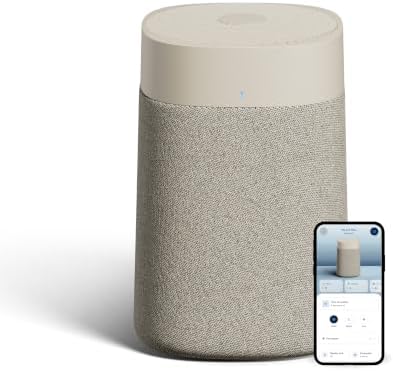
These options come from our affiliate table. Check the listing for the current CADR, filter type and replacement cost.





Open Plans and Air Movement
In open floor plans, air moves between zones, so a purifier in the middle of the space can work across the whole area. Large furniture and partial walls interrupt airflow, so avoid placing the unit in a corner or behind a sofa.
Noise at High Output
Moving 800 cubic feet per minute takes a strong fan. Check the noise at medium speed, not just the minimum. A larger unit running on medium is usually quieter than a small unit working on high.
Filter Size and Cost
Larger units have larger filters, which cost more but often last longer. Compare the price per month, including carbon if you need odor control. Make sure replacement filters are easy to buy before you commit.
The Math for 1,200 Square Feet
AHAM suggests a CADR of about two-thirds of the floor area for 8 foot ceilings. For 1,200 square feet, that is roughly 800. Few single consumer units reach that, which is why many homes use two units or accept lower coverage.
If your ceilings are 9 feet, increase the target by about 12 percent. With 10 foot ceilings, increase it by 25 percent.
| Ceiling height | Volume | CADR target |
|---|---|---|
| 8 ft | 9,600 cu ft | About 800 |
| 9 ft | 10,800 cu ft | About 900 |
| 10 ft | 12,000 cu ft | About 1,000 |
One Unit or Two
A single large unit is simpler, but it can only clean the air it sees. In a house with several closed rooms, a unit in the living area does little for the bedrooms. Two mid-size units placed in the main living area and the main bedroom usually give better coverage than one large unit in the wrong place.
For an apartment with a mostly open plan, a single high-CADR unit can be enough. Place it centrally with clear airflow.
A Worked Example: Two-Bedroom Apartment of 1,200 Square Feet
Picture a 1,200 square foot apartment with an open kitchen and living area of 500 square feet, a 180 square foot primary bedroom and a 120 square foot second bedroom, with the rest taken by hallways and bathrooms. Instead of one 800 CADR unit, place a 350 CADR unit in the living area and a 120 to 150 CADR unit in the primary bedroom. The living area unit handles the shared space, and the bedroom unit runs quietly at night.
| Zone | Size | CADR target | Notes |
|---|---|---|---|
| Open living and kitchen | 500 sq ft | 330 to 400 | Boost while cooking |
| Primary bedroom | 180 sq ft | 120 to 150 | Quiet sleep mode |
| Second bedroom | 120 sq ft | 80 to 100 | Optional |
Why Rated Coverage Can Mislead
Maker coverage claims often assume one air change per hour or a high-speed setting that is too noisy to use. The AHAM two-thirds guideline assumes about 4.8 air changes per hour, which is a better target for allergens and smoke. When a listing says 1,200 square feet, check the CADR behind the claim before you trust it.
Cooking, Pets and Other Sources in a Mid-Size Home
Zoning also helps with sources. Put a unit near the kitchen opening if cooking is the main issue. Put one near the pet area if hair and dander are the main issue. In both cases, the purifier supports ventilation and cleaning rather than replacing them.
HVAC and Purifiers Together
If your home has central air, a MERV 13 or higher filter, where the system supports it, adds baseline filtration to the whole home whenever the fan runs. A portable purifier adds targeted cleaning in the rooms that matter most. The two approaches complement each other.
Running Costs for a Large Space
Large units use more electricity at high speed. Running on medium most of the day and boosting when needed keeps costs sensible. Compare annual filter costs: a cheaper unit with short-lived or expensive filters may cost more over three years than a pricier unit with long-life filters.
How to Choose
- Measure the area, including open sections
- Find the CADR target for your ceiling height
- Decide between one large unit and two mid-size units
- Check noise at medium speed
- Compare filter cost over two years
- Place the units with clear airflow
Do
- Match the unit’s rated coverage to your room first
- Run it consistently, not only when the air feels bad
- Leave space around the unit for airflow
- Replace filters on the maker’s schedule
Don’t
- Do not buy on looks or price alone
- Do not block the intake or exhaust
- Do not skip filter changes
- Do not expect a purifier to fix every source of pollution
Honest Limits
- This guide uses manufacturer information and public guidance from the EPA and AHAM, not our own lab tests.
- Features and room ratings change between model years, so confirm on the listing before you buy.
- A purifier is not a medical device and does not replace medical advice or treatment.
Who Should Skip This
Skip small units advertised for 1,200 square feet; check the CADR behind the claim.
Skip ionizer and ozone modes; the EPA advises against ozone-generating devices.
When to See a Professional
If you have asthma or allergies, talk to your doctor about a plan. A purifier supports it but does not replace treatment.
If you suspect mold, combustion problems or hidden moisture, get a qualified professional to inspect.
Frequently Asked Questions
What CADR do I need for 1,200 square feet?
About 800 for 8 foot ceilings by the two-thirds guideline, more for taller ceilings.
Can one purifier clean 1,200 square feet?
Only a high-CADR unit in a mostly open space. Many homes work better with two units.
Is it better to buy two smaller units?
Often yes, especially with closed rooms. Place them where you spend time.
Will a large purifier be loud?
At high speed, yes. Medium speed is usually quiet enough for living areas.
How often should I change filters in a large unit?
Follow the maker, usually 6 to 12 months for HEPA and sooner for carbon in kitchens or smoky homes.
Does ceiling height matter?
Yes. Taller ceilings mean more air volume, so you need more CADR.
Do I need an air purifier if I have a MERV 13 filter?
A MERV 13 filter helps only when the system runs. A purifier works independently and targets key rooms.
Where should I place the unit?
Centrally in the main living area, a few feet from walls, with clear airflow.
Are ionizers good for large spaces?
Some produce ozone, which the EPA advises against.
How much electricity will it use?
Low speed uses little. High speed uses much more, so run medium most of the time.
Bottom Line
For 1,200 square feet, the honest answer is often two units rather than one oversized machine, unless the space is truly open.
Start with CADR math, then placement, noise and filter costs.
Related reading: bed,lw,fan
Sources: EPA, Guide to Air Cleaners in the Home; AHAM Verifide.