Last updated:
Disclosure: As an Amazon Associate we earn from qualifying purchases. This does not change what we recommend. See our affiliate disclaimer.
A 300 square foot room is about 15 by 20 feet, the size of a large bedroom, a small living room or a home office. It is small enough for a mid-size purifier and large enough that a tiny desktop unit will struggle.
The simple sizing rule from AHAM is that the clean air delivery rate, or CADR, should be about two-thirds of the room area. For 300 square feet, that points to a smoke CADR of roughly 200, assuming standard 8-foot ceilings.
This guide explains how to size a purifier for 300 square feet, what else to check and which models to compare. Recommendations follow AHAM and EPA guidance and manufacturer information, not our own tests.
For 300 sq ft look for
- CADR of about 200 or more
- A maker room rating of at least 300 sq ft
- A quiet low setting
- A true HEPA-type filter
Be careful with
- Units rated for much smaller rooms
- Ratings measured at different air change rates
- Ionizers and ozone devices
- Skipping filter replacement
Key Takeaways
- A 300 square foot room needs a CADR near 200 under AHAM’s two-thirds guideline for standard ceilings.
- Maker room ratings often assume fewer air changes than allergy users want, so check CADR and consider a size up.
- Buy a unit rated above your room and run it on low: quieter and longer filter life.
- Place it with clear space around the intake, not tucked into a corner.
- Carbon matters if odors are the issue; HEPA matters for dust, pollen and dander.
- Compare replacement filter prices; compact units can have pricey filters.
- Avoid ozone and ionizer modes, which the EPA advises against.
Top Picks: Purifiers for a 300 Square Foot Room
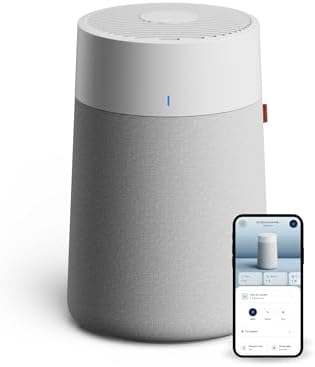
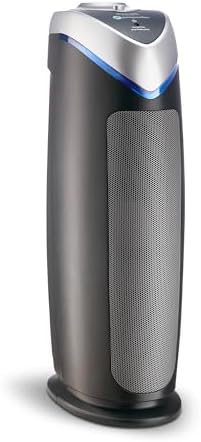
Six compact and mid-size models to compare. Check each listing for CADR or room size and the replacement filter cost.




The Two-Thirds Rule
AHAM\u2019s guideline links a room\u2019s floor area to the CADR needed to clean it at about 4.8 air changes per hour. For a room with 8-foot ceilings, the CADR should be roughly two-thirds of the floor area.
At 300 square feet, that is a CADR near 200. If you have higher ceilings, pets or someone with allergies, aim higher.
Maker Room Ratings vs CADR
Many makers list a room size. These ratings are not always measured the same way. Some assume one air change per hour, others up to five, so a model rated for 300 sq ft by one maker may not match another.
If the listing gives CADR, use that. If it gives only a room size, choose a unit rated above 300 sq ft to leave a margin.
Choosing a Size Class
| Rated room size | Fit for 300 sq ft? | Comment |
|---|---|---|
| Under 200 sq ft | No | Will not keep up |
| 200 to 300 sq ft | Borderline | Needs high speed |
| 300 to 500 sq ft | Good | Can run on a lower, quieter speed |
| 500 sq ft or more | Excellent | Quietest operation at low speed |
Noise
A unit that is rated well above 300 sq ft can run on a low setting and still clean the room, which keeps noise down. Check the maker\u2019s noise listing for the lowest and highest settings.
For a bedroom, check that the lowest setting is quiet and that there is a sleep mode.
Filters and Odors
A true HEPA-type filter handles fine particles. If odors matter, check the carbon layer. In a living room or kitchen-adjacent space, a thicker carbon layer helps.
Compare filter prices and replacement schedules, since filters are the main running cost.
Placement in a 300 Square Foot Room
Put the purifier where air can move freely, a little away from walls, with the intake and exhaust unblocked. A spot near the middle or along a long wall works well.
Avoid putting it behind furniture or in a corner.
One Purifier or Two?
A single suitably sized unit is usually enough for a single 300 sq ft room. If the room is open to another space, consider the combined area and size up.
Running Costs
At low speeds, power use is modest. Filter replacement is the main cost, so check the price and how often the maker advises changing it.
Rooms That Fit 300 Square Feet
Three hundred square feet is a typical large bedroom, a small living room, a studio apartment or a home office. Each use puts different demands on a purifier. A bedroom needs quiet. A studio needs coverage that handles cooking and sleeping in the same space. An office may need steady dust control while you work.
Keep the room’s purpose in mind as you read specs. A unit that is perfect for a bedroom may be too noisy for a studio where it runs all day.
Worked Examples for 300 Square Feet
| Situation | Rough CADR target | Why |
|---|---|---|
| Bedroom, 8 ft ceiling | About 200 | AHAM two-thirds guideline |
| Bedroom, 10 ft ceiling | About 250 | More air volume |
| Studio with cooking | About 250 to 300 | Particles and odor |
| Allergy household | About 250 or more | More air changes per hour |
| Home with a dog or cat | About 250 to 300 | Dander and hair |
If you choose a unit that meets the target on its second-lowest speed, you can usually run on low most of the time. That is the sweet spot for quiet and effective cleaning.
Room Ratings and What They Assume
Makers list room sizes, but the numbers depend on assumptions about air changes per hour. Some state ratings based on one air change per hour, others on more. A rating of 400 square feet can mean very different things in different listings.
CADR is the most useful common measure. If a listing does not give CADR, ask how the room rating was calculated. A conservative approach is to choose a unit with a room rating at least 25 percent above your actual size.
Cooking and Odor Considerations
If your 300 square foot space includes a kitchen, cooking particles and odors travel quickly. A HEPA filter captures cooking particles. A carbon filter helps with some odors. The range hood and open window do more than any purifier, so use them first.
Placement and Airflow in a Mid-Size Room
- Keep at least a foot or two of clear space around the unit
- Avoid putting it in a corner or behind furniture
- Place it where air flows across the room, not against a wall
- Keep doors closed during high-pollen periods
- Put it within a few feet of where you sleep or work if you want the most direct benefit
Maintenance and Filter Life
In a mid-size room, a purifier typically runs for long hours. Check the pre-filter every few weeks, replace HEPA filters on the maker’s schedule and replace carbon filters when odors return. Keep a note on the calendar. A clean filter keeps noise down and performance up.
Two Smaller Units or One Larger?
For a simple rectangle, one unit is usually enough. For a long room or an awkward layout, two compact units on opposite sides can distribute air better. Two units also give a backup if one fails. Add their CADR values and compare total cost, including two sets of filters.
Seasonal Adjustments
During pollen season or smoke events, keep windows closed and run the unit on a higher setting for a while. In winter, closed-up homes accumulate particles, so check filters. In humid summers, keep an eye on moisture, since a purifier does not reduce humidity.
How to Choose
- Measure the room and ceiling height.
- Calculate target CADR using the two-thirds rule.
- Pick a unit rated above 300 sq ft for a margin.
- Check low-setting noise.
- Look for a true HEPA-type filter.
- Compare filter costs.
Do
- Match the unit’s rated coverage to your room first
- Run it consistently, not only when the air feels bad
- Leave space around the unit for airflow
- Replace filters on the maker’s schedule
Don’t
- Do not buy on looks or price alone
- Do not block the intake or exhaust
- Do not skip filter changes
- Do not expect a purifier to fix every source of pollution
Honest Limits
- This guide uses manufacturer information and public guidance from the EPA and AHAM, not our own lab tests.
- Features and room ratings change between model years, so confirm on the listing before you buy.
- A purifier is not a medical device and does not replace medical advice or treatment.
Who Should Skip This
Skip a tiny desktop unit for a full 300 square foot room. It will not move enough air.
Skip any unit with an ozone or ionizer feature you cannot turn off.
When to See a Professional
If you have asthma, severe allergies or breathing symptoms, see a doctor about care. A purifier can reduce airborne particles but is not a treatment.
If you notice mold, strong chemical smells or water damage, address the source and consult a professional if needed.
Frequently Asked Questions
What CADR do I need for a 300 square foot room?
AHAM’s guideline of two-thirds of the floor area gives about 200 for an 8 foot ceiling. Many people choose 250 or more for pets, allergies or taller ceilings so the unit can run on low.
Are maker room ratings reliable?
They depend on assumptions about air changes per hour and vary between brands. CADR is a better common measure. If a listing gives only a room size, choose a unit rated at least 25 percent above your room.
Is a bigger purifier better in a small room?
Often yes, because it can run on low and stay quiet. A very large unit may be overkill and cost more, so aim for a modest margin above your target.
Where should I put a purifier in a 300 square foot room?
With clear space around the intake and outlet, away from corners and walls. In a bedroom, a few feet from the bed works well. In a studio, place it near the main living area.
Do I need carbon for a studio apartment?
If you cook in the same space, carbon helps with some odors. For pure particle control, HEPA matters most. Choose a thicker carbon layer if odors are a major concern.
How often should I replace filters?
Follow the maker’s guidance, often every six to twelve months for HEPA. Check pre-filters every few weeks, and replace carbon when odors return.
Can one purifier handle a bedroom and an open door?
Not as effectively. Open doors let in air from other rooms. For best results, keep the door closed while the purifier runs, or size for the connected space.
Is a sleep mode worth it?
Yes if the purifier is for a bedroom. A sleep mode lowers fan speed and dims lights. Check that the display can be turned off completely.
Are ionizers a good addition?
The EPA advises against ozone-generating devices, and some ionizers create ozone. Choose a filter-based unit and keep ion modes off.
Will a purifier help with pet allergies?
It can reduce airborne dander with a true HEPA filter, but you still need to clean surfaces and groom pets. Talk to your doctor about allergy care.
Bottom Line
For a 300 square foot room, aim for a CADR near 200 or a maker rating above 300 sq ft, a true HEPA-type filter and a quiet low setting.
Oversizing a little gives you quieter operation.
Related reading: bed,port,fan
Sources: EPA, Guide to Air Cleaners in the Home; AHAM Verifide.