Last updated:
Disclosure: As an Amazon Associate we earn from qualifying purchases. This does not change what we recommend. See our affiliate disclaimer.
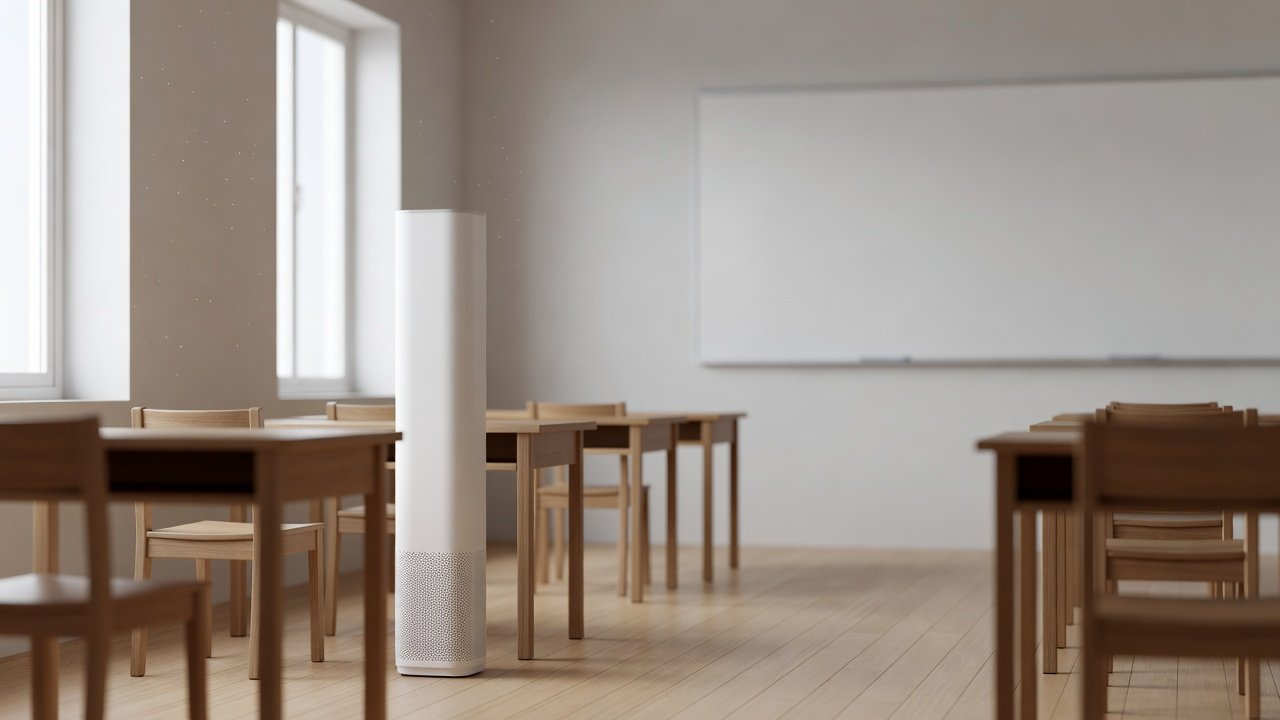
Classrooms are crowded rooms where people breathe the same air for hours. A portable HEPA purifier can add clean air to a classroom, especially alongside ventilation, but noise and size are big practical issues.
The EPA recommends improving ventilation and using filtration in schools. Portable air cleaners can help where ventilation is limited, but they work best as part of a plan, not as a replacement for fresh air.
This guide explains how to size a purifier for a classroom, how to manage noise, where to place units and which larger-room models to compare. It is general information, not medical advice. Check your school\u2019s policies. Recommendations follow EPA and AHAM guidance and manufacturer information, not our own tests.
What helps
- Enough airflow for the room size
- A true HEPA filter
- Quiet low-speed operation
- Placement away from where students sit
Common mistakes
- An undersized unit that must run loud
- Ozone-producing devices
- Blocking airflow with furniture
- Ignoring ventilation
Key Takeaways
- Ventilation and filtration come first in schools; portable HEPA purifiers add clean air but do not replace fresh air.
- A typical classroom is 700 to 1,000 square feet, so AHAM’s two-thirds guideline points to a CADR of roughly 470 to 670 or more.
- Most classrooms need a large unit or several units; two units on low are often quieter than one on high.
- Noise matters for teaching and testing, so buy capacity above the room size and run units on a low setting.
- Avoid ozone-producing devices, as the EPA advises, and check cords, bases and placement for safety.
- Assign someone to check pre-filters and a schedule for filter changes.
- Coordinate with school facilities before buying; electrical load and policy can limit what is allowed.
Top Picks: Larger-Room Purifiers for Classrooms
Six larger-room models. Classrooms often need several units, so check rated room size, noise and filter costs.





Ventilation Comes First
The EPA recommends bringing in fresh outdoor air and improving filtration. Opening windows, using mechanical ventilation properly and upgrading the HVAC filter are the first steps.
Portable air cleaners can add to this, especially in rooms with poor ventilation.
Sizing for a Classroom
A typical classroom may be 700 to 1,000 square feet. AHAM\u2019s guideline suggests a CADR of about two-thirds of the floor area, so roughly 470 to 670 for those sizes, and more with high ceilings.
Most classrooms need more than one unit, or a large unit sized for the room.
Classroom Needs Compared
| Need | What to look for |
|---|---|
| Airflow | CADR matched to the room, with a margin |
| Noise | Quiet enough for teaching and testing |
| Filters | True HEPA with easy replacement |
| Safety | No ozone, stable base, cord management |
| Placement | Clear airflow, away from desks |
| Upkeep | A schedule and someone responsible |
Noise and Learning
Teaching needs a quiet room, so a purifier on high is a problem. Choose units rated above the room so they can run on low, and check the noise ratings at the speed you will use.
Two units on low are often quieter than one on high.
Placement
Place purifiers where air can circulate, away from walls and blocked intakes, and out of high-traffic areas so cords are not a hazard.
Keep them off desks that students will bump.
Safety
- Avoid ozone-producing devices, as the EPA advises
- Secure cords and use stable bases
- Check electrical load with the school facilities team
- Follow school policy on appliances
Filters and Maintenance
Classrooms collect chalk, paper and skin dust, so filters load. Assign a person to check filters and keep a replacement schedule.
Beyond Purifiers
- Open windows when weather allows
- Keep HVAC filters at MERV 13 or higher if the system supports it
- Maintain ventilation systems
- Encourage students to stay home when ill
Why Classrooms Are Different From Homes
A classroom packs 20 to 30 people into a room for hours. People are the main source of the air-quality problem there: they breathe out carbon dioxide and moisture, shed skin and fabric particles, and bring in pollen and dust on clothes and shoes. Add chalk or marker dust, art supplies, cleaning products and sometimes pets, and the air changes a lot over a school day.
That is why the first questions are about ventilation, not appliances. How much outdoor air does the room get? Do windows open? Does the mechanical system run during occupied hours? A purifier works on whatever air is in the room, so it supports good ventilation rather than replacing it.
What the EPA Says About Schools
The EPA publishes guidance for schools on indoor air quality, including ventilation, filtration and maintenance. Its guidance on air cleaners says portable cleaners can reduce particles in a room but are most useful as a supplement to source control and ventilation.
For HVAC systems, the EPA suggests upgrading to the highest-efficiency filter the system can handle, such as MERV 13 or higher, and keeping equipment maintained. If your school building has central air, ask the facilities team what filters are installed and how often they are changed. That one question can matter more than any portable unit.
Sizing Examples for Real Classrooms
| Room size | Rough CADR target | Typical approach |
|---|---|---|
| 600 sq ft | About 400 | One large unit or two mid-size units |
| 800 sq ft | About 530 | One large unit plus margin, or two units |
| 1,000 sq ft | About 670 | Two units placed apart |
| 1,200 sq ft with high ceiling | About 800 or more | Two or three units, check with facilities |
These are rules of thumb based on AHAM’s two-thirds guideline for 8 foot ceilings. Taller ceilings hold more air, and a crowded room produces more particles, so most schools should buy above the minimum. Always check the rated CADR from the maker or AHAM.
Noise: The Limiting Factor in a Teaching Room
Even a small amount of steady noise can make it harder to hear a teacher, especially for younger students and anyone with hearing difficulties. A purifier running on high can be louder than most people expect. That is why capacity matters more than it seems: a large unit running on low moves plenty of air with far less noise than a small unit running flat out.
Check the maker’s noise figures at low and medium speeds, and test the unit in the room before committing to a whole set. If the school has a quiet testing period, avoid placing a unit near the seats or microphone.
Placement and Safety
- Keep intakes and outlets at least a foot or two from walls and furniture
- Place units away from doorways and high-traffic paths
- Secure or cover cords, and avoid extension cords across walkways
- Choose stable, low-center-of-gravity models in rooms with young children
- Keep purifiers off desks that students might bump
Check with the facilities or maintenance team about electrical loads and building rules. Some schools have policies on plug-in appliances.
A Maintenance Plan That Works
Classroom air carries more paper, chalk and fabric fibers than a typical living room, so pre-filters load quickly. Assign a specific person, such as a custodian or teacher, to check pre-filters on a set schedule and to log filter replacements. A clogged filter reduces airflow and increases noise.
Keep a spare filter set on hand and note the model numbers. Filters are often discontinued, and schools buy in batches, so confirm availability before you buy a whole set.
Budget and Procurement
Schools often have limited budgets and special purchasing rules. Compare the total cost of ownership over two or three years, including filters and electricity, not just the unit price. Look for units rated by AHAM and ask for the CADR figures in writing.
Some regions have funding programs for school air quality. Ask the district whether grants or bulk programs exist before buying individually.
Beyond Purifiers: A Classroom Air Checklist
- Open windows when weather and outdoor air quality allow
- Run mechanical ventilation during occupied hours
- Use the best HVAC filter the system can handle
- Keep clutter, carpets and stuffed items clean to limit dust
- Avoid scented products, air fresheners and ozone devices
- Encourage students and staff who are ill to stay home
How to Choose
- Measure the room and calculate CADR.
- Decide how many units you need.
- Check low-speed noise.
- Avoid ozone devices.
- Plan filter replacement and ownership.
- Coordinate with school facilities.
Do
- Match the unit’s rated coverage to your room first
- Run it consistently, not only when the air feels bad
- Leave space around the unit for airflow
- Replace filters on the maker’s schedule
Don’t
- Do not buy on looks or price alone
- Do not block the intake or exhaust
- Do not skip filter changes
- Do not expect a purifier to fix every source of pollution
Honest Limits
- This guide uses manufacturer information and public guidance from the EPA and AHAM, not our own lab tests.
- Features and room ratings change between model years, so confirm on the listing before you buy.
- A purifier is not a medical device and does not replace medical advice or treatment.
Who Should Skip This
Skip a portable purifier as your main plan if the room has no ventilation at all or a broken HVAC system. Fix ventilation first, since a purifier cannot supply fresh air.
Skip very small desktop units for whole classrooms. They are designed for personal space, not a room of 25 people.
When to See a Professional
If students or staff report ongoing symptoms such as headaches, breathing trouble or allergies that seem tied to the room, ask the school’s facilities team and, where appropriate, a qualified indoor air quality professional to evaluate ventilation, moisture and mold.
Follow your school’s health policies and local guidance. This page is general information, not medical or engineering advice.
Frequently Asked Questions
Do air purifiers help in classrooms?
They can help by removing particles from the air, alongside ventilation and good HVAC filtration. They do not replace fresh air, and they work best when sized for the room, running consistently and maintained on a schedule.
How many air purifiers does a classroom need?
It depends on room size and the CADR of the units. A rough target is a CADR near two-thirds of the floor area for standard ceilings. Many classrooms use two units instead of one large unit to cover the space and keep noise lower.
How loud are classroom air purifiers?
Noise varies by model and speed. Most units are noticeably louder on high. Choose capacity above what the room needs so you can run them on low, and check the maker’s noise figures at the speed you plan to use.
What does the EPA recommend for schools?
The EPA recommends bringing in outdoor air, maintaining ventilation, using the best HVAC filter the system can handle and using portable air cleaners as a supplement where needed. It also advises against ozone-generating devices.
Can purifiers replace ventilation in a classroom?
No. Purifiers clean the air already in the room, but they do not supply fresh outdoor air or remove carbon dioxide. Use them with open windows or mechanical ventilation rather than instead of them.
What filter should I look for?
A true HEPA filter is the standard for capturing fine particles, with a pre-filter to catch larger dust and fibers. Check CADR figures and replacement filter availability, and avoid models that rely on ionization or ozone.
Are ionizers or ozone devices okay in schools?
The EPA advises against ozone-producing air cleaners because ozone can irritate the lungs, and some ionizers produce it as a by-product. Filter-based purifiers are the safer choice for a room full of children.
Where should I place purifiers in a classroom?
Place them where air can circulate, away from walls, blocked vents and walkways. Avoid sitting them directly beside students or the teacher’s microphone, and secure cords so they are not a trip hazard.
Who should maintain the purifiers?
Assign a specific person, such as a teacher or custodian, to check pre-filters and keep a replacement log. Without a named owner, filters tend to go unchanged and the unit loses airflow and gets noisier.
What should we do about cords and electrical safety?
Use outlets with enough capacity, avoid long extension cords, and run cords along walls or cover them. Ask the facilities team to check the electrical load, especially if several units are planned for one room.
Bottom Line
In classrooms, ventilation comes first, and portable HEPA purifiers add filtration. Size by CADR, keep noise low and plan maintenance.
Check school policies and avoid ozone devices.
Related reading: bed,fan,sens
Sources: EPA, Guide to Air Cleaners in the Home; AHAM Verifide.