Last updated:
Disclosure: As an Amazon Associate we earn from qualifying purchases. This does not change what we recommend. See our affiliate disclaimer.
ENERGY STAR certification on an air purifier, formally called a room air cleaner, means the unit meets efficiency requirements set by the program. It is a way to compare running costs between models, especially if you plan to run the purifier all day.
Efficiency is only one part of a good purchase. A purifier also needs the right airflow for your room, a true HEPA filter and, in a pet home, a carbon layer and an easy pre-filter.
This guide explains what ENERGY STAR means for air purifiers, how to size one for a large room with pets and which models to compare. Recommendations follow ENERGY STAR, EPA and AHAM guidance and manufacturer information, not our own tests.
ENERGY STAR helps you
- Compare running costs
- Choose an efficient fan and motor
- Lower energy use over years of daily use
It does not tell you
- Whether the unit is the right size
- How good the filters are
- How quiet it is
- How much replacement filters cost
Key Takeaways
- ENERGY STAR certification means a room air cleaner meets program efficiency criteria, not that it is the best at cleaning.
- Certification helps you compare running costs, especially for units you run all day.
- Size, filter quality, noise and filter cost matter more for choosing a purifier than the label alone.
- Check certification on the official ENERGY STAR product finder, since marketing sometimes uses the label loosely.
- Pet homes need a washable pre-filter and carbon in addition to efficiency.
- Smart features can add standby power; check the listing.
- Run on low and keep filters clean to save energy and keep noise down.
Top Picks: Larger-Room Purifiers to Compare
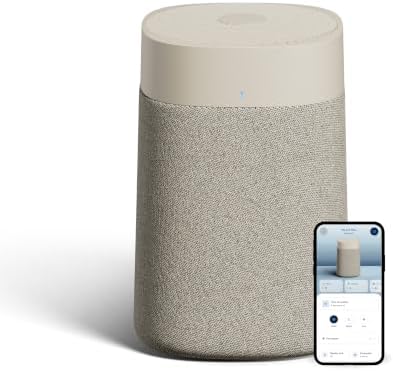
Six models rated for larger rooms. Check each listing and the ENERGY STAR product finder to confirm certification, and compare rated room size and filter costs.





What ENERGY STAR Means for Air Purifiers
ENERGY STAR is a program run by the EPA and the Department of Energy that certifies products that meet efficiency criteria. For room air cleaners, it looks at how much clean air a unit delivers per unit of energy and how much power it uses in standby.
Certified models use less energy for the same airflow than uncertified ones. That adds up if the purifier runs all day.
Energy Use in Context
A purifier on a low setting uses modest power, and many homes will see only a small change on the bill. Efficiency matters more for large units run on high for long periods and for homes with several purifiers.
Filter replacement is usually a larger cost than electricity, so compare both.
What to Check Beyond the Label
| Check | Why it matters |
|---|---|
| Rated room size or CADR | Matches the unit to your space |
| True HEPA filter | Captures fine particles |
| Carbon layer | Helps with pet odors |
| Pre-filter | Handles pet hair |
| Noise on low | You will run it all day |
| Filter cost | Often the larger expense |
Sizing a Large Room
AHAM\u2019s guideline is a CADR of about two-thirds of the floor area for standard ceilings. For a 500 square foot room that is about 330, and for 800 square feet about 530.
Pets and high ceilings argue for sizing up.
Pet Homes
Pet homes need a pre-filter that is easy to clean and a carbon layer to reduce some odor. Hair loads filters quickly, so check them regularly.
Our guides to pets and dog hair explain more.
Standby Power and Smart Features
Smart features can add standby power use, which ENERGY STAR also considers. If you want Wi-Fi, check the certification and standby listing.
Running It Efficiently
- Run on a low or medium setting rather than high
- Use auto mode where available
- Keep filters clean so the fan does not strain
- Place the unit with clear airflow
- Do not run it if the room is empty and no activity is expected for days
Finding Certified Models
The ENERGY STAR product finder lists certified room air cleaners. Check that the model you are considering is listed, since marketing sometimes mentions the label loosely.
What the Program Measures
The ENERGY STAR program for room air cleaners looks at how efficiently a unit moves clean air for the energy it uses and how much power it draws in standby. The goal is to help buyers identify models that use less electricity for similar cleaning performance.
It does not test how well a filter captures particles or how pleasant the unit sounds. Those are separate questions that require CADR, filter type and noise figures.
Estimating Running Costs
You can estimate cost with a simple calculation. Multiply the unit’s wattage by the hours you run it per day, divide by 1,000 to get kilowatt-hours, then multiply by your electricity rate. A unit using 30 watts for 24 hours uses about 0.72 kilowatt-hours per day. At a typical rate, that is a modest cost.
| Example | Power | Hours per day | Daily energy |
|---|---|---|---|
| Low setting | 10 to 20 W | 24 | 0.24 to 0.48 kWh |
| Medium setting | 30 to 50 W | 24 | 0.72 to 1.2 kWh |
| High setting | 60 W or more | 4 | 0.24 kWh or more |
These are illustrative figures. Check the wattage listed by the maker for each speed, and use your own rate to get a cost.
Where Efficiency Matters Most
Efficiency has the largest impact for large units, for homes that run purifiers continuously and for households with more than one unit. For a small purifier used a few hours a week, the difference between certified and uncertified may be small compared with filter costs.
If you are comparing two similar models and one is ENERGY STAR certified, the certified one is a reasonable tie-breaker.
Pets, Odors and Large Rooms
A pet home needs a purifier that handles hair, dander and odors, and runs most of the day. That means a washable pre-filter, a True HEPA filter and a thick carbon layer, together with a good fan. Look for efficient models, but do not give up the filter stack to save a few watts.
Standby Power and Smart Features
Wi-Fi, apps and displays draw power even when the fan is off. ENERGY STAR sets limits on standby power. If you want smart features, look at how much the unit uses in standby and whether you can turn the display off.
How to Verify the Label
- Search the official ENERGY STAR product finder for room air cleaners
- Match the exact model number, not just the brand or series
- Be wary of listings that show a logo without a model match
- Check that the certification is current
- Contact the maker if you cannot find the model
Beyond Efficiency: A Balanced Checklist
Pair the efficiency label with the basics. Check CADR for your room, a True HEPA filter, a washable pre-filter if you have pets, carbon if odors matter, a quiet low setting and affordable filters. A unit that scores well on all of these will serve you better than one that wins only on efficiency.
Habits That Cut Energy Use
- Run on low or medium most of the time
- Use auto mode where it works well
- Keep filters clean so the fan does not strain
- Close doors so the unit cleans a smaller volume
- Use the highest speed only for short bursts after cooking or cleaning
How to Choose
- Measure the room and size by CADR.
- Check for ENERGY STAR on the official finder.
- Require true HEPA and an easy pre-filter.
- Add carbon for pet odors.
- Compare filter costs.
- Check low-setting noise.
Do
- Match the unit’s rated coverage to your room first
- Run it consistently, not only when the air feels bad
- Leave space around the unit for airflow
- Replace filters on the maker’s schedule
Don’t
- Do not buy on looks or price alone
- Do not block the intake or exhaust
- Do not skip filter changes
- Do not expect a purifier to fix every source of pollution
Honest Limits
- This guide uses manufacturer information and public guidance from the EPA and AHAM, not our own lab tests.
- Features and room ratings change between model years, so confirm on the listing before you buy.
- A purifier is not a medical device and does not replace medical advice or treatment.
Who Should Skip This
Skip choosing a purifier on the ENERGY STAR logo alone. A certified unit that is too small for your room will run on high and clean poorly.
Skip units that show the logo but do not match the official product list.
When to See a Professional
If you have asthma or allergies, talk to a doctor about care. Energy efficiency has no bearing on medical benefit.
If a unit overheats, smells of burning or has a damaged cord, stop using it and contact the maker or an electrician.
Frequently Asked Questions
What does ENERGY STAR certified mean for an air purifier?
It means the room air cleaner meets program criteria for efficiency, such as clean air delivered per unit of energy and limits on standby power. It does not rate filter quality or noise.
Do ENERGY STAR purifiers clean better?
Not necessarily. The label is about efficiency. A certified unit may clean well, but you still need to check CADR, filter type and room size.
How much energy does an air purifier use?
It depends on the model and the fan speed. Low settings often use modest power, while high speeds use more. Check the wattage listed for each speed and calculate with your electricity rate.
Are ENERGY STAR purifiers more expensive?
Not always. Some certified units are competitively priced. Compare total cost of ownership, including filters, rather than the purchase price alone.
How can I verify an ENERGY STAR claim?
Use the official product finder and match the exact model number. Be cautious of logos on listings that do not match the finder.
What size purifier do I need for a large room?
AHAM suggests a CADR near two-thirds of the floor area for standard ceilings. Add margin for pets, smoke or tall ceilings so you can run the unit on low.
Does Wi-Fi use more power?
Smart features can add standby power use. ENERGY STAR limits standby consumption, but check the listing and consider turning off displays you do not need.
How can I cut running costs?
Run on low or medium, keep filters clean, use auto mode and close doors. Choose a unit sized above your room so it can run on a lower speed.
Is a certified purifier good for pet homes?
It can be, if it also has a washable pre-filter, True HEPA filter and carbon for odors. Efficiency is a plus, but filters and capacity come first.
Is ENERGY STAR worth prioritising?
As a tie-breaker after size, filter quality, noise and filter cost, yes. It helps if you run the unit all day.
Bottom Line
ENERGY STAR helps you compare running costs, but size, filters and noise matter more. Choose a unit sized for your room and then favour a certified model.
Confirm certification on the official finder.
Related reading: bed,fan,port
Sources: EPA, Guide to Air Cleaners in the Home; AHAM Verifide.