Last updated:
Disclosure: As an Amazon Associate we earn from qualifying purchases. This does not change what we recommend. See our affiliate disclaimer.
A HEPA air purifier can capture mold spores that float in the air, which makes it a useful tool in a home with a mold problem. It cannot remove mold that is growing on a wall, ceiling or other surface, and it does not stop mold from coming back.
Mold grows where there is moisture. The EPA is clear that controlling moisture is the key to controlling mold, so a purifier works best alongside fixing leaks, lowering humidity and cleaning up growth safely.
This guide explains what a HEPA purifier does for mold, how to choose one, how to use it and what else you need to do. The advice follows public guidance from the EPA and AHAM and manufacturer information, not our own lab tests.
A purifier helps with
- Capturing airborne mold spores in the room
- Reducing dust that mold spores travel with
- Keeping the air cleaner while you fix the source
A purifier cannot do
- Remove mold growing on surfaces
- Fix leaks or high humidity
- Replace professional cleanup for large growth
Key Takeaways
- A HEPA purifier captures airborne mold spores but does not stop mold from growing.
- Moisture control is the real fix: leaks, humidity and ventilation.
- Aim for 30 to 50 percent relative humidity, per EPA guidance.
- Do not use ozone generators or UV gadgets as a mold solution.
- Clean small mold patches safely; get professionals for large areas.
- Size a purifier by CADR to the room and place it away from damp surfaces.
- Replace filters on schedule; do not reuse filters exposed to mold.
Choosing a Purifier for Mold-Prone Rooms
Look for True HEPA, a CADR sized to the room and an easy way to replace filters. Avoid units with filters that are difficult to inspect. Keep the purifier in the room you use most, not in the damp corner where mold is growing, because the unit can suck spores into the filter and spread moisture. A washable pre-filter helps keep dust and spores from reaching the HEPA layer quickly.
Do not rely on a purifier to make a visibly moldy room safe to occupy. Treat the cause and the cleanup first.
What to Do After Water Damage
After a leak or flood, drying within 24 to 48 hours is the key to preventing mold. Remove standing water, run fans and a dehumidifier, discard wet porous items that cannot be dried and open windows if outdoor conditions allow. If materials stay wet, get help. A purifier is a supporting tool once drying is underway.
Photograph the damage and contact your insurer or landlord if the leak is not your doing.
Everyday Habits That Keep Mold Away
- Run the bathroom and kitchen exhaust fans
- Fix leaks quickly
- Keep furniture slightly away from exterior walls
- Dry wet towels and clothes promptly
- Clean visible dampness and mildew on surfaces
- Check humidity with a hygrometer
Top Picks: Larger-Room HEPA Air Purifiers
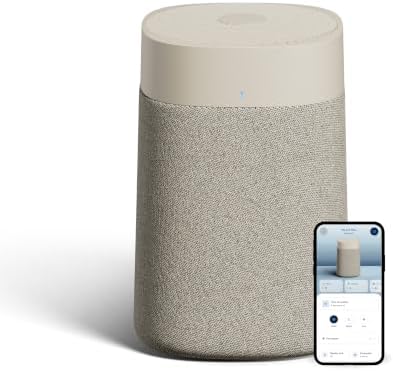
Six models rated for larger rooms. Confirm the filter type, the maker\u2019s rated room size and the replacement filter cost on each listing.





Mold, Spores and Air Quality
Mold releases tiny spores that travel through the air. Breathing spores can irritate the nose, throat and lungs and can trigger symptoms in people who are sensitive to them.
Mold spores are among the larger kinds of airborne particles, which is one reason a true HEPA filter can capture them well.
What a HEPA Purifier Does and Does Not Do
A true HEPA filter captures very small particles, including mold spores, as air passes through it. The purifier cleans the air in the room where it runs.
It does not touch mold that is already growing on surfaces, and it does not change the moisture that lets mold grow. If the cause remains, spores keep coming.
Fix the Moisture First
The EPA advises controlling moisture to control mold. Fix leaks quickly, dry wet materials within a day or two, use exhaust fans in bathrooms and kitchens, and keep indoor humidity within the range recommended by the EPA.
A dehumidifier can help in damp spaces. Check the humidity with an inexpensive hygrometer rather than guessing.
Choosing a Purifier for Mold Spores
| Feature | Why it matters | What to look for |
|---|---|---|
| True HEPA filter | Captures fine particles including spores | Check the filter type on the listing |
| Airflow and room size | Cleans the room quickly enough | Rated for at least your room size |
| Carbon layer | Helps with musty odor | Substantial carbon, with limits |
| Noise | You run it for many hours | Quiet low setting |
| Filter cost | Filters load up in a spore-heavy room | Affordable and easy to find |
Sizing and Placement
Match the purifier to the room size the maker lists. For a larger or damp room, choose a unit rated for more than the room so it can run at a moderate speed.
Place it where air can flow in and out. Do not place a purifier in a spot that is itself damp, and keep it out of direct water, such as in a bathroom with splashing.
Do Not Use Ozone or UV Gimmicks
The EPA advises against ozone generators sold as air cleaners, because ozone is a lung irritant and does not remove mold effectively at safe levels. Some purifiers add UV lights, but check what the maker claims and what independent guidance says.
A plain true HEPA filter remains the most reliable choice for catching spores.
Cleaning Up Mold Safely
- Wear protective gear if you clean small areas yourself
- Clean hard surfaces with detergent and water, and dry them fully
- Throw away porous materials that stay moldy, such as ceiling tiles or carpet
- Follow EPA guidance, and call a professional for large areas
Filter Care and Noise
A purifier that runs in a mold-affected room collects spores, so check the filter regularly and replace it according to the maker\u2019s guidance. Do not wash or reuse a HEPA filter unless the maker says you can.
Choose a model with a quiet setting if you plan to run it overnight.
A Worked Example: Damp Bedroom With Window Condensation
A 150 square foot bedroom with condensation on cold windows has a moisture problem. A purifier with a CADR near 100 can help with particles, but it will not stop the damp. The first steps are to run a dehumidifier, seal leaks, open windows briefly when outdoor conditions are dry and keep furniture a few inches from exterior walls so air can circulate.
| Sign | Likely cause | First action |
|---|---|---|
| Window condensation | High indoor humidity | Dehumidifier, ventilation |
| Musty smell | Hidden moisture | Check for leaks |
| Dark spots on wall | Mold growth | Clean and fix moisture |
| Peeling paint | Persistent damp | Investigate source |
How Spores Move
Mold releases spores into the air, and they settle on surfaces. They are small enough to be captured by HEPA filters, but a purifier cannot reach spores on walls and fabric. That is why cleaning and moisture control are central.
Safe Cleanup of Small Patches
- Wear gloves, a mask rated for the task and eye protection
- Ventilate the area
- Use detergent and water on hard surfaces; follow the EPA’s guidance for small areas
- Never mix bleach with other cleaning products
- Dry the area thoroughly
- Discard porous materials such as ceiling tiles if they are affected
The EPA suggests that areas larger than about 10 square feet may call for professional help.
Why UV and Ozone Are Not the Answer
Some devices claim to kill mold with UV light or ozone. Evidence of effectiveness in homes is limited, and the EPA advises against ozone generators because ozone can irritate the lungs. A filter-based unit with moisture control is the safer path.
Monitoring Humidity
A hygrometer lets you check humidity and track patterns. Keep readings between 30 and 50 percent. If you see a rise after showers or cooking, ventilate and use fans. Persistent readings above 60 percent call for a dehumidifier or a deeper moisture fix.
How to Choose
- Find and fix the moisture source first.
- Measure the room and choose a unit rated for at least that area.
- Require a true HEPA filter and avoid ozone-producing devices.
- Add a carbon layer if there is a musty smell.
- Check the lowest setting noise for overnight use.
- Plan for filter replacement in a spore-heavy room.
Do
- Match the unit’s rated coverage to your room first
- Run it consistently, not only when the air feels bad
- Leave space around the unit for airflow
- Replace filters on the maker’s schedule
Don’t
- Do not buy on looks or price alone
- Do not block the intake or exhaust
- Do not skip filter changes
- Do not expect a purifier to fix every source of pollution
Honest Limits
- This guide uses manufacturer information and public guidance from the EPA and AHAM, not our own lab tests.
- Features and room ratings change between model years, so confirm on the listing before you buy.
- A purifier is not a medical device and does not replace medical advice or treatment.
Who Should Skip This
Skip purifiers as your only mold response; they do not stop growth.
Skip ozone generators and UV gadgets as mold treatments.
When to See a Professional
For mold over about 10 square feet, repeated leaks or hidden mold, consult a qualified professional.
If mold seems to affect your health, talk to your doctor.
Frequently Asked Questions
Does a HEPA purifier remove mold?
It can capture airborne spores, but it does not remove mold from surfaces or stop growth.
What is the best way to prevent mold?
Control moisture: fix leaks, ventilate, keep humidity between 30 and 50 percent and dry wet items quickly.
Can I use bleach on mold?
Detergent and water usually work on hard surfaces. If you use bleach, never mix it with other products. Follow safety guidance.
When should I call a professional?
For large areas, hidden mold, recurring leaks or if you cannot find the source.
Are UV purifiers effective against mold?
Evidence in homes is limited. Moisture control and cleaning are more reliable.
Is ozone safe for killing mold?
The EPA advises against ozone generators.
What humidity is best?
The EPA suggests 30 to 50 percent relative humidity.
Where should I put the purifier?
Away from damp walls and floors, with clearance for airflow.
How often should I change filters?
Follow the maker’s schedule and replace sooner if filters were exposed to mold or heavy dust.
Does a purifier help with musty smell?
A carbon layer may reduce some musty odors, but the source must be fixed.
Bottom Line
A HEPA purifier is a helpful part of a mold plan, but moisture control is the real fix. Use the purifier to clean the air while you repair leaks, dry the space and clean up growth.
Choose a true HEPA unit sized for your room, skip ozone devices and follow EPA guidance for cleanup.
Related reading: bed,sens,port
Sources: EPA, Guide to Air Cleaners in the Home; AHAM Verifide.