Last updated:
As an Amazon Associate we earn from qualifying purchases. This does not change what we recommend. See our affiliate disclaimer.
You switch the purifier on and the room smells musty, like a damp basement or old towels. It is an unsettling thing to smell from a machine meant to clean the air, and the first thought is that the unit is growing mold. Sometimes it is. More often the cause is simpler and fixable in an afternoon.
A moldy smell from an air purifier has a short list of explanations. The filter may have taken on moisture and started to smell. The room may be humid enough, above about 60 percent, for damp odors to build. A model with a water tank, such as a combination humidifier, may have stale water or a slimy tank. The unit may have been stored in a damp place. Or the purifier is simply moving a musty smell that already exists in the room, from a damp wall, a leak or wet laundry. Each has a different fix, from a replacement filter to a dehumidifier to cleaning the tank. A purifier can capture some mold spores on its HEPA filter, but it does not remove the damp that grows mold, and a smell is never a measurement of how much mold is present. Nothing here is medical advice.
In short: check the filter and any water tank, measure the humidity, move the unit to see whether the smell follows, and fix the damp at its source.
This guide is research-based, drawn from EPA mold and indoor air guidance, maker documentation and AHAM standards. We have not tested the units in the table and quote no prices or ratings. Nothing here is medical advice.
Likely the unit if
- The smell follows the unit to another room
- The filter is damp, discolored or overdue
- There is a water tank with residue
- The unit was stored somewhere damp
Likely the room if
- The smell stays when the unit moves
- Humidity reads above 60 percent
- There is a leak, stain or damp wall
- Laundry dries indoors
Key Takeaways
- A damp or overdue filter is the commonest unit-side cause of a musty smell; replace it.
- Never wash a HEPA filter; water collapses its fibers and encourages damp.
- Keep indoor humidity between 30 and 50 percent to discourage mold and mildew.
- A combination humidifier’s tank needs regular emptying, cleaning and drying.
- Move the unit to another room to learn whether the smell is the unit’s or the room’s.
- A purifier cannot remove the damp that grows mold; fix leaks and moisture at the source.
- A smell is not a measurement; the EPA advises finding and fixing the moisture rather than testing.
Purifiers With Accessible Filters and No Water Tank
These widely reviewed units use true HEPA with carbon, publish AHAM-verified CADR and have accessible filters without water tanks, which keeps damp out of the machine. Compare the maker-listed CADR against your room before choosing.


How This Guide Approaches the Question
We looked at why a running purifier can smell musty, at how to tell the unit from the room, and at the fixes in order of cost. Product details in the table come from maker specifications.
The question is whether the smell is made by the purifier or merely carried by it.
The Unit or the Room?
Take the purifier to a different, drier room, run it for twenty minutes, and smell the outlet. If the musty smell goes with it, the unit or its filter is the source. If it stays behind, the source is in the first room, and the cure is drying and cleaning there, not a new filter. This one test saves most of the guessing.
| Observation | Likely source | Next step |
|---|---|---|
| Smell follows the unit | Filter or tank | Inspect and replace the filter; clean the tank |
| Smell stays in the first room | Room damp or mold | Find the moisture; fix leaks; ventilate |
| Smell only when the unit starts | Damp filter | Replace; dry the compartment |
| Smell stronger on humid days | Humidity in the unit or room | Dehumidify; check the filter |
| Smell began after storage | Damp storage | Air out; replace the filter if damp |
| Smell with a combo humidifier | Stale tank water | Empty, clean, dry the tank |
The Filter
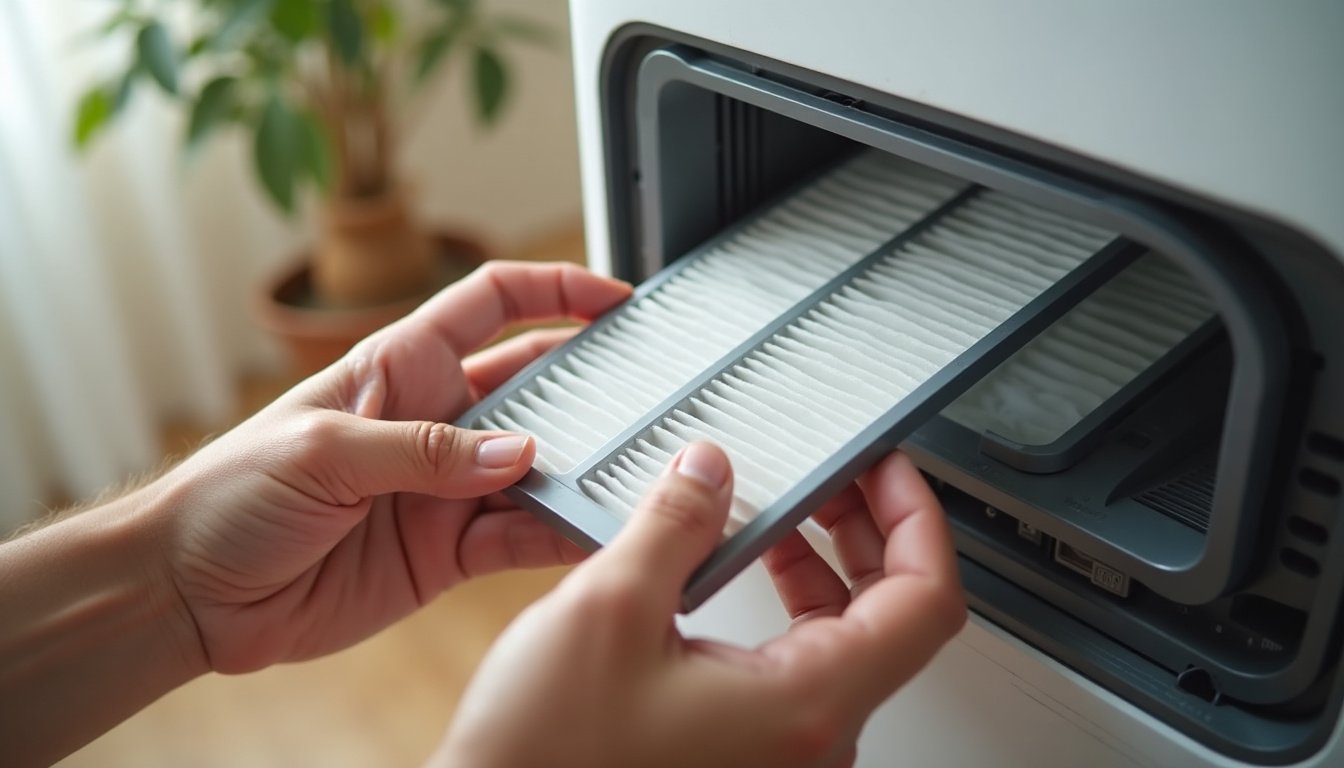
Filters can take on moisture from humid air, from being stored in a damp place, or from a spill, and a damp filter can smell musty. An overdue filter loaded with dust and organic matter can do the same in a humid room. Remove the filter and smell it. A damp, discolored or musty filter should be replaced. A carbon stage that is saturated can also release smells. Do not wash a true HEPA, because water collapses the fibers and can encourage more damp.
Humidity and Water Tanks
The EPA advises keeping indoor humidity below about 60 percent, and 30 to 50 percent is the usual target. Above that, damp odors build and mold and mildew grow on surfaces. A combination unit with a humidifier has an extra place for trouble: a tank with stale water develops slime and a musty smell. Empty it daily when in use, clean it on the maker’s schedule, and dry it fully before storing.
- Buy a hygrometer and check humidity in the room.
- Use a dehumidifier or ventilation if humidity stays above 50 percent.
- Empty, clean and dry any water tank.
- Do not run a humidifier alongside a purifier in a small damp room.
- Store the unit dry, with filters in place or in a sealed bag.
| Humidity reading | What it means | Action |
|---|---|---|
| Below 30 percent | Dry air; static is likely | Humidify gently if needed |
| 30 to 50 percent | Target range | Keep it here |
| 50 to 60 percent | Damp odors may build | Ventilate; consider a dehumidifier |
| Above 60 percent | Mold and mildew encouraged | Dehumidify; find the moisture |
The Room Itself
If the smell stays in the room, look for the moisture. Leaks under sinks, damp window sills, wet laundry, bathrooms without a fan, a wet basement or a damp carpet can all smell musty. The EPA’s guidance is to find and fix the moisture problem, clean or remove small areas of mold, and dry wet materials within a day or two. A purifier helps with airborne spores but cannot stop the growth.
Worked example: a unit with a new filter smells musty in a bedroom but not in the hall. Behind a wardrobe on an outside wall, the wall is damp and speckled. A dehumidifier, ventilation and cleaning the wall remove the smell, and the purifier was never the cause.
| Source | Where to look | Fix |
|---|---|---|
| Leaks | Under sinks, around windows, roofs | Repair the leak; dry the area |
| Condensation | Cold walls and windows | Ventilate; dehumidify; insulate |
| Wet laundry | Drying racks, closets | Dry outdoors or with a vent |
| Bathrooms | Ceilings, grout, curtains | Use the fan; wipe surfaces |
| Basements | Walls, floors, stored boxes | Dehumidify; fix drainage |
| Damp carpets | Under furniture, near leaks | Dry quickly; replace if soaked |
Is It Dangerous, and Should I Test?
A musty smell means damp and probably some mold or mildew, but it does not tell you how much, and the EPA does not recommend routine mold sampling; it advises finding and fixing the moisture. Small areas can be cleaned with detergent and water. Large areas, more than about ten square feet, or any that follow flooding or sewage, call for a professional. If anyone in the home has a health concern linked to damp or mold, ask a doctor. Nothing here is medical advice.
How to Fix a Moldy Smell From Your Air Purifier in 6 Steps
- Move the unit to a drier room and smell the outlet after twenty minutes to learn whether the smell is the unit’s or the room’s.
- Open the unit and inspect the filter; replace it if it is damp, discolored or overdue, and never wash a true HEPA.
- Empty, clean and fully dry any water tank, and keep it dry when not in use.
- Measure humidity with a hygrometer and bring it to 30 to 50 percent with ventilation or a dehumidifier.
- Find and fix the moisture: leaks, condensation, wet laundry, damp walls.
- Call a professional for large areas of mold, flooding or sewage, and the maker for a persistent smell with a new filter.
Do and Do Not
Do
- Replace damp or overdue filters.
- Keep humidity at 30 to 50 percent.
- Clean and dry water tanks.
- Move the unit to test the source.
- Fix the moisture source.
Do not
- Do not wash a HEPA filter.
- Do not use compressed air on the filters.
- Do not run a humidifier beside the purifier in a damp room.
- Do not store the unit in a damp place.
- Do not rely on the purifier to stop mold growth.
Who Should Skip This
If the smell stays in the first room when you move the unit, skip the filter checks and go straight to the room’s moisture.
If the unit is brand new and smells of plastic rather than damp, skip the mold advice and run it near a window for a few days.
Honest Limits
- Smell cannot tell you how much mold is present.
- EPA guidance does not recommend routine mold sampling.
- Filter and tank advice varies by model; the manual overrides this guide.
- We did not test any unit.
- Nothing here is medical advice.
When to See a Professional
Call a professional for mold covering more than about ten square feet, after flooding or sewage, or when the source of damp cannot be found.
Contact the maker if a new filter and a dry room do not remove the smell, or if the unit smells hot or burnt.
Frequently Asked Questions
Why does my air purifier smell moldy?
Common causes are a damp or overdue filter, high room humidity, a combination humidifier with a stale tank, a unit stored somewhere damp, or a musty room the purifier is simply moving. Move the unit to a drier room to learn whether the smell follows it.
Can an air purifier grow mold?
A damp filter or a water tank can develop musty smells and, if kept wet, mold or mildew. A dry mechanical purifier in a room kept at 30 to 50 percent humidity rarely does. Replace damp filters and keep tanks cleaned and dried.
Should I wash the filter to remove the musty smell?
Not a HEPA. Water collapses its fibers and can leave it damp, which makes things worse. Replace it. Only a pre-filter marked washable can be rinsed, and it must be completely dry before refitting. Carbon cannot be cleaned and should be replaced.
What humidity should I keep to avoid mold?
The EPA advises keeping indoor humidity below about 60 percent, and 30 to 50 percent is the usual target. Use a hygrometer to check, and a dehumidifier or ventilation if the reading stays high. Damp air feeds musty smells and mold growth.
Is a moldy smell from my purifier dangerous?
A musty smell signals damp and possibly mold or mildew, but it does not tell you how much. Replace damp filters and fix the moisture. Large areas of mold, or any after flooding or sewage, need a professional. Ask a doctor about health concerns. Nothing here is medical advice.
How do I know if the smell is the unit or the room?
Move the unit to a drier room, run it for twenty minutes and smell the outlet. If the musty smell goes with it, the unit or filter is the source. If it stays in the first room, the source is the room’s damp.
Can a combo humidifier purifier smell moldy?
Yes. The water tank is the usual culprit. Stale water develops slime and a musty smell. Empty it daily when in use, clean it on the maker’s schedule, and dry it fully before storage. Do not leave water standing in an unused tank.
Can an air purifier remove mold from the air?
A true HEPA filter can capture mold spores that pass through it, but it does not remove the damp that grows mold, and it does not clean mold from surfaces. Fix the moisture, clean small areas with detergent and water, and use the purifier as a supplement.
How long before the musty smell should go after I replace the filter?
If the filter was the source, the smell should be gone within a day of running the new one in a dry room. If it persists, the source is probably the room, a tank or a damp compartment. Open the unit and check, and contact the maker if needed.
When should I call a professional about a moldy smell?
When mold covers more than about ten square feet, after flooding or sewage, when you cannot find the moisture, or when a persistent smell remains after you have dried the room and replaced the filter. A professional can inspect hidden damp and advise on remediation.
Bottom Line
A moldy smell from an air purifier is usually damp somewhere: a wet filter, a stale tank or a room above 60 percent humidity. Move the unit to find out whether the smell is the machine’s or the room’s, replace damp or overdue filters, clean and dry any tank, and bring humidity to 30 to 50 percent.
The purifier is a supplement, not a cure for damp. Find and fix the moisture, clean small areas, and call a professional for large ones. Nothing here is medical advice.
Related reading: Air purifier smells like ammonia, Air purifier smells like burning, Air purifier humidity.