Last updated:
As an Amazon Associate we earn from qualifying purchases. This does not change what we recommend. See our affiliate disclaimer.
You switch the purifier on and the room smells sharp, like ammonia, cat urine or a cleaning product. It is alarming, because a machine meant to improve the air seems to be fouling it. The smell is real, but it has a small set of explanations, and one of them calls for unplugging the unit at once.
An air purifier that smells like ammonia is usually doing one of four things. The carbon filter may be saturated and releasing smells it captured earlier, ammonia from pet urine included. An ionizer or other ozone-producing feature may be giving off a sharp, chemical odor. New plastic and glue may be off-gassing in the first days. Or an electrical part is overheating, and burning electronics can smell fishy or ammonia-like. The first three are fixed by changing the filter, switching off the feature or airing the unit. The fourth is not a home repair: unplug the unit and contact the maker. The room itself is the fifth possibility, because the purifier may simply be reporting a smell that was already there. Nothing here is medical advice.
In short: unplug if the smell is hot or burnt, switch off any ionizer, check the carbon filter’s age, and look for the source in the room.
Maker support pages tie odors to saturated carbon, new-unit off-gassing and ozone from ionizers. The EPA advises against air cleaners that intentionally produce ozone.
This guide is research-based, drawn from maker documentation, EPA guidance and AHAM standards. We have not tested the units in the table and quote no prices or ratings. Nothing here is medical advice.
Unplug first if
- The smell is hot, burnt or fishy
- The plug or cord is warm
- There is buzzing, crackling or smoke
- The smell began after a fault or spill
Usually harmless if
- The unit is new and the smell fades in days
- An ionizer is on and the smell is sharp but mild
- The carbon filter is overdue
- The smell was in the room before you switched on
Key Takeaways
- A hot, burnt or fishy smell is an electrical warning: unplug the unit and contact the maker.
- A saturated carbon filter can release captured ammonia and other odors back into the room.
- Ionizers and ozone-producing modes give a sharp chemical smell; switch them off.
- The EPA advises against air cleaners that intentionally produce ozone.
- New plastic and glue off-gas for the first days; air the unit in a ventilated room.
- Cat urine, cleaning products and damp bedding are common ammonia sources in the room itself.
- A true HEPA removes particles, not gases; real activated carbon is what handles smells.
Purifiers With Real Carbon and No Intentional Ozone
These widely reviewed units use true HEPA with a substantial activated carbon stage, publish AHAM-verified CADR and do not rely on ozone, which suits households with pet odors. Compare the maker-listed CADR against your room before choosing.


How This Guide Approaches the Question
We looked at why a running purifier can smell of ammonia, at which causes are harmless and which need the unit unplugged, and at how to find the source in the room. Product details in the table come from maker specifications.
An odor from a purifier is a clue, not a diagnosis. The job is to tell a smell the machine is making from a smell it is moving.
When to Unplug the Unit Immediately
Overheating electronics, a failing motor or a degrading capacitor can give off a sharp, fishy or ammonia-like smell before any visible sign. If the smell is hot, burnt or fishy, the plug or cord is warm, or you hear buzzing or crackling, unplug the unit at the wall, move it away from anything flammable and do not run it again. Contact the maker; do not open a sealed appliance.
A Saturated Carbon Filter
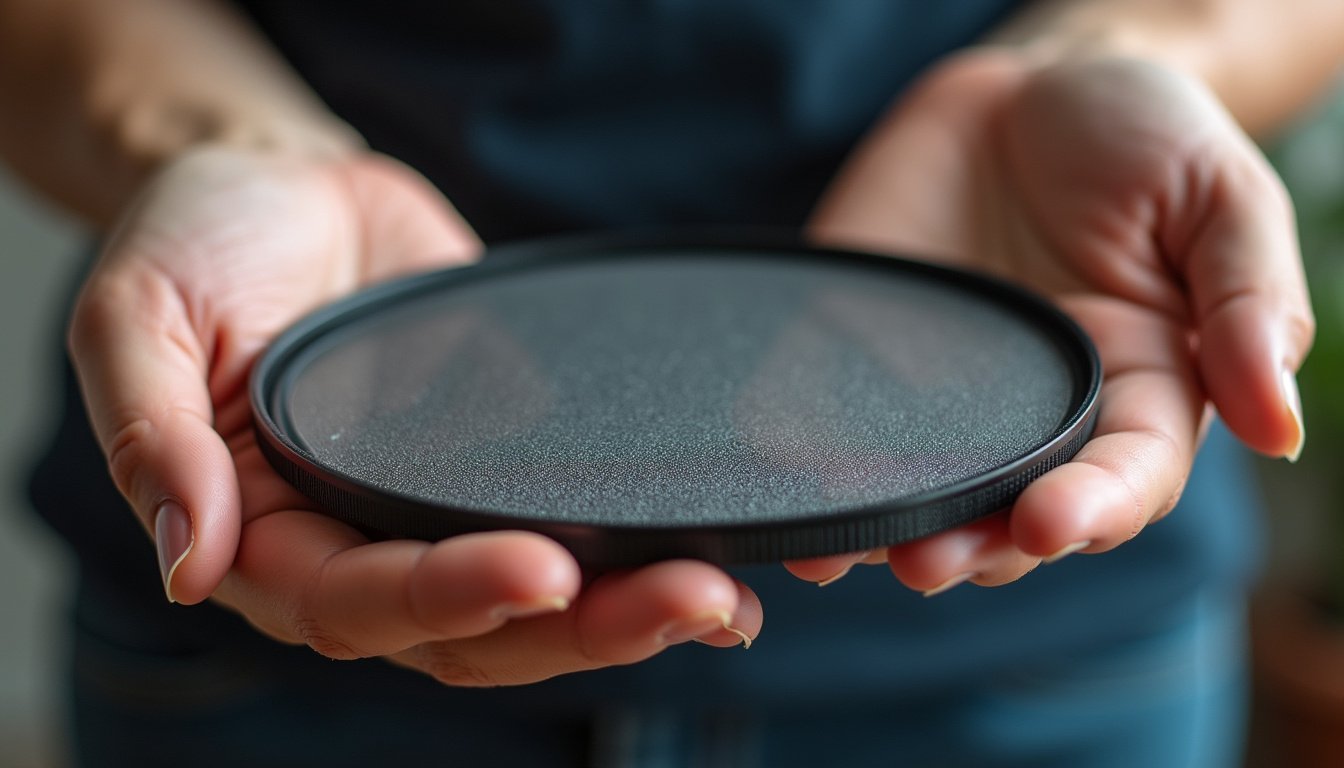
Activated carbon adsorbs gases such as ammonia onto its surface, and it has a limited capacity. Once full, it can release some of what it holds, particularly when temperature or humidity rises, and a purifier near a litter tray or a urine-soaked spot can give back a sharp ammonia note. Many filters carry only a thin carbon sheet that saturates in weeks in a smelly home. Check the filter’s age against the maker’s interval and replace it if it is overdue.
| Sign | Likely meaning | Action |
|---|---|---|
| Smell stronger from the outlet than the room | Saturated carbon releasing odor | Replace the filter |
| Smell began months after a new filter | Carbon capacity used up | Replace; add a heavier carbon unit |
| Filter overdue by the maker’s interval | Saturation likely | Replace |
| Smell worse on hot or humid days | Release from loaded carbon | Replace; reduce humidity |
| Pet urine or litter nearby | Ammonia source close by | Clean the source; move unit |
| Thin carbon sheet only | Low capacity for gases | Choose a substantial carbon stage |
Ionizers and Ozone
Ionizers, plasma modes and some UV features can produce ozone, a sharp, chlorine-like gas that people sometimes describe as ammonia-like or metallic. The EPA advises against air cleaners that intentionally generate ozone, because ozone is a lung irritant and does not usefully clean air at safe levels. If your unit has an ionizer, plasma or similar button, switch it off and see whether the smell goes. A unit that cannot run without ozone is a candidate for return.
- Switch off ionizer, plasma, UV or negative-ion modes.
- Air the room and run the unit on HEPA and carbon only.
- Check the maker’s page for ozone output or a California Air Resources Board certification.
- Return a unit that produces ozone and cannot switch it off.
| Feature | Ozone risk | What to do |
|---|---|---|
| True HEPA with carbon | None intended | Preferred |
| Ionizer, switchable | Possible when on | Keep off |
| Plasma or ion cluster modes | Possible | Keep off; check the maker’s page |
| UV-C inside the housing | Low if enclosed | Check the maker’s page |
| Unit sold as an ozone generator | Intentional | Avoid; EPA advises against |
A New Unit
New plastics, glues and fresh filter media off-gas in the first days of use. The smell is usually plastic or chemical rather than ammonia, but it can read as sharp, particularly in a small closed room. Run the unit on high in a ventilated room for a day, open a window, and let it air out. If the smell has not faded after a week, treat it as a defect and contact the maker.
The Room Itself
A purifier moves the air of the room, so a smell at its outlet may be the room’s smell rather than the machine’s. Ammonia in homes comes from cat urine on bedding or carpets, litter trays, cleaning products, damp laundry and, in some basements, drain or sewer gases. Take the unit to a different room and see whether the smell follows. If it stays behind, the source is in the first room, and the cure is cleaning it, not the filter.
Worked example: a unit with a month-old filter smells sharp in a bedroom but not in the hall. Under the bed, an old cat accident has soaked into the carpet. Cleaned with an enzyme cleaner, the smell goes, and the purifier stops seeming to be the cause.
| Source | Where to look | Fix |
|---|---|---|
| Cat urine | Bedding, carpet, corners | Enzyme cleaner; wash fabrics |
| Litter tray | Beside or near the unit | Move; scoop daily |
| Cleaning products | Recently used sprays | Ventilate; avoid spraying near the unit |
| Damp laundry or mold | Closets, drying racks | Dry; control humidity at 30 to 50 percent |
| Drains or sewer gas | Basement, bathroom | Run water in traps; call a plumber |
What to Do, in Order
Work from the safest cause to the least likely. Unplug if the smell is hot or burnt. Switch off any ionizer or plasma mode. Check the carbon filter’s age and replace it if overdue. Air out a new unit. Move the unit to another room to see whether the smell follows. Clean any source you find. Never wash a HEPA filter and never use compressed air on the filters, because both damage them.
How to Deal With an Ammonia Smell From Your Air Purifier in 6 Steps
- Unplug at once if the smell is hot, burnt or fishy, the plug is warm or you hear buzzing, and contact the maker.
- Switch off any ionizer, plasma or UV mode and air the room.
- Check the carbon filter’s age against the maker’s interval and replace it if it is overdue.
- Run a new unit on high near an open window for a day; call the maker if the smell lasts a week.
- Move the unit to another room to learn whether the smell is in the machine or the first room.
- Clean any source you find with an enzyme cleaner, ventilate, and keep humidity between 30 and 50 percent.
Do and Do Not
Do
- Unplug for a hot or fishy smell.
- Switch off ionizers.
- Replace overdue carbon filters.
- Air out new units.
- Clean urine and damp sources.
Do not
- Do not keep running a unit that smells hot.
- Do not wash the HEPA or blow it out with compressed air.
- Do not rely on ozone-producing modes.
- Do not spray cleaners near the intake.
- Do not assume the filter is at fault before checking the room.
Who Should Skip This
If the smell is hot, burnt or fishy, skip the filter checks and unplug the unit: it is a safety matter before it is an odor matter.
If the smell stays in one room when you move the unit, skip the unit entirely: the source is the room, and cleaning it is the fix.
Honest Limits
- Odors are subjective; the same smell may be described differently by different people.
- Carbon capacity varies widely by filter and is rarely published.
- Ozone output varies by model and mode; check the maker’s documentation.
- We did not test any unit or induce faults.
- Nothing here is medical advice.
When to See a Professional
Contact the maker for a hot, burnt or fishy smell, a warm plug, buzzing or any persistent odor in a new unit; these are warranty and safety matters.
If ammonia smells persist after you have cleaned the source, an HVAC or plumbing professional can check drains and ventilation.
Frequently Asked Questions
Why does my air purifier smell like ammonia?
Common causes are a saturated carbon filter releasing captured smells, ozone from an ionizer or plasma mode, new plastic off-gassing, an overheating electrical part, or the room’s own ammonia from pet urine or cleaners. Unplug first if the smell is hot or fishy, then check the others in turn.
Is an ammonia smell from an air purifier dangerous?
It can be if the cause is an overheating electrical part, which can smell fishy or ammonia-like, so unplug the unit and contact the maker. Ozone from an ionizer is an irritant, so switch it off. A saturated filter or new-unit off-gassing is not usually dangerous, but replace or air it.
Can a full carbon filter smell like ammonia?
Yes. Carbon adsorbs ammonia and other gases up to its capacity, then may release some back, especially when warm or humid. A unit near a litter tray or urine spot can return a sharp ammonia note. Replace the filter if it is overdue and consider a heavier carbon stage.
Do ionizers make an air purifier smell like ammonia?
Ionizers and plasma modes can produce ozone, a sharp, chlorine-like gas that some people describe as ammonia-like or metallic. The EPA advises against air cleaners that intentionally generate ozone. Switch the feature off, air the room and run on HEPA and carbon only; return a unit that cannot run without it.
My new air purifier smells like ammonia. Is it defective?
Probably not at first. New plastics, glues and filter media off-gas in the first days, and the smell can read as sharp. Run the unit on high near an open window for a day. If it has not faded after a week, or smells hot or fishy, contact the maker.
How do I know whether the smell is the purifier or the room?
Move the unit to another room and run it. If the smell goes with it, the machine or its filter is the source. If it stays behind, the source is in the first room, such as cat urine, litter, cleaners or damp fabrics, and cleaning it is the fix.
Does a HEPA filter remove ammonia?
No. True HEPA captures particles, not gases, so it does nothing to ammonia, which is a gas. Only activated carbon or similar sorbents adsorb it, and the carbon in many filters is a thin sheet that saturates quickly. Source control and ventilation matter more than any filter for ammonia.
Can pet urine make my purifier smell of ammonia?
Yes, indirectly. Urine releases ammonia into the air; the purifier moves it and its carbon filter captures some, then may release it as it saturates. Clean the source with an enzyme cleaner, wash fabrics, and keep the unit away from the litter tray.
Should I wash the filter to remove the smell?
Not a HEPA. Water collapses its fibers and ruins it, and compressed air drives dust back into the room and the motor. Only a pre-filter marked washable can be rinsed, and carbon cannot be cleaned. Replace the filter rather than washing it.
When should I call the maker about the smell?
Call when the smell is hot, burnt or fishy, the plug or cord is warm, you hear buzzing or crackling, or a new unit still smells after a week. These are safety or warranty matters on a sealed appliance, not home repairs, and the unit should stay unplugged meanwhile.
Bottom Line
An air purifier that smells like ammonia has a short list of explanations, and the order matters. A hot, burnt or fishy smell is an electrical warning and the unit should be unplugged. A sharp chemical note with an ionizer on points to ozone, which should be switched off. An overdue carbon filter, a new unit’s off-gassing and the room’s own ammonia are all fixed with a filter, a window or a cloth.
Most of these are cheap to fix and none needs a repair on a sealed appliance. Move the unit to another room to learn whether the smell is the machine’s or the room’s, replace overdue carbon, keep ozone features off, and call the maker for anything that smells hot. Nothing here is medical advice.
Related reading: Air purifier smells like burning, Air purifier for pet odors, Air purifier ozone smell.