Last updated:
Disclosure: As an Amazon Associate we earn from qualifying purchases. This does not change what we recommend. See our affiliate disclaimer.
Large rooms, open-plan living areas and big basements need more cleaning capacity than a small bedroom unit can provide. Look for a CADR high enough for the floor area, a true HEPA filter and replaceable filters you can afford. As a rule of thumb, CADR should be roughly two thirds of floor area for rooms with 8 foot ceilings, and higher ceilings or heavy pollutant loads call for more. Placement matters too: leave clearance, keep doors closed where possible and consider two smaller units at opposite ends instead of one unit working too hard.
We have not tested these products ourselves, so confirm specifications on the product page. Nothing here is medical advice.
Look for
- CADR matched to floor area
- True HEPA filtration
- Reasonable noise at working speeds
Watch out for
- Coverage claims based on four air changes
- High ceilings and open plans
- Replacement filter costs
Key Takeaways
- Match CADR to floor area and ceiling height
- Consider two units for irregular spaces
- Leave clearance around intakes
- Check noise and filter costs
A Sizing Example
Suppose you have an open-plan living area of 30 feet by 20 feet, which is 600 square feet, with 8 foot ceilings. A CADR around 400 would be a sensible target by the two-thirds rule. If the space has 10 foot ceilings, scale the number up by about a quarter. If you have pets, smokers or wildfire smoke concerns, aim higher. If one unit with that CADR is too loud or too costly, two units at roughly half each can do the job and cover more corners. Place them diagonally across the space with clear airflow, run them continuously on a moderate speed and raise speed when needed. Check the filter replacement cost for each unit and estimate the yearly total.
Reading Specs Carefully
Compare CADR ratings for smoke, dust and pollen, not just a headline coverage figure. Check for true HEPA, filter life and warranty.
Smart Features
Auto mode and sensors can help but are not essential. Check that the unit remembers settings after a power cut.
Budget Planning
Include replacement filters and electricity in the cost. Cheaper units can cost more over time.
Placement Mistakes
Avoid pushing units against walls, behind sofas or in corners.
Noise Control
Choose a unit that is quiet at the speed you will actually use.
Moving or Remodeling
Dust from renovation can clog filters quickly. Run the unit and check filters often.
Large Space Mistakes to Avoid
The most common mistake is buying by the coverage number on the box rather than the CADR. Another is placing one unit in a corner where airflow is blocked. Others include ignoring ceiling height, forgetting that open doorways connect spaces and skipping filter costs. Choose a unit with room to spare and run it on a moderate speed rather than a small one on maximum. Check that the filters are easy to find and replace. If you use the space for work or sleep, check the noise at the speed you will use. Review the warranty and customer support. Compare at least two options on CADR, noise, filter cost and filter life before deciding. Place the unit where cords are safe and airflow is clear.
Wildfire Smoke and Large Rooms
During smoke events, close windows, run units at a higher speed and consider a smaller sealed room if the large space is hard to clean.
Pets in Large Homes
Pet hair and dander spread widely. Vacuum often and place units where pets spend time.
Allergy Season
Close windows on high-pollen days and run units continuously.
Why Large Spaces Are Different
Open-plan living areas, lofts, and great rooms have more air to clean, higher ceilings that add volume, and more sources, and the air does not move uniformly. A single unit in a corner cleans its corner. The useful approach is to size by volume rather than floor area, to place units where air moves, and to use more than one unit for long or L-shaped spaces. Ceiling fans on low help mix air and bring it to the purifiers.
Expect to spend more on filters, since large spaces load them faster.
Sizing for Volume
- Multiply floor area by ceiling height; a 500 square foot room with 12-foot ceilings has the volume of a 750 square foot room at 8 feet
- Choose a combined smoke CADR of at least two thirds of that equivalent floor area
- Split the total across two or three units placed apart rather than one giant unit
- Add margin so units can run on medium rather than high
Units sized this way run quieter and last longer.
Placement in Big Rooms
Place units at the edges of the main seating and activity areas, not in corners, with intakes facing the room and outlets aimed toward the centre or upward. In L-shaped rooms, one unit per leg. Keep them clear of walkways and away from the kitchen end so they are not swamped with cooking fumes. Run them continuously.
Features That Matter
True HEPA, a high smoke CADR, a substantial carbon stage if the space includes a kitchen, a washable pre-filter, and no ozone generation. Wheels help with cleaning around them. Noise at medium speed matters because the units will run in a room where people talk.
HVAC and Whole-Space Options
If the space has central heating or cooling, an upgraded filter in the system cleans the whole volume while the blower runs, which reduces the number of portable units needed. Check the system can handle the higher rating. In-duct purifiers installed by an HVAC professional are an option for large homes.
Air Purifiers for Large Rooms and Open Plans
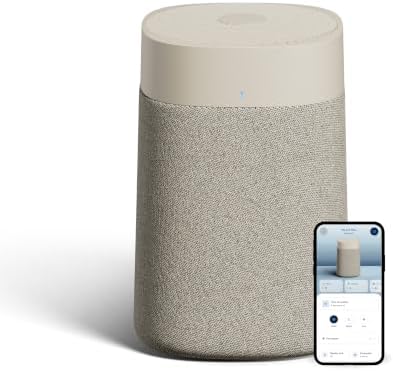
These picks come from the Hostinger affiliate plugin. Specs change by model year, so confirm filter type, CADR, noise and replacement filter costs on the product page.





Measure the Space First
Measure length and width and note the ceiling height. Open-plan spaces connected to other rooms behave as a larger space. Use the actual area, not just the room you sit in.
Understanding CADR for Big Rooms
CADR measures clean air delivery in cubic feet per minute. A common guide is a CADR about two thirds of the floor area for 8 foot ceilings. Higher ceilings need more. Manufacturer coverage claims may assume fewer air changes per hour, so check CADR.
One Big Unit or Two
Two units at opposite ends can improve coverage in long or irregular spaces and may run more quietly than one unit on a high speed. A single large unit can suit open, regular spaces.
Placement and Airflow
Keep clearance around intakes, avoid corners and place units where air can move freely. Close doors to isolate the space where possible.
Noise and Running Costs
Large units can be loud at high speeds. Check noise ratings and filter replacement costs before buying.
Basements and Garages
Damp spaces need moisture control. A purifier does not stop mold growth. Fix leaks and dehumidify.
Open-Plan Kitchens
Cooking particles spread in open plans. Use a range hood and place a unit near the kitchen edge.
High Ceilings
Volume matters. Choose a higher CADR for ceilings above 8 feet.
Offices and Studios
Check noise levels and run times for workspaces.
Maintenance
Replace filters on schedule and clean pre-filters regularly.
How to Choose
- CADR matched to floor area
- True HEPA filtration
- Reasonable noise levels
- Affordable replacement filters
Do
- Match the unit’s rated coverage to your room first
- Run it consistently, not only when the air feels bad
- Leave space around the unit for airflow
- Replace filters on the maker’s schedule
Don’t
- Do not buy on looks or price alone
- Do not block the intake or exhaust
- Do not skip filter changes
- Do not expect a purifier to fix every source of pollution
Honest Limits
- This guide uses manufacturer information and public guidance from the EPA and AHAM, not our own lab tests.
- Features and room ratings change between model years, so confirm on the listing before you buy.
- A purifier is not a medical device and does not replace medical advice or treatment.
Who Should Skip This
When to See a Professional
Frequently Asked Questions
What CADR for a large room?
About two thirds of floor area at 8 foot ceilings, more for higher.
Is one unit enough?
Often, but two can help irregular spaces.
Do coverage claims matter?
Check CADR instead.
Where to place units?
With clearance and away from corners.
Bottom Line
For large spaces, choose a CADR suited to the floor area, consider two units for irregular layouts and place them with clearance. Check noise and filter costs before you buy.
Related reading: sens,fan,bed
Sources: EPA, Guide to Air Cleaners in the Home; AHAM Verifide.