Last updated:
As an Amazon Associate we earn from qualifying purchases. This does not change what we recommend. See our affiliate disclaimer.
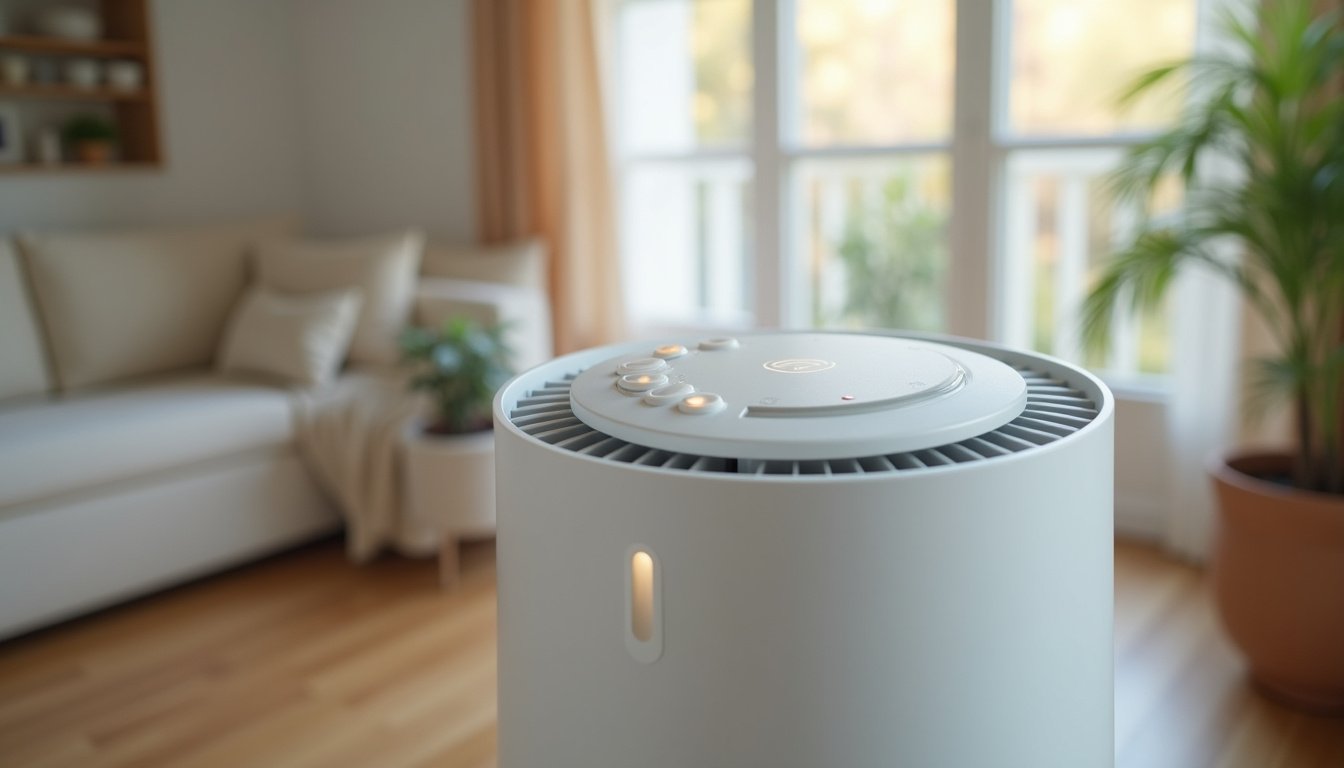
Many air purifiers have a small light that turns on when it is time to change the filter. It feels like a built-in maintenance assistant, and for a lot of households it is. But the light is not looking at the filter in the way you might imagine, and trusting it blindly can mean changing filters too early, too late or not at all. This guide explains how filter indicators work, when they mislead and what to check yourself.
Most filter indicators are reminders, not measurements. Many count hours of running time and light up when a preset total is reached, regardless of how clean or dirty your air actually was. That makes them useful for building a routine and for people who forget, but they can be wrong in both directions: too early in clean homes, too late after smoke, renovation or heavy pet shedding. Use the light as a prompt, check the filter and the manual, and replace sooner when your air has been dirty.
In short: keep the indicator, but do not outsource your judgment to it. Reset it only when you have actually installed a new filter, and add a simple visual and calendar check.
The EPA says that all filters need regular replacement and that a dirty, overloaded filter will not work well, and it gives typical manufacturer recommendations of about every 60 to 90 days for some filters. The right interval depends on your air, which is exactly what a simple hour counter cannot know.
These picks are research-based, built on manufacturer information and published guidance rather than our own lab tests. Nothing here is medical advice.
The indicator helps if
- You tend to forget filter changes
- You run the unit on a steady schedule
- Your air is fairly typical
- You treat the light as a reminder, not a verdict
Do not rely on it if
- You had smoke, renovation or heavy shedding
- You use a third-party or washable filter
- You have reset the light without changing the filter
- The unit runs on high most of the day
Key Takeaways
- Most filter lights are timers that count running hours, not sensors that read the condition of the filter.
- A timer cannot know if your air was clean or full of smoke, so it can be early or late by a wide margin.
- Resetting the light without installing a new filter hides the reminder and does not make the filter work better.
- A quick visual check of the filter, plus the manual schedule, is a better guide than the light alone.
- After smoke, renovation or heavy pet shedding, replace filters sooner than the indicator says.
- Write the install date on the filter or in your calendar as a second reminder.
- An indicator light is a convenience feature. It should not decide which purifier you buy over CADR and filter quality.
Top Picks: Purifiers With Clear Filter Reminders
The models below are filter-based purifiers that include filter reminders or simple, accessible filters. Check each listing for the exact indicator type of the variant you choose, and use the button to open the Amazon listing.






How We Looked at Filter Indicators
We looked at how manufacturers commonly describe filter reminders, what the EPA says about filter replacement, and how shoppers can judge a filter for themselves. We did not test any indicator, and exact behavior varies by model, so your manual is the final word.
How Filter Indicators Work
The most common design is a timer. The purifier counts the hours the fan runs, and once the total reaches a preset number, a light turns on or a message appears. The number comes from the maker and reflects typical use, not your air. Some units count only hours on, so a unit that runs on low all day will reach the limit later than one that runs on high.
A smaller group of designs estimates filter loading in other ways, for example by watching airflow or the load on the motor, and a few link the reminder to an air quality sensor. These can reflect conditions better, but they are less common and still are estimates. Whichever design your unit has, the manual should say what the light means and how to reset it.
| Indicator type | What it measures | Strength | Weakness |
|---|---|---|---|
| Timer based | Hours the unit has run | Simple, steady reminder | Blind to how dirty the air was |
| Airflow or load based | Changes in airflow or motor effort | Can react to heavy loading | Less common, still an estimate |
| Sensor linked | Air quality readings over time | Reflects conditions at home | May not reflect the filter condition directly |
| No indicator | Nothing | No false confidence | You must track it yourself |
When the Light Gets It Wrong
A timer treats a month of clean spring air the same as a month of wildfire smoke. In the first case, the filter may still have plenty of capacity when the light comes on. In the second, it may be overloaded well before the light. Pet shedding, cooking, renovation dust and nearby construction can all change how quickly a filter loads.
The light can also be wrong because of how it is reset. If someone resets it without changing the filter, or changes the filter without resetting it, the reminder no longer matches reality. Third-party filters and washable filters add another gap, since the unit does not know which filter you installed.
A worked example: a unit that runs around the clock accumulates 720 hours in a 30-day month. If the maker sets the reminder at 4,320 hours, that is about six months of continuous running, but a smoky season could use up the filter well before that, and a unit running only 8 hours a day would take years to reach the same total. The number on the light says nothing about your air.
How to Check a Filter Yourself
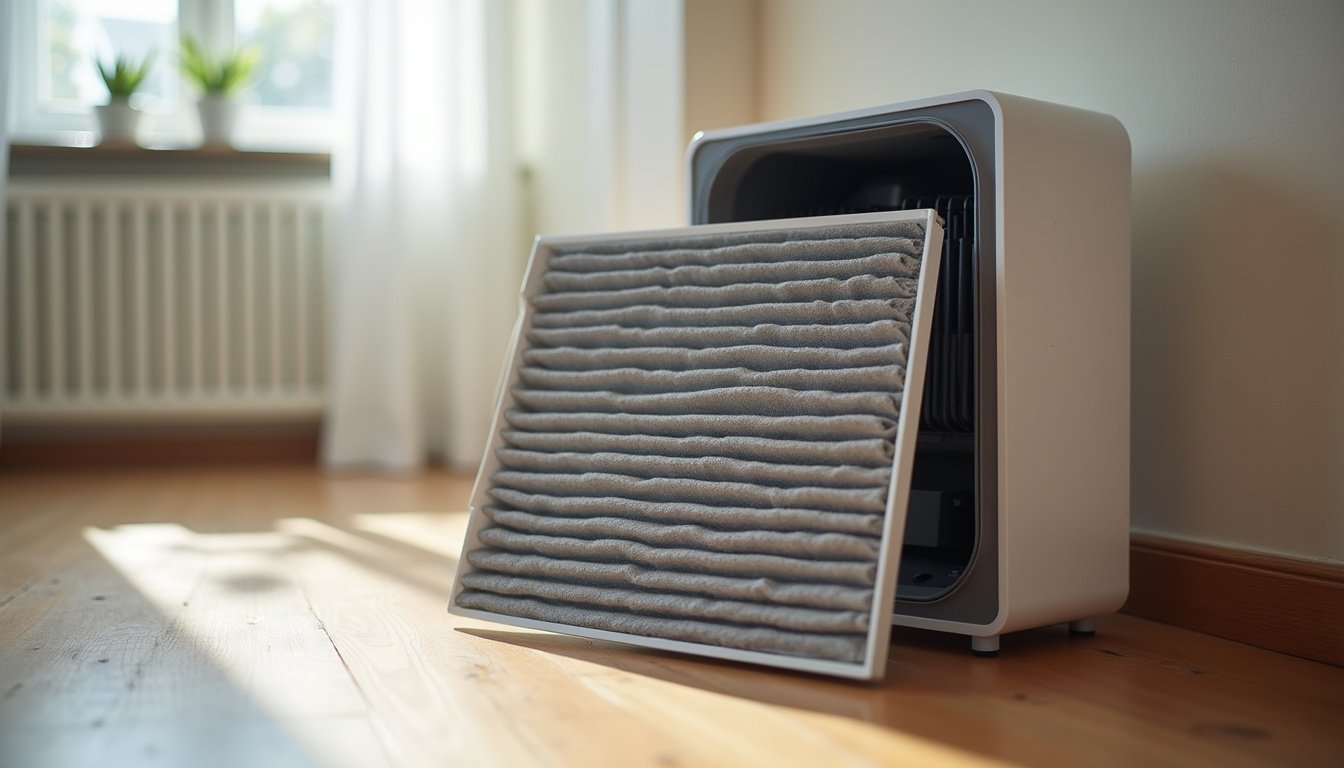
You can learn a lot from looking. A HEPA-type filter that is gray or dark, matted or visibly loaded with dust or pet hair is working hard. A pre-filter that is coated in lint or hair needs cleaning, if the maker says it is cleanable. A carbon layer cannot be judged by eye, so rely on time and on whether odors are returning.
Pay attention to performance as well. If airflow seems weaker, the fan seems louder than before or smells are no longer controlled, the filters may be overdue even if the light is not on. Do not use the vacuum on a HEPA filter unless the manual says it is cleanable, because you can damage it.
| What you notice | Possible meaning | Action |
|---|---|---|
| Filter looks gray or matted | Heavily loaded | Replace on schedule or sooner |
| Pre-filter coated in lint | Pre-filter needs cleaning | Clean per the manual |
| Weaker airflow | Filter loading or blocked intake | Check filters and intake |
| Odors returning | Carbon capacity used up | Replace the carbon filter |
| Light is on, filter looks clean | Timer reached its limit | Check manual, replace if due |
Resetting the Indicator Correctly
Reset procedures differ by model. Many units ask you to hold a button for a few seconds with the new filter installed, and some require a particular sequence. Follow the manual, because pressing the wrong button can change a setting you did not mean to change.
Reset the indicator only after installing a new filter, and write the date somewhere. A sticker on the filter or on the unit itself, or a calendar reminder, gives you a second signal that does not depend on the electronics. If your unit has more than one filter, check whether the reminder covers all of them or only one.
Events That Should Override the Light
Some events change the picture. After smoke from wildfires or cooking, or after painting, sanding or other renovation, filters can load much faster than the timer expects. Heavy pet shedding or a household with several pets does the same. If any of these apply, check the filters earlier than the light suggests.
| Event | Effect on filters | What to do |
|---|---|---|
| Wildfire smoke or smoky cooking | Loads the filter faster | Check early, replace sooner |
| Renovation, sanding or painting | Fine dust clogs pre-filter and main filter | Clean pre-filter, check main filter |
| Heavy pet shedding | Hair and dander load the pre-filter | Clean pre-filter often |
| Long stretches on high speed | More hours and more air through the filter | Expect to replace sooner |
| Away from home with the unit off | Fewer running hours | The timer may be conservative |
- Wildfire smoke or a smoky home: check and replace sooner.
- Renovation or construction nearby: check the pre-filter and main filter.
- Many pets or heavy shedding: clean the pre-filter often.
- Long periods on high speed: expect to replace sooner.
For more on how upkeep affects ownership, our posts on quick versus complex filter replacement and washable versus replaceable filters are good next reads.
Third-Party and Washable Filters
If you use a non-original filter, the indicator may not recognize it, and the reminder can drift away from the real condition. Make sure any third-party filter fits snugly and meets the specifications in the manual, and follow its own replacement guidance.
For washable filters, the unit will not know how clean the filter is after washing. Follow the manual for washing and drying, make sure it is fully dry before reinstalling, and do not wash filters that are not labeled washable.
Should an Indicator Influence Your Purchase?
It can be a pleasant feature, but it should come after the things that decide performance. Choose a purifier by CADR for your room, a filter that suits your needs and a noise level you can live with, then consider the indicator as a tie-breaker. A clear reminder is more useful to a forgetful owner than a disciplined one.
If you are comparing filter types, our guide to true HEPA versus HEPA-type filters explains how to read the label.
How to Handle Filter Changes in 6 Steps
- Read the manual to find out what the indicator measures and the recommended interval.
- Write the install date on the filter or in your calendar.
- When the light comes on, remove the filter and look at it.
- Replace the filter if it is dirty, overdue or the manual says so.
- Reset the indicator after installing the new filter, following the manual.
- Check sooner after smoke, renovation or heavy shedding, whatever the light says.
Do and Do Not
Do
- Treat the light as a reminder
- Keep a spare filter if you can
- Note the install date
- Check sooner after dirty-air events
Do not
- Do not reset without replacing
- Do not wash a filter that is not washable
- Do not ignore weak airflow because the light is off
- Do not run the unit with no filter
Who Should Skip This
Skip this guide if your purifier has no filter, such as a unit that works in another way. Check the manual for how the unit cleans air and what maintenance it needs.
Skip it too if you already change filters on a strict calendar and your air is typical. The indicator is then a backup, and you do not need to think about it much.
Honest Limits
- We cannot say how any specific model calculates its reminder, so check the manual.
- An indicator cannot tell how well a filter is capturing particles or gases.
- A visual check cannot judge a carbon layer, so time and odor are your guide.
- A filter reminder is not a substitute for ventilation or source control.
When to See a Professional
If you or someone in your household has asthma or allergies and you are unsure whether your filters are doing their job, talk with a doctor or allergist. A purifier may reduce airborne particles, but it is not a treatment.
If the unit has a fault, such as a light that stays on after a new filter, a strange noise or a burning smell, unplug it and contact the manufacturer. This page is general information.
Frequently Asked Questions
How does a filter replacement indicator work?
Most count the hours the fan has run and light up at a preset total. They do not measure how dirty the filter is. A smaller group uses airflow or sensor data to estimate loading. The manual will say which kind your unit has.
Can I trust the filter light?
As a reminder, yes. As a precise measure, no. A timer cannot tell clean air from smoky air, so the filter may be fine when the light comes on, or overloaded well before it. Check the filter and follow the manual.
What happens if I ignore the filter indicator?
A loaded filter works less well, airflow can drop and the unit may be louder. The EPA says a dirty, overloaded filter will not work well. If the light is on and the filter looks dirty, replace it.
How do I reset the filter light?
Install the new filter first, then follow the manual. Many units ask you to hold a button for a few seconds. Procedures differ, so check the manual, because the wrong sequence can change another setting.
Should I replace the filter when the light comes on?
Check it first. If it is dirty, overdue by the manual or the air has been smoky, replace it. If the filter looks clean and you have had light use, you may have some margin, but follow the manual interval.
Do I need to reset the light after cleaning a washable filter?
Only if the manual says so. Washing does not usually reset the reminder automatically, and a washable filter still wears out over time. Follow the maker guidance on cleaning, drying and replacing, and make sure the filter is completely dry before it goes back into the unit.
Why is my filter light still on after replacing the filter?
You may not have reset it, or the reset sequence may not have worked. Re-seat the filter, check that the cover is fully closed and follow the reset steps in the manual. If it stays on, contact the maker.
Will a third-party filter work with the indicator?
The unit will usually still count hours, but it cannot tell which filter you installed, so the reminder may drift away from reality. Make sure the filter fits snugly and meets the specifications in the manual, and track the replacement date yourself.
How often should I really change my filter?
Follow your manual. The EPA mentions typical recommendations of about 60 to 90 days for some filters, but the right interval depends on your air and how often the unit runs. Replace sooner after smoke, renovation or heavy pet shedding.
Is an indicator worth paying extra for?
It is a convenience, not a performance feature. Choose the purifier by CADR, filter quality and noise first. If two units are similar, the one with a clear reminder may help you stay on schedule, especially if you forget.
Bottom Line
A filter replacement indicator is a helpful nudge, not a measurement. Most are timers, so they can be early in clean homes and late after smoke or renovation. Use the light to build a routine, but check the filter with your own eyes and follow the manual.
Reset the indicator only after a new filter is installed, write the date down and replace sooner after dirty-air events. When you shop, choose by CADR and filter quality first and treat the indicator as a tie-breaker.
Related reading: quick versus complex filter replacement, washable versus replaceable filters, true HEPA versus HEPA-type filters.