Last updated:
Disclosure: As an Amazon Associate we earn from qualifying purchases. This does not change what we recommend. See our affiliate disclaimer.
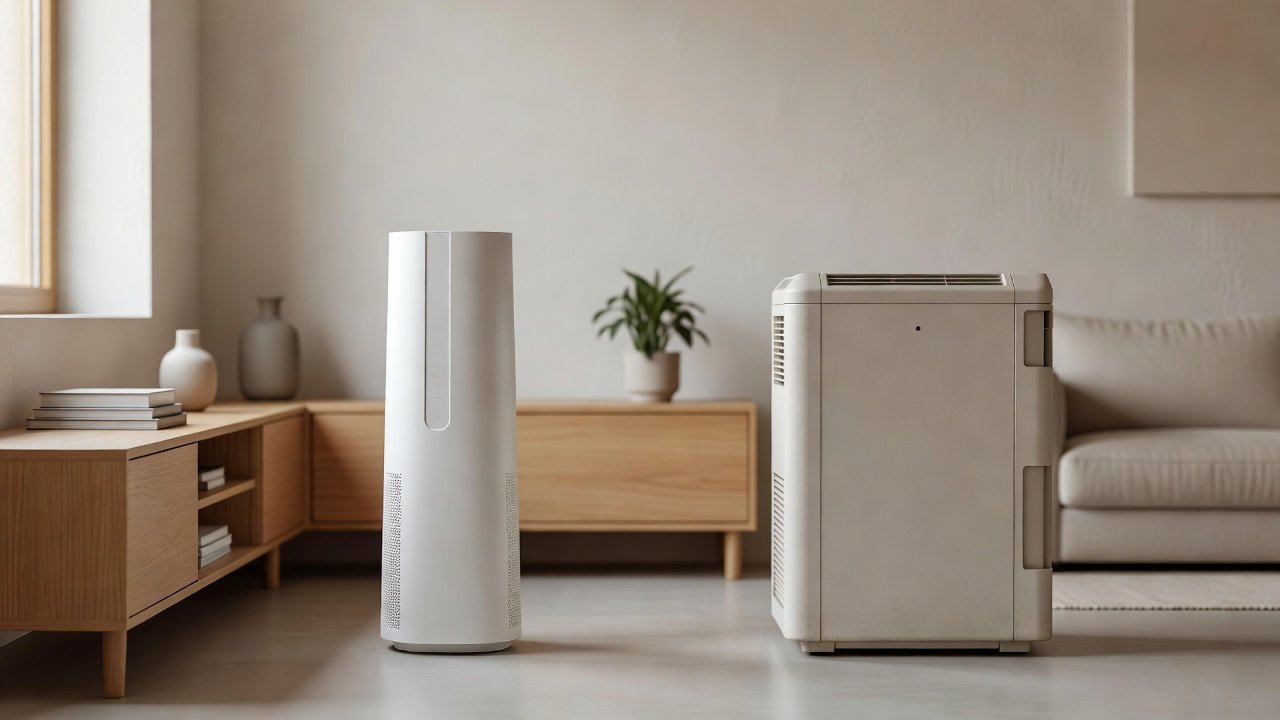
An air purifier sits in your room for hours every day, so how it looks matters. Many people prefer a slim, tidy unit that blends into the decor, while others accept a bulkier, more utilitarian design if it cleans better. The question is whether style and performance pull in opposite directions. Sometimes they do, because a bigger housing can hold a bigger fan and a larger filter. But good design can also deliver strong performance in a compact form, and a bulky unit is not automatically a better purifier.
This guide explains what physical size and shape actually change, what to look for if appearance matters to you, and how to avoid paying for style at the expense of capacity. We have not tested these products ourselves; use the principles here with current specifications from the product pages.
A sleek design suits you if
- The unit will be visible in a living space
- You have limited floor space
- You have checked that the CADR suits your room
A bulkier design suits you if
- You need high capacity for a large room
- You want larger, longer-lasting filters
- Looks matter less than performance
Key Takeaways
- Fan and filter size, not looks, decide capacity and noise.
- Compare CADR, noise and filter specs before judging style.
- Clearance matters; do not hide a purifier where airflow is blocked.
- Easy filter access helps you keep up with changes.
- Dimmable lights and a stable base improve daily use.
- Larger units often run quieter for the same output.
- Avoid ozone or ionizer modes; the EPA advises against ozone-emitting air cleaners.
A Quick Test Before You Commit
If you are torn between a sleek unit and a bulkier one, try this simple test. Write down your room size and the smoke CADR you need. Then list the two or three models you like and note for each the CADR, the noise at low and medium speeds, the filter price and interval and the dimensions. Cross out any model that falls short of your CADR target. From those that remain, pick the one whose size fits your space and whose look you like. This approach removes the guesswork and lets your eye decide only among units that can do the job.
When the unit arrives, place it in the intended spot, run it at the speed you plan to use and listen from where you sit or sleep. Check that the light is not too bright and that the airflow does not blow on you. If it does not suit you, use the return window. The right purifier is one you are happy to see, hear and maintain every day.
How Long to Expect a Purifier to Last
A well made purifier can last for many years if its filters are changed on time and it is kept clean. Fans and motors are the parts most likely to wear, and dust is their main enemy. Vacuum the intake area regularly, keep the unit on a level surface and avoid moving it while running. Sleek designs with tight tolerances need particular care with dust, while bulkier ones may be more forgiving. Whatever you choose, treat the purifier like any appliance: look after it and it will look after your air.
Air Purifiers to Compare
The table below lists purifiers from our affiliate partner. Compare CADR, room size ratings, noise and filter details, and judge the look from the product images.
Placement Matters More Than Looks
People sometimes hide a purifier behind a sofa or in a corner to keep it out of sight. This usually reduces performance, because the unit cannot draw in air freely. Whatever the design, a purifier needs clearance around the intake and outlet, as the manual specifies, and a position where air can circulate. If you want to hide the unit, do so in a way that keeps airflow clear, for example by choosing a model that looks good enough to leave in the open.
If space is tight, a slim vertical unit that stands against a wall (while keeping the clearance the manual asks for) can be easier to place than a wide, low unit. Measure the space before you buy.
Sleek vs Bulky at a Glance
The table below summarizes the general trade-offs.
| Factor | Sleek or compact | Bulky or large |
|---|---|---|
| Capacity | Often lower | Often higher |
| Noise at same output | Often louder | Often quieter |
| Filter size and life | Smaller, may need changing sooner | Larger, may last longer |
| Placement | Easier in small spaces | Needs more room |
| Looks | Blends in | More utilitarian |
What Size and Shape Change
Physical size sets limits on two key parts of a purifier: the fan and the filter. A larger housing can hold a larger fan that moves more air at a lower speed, which means more capacity and less noise. It can also hold a larger filter area, which usually means longer filter life and lower resistance to airflow. A slim or compact unit has to achieve its rating with a smaller fan and filter, which may mean running faster and louder, or replacing filters more often.
That said, size is not everything. Good engineering can achieve strong results in a compact shape, for example through efficient fan design, pleated filters with a large surface area and a well sealed housing. The key is to compare the CADR, noise and filter specifications of the units, not their appearance. A sleek unit with a CADR that suits your room is a better choice than a bulky unit that is oversized for the space.
Design Features Worth Having
If you care about looks, there are practical design features that also improve daily use. A clean, uncluttered control panel with dimmable lights is easier to live with in a bedroom. Interchangeable covers or neutral colors help the unit blend into a room. A top or 360-degree air outlet can distribute air without blowing directly on you. A stable base prevents tipping, and a well placed handle makes the unit easier to move.
Look at the practical side too: how the unit opens for filter changes, how easy it is to wipe clean and whether the intake is easy to reach for vacuuming. A beautiful unit that is hard to open will not get its filters changed on time, and that defeats the purpose.
Matching the Unit to the Room’s Style
In a modern living room with clean lines, a slim unit with a neutral finish is easiest to blend in. In a traditional space, a tower-style unit in a warm color or one with a fabric cover can look at home. In a bedroom, favor a calm, simple design with dimmable lights. In an office, a compact unit that fits on a shelf or desk saves space. Consider using a stand or a console table to raise a short unit so air can reach it, as long as the unit remains stable.
Do not let style push you into a unit that is too small. Look at the room size rating, apply the sizing rule and keep some margin. If you love a particular design but it is a little small, you can use two units, or place the stylish unit in a smaller room and a more utilitarian one in a larger space.
Noise, Fans and Airflow Design
The shape of the unit and its fan affect noise. Larger fans move more air at lower speeds, which usually reduces noise. Smooth airflow paths and well balanced fans reduce whistling and vibration. A unit with a wide intake and outlet tends to have less resistance and so can be quieter. When you compare units, look at the noise at low and medium speeds, and read the descriptions of owners who use the unit in a bedroom, but treat them as impressions rather than measurements.
Filters, Access and Upkeep
A good design makes upkeep easy. Look for a filter door or cover that opens without tools, a pre-filter that you can reach and clean, a filter indicator and clear markings for which way the filter goes. If the unit is awkward to open, you are more likely to delay changes. Keep spares on hand and note the installation date. A well maintained plain unit will outperform a beautiful unit with a clogged filter.
Build Quality and Longevity
Appearance can hide differences in build quality. Check the materials, the stability of the base, the fit of the panels and the warranty. A unit that rattles, has loose parts or feels flimsy may not last. Read the warranty terms and keep your receipt. If possible, choose a model from a maker that has kept filters in production for a number of years.
Final Advice
Decide first on capacity and noise, then choose the best-looking unit that meets those needs. If two units are equal on performance, choose the one you like to look at and that is easy to maintain. You are more likely to leave a unit running if you enjoy having it in the room.
How to Choose
- Match smoke CADR to your room before judging looks.
- Check noise at the speeds you will use.
- Compare filter size, life and cost.
- Check how easily the unit opens for filter changes.
- Avoid ozone generating or ionizer modes; the EPA advises against ozone-emitting air cleaners.
Do
- Match the unit’s rated coverage to your room first
- Run it consistently, not only when the air feels bad
- Leave space around the unit for airflow
- Replace filters on the maker’s schedule
Don’t
- Do not buy on looks or price alone
- Do not block the intake or exhaust
- Do not skip filter changes
- Do not expect a purifier to fix every source of pollution
Honest Limits
- This guide uses manufacturer information and public guidance from the EPA and AHAM, not our own lab tests.
- Features and room ratings change between model years, so confirm on the listing before you buy.
- A purifier is not a medical device and does not replace medical advice or treatment.
Who Should Skip This
Skip units that sacrifice airflow clearance for looks.
Skip ozone generators and ionizers that emit ozone; the EPA advises against them.
When to See a Professional
If you have asthma or allergies, a purifier supports but does not replace the plan your doctor gives you.
If a unit smells of burning or sparks, stop using it and contact the maker.
Frequently Asked Questions
Do sleek purifiers perform worse?
Not necessarily, but small housings limit fan and filter size, so check the CADR.
Are bulky purifiers quieter?
Often at the same output, because larger fans can run slower.
Can I hide my purifier?
Only if the intake and outlet stay clear and the manual clearances are met.
What design features are useful?
Dimmable lights, a stable base, easy filter access and a clear control panel.
Does a bigger filter last longer?
Often, because it has more surface area, but follow the maker.
How do I match the purifier to my decor?
Choose a neutral finish or cover, but size for the room first.
Is a tower design better?
It depends on the model. Compare the specifications.
Where should I place a slim unit?
In an open spot with clearance, not pressed against walls or curtains.
Does design affect filter changes?
Yes. Easy access helps you keep up with them.
Are ionizer modes safe?
Some produce ozone, which the EPA advises against.
Bottom Line
Design affects capacity and noise mainly through fan and filter size, so judge a purifier by its CADR, noise and filter specifications, not by its looks.
You can often get both style and performance, as long as the unit is sized for your room and placed with clear airflow.
Related reading: sens,fan,bed
Sources: EPA, Guide to Air Cleaners in the Home; AHAM Verifide.