Last updated:
As an Amazon Associate we earn from qualifying purchases. This does not change what we recommend. See our affiliate disclaimer.
The appeal of a filterless purifier is obvious. No cartridges to buy, no schedule to forget, no grey mat of dust to bag up; just a device that plugs in and, the box says, cleans the air for good. The appeal is also why the category deserves a careful look, because something still has to do the catching.
Yes, air purifiers without filters exist, in a handful of technologies: ionizers that charge particles so they stick to room surfaces, electrostatic precipitators that collect charged particles on washable metal plates, UV units that shine light on passing air, photocatalytic units that use UV on a coated surface to break down gases, and ozone generators. Each pays for skipping the filter. Ionizers do not remove particles; they move them onto walls and furniture, from which they return. Electrostatic plates do collect particles but lose efficiency as they load and must be washed often, and can produce ozone. UV at consumer exposure times does little to moving air. Photocatalytic units address some gases and can produce byproducts. Ozone generators remove nothing at safe concentrations, and the EPA advises against them in occupied spaces. The EPA’s position is that a true HEPA filter sized to the room is the proven method for particles, activated carbon the method for gases, and ozone-producing devices are to be avoided indoors. As the sole purifier in a bedroom, a filterless unit is usually a fan with a glow.
In short: filterless purifiers exist and most either move particles onto surfaces, produce ozone, or do little to moving air. HEPA is still the proven tool; filterless units are at best supplements.
The EPA’s technical summary on residential air cleaners finds HEPA effective for particles and sorbent media for gases, rates ionizers and precipitators as variable and prone to ozone and surface soiling, finds UV and photocatalytic oxidation of limited effectiveness at residential exposure times, and advises against ozone generators in occupied spaces.
This guide is research-based, drawn from EPA guidance on air cleaners and ozone, California Air Resources Board material and maker specifications. We have not tested the units in the table and quote no prices or ratings. Nothing here is medical advice.
Filterless technologies
- Ionizers and negative ion generators: charge particles so they settle on surfaces
- Electrostatic precipitators: charge particles and collect them on washable plates
- UV-C units: irradiate passing air with limited effect at typical flows
- Photocatalytic oxidation and plasma: target gases; can produce byproducts and ozone
What the EPA recommends instead
- True HEPA filtration sized by CADR to the room for particles
- Activated carbon in meaningful quantity for odors and gases
- Source control and ventilation first
- No ozone generators in occupied spaces, ever
Key Takeaways
- Filterless purifiers exist: ionizers, electrostatic precipitators, UV, photocatalytic oxidation, plasma and ozone generators.
- Ionizers do not remove particles; they charge them so they stick to walls, screens and furniture and return when disturbed.
- Electrostatic precipitators do collect particles on plates but need frequent washing and can produce ozone.
- UV at consumer exposure times does little to moving air; photocatalytic units address some gases and can create byproducts.
- Ozone generators clean nothing at safe concentrations, and the EPA advises against using them in occupied rooms.
- The EPA’s proven methods are HEPA filtration for particles and activated carbon for gases, both of which are filters.
- A filterless unit may suit a specific supplementary role; as a sole purifier it usually underdelivers.
HEPA Purifiers With Low Filter Hassle
If the appeal of filterless was avoiding maintenance, these widely reviewed HEPA units come close: long filter intervals, washable pre-filters, tool-free changes and no ionizing stage. Compare the maker-listed CADR against your room and the filter interval against your patience.






How This Guide Approaches the Question
We looked at each filterless technology, what it physically does to particles and gases, what the EPA and California regulators have found about its effectiveness and byproducts, and where, if anywhere, it earns a place. Product details in the table come from maker specifications.
The test for any purifier is where the dirt goes. A filter holds it; a filterless unit has to put it somewhere else, and where that is, the wall, a plate, or nowhere, is the whole story.
The Filterless Technologies
Removing a particle from the air means capturing it on something. Filters do that with fibers. Filterless units do it with charge, light or chemistry, and each approach has a known profile.
| Technology | How it works | Particles | Gases | Byproducts | EPA view |
|---|---|---|---|---|---|
| Ionizer, negative ion generator | Charges particles so they stick to surfaces | Moves them, does not remove them | None | Some produce ozone | Variable; surface soiling; ozone concern |
| Electrostatic precipitator | Charges particles; collects on metal plates | Collects; efficiency falls as plates load | None | Can produce ozone | Variable; frequent cleaning needed |
| UV-C | Irradiates passing air | None | None | Some lamps produce ozone | Limited at residential exposure times |
| Photocatalytic oxidation, PCO | UV on a catalyst breaks down gases | Little | Some; incomplete | Formaldehyde and others possible | Limited; byproduct concern |
| Plasma, bipolar ionization | Generates ions to charge particles and react with gases | Moves particles | Some claims | Ozone possible | Variable; limited evidence |
| Ozone generator | Floods room with ozone | None | Reacts with some | Ozone itself | Advises against in occupied spaces |
| Water or wet scrubber | Bubbles air through water | Poor for fine particles | Poor | Mold risk in water | Not recommended for fine particles |
Ionizers: Moving Dirt, Not Removing It
An ionizer releases charged ions that attach to airborne particles. Charged particles are attracted to nearby surfaces, so dust, pollen and smoke leave the air and arrive on the wall behind the unit, the television screen, the curtains and the floor. The air reads cleaner on a particle meter for a while, and the room is no cleaner at all; the particles are waiting to be stirred back up by footsteps, a pet or a draft. The telltale sign is a grey shadow on the wall near the unit, sometimes called black wall effect. Some ionizers also generate ozone as a byproduct. The EPA notes that ionizers’ performance is variable and that they can soil surfaces; California requires air cleaners sold there to meet an ozone emission limit partly because of this category.
Electrostatic Precipitators: The Honest Filterless Option
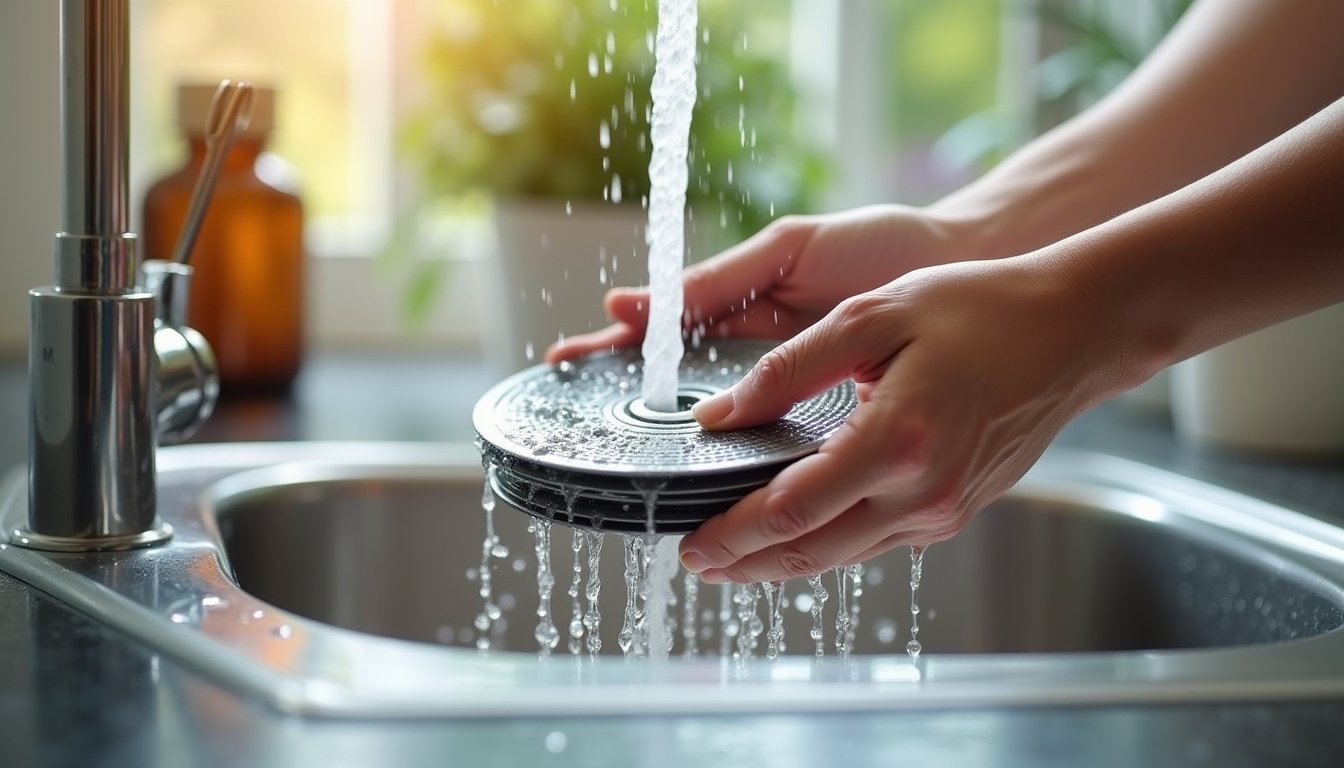
An electrostatic precipitator does what an ionizer does but gives the charged particles somewhere to land: a set of oppositely charged metal plates inside the unit. The plates collect dust, and the owner washes them rather than replacing a filter. This is a genuine particle-removal method, used at industrial scale, and it is the one filterless design that holds the dirt. Its limits are real: collection efficiency falls as the plates load, so they need washing every week or two in a normal home to keep working; the high-voltage stage can produce ozone, and a crackling sound and sharp smell are signs; and consumer units typically have lower effective clean air delivery than a HEPA unit of similar size. For someone determined to avoid filter purchases, a precipitator certified to the California ozone limit, washed on schedule, is the defensible choice.
- Wash plates every one to two weeks; efficiency drops as they load.
- Dry plates fully before refitting; damp plates arc and smell.
- Choose a unit certified to the California Air Resources Board ozone limit.
- Expect lower clean air delivery than a comparably sized HEPA unit.
- A crackling sound or sharp smell means the plates are dirty, damp or the unit is producing ozone.
UV, Photocatalytic Oxidation and Plasma
UV-C units shine germicidal light on passing air. The EPA’s assessment is that the exposure time at residential airflows is far too short to inactivate most microorganisms, that UV does nothing to particles, dust, pollen or dander, and that some lamps produce ozone. Photocatalytic oxidation adds a catalyst-coated surface that, under UV, breaks down some volatile organic compounds; the reaction is often incomplete and can produce byproducts including formaldehyde, which is why the EPA flags the category. Plasma and bipolar ionization units generate ions that charge particles and are claimed to react with gases; the evidence is limited and ozone is possible. None of the three removes particles from a room in the way a filter or a precipitator does, and none is a substitute for HEPA where dust, pollen, dander or smoke is the concern.
| If your concern is | Filterless option | Does it help? | Better tool |
|---|---|---|---|
| Dust, pollen, dander | Ionizer | Moves it to surfaces | HEPA filter |
| Dust, pollen, dander | Electrostatic precipitator | Yes, with frequent washing | HEPA for higher delivery |
| Smoke | Any filterless | Poorly; fine particles and gases | HEPA plus deep carbon |
| Odors, VOCs | PCO, plasma | Partially; byproducts possible | Activated carbon, ventilation, source control |
| Microbes | UV | Little at residential flows | HEPA captures particle-borne microbes; ventilation |
| Mold | UV, ozone | No; mold needs moisture control | Fix the damp; HEPA for spores |
Ozone Generators: Not a Purifier
Ozone generators are sold as air purifiers, often as activated oxygen or energized oxygen devices, and they produce ozone deliberately. Ozone is a lung irritant that causes coughing, throat irritation, chest discomfort and headache, and worsens asthma; the EPA states that at concentrations that do not exceed public health standards ozone removes almost nothing from indoor air, and that at concentrations that do affect pollutants it is harmful to occupants. Ozone also reacts with household materials to form other irritants. The EPA advises against using ozone generators in occupied spaces. Some contractors use high-output ozone for unoccupied smoke or odor remediation with the space sealed and aired afterward; that is not an air purifier and not a home appliance. A device whose main mechanism is ozone has no place in a bedroom, nursery or living room.
Why Filters Still Win
A true HEPA filter captures 99.97 percent of particles at 0.3 microns and more at other sizes, holds what it catches until it is bagged and binned, produces nothing, and has a published, verifiable clean air delivery rate. Activated carbon adsorbs gases and odors and likewise produces nothing. Together they cover the two things people buy purifiers for, particles and smells, with a maintenance cost of a filter change on a schedule. The EPA’s technical summary treats this combination as the proven residential approach. Every filterless technology trades that proven capture for either surface deposition, frequent plate washing, limited effect or ozone, and the trade is rarely worth it in a home.
Worked example: a household wants to stop buying filters for a 200 square foot bedroom. A CARB-certified electrostatic precipitator sized for the room, with plates washed every ten days, delivers lower but real particle removal and no cartridges. The alternative they choose instead is a HEPA unit with a twelve-month filter and a washable pre-filter: one filter a year, bagged in a minute, and roughly twice the clean air delivery. Both are defensible; the ionizer and the ozone unit they were offered were not.
When a Filterless Unit Makes Sense
A few roles fit. An electrostatic precipitator for someone who will wash plates weekly and wants no consumables. A UV lamp as a supplement inside a filter unit, for its small surface effect on the filter, switched off if it smells. Industrial or whole-house electrostatic systems maintained by a professional. Ozone for unoccupied remediation by a contractor who seals and airs the space. What does not fit is a standalone ionizer, plasma or ozone unit as the sole purifier in a room people live in; it moves dust onto walls, may add ozone, and removes little, and the money is better spent on a HEPA unit with a long filter interval.
| Role | Filterless option | Condition |
|---|---|---|
| No-consumables bedroom unit | Electrostatic precipitator | CARB-certified; plates washed every 1 to 2 weeks |
| Supplement inside a HEPA unit | UV lamp on the filter | Shielded; switched off if it smells |
| Whole-house low maintenance | Electrostatic HVAC system | Professionally maintained; ozone checked |
| Unoccupied odor remediation | Contractor ozone treatment | Space sealed, then aired; never occupied during |
| Sole purifier in a living space | Ionizer, plasma or ozone unit | Does not fit; choose HEPA |
How to Decide on a Filterless Purifier in 6 Steps
- Name the problem: dust, pollen, dander, smoke, odors or microbes. Filterless technologies address each differently, and most address particles poorly.
- Rule out ozone generators and any unit whose main mechanism is ozone; the EPA advises against them in occupied spaces.
- If the goal is no consumables, consider an electrostatic precipitator certified to the California ozone limit, and commit to washing plates every one to two weeks.
- If the goal is particles or smoke, choose HEPA with a long filter interval and a washable pre-filter instead; it holds the dirt and has a verifiable CADR.
- If the goal is odors or gases, choose activated carbon in meaningful quantity plus ventilation and source control; PCO and plasma are partial and can produce byproducts.
- Whatever you choose, watch the wall behind it and sniff the outlet; grey paint or a sharp smell means dust deposition or ozone, and the unit should be switched off.
Do and Do Not
Do
- Match the technology to the actual problem.
- Prefer units certified to the California ozone limit.
- Wash precipitator plates on schedule.
- Keep HEPA as the default for particles.
- Use carbon, ventilation and source control for gases.
Do not
- Do not use an ozone generator in an occupied room.
- Do not expect an ionizer to remove particles from the room.
- Do not rely on UV for particles or at residential flows for microbes.
- Do not accept a sharp smell as a sign of cleaning.
- Do not place a filterless unit against a pale wall and expect it to stay pale.
Who Should Skip This
If the concern is dust, pollen, dander or smoke, skip the filterless category; HEPA is the proven tool, and a long-interval filter is less hassle than weekly plate washing.
If a unit’s selling point is ozone, activated oxygen or energized oxygen, skip it entirely; the EPA advises against ozone generators in occupied spaces regardless of the problem.
Honest Limits
- Effectiveness statements follow the EPA’s general technical summary; individual products vary and we tested none.
- Ozone output differs by model; CARB certification is the practical screen.
- Electrostatic precipitator efficiency depends heavily on cleaning frequency.
- Photocatalytic byproduct formation depends on the gases present and the catalyst.
- Industrial and whole-house systems are outside this guide’s scope.
- Nothing here is medical advice.
When to See a Professional
Ask an HVAC professional about whole-house electrostatic or media filtration if the goal is low-maintenance cleaning across a home, and about the system’s ozone and cleaning requirements.
See a doctor about any respiratory symptoms, especially if a sharp smell from a device coincided with them; ozone exposure is a health matter, and nothing on this page is medical advice.
Frequently Asked Questions
Are there air purifiers that do not use filters?
Yes: ionizers that charge particles so they stick to surfaces, electrostatic precipitators that collect particles on washable plates, UV units, photocatalytic oxidation and plasma units aimed at gases, and ozone generators. Each avoids a filter by doing something other than filtering, and each has limits the EPA has documented.
Do filterless air purifiers actually work?
Partly, and unevenly. Electrostatic precipitators do remove particles when their plates are washed often. Ionizers move particles onto walls and furniture rather than out of the room. UV does little to moving air at residential flows. PCO and plasma address some gases and can create byproducts. Ozone generators clean nothing at safe levels.
Where does the dust go in a filterless purifier?
In an electrostatic precipitator, onto metal plates you wash. In an ionizer, onto the nearest surfaces: the wall behind the unit, screens, curtains and floors, where it waits to be stirred back into the air. In UV, PCO and ozone units, nowhere; particles pass through.
Are ionizer air purifiers safe?
They can produce ozone, an airway irritant the EPA advises against generating indoors, and they deposit charged dust on surfaces. Units certified to the California Air Resources Board ozone limit emit very little, but the surface soiling remains. The EPA rates ionizers as variable in performance; a HEPA unit does the job without the byproducts.
What is the difference between an ionizer and an electrostatic precipitator?
Both charge particles. An ionizer releases ions into the room and lets charged particles land wherever they will, usually on walls and furniture. An electrostatic precipitator keeps the charging inside the unit and collects particles on oppositely charged plates that you wash. The precipitator removes dust from the room; the ionizer relocates it.
Do UV air purifiers remove dust and allergens?
No. UV light does nothing to particles; dust, pollen, dander and smoke pass through untouched. Its intended effect is on microbes, and the EPA finds exposure times at residential airflows too short for meaningful inactivation. Some UV lamps also produce ozone. For allergens, a HEPA filter is the tool.
Are ozone generators air purifiers?
They are sold as such, often as activated or energized oxygen devices, but the EPA advises against using them in occupied spaces. At concentrations safe for people ozone removes almost nothing; at concentrations that affect pollutants it harms occupants and reacts with materials to form other irritants. They are not a home air cleaning option.
What is the lowest-maintenance way to clean air without a filter?
An electrostatic precipitator certified to the California ozone limit, with plates washed every one to two weeks and dried fully before refitting. It removes particles without consumables, at lower clean air delivery than a comparable HEPA unit. Compare that weekly washing with a HEPA unit’s one filter change a year before deciding.
Can a filterless purifier handle smoke or odors?
Poorly. Smoke is fine particles plus gases; ionizers relocate the particles and no filterless unit holds them, while odors are gases that only sorbent media such as activated carbon adsorbs in quantity. PCO and plasma address some gases incompletely and can produce byproducts. HEPA plus a deep carbon bed is the proven combination.
Is a HEPA filter really better than filterless technology?
For particles, yes, and it is what the EPA’s technical summary treats as the proven residential method: 99.97 percent capture at 0.3 microns, a verifiable clean air delivery rate, no byproducts and dirt held until it is binned. Add activated carbon for gases. Filterless units trade that for surface deposition, washing, limited effect or ozone.
Bottom Line
There are air purifiers without filters, and the honest summary is that most of them are not purifying in the sense a buyer expects. Ionizers move dust onto walls, UV does little to moving air, photocatalytic and plasma units address some gases with possible byproducts, and ozone generators are a pollutant the EPA says to keep out of occupied rooms. The one filterless design that holds the dirt, the electrostatic precipitator, does so at the cost of washing plates every week or two.
For the problems people buy purifiers to solve, dust, pollen, dander, smoke and odors, a true HEPA filter with activated carbon remains the proven tool, and a unit with a long filter interval asks for less maintenance than any plate-washing alternative. Keep filterless technology to supplementary roles, watch the wall behind any ionizer, and treat a sharp smell from any device as the signal to switch it off.
Related reading: Air purifier ionizer on or off, Air purifier ozone smell, Air purifier with UV light issues.