Last updated:
Disclosure: As an Amazon Associate we earn from qualifying purchases. This does not change what we recommend. See our affiliate disclaimer.
An air purifier and fan combo promises to move air for comfort and filter it at the same time. In practice, the two jobs pull in different directions: a fan wants to push a strong stream across the room, while a purifier wants to pull air through dense filters. Good combos balance the two, and poor ones do neither well.
This guide explains how combos work, what to check on CADR and airflow, how noise and filters compare with separate units and who should consider one. Choices come from our affiliate table. Our guidance follows EPA and AHAM information and is not based on our own lab testing.
A combo fits if
- You want one unit for a small room
- Space and outlets are limited
- You accept a trade-off between comfort and filtering
Choose separate units if
- You want strong cooling and strong filtering
- The room is large
- You prioritize quiet operation
Key Takeaways
- A combo adds a fan to a purifier; check the published CADR, not only fan airflow.
- Fans move air for comfort but do not lower room temperature.
- Filter resistance limits airflow, so combos may be louder at the same output.
- A combo suits small rooms; large rooms and strong cooling need separate units.
- Check True HEPA, noise on low and medium, and filter cost.
- Use sensible placement so the airflow circulates without blasting you all night.
- Avoid ozone and ionizer modes, which the EPA advises against.
How to Judge a Combo From the Spec Sheet
Start with the CADR for smoke, dust and pollen, then compare it with the room size using the two-thirds guideline. Next look at the fan specifications: number of speeds, whether the unit oscillates and whether the fan-only mode bypasses the filter. Check the noise ratings at low and medium speeds, and the dimensions to see whether it fits your space. Finally look at filter details: True HEPA or not, carbon layer, price and expected lifetime. A combo with a clear CADR, quiet low speed and available filters deserves serious consideration; one that hides the CADR does not.
Take any claims about cooling with caution. A fan changes how warm you feel but does not change the temperature, and a purifier does not cool air at all.
Using a Combo Through the Year
In spring and fall, use the unit mainly as a purifier, with a pleasant breeze when pollen is low. In summer, use the fan on low during the day and the purifier at night with the oscillation off. In winter, run the purifier on low and avoid drafts. At the end of each season, clean the grilles and the pre-filter, check the filter indicator and note when you need a replacement. Store the unit upright in a dry spot if you put it away.
Common Combo Mistakes
- Buying on fan features without checking CADR
- Putting the unit in a corner where it cannot circulate air
- Running it on high all night and being kept awake
- Forgetting to replace the filter because the fan still works
- Expecting it to replace air conditioning
- Using ionizer modes the EPA advises against
A Note on Wi-Fi and Smart Controls
Some combos add app control, timers and sensors. These can be convenient for scheduling a quiet purifier mode at night and a stronger fan during the day, but they add cost and potential points of failure. Check that the unit works fully from its physical controls and that the manufacturer supports the app. A simple remote and timer may be all you need.
Top Picks: Air Purifiers
These options come from our affiliate table. Check the listing for the current CADR, filter type and replacement cost.






Cooling Versus Cleaning
Moving air across your skin feels cooler, but a fan does not lower room temperature. A combo can improve comfort and remove particles, but if you need strong cooling, a dedicated fan or air conditioner is better.
Noise
Combos can be louder at the same airflow because the fan works against filter resistance. Check reviews for noise on the lowest and medium settings.
Filters in Combos
Look for True HEPA and a clear replacement schedule. Slim combos may have thin filters that load quickly. Check the cost and availability of replacements.
Placement
Place the unit where airflow can circulate without blowing directly on you all night. Keep the intake clear and avoid corners.
Energy Use
Running a fan and purifier at the same time uses more power than either alone. Check wattage on the speeds you will use.
When Separate Units Win
If you need strong cooling, high CADR or very quiet filtering, two units can outperform a combo. A good purifier plus a good fan costs more, but each does its job well.
How a Combo Works
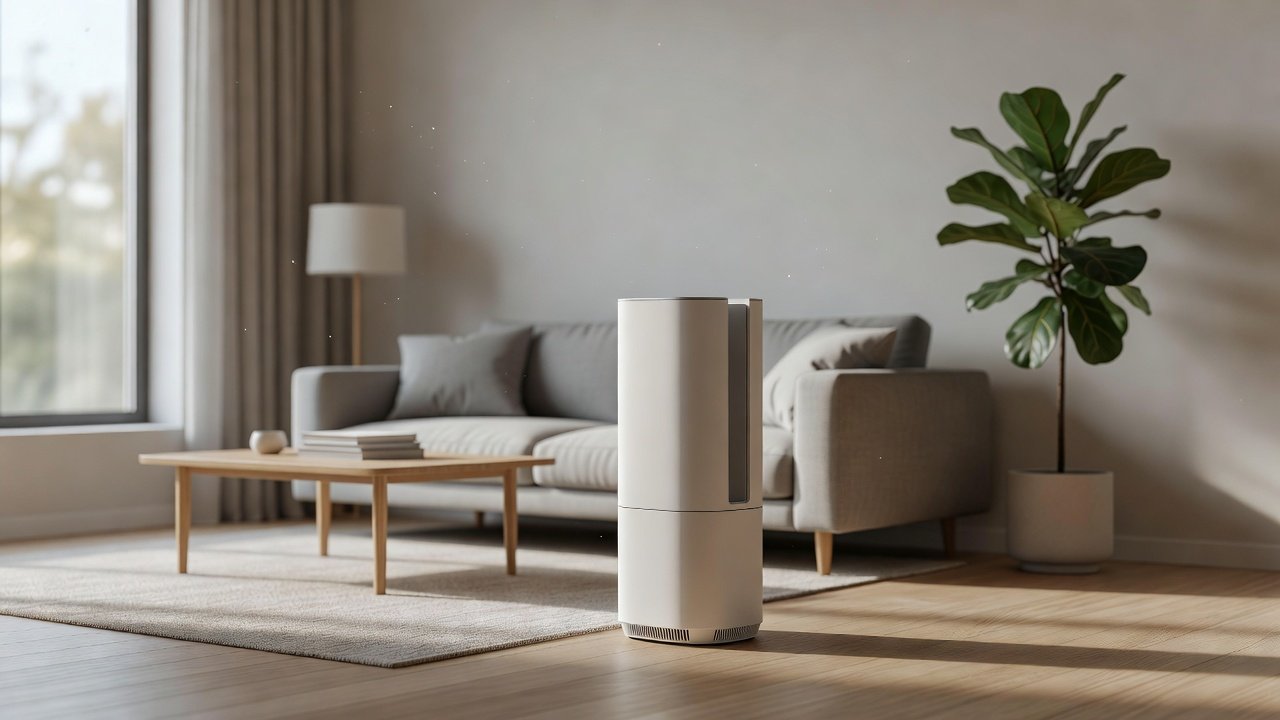
Most combos draw air through a filter and then use the fan to push it out, sometimes with oscillation or a tower design that spreads airflow. Some models separate the fan function from the filter function, so you can run just the fan or just the purifier.
The filter creates resistance, which limits how much air the fan can move at a given speed and noise level.
CADR and Airflow
A purifier’s CADR measures filtered air delivered. A fan’s rating, often in cubic feet per minute, measures air moved, not cleaned. Check that the combo lists a CADR and not just a fan airflow number.
| Rating | What it measures | Use it for |
|---|---|---|
| CADR | Clean air delivered | Sizing the purifier |
| Fan CFM | Air moved | Comfort and cooling |
| Noise | Sound level | Sleep and focus |
A Worked Example: A 140 Square Foot Summer Bedroom
In a 140 square foot bedroom on a warm night, you want gentle airflow and clean air. A combo with a CADR near 100 and a quiet low setting can provide both, as long as the fan stream is not aimed directly at you for hours. If the room is hot enough that you need cooling, a combo will not fix it. Use air conditioning or a dedicated fan for comfort, and the purifier for particles. If you mainly want air movement, check whether the combo’s fan-only mode is quiet and whether it keeps filter use low.
| Need | Combo? | Alternative |
|---|---|---|
| Small room, gentle air movement and cleaning | Good fit | None needed |
| Strong cooling | Poor fit | Fan or air conditioner |
| Large room cleaning | Poor fit | Higher-CADR purifier |
| Quiet sleep | Depends on model | Dedicated quiet purifier |
Tower and Oscillation Designs
Some combos use tall towers with oscillation to spread airflow more widely. Oscillation can help circulate clean air but can also stir up dust that has settled on floors and furniture. Look for a unit with adjustable oscillation and a speed you can set low. A tower that is stable and has a wide base is safer around kids and pets.
Fan-Only Mode and Filter Life
Running the fan without the filter engaged is not a feature on every model. If a combo lets you run the fan only, check whether air still passes through the filter. If it does, filters load as usual and you should plan to replace them on schedule. If it does not, you can use the fan on its own without wearing out the filter, but you are not getting filtration in that mode.
Seasonal Use
In summer, a combo can provide airflow and filtration, but windows should stay closed on high pollen or smoke days. In winter, use it as a purifier on low, with the fan feature minimized to avoid cold drafts. Clean the pre-filter at the change of season and check for dust buildup in the fan housing.
Safety and Placement
Place the unit on a stable, level surface away from water and curtains. Keep cords tidy and out of reach of children and pets. Do not cover the unit or block the intake. Follow the manual for cleaning the fan blades or grilles.
Cost Comparison: One Combo Versus Two Units
A combo costs less than two good units and saves outlets and space, but you may give up some performance in one role. Add up the price of a combo plus filters over two years and compare with a purifier and a fan. If the room is small and the needs are modest, the combo wins. If you need strong results in both functions, separate units can be better value.
How to Choose
- Check the published CADR, not only fan airflow
- Check noise at low and medium speeds
- Confirm True HEPA and filter cost
- Match CADR to room size
- Decide whether you need real cooling
Do
- Match the unit’s rated coverage to your room first
- Run it consistently, not only when the air feels bad
- Leave space around the unit for airflow
- Replace filters on the maker’s schedule
Don’t
- Do not buy on looks or price alone
- Do not block the intake or exhaust
- Do not skip filter changes
- Do not expect a purifier to fix every source of pollution
Honest Limits
- This guide uses manufacturer information and public guidance from the EPA and AHAM, not our own lab tests.
- Features and room ratings change between model years, so confirm on the listing before you buy.
- A purifier is not a medical device and does not replace medical advice or treatment.
Who Should Skip This
Skip combos that list only fan airflow and no CADR.
Skip ionizer and ozone modes; the EPA advises against ozone-generating devices.
When to See a Professional
If you have asthma or allergies, talk to your doctor about a plan. A purifier supports it but does not replace treatment.
If a unit overheats or smells of burning, unplug it and contact the maker.
Frequently Asked Questions
Do air purifier and fan combos work?
They can, in small rooms, if the CADR fits the space. Check that the unit lists a CADR and not only fan airflow.
Do they cool a room?
They move air, which can feel cooler, but they do not reduce room temperature.
Are combos louder than purifiers?
Often at the same airflow, because the fan works against filter resistance. Check reviews for noise.
Can I use only the fan?
Many combos allow fan-only operation, but check whether air still passes through the filter.
What CADR do I need?
About two-thirds of the floor area for 8 foot ceilings.
Where should I put a combo?
Where airflow can circulate, a few feet from walls, not blowing directly on you all night.
How often should I change the filter?
Follow the maker, and check the pre-filter more often in dusty or pollen seasons.
Are combos good for large rooms?
Usually not. Large rooms need higher CADR and stronger cooling than most combos provide.
Do tower combos oscillate?
Many do. Oscillation spreads airflow but may stir up dust.
Are ionizer modes safe?
Some produce ozone, which the EPA advises against.
Bottom Line
An air purifier and fan combo can be a convenient choice for a small room if the CADR and noise levels suit you.
For bigger rooms or stronger cooling, separate units usually perform better.
Related reading: port,bed,fan
Sources: EPA, Guide to Air Cleaners in the Home; AHAM Verifide.