Last updated:
Disclosure: As an Amazon Associate we earn from qualifying purchases. This does not change what we recommend. See our affiliate disclaimer.
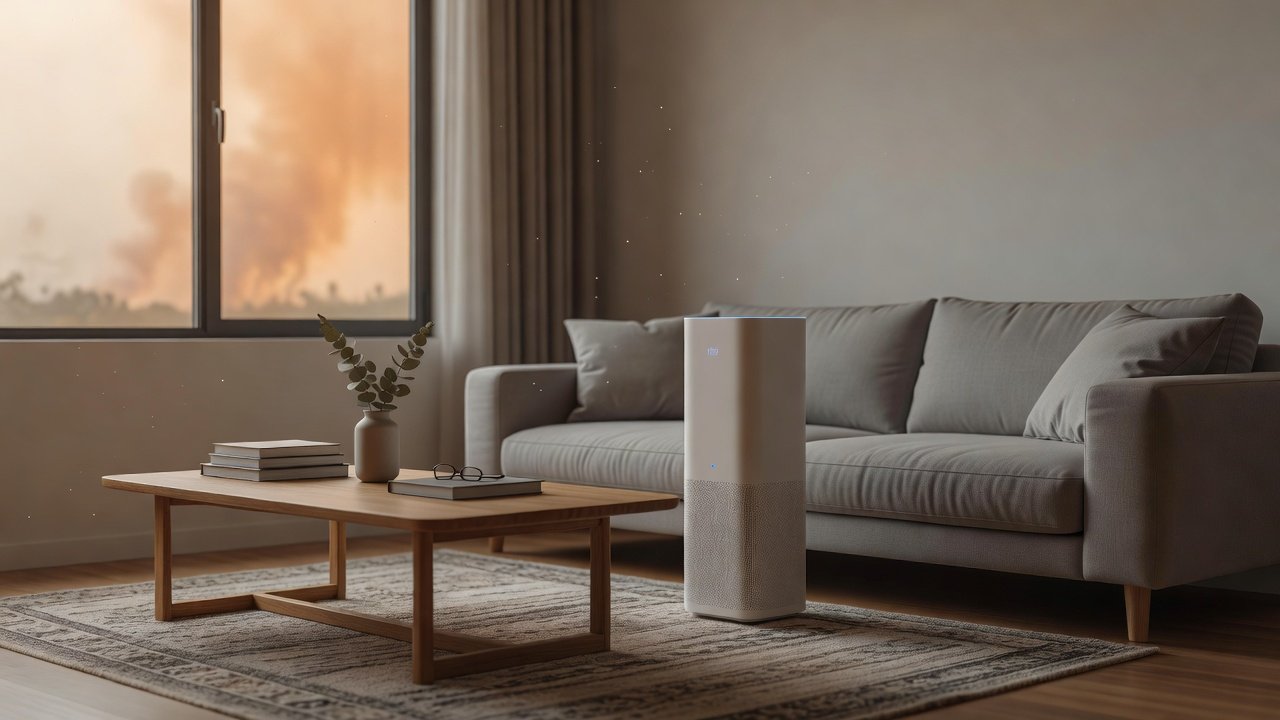
Wildfire smoke is mostly fine particles that slip indoors through gaps, doors and ventilation. A portable air purifier with a true HEPA filter can cut the particles in one room, which is why the EPA recommends creating a cleaner room during smoke events.
The choice that matters most is airflow. A unit that is too small for the room cannot clean the air quickly enough, especially when smoke levels are high. A good setup also depends on closing windows, limiting outside air and keeping filters fresh.
This guide covers how to choose a purifier for smoke, how to size it, how to use it and which larger-room models to compare. The advice follows public guidance from the EPA and AHAM and manufacturer information, not our own lab tests.
Look for
- A true HEPA filter, which captures fine smoke particles
- High airflow for the room size
- An activated carbon layer for odor, with realistic expectations
- Filters that are easy to find and replace
Be careful with
- Ozone-producing devices, which the EPA advises against
- Units that are too small for the room
- Assuming a purifier replaces a respirator outdoors
- Letting filters clog and keep running
Key Takeaways
- Wildfire smoke is mostly fine particles; True HEPA and adequate CADR are the key.
- Make a clean room: close windows and doors and run the purifier in the room you use most.
- Filters clog faster in smoke; check and replace more often.
- Carbon helps with smoke smell but does not stop particles.
- Use the AirNow or a similar index to check outdoor conditions, and act on guidance from health authorities.
- A properly fitted respirator-type mask may help when you must go outside; follow official guidance.
- Avoid ozone and ionizer modes, which the EPA advises against.
Running Costs During a Long Smoke Season
Smoke events can last weeks. Running a purifier at medium or high for long periods uses electricity and loads filters faster. Plan on at least one extra filter set per season in smoke-prone regions, and estimate the monthly cost by multiplying watts by hours and your electricity rate. Keeping the room well sealed lets you run at a lower speed.
After the Smoke Clears
Open the windows when outdoor air quality is good, run the purifier for a while longer, wash bedding and wipe dusty surfaces. Replace filters that look dark or clogged, since they may be spent. Update your supply list for next season.
Top Picks: Larger-Room Air Purifiers
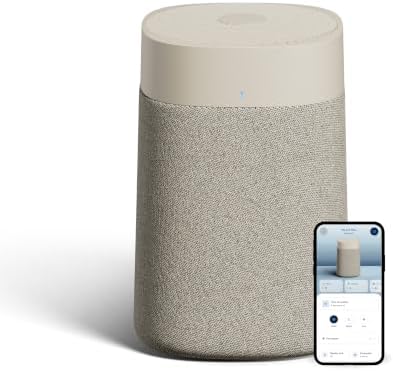
Six models rated for larger rooms, which gives you airflow margin during smoke. Confirm each maker\u2019s rated room size, filter type and replacement filter cost on the listing.





What Wildfire Smoke Does Indoors
Smoke contains very small particles that can travel far from the fire and enter a home through gaps and open windows. These particles can irritate eyes, nose and lungs, and can be more concerning for people with asthma, heart or lung conditions, older adults and children.
Local health guidance changes during smoke events, so check your local air quality alerts and follow advice from your doctor or local health department.
Create a Cleaner Room
The EPA suggests setting up one room with the windows and doors closed and a portable air cleaner running. This is easier than trying to clean the whole home and often gives better results.
Pick a room where you spend the most time, such as a bedroom, and size the purifier for that room.
Sizing for Smoke: Airflow First
Smoke is a lot of fine particles, so airflow matters more than almost anything else. AHAM\u2019s rule of thumb is a clean air delivery rate of about two-thirds of the room\u2019s floor area. During heavy smoke, a unit rated above that gives you a margin.
Check the maker\u2019s rated room size and the smoke clean air delivery rate if it is listed, and choose a unit rated for more than your room if you can.
Filter Types Compared
| Filter type | What it does | Smoke relevance |
|---|---|---|
| True HEPA | Captures fine particles | Core filter for smoke particles |
| Activated carbon | Adsorbs some gases and odors | Helps with odor, has limits and fills up |
| Pre-filter | Catches larger dust and hair | Protects the main filter |
| Ionizer or ozone | Charges particles or produces ozone | Not recommended, see EPA guidance |
Carbon and Smoke Smell
Smoke smell comes from gases as well as particles. An activated carbon layer can reduce some of it, but a thin carbon layer will fill up quickly during a heavy smoke event.
If odor is a top concern, look for a model with a substantial carbon filter and expect to replace it more often than usual.
Using the Purifier During Smoke Days
- Keep windows and doors closed in the room
- Run the purifier on a higher setting while smoke is heavy
- Keep it away from walls and furniture so air can flow
- Run it continuously rather than only when you smell smoke
- Replace filters once they are loaded, following the maker\u2019s guidance
Filters Clog Faster in Smoke
During a smoke event, the filters collect far more particles than normal, so they can fill up and lose airflow sooner. Check the maker\u2019s guidance and look at the filter if airflow seems weak.
Keep a spare set on hand in places that get regular smoke, so you can swap one during a long event.
Other Steps That Matter
A purifier works best with other measures. Set your air conditioner to recirculate if it has that setting, use a high efficiency filter in your HVAC system if it supports it, and avoid activities that add particles, such as frying or burning candles.
When you go outside during heavy smoke, a well-fitted respirator such as an N95 offers protection that a room purifier cannot.
Noise and Running Costs
At higher speeds, purifiers get louder and use more power. Run the unit on a lower setting once smoke eases, and consider a sleep mode for the bedroom.
Filters are the main recurring cost, so check the replacement price before you buy.
A Worked Example: Smoke Day in a 250 Square Foot Bedroom
A 250 square foot bedroom with an 8 foot ceiling needs a smoke CADR near 170 by the two-thirds guideline. For a heavy smoke event, a higher figure helps the room clear faster and keeps up as outdoor air leaks in. Close windows and doors, run the unit on a higher setting at first, then reduce to a sustainable level. Check the pre-filter daily if smoke is thick.
| Condition | Action | Purifier setting |
|---|---|---|
| Light haze | Close windows, monitor | Low to medium |
| Moderate smoke | Clean-room setup | Medium to high |
| Heavy smoke | Stay indoors, follow local guidance | High, check filters often |
Building a Clean Room
- Choose a room with few windows and doors, often a bedroom
- Seal gaps with weatherstripping where practical
- Keep the door closed
- Run the purifier continuously during smoke
- Avoid activities that add particles, such as frying or burning candles
- Use a fresh HVAC filter rated MERV 13 or higher if your system supports it, and set the fan to recirculate
Checking Outdoor Conditions
Official air quality indexes and local health agencies publish forecasts. Follow their guidance on when to stay indoors, reduce outdoor activity and when it is safe to ventilate. When the smoke clears, open windows and run fans to bring in fresh air.
Smoke Smell and Residue
Smoke leaves odors on fabrics and surfaces. A carbon layer can reduce some smell, but cleaning and airing out are needed. Wash bedding, wipe surfaces and run the purifier after the event. Smoke particles can also leave residue on walls.
Masks and Going Outside
Standard cloth and surgical masks are not designed to filter fine smoke particles well. Well-fitted respirator-type masks may help. Follow guidance from public health agencies, and note that fit matters as much as the rating.
Preparing Before Smoke Season
Buy filters ahead of time, test the clean-room setup, replace HVAC filters and know your local alert system. Check that you have enough supply of any medications you use, and talk with your doctor about an action plan if you have a respiratory condition.
How to Choose
- Choose one main room and measure its floor area.
- Pick a unit rated above that area for a margin in heavy smoke.
- Require a true HEPA filter and avoid ozone-producing devices.
- Add a carbon layer if odor matters, and plan to replace it often.
- Check noise on the lowest and highest settings.
- Stock a spare set of filters before smoke season.
Do
- Match the unit’s rated coverage to your room first
- Run it consistently, not only when the air feels bad
- Leave space around the unit for airflow
- Replace filters on the maker’s schedule
Don’t
- Do not buy on looks or price alone
- Do not block the intake or exhaust
- Do not skip filter changes
- Do not expect a purifier to fix every source of pollution
Honest Limits
- This guide uses manufacturer information and public guidance from the EPA and AHAM, not our own lab tests.
- Features and room ratings change between model years, so confirm on the listing before you buy.
- A purifier is not a medical device and does not replace medical advice or treatment.
Who Should Skip This
Skip small desktop units for smoke events; they do not move enough air.
Skip ozone and ionizer modes; the EPA advises against them.
When to See a Professional
If you have asthma, heart disease or other conditions that make smoke dangerous, follow your doctor’s plan and local health guidance.
If you have trouble breathing, chest pain or severe symptoms, seek medical care.
Frequently Asked Questions
Do air purifiers help with wildfire smoke?
True HEPA purifiers can reduce fine smoke particles indoors when sized properly and used with windows closed.
What CADR do I need?
About two-thirds of floor area for standard ceilings, and more for heavy smoke or leaky rooms.
How often should I change filters during smoke?
Check daily in heavy smoke and replace when clogged or on the maker’s schedule. Filters can need replacing sooner.
Does carbon help with smoke?
It reduces some odor, but particles need HEPA.
What is a clean room?
A room with windows and doors closed and a purifier running, where you spend most of your time during smoke.
Should I open windows?
Not during heavy smoke. Ventilate when outdoor air quality improves.
Do masks help?
Well-fitted respirator-type masks may help outdoors. Cloth masks are less effective for fine particles.
Can my HVAC help?
A MERV 13 or higher filter helps if your system supports it. Run the fan on recirculate.
Is ozone safe for smoke smell?
The EPA advises against ozone generators.
How do I clear smoke smell afterward?
Ventilate when safe, wash fabrics, wipe surfaces and run the purifier with a carbon layer.
Bottom Line
For wildfire smoke, size comes first, then a true HEPA filter, then a carbon layer for odor. Close the room, run the unit continuously and keep spare filters ready.
A purifier helps, but follow local air quality alerts and medical advice, especially if you or someone at home has a lung or heart condition.
Related reading: bed,sens,fan
Sources: EPA, Guide to Air Cleaners in the Home; AHAM Verifide.