Last updated:
Disclosure: As an Amazon Associate we earn from qualifying purchases. This does not change what we recommend. See our affiliate disclaimer.
Formaldehyde is a volatile organic compound, a gas released by some pressed-wood furniture, flooring, cabinets, paints, glues and other products, especially when they are new. Because it is a gas, a HEPA filter does not capture it.
Air purifiers that claim to help with formaldehyde rely on activated carbon or other sorbents, and their effect depends on how much material they hold and how much formaldehyde is in the air. The EPA is clear that reducing the source and ventilating are the most effective steps.
This guide explains how formaldehyde gets into homes, what a purifier can realistically do, what to look for and which larger-room models to compare. It is general information, not medical advice. If you are concerned about exposure or symptoms, talk to your doctor. Recommendations follow manufacturer information and public guidance, not our own tests.
What helps most
- Removing or reducing the source
- Ventilating, especially with new products
- A purifier with a substantial carbon filter as an extra layer
What does not work
- A HEPA filter alone, which captures particles not gases
- Ozone generators, which the EPA advises against
- Expecting a small unit to clear a heavily loaded room
Key Takeaways
- HEPA filters do not capture gases such as formaldehyde; activated carbon can adsorb some, but capacity is limited.
- Source control and ventilation are the main ways to reduce formaldehyde and other VOCs.
- New furniture, flooring and pressed-wood products are common sources; let items off-gas in a ventilated space.
- Size by CADR for particles; for gases, check carbon weight and replacement cost.
- Be skeptical of claims that a purifier removes all chemicals.
- Testing can show whether levels are an issue, and professionals can help with hazardous situations.
- Avoid ozone and ionizer modes, which the EPA advises against.
Building a Practical Plan for a Single Room
Start with the room people spend the most time in, usually the bedroom. List what is new or strongly scented: furniture, flooring, paint, cleaning products. Remove or relocate what you can, ventilate as much as the weather permits and run the purifier on a moderate setting during the first weeks. Re-check how the room smells after a month; if odors have faded, you can cut back on running time.
Keep a simple note of dates: when items arrived, when you started ventilating and when you changed the carbon filter. It makes it easier to judge whether things are improving.
Cost of Carbon Over Time
Heavy chemical loads use carbon faster, so the replacement cost matters more here than in a normal home. Compare the price and expected life of replacement filters before you buy. A unit with a large, replaceable carbon cartridge may cost more up front but save money if you need continuous gas adsorption over several months.
Top Picks: Larger-Room Purifiers With Carbon Filtration
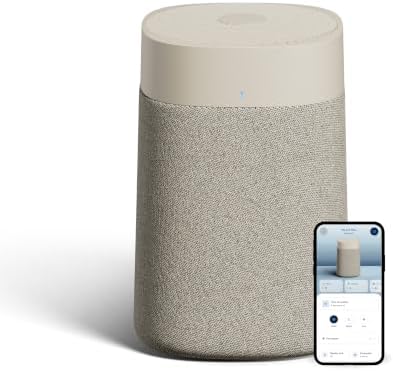
Six models rated for larger rooms. Check each listing for the amount and type of carbon, the maker\u2019s rated room size and any claims about gases, and treat those claims carefully.





Where Formaldehyde Comes From
Many homes have small amounts of formaldehyde. Common sources include pressed-wood products made with certain resins, such as some plywood, particleboard and fiberboard, plus new furniture, cabinetry, laminate flooring, some paints and glues, and combustion such as smoking and gas appliances.
Levels tend to be higher in new or recently renovated homes and in warm, humid conditions, and they usually fall over time.
HEPA Does Not Capture Gases
A true HEPA filter traps particles, and formaldehyde is a gas. It passes straight through a HEPA filter. Any benefit has to come from another filter stage that can adsorb or break down gases.
That is why a purifier that lists only HEPA is not a formaldehyde purifier, however good it is at dust.
What the Filter Stages Do
| Stage | Captures | Formaldehyde relevance |
|---|---|---|
| True HEPA | Fine particles | None for gases |
| Activated carbon | Some gases and odors | Can adsorb some, limited capacity |
| Treated carbon or other sorbents | Specific gases, as the maker states | May improve capture, check the claims |
| Ionizer or ozone | Produces charged particles or ozone | Not recommended by the EPA |
Source Control and Ventilation Come First
The EPA recommends reducing sources where possible, for example by choosing products labeled low-emitting, and increasing ventilation, especially after bringing in new furniture or flooring. Keeping indoor temperature and humidity moderate also helps reduce emissions.
Open windows when weather allows, use exhaust fans and let new items air out in a garage or well-ventilated room before bringing them in if you can.
How Much Carbon Do You Need?
Capacity matters because carbon fills as it adsorbs gases. A purifier with a thick bed of granular carbon holds more than one with a thin carbon-coated sheet, and it lasts longer.
Look at the listing for the weight or description of the carbon filter and check reviews for how quickly the unit stops working on odors, which is a rough sign the carbon is full.
Sizing and Airflow
Choose a unit rated above your room size, using the maker\u2019s listing. More airflow means more air passes through the carbon, and a larger unit can run on a lower, quieter speed.
In a new or renovated room, run the purifier continuously and open windows when you can.
Claims to Treat With Caution
Some products promise to destroy or eliminate formaldehyde using catalysts, photocatalytic coatings or UV. Check whether the maker gives specific test conditions and whether those tests were independent.
Be wary of ozone, plasma or ionizing claims, and read the EPA guidance on air cleaners before relying on them.
Filters, Cost and Replacement
Carbon filters are often the most expensive part to replace. Compare price and life, and plan for earlier replacement in a new or renovated space, when the carbon works hardest.
Do not wash or reuse carbon filters unless the maker says you can.
When to Test or Get Help
If you have symptoms such as irritation of the eyes, nose or throat after new furniture or renovation, or you are concerned about exposure, speak to your doctor. Home test kits and professional testing exist, and a professional can advise on how to reduce levels.
A Worked Example: New Furniture in a Bedroom
You bring home a pressed-wood dresser and a new mattress for a 200 square foot bedroom. Off-gassing is usually highest at first and fades over time. Air the items in a garage or open space if possible, open windows during the first weeks and keep the room ventilated. A purifier with a thick carbon bed can help with odors, but it will not replace ventilation, and its capacity will be used up faster the more it has to adsorb.
| Source | Examples | First step |
|---|---|---|
| Pressed wood | Cabinets, shelves | Ventilate, choose low-emitting products |
| Flooring and adhesives | Laminate, vinyl | Air out, ventilate |
| Fabrics and mattresses | New bedding | Air before use |
| Paints and finishes | Wall paint | Choose low-VOC, ventilate |
What Carbon Can and Cannot Do
Activated carbon adsorbs some volatile organic compounds, but each filter has finite capacity. Thin carbon sheets saturate quickly. Thicker beds last longer but do not make the air risk free. Carbon does not capture every gas equally, and some gases pass through. Treat it as a supplement to ventilation.
Choosing Low-Emitting Products
- Look for products labeled low-VOC or low-emitting by recognized programs
- Buy solid wood or finished products that have already off-gassed when possible
- Let new items air out before bringing them into bedrooms
- Avoid unneeded fragranced products
- Store paints and solvents outside living areas
Ventilation Strategy
Open windows for cross-ventilation when outdoor air quality allows, and use exhaust fans. In tightly sealed homes, a heat or energy recovery ventilator can bring in fresh air. If you are renovating, ask your contractor about ventilation during and after work.
Testing and Next Steps
Consumer formaldehyde test kits and monitors exist, but they vary in accuracy. If you are concerned, consider professional testing. The EPA provides guidance on formaldehyde and other indoor pollutants, and it is a good starting point for deciding what to do.
How to Choose
- Reduce and ventilate before you buy anything.
- Measure the room and choose a unit rated above it.
- Look for a substantial carbon filter, not only HEPA.
- Treat specific formaldehyde claims with caution.
- Compare carbon filter cost and replacement schedule.
- Skip ozone-producing devices.
Do
- Match the unit’s rated coverage to your room first
- Run it consistently, not only when the air feels bad
- Leave space around the unit for airflow
- Replace filters on the maker’s schedule
Don’t
- Do not buy on looks or price alone
- Do not block the intake or exhaust
- Do not skip filter changes
- Do not expect a purifier to fix every source of pollution
Honest Limits
- This guide uses manufacturer information and public guidance from the EPA and AHAM, not our own lab tests.
- Features and room ratings change between model years, so confirm on the listing before you buy.
- A purifier is not a medical device and does not replace medical advice or treatment.
Who Should Skip This
Skip purifiers that promise to remove all chemicals; no consumer unit can.
Skip ozone generators; the EPA advises against them.
When to See a Professional
If you have strong chemical odors, headaches or irritation that you link to a product or room, ventilate and talk to a doctor or an industrial hygienist.
For major renovations or suspected hazardous materials, consult qualified professionals.
Frequently Asked Questions
Do HEPA filters remove formaldehyde?
No. HEPA captures particles, not gases. Carbon may adsorb some formaldehyde, but capacity is limited.
What is the best way to reduce formaldehyde?
Control the source, choose low-emitting products and ventilate. A purifier is a supplement.
How much carbon do I need?
More carbon generally lasts longer. Look for the stated weight and the replacement cost.
How long do new products off-gas?
Emissions are highest early and decline over time, but the pace depends on the product and conditions.
Can I test my home for formaldehyde?
Consumer kits exist but vary in accuracy. Professional testing is more reliable.
Does humidity affect formaldehyde?
Warm, humid conditions can increase emissions from some materials. Keep the home ventilated and moderately humid.
Are ozone purifiers safe?
The EPA advises against ozone-generating devices because ozone can irritate the lungs.
Should I run the purifier all the time?
During heavy off-gassing, running it can help with odor, but ventilation is the main tool.
How often should I replace the carbon filter?
When odors return or on the maker’s schedule. High chemical loads use it up faster.
Are plants a solution?
Plants have little measurable effect on indoor air at household scales. Ventilation is far more effective.
Bottom Line
For formaldehyde, the order is reduce the source, ventilate, then filter. A purifier with a thick carbon filter can help, but a HEPA filter alone will not.
Choose a larger-room unit with a substantial carbon filter, run it continuously after renovation and replace the carbon on time.
Related reading: bed,sens,port
Sources: EPA, Guide to Air Cleaners in the Home; AHAM Verifide.