Last updated:
As an Amazon Associate we earn from qualifying purchases. This does not change what we recommend. See our affiliate disclaimer.
A low price on an air purifier can be a smart buy or an expensive mistake. Some affordable units use the same kind of true HEPA filter and sensible design as pricier ones. Others cut corners on airflow, use filters that are hard to find, or add features that do little for clean air.
The trouble is that the box rarely tells you which kind you have. Marketing language such as “medical grade,” “99% effective” and “covers 1,000 square feet” sounds precise but often hides the numbers that matter, such as clean air delivery rate, filter type and the long-term cost of replacement filters.
This guide shows how to shop for a budget air purifier without relying on a price tag or a star rating. We do not quote prices, because they change daily and vary by store. Instead, we focus on the specifications you can check, the features worth paying for and the ones you can skip.
Spend your limited money on the right size, a real true HEPA filter and replacement filters you can keep buying. Match CADR to your room using the EPA rule of about two-thirds of the floor area for an 8-foot ceiling, avoid ozone-producing devices, and confirm every specification on the current listing.
Work through the sections in order. The table below is a shortcut, and the FAQ near the end covers the questions shoppers ask most about cheap purifiers.
A budget unit may suit you if
- You are cleaning one bedroom, office or small living area
- You can confirm a CADR that fits the room
- You are comfortable buying replacement filters on a schedule
- You value a simple unit with few extras
Think twice if
- You need to clean a large open space on a tight budget
- The listing hides CADR or filter type
- Replacement filters are hard to find or unclear
- The product relies on ionizers or ozone to clean air
Key Takeaways
- A smaller room is the best way to stretch a budget, because the unit can be small and still effective.
- CADR matters more than coverage claims, so aim for about two-thirds of your floor area for an 8-foot ceiling.
- True HEPA is worth insisting on, since “HEPA-type” and “HEPA-like” are not the same thing.
- Check that replacement filters are available before you buy the unit.
- Skip ozone generators and be careful with ionizers, because the EPA advises against ozone-producing air cleaners.
- Noise on high speed is a common weakness of cheap units, so check low-speed performance.
- Confirm every specification on the current listing and an independent source.
Affordable Air Purifiers to Compare
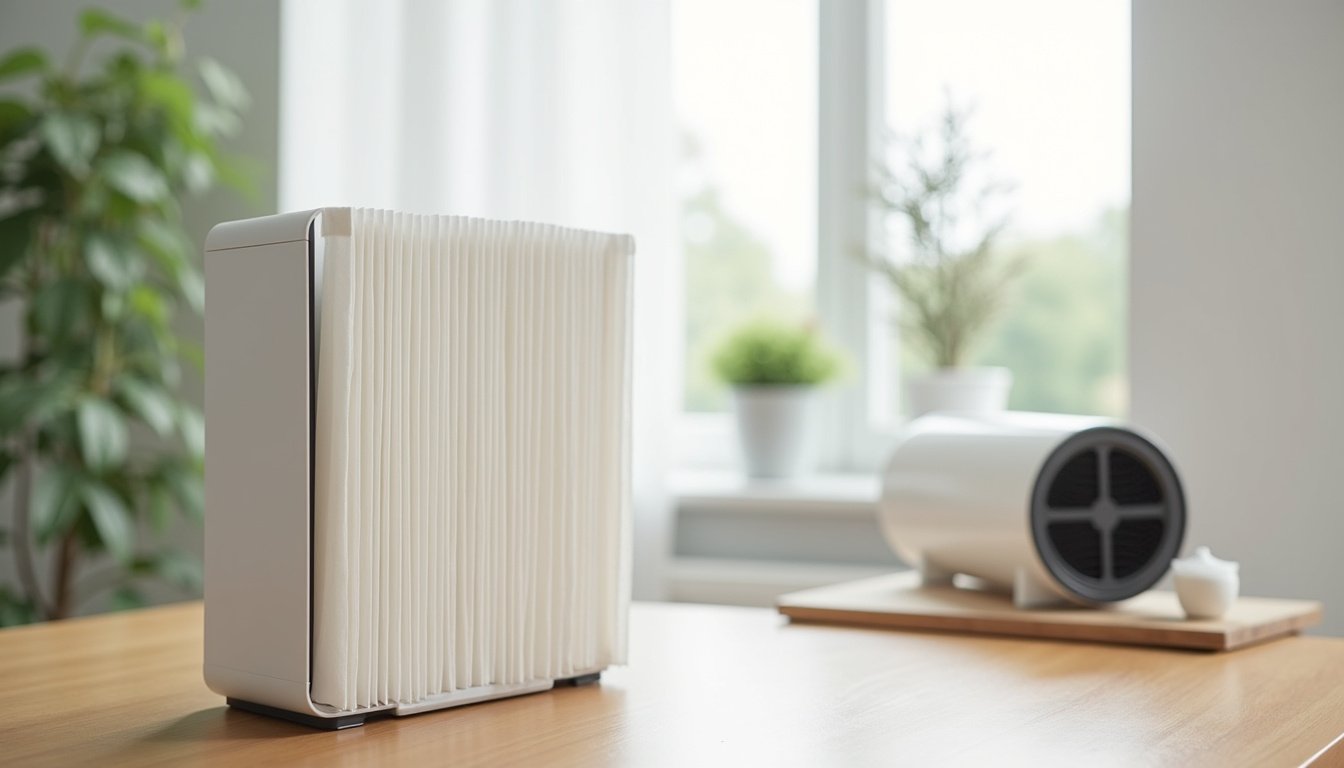
The table below lets you compare air purifiers side by side. Check CADR, filter type and replacement filter availability against the room you measured, and ignore the marketing claims.






How We Approached This Guide
We reviewed how the EPA and AHAM explain clean air delivery rate and room sizing, how filter types differ, and the most common mistakes shoppers make with low-cost purifiers. We did not test any unit, and we do not quote prices or ratings.
Start With the Room, Not the Price
The cheapest way to get good air cleaning is to buy the right size for one room. An oversized unit costs more up front and to run, while an undersized unit never catches up and runs loudly on high.
Measure your room and multiply length by width. The EPA suggests choosing a unit with a CADR of about two-thirds of the floor area for an 8-foot ceiling, and that is the number to compare against the listing.
- Measure the room length and width in feet.
- Multiply to get square feet.
- Multiply by two thirds to get a target CADR.
- Add margin for tall ceilings or open doorways.
| Room area | Approximate target CADR | Typical space |
|---|---|---|
| 100 sq ft | About 65 | Small office or nursery |
| 200 sq ft | About 130 | Average bedroom |
| 300 sq ft | About 195 | Large bedroom |
CADR and Coverage Claims
CADR stands for clean air delivery rate. It measures how much filtered air a unit delivers, tested under standard conditions. A higher CADR means faster cleaning for a given room.
Many low-cost listings advertise a large coverage area instead of CADR. Coverage claims can assume a slow rate of air changes or a favorable test, so they flatter the unit. If a listing does not show CADR, treat that as a warning sign.
| What you see | What it usually means | What to do |
|---|---|---|
| A large coverage number only | May assume few air changes per hour | Look for CADR and use the two-thirds rule |
| CADR from the maker | Test results, sometimes certified | Check whether it is independently verified |
| Certified CADR listing | Verified by a testing program | Most trustworthy for comparison |
The AHAM Verifide directory lists certified CADR values for many models, which is a helpful check when a budget brand makes bold claims.
True HEPA Versus Look-Alikes
A true HEPA filter is designed to capture a very high share of tiny airborne particles. Cheaper listings sometimes use terms such as “HEPA-type,” “HEPA-like” or “99% filter” that sound similar but do not mean the same thing.
- Look for the words “true HEPA” and a filter model you can look up.
- Be cautious when a listing says only “HEPA-type” or “high efficiency.”
- Remember that a good filter in a weak fan still delivers less clean air.
Filter Costs Over Time
The purchase price is only part of the cost. Filters wear out, and the yearly cost of replacements can exceed the savings from a cheap unit. Check the replacement filter before you commit.
| Question | Why it matters | How to check |
|---|---|---|
| Is the replacement filter sold separately? | Some units are hard to refill | Search for the filter by model |
| How often does it need replacing? | Drives the yearly cost | Follow the manual and inspect the filter |
| Is there a washable pre-filter? | Can extend filter life | Read the filter description |
- Write down the filter model before buying the unit.
- Do not run the unit without its filter in place.
- Replace sooner after smoke, renovation or heavy dust.
A washable pre-filter, where the manual allows it, catches hair and large dust and can stretch the life of the more expensive layers. Never wash a true HEPA filter.
Ozone, Ionizers and Features to Avoid
The EPA advises against ozone generators sold as air cleaners, because ozone can irritate the lungs and is not an effective way to clean indoor air. Some cheap units add ionizers or similar features that can produce small amounts of ozone.
- Avoid products that advertise ozone as a benefit.
- Prefer filter-only operation if you have asthma or lung sensitivity.
- Be skeptical of claims that a device “kills” viruses without evidence.
Noise and Everyday Use
Budget units often sound fine on low and loud on high. Published decibel figures are measured in test rooms, usually at low speed, so they can flatter the unit.
If the purifier will sit in a bedroom, check that the lowest speed still moves enough air for the room, and look for a sleep mode that dims or turns off the display.
Features Worth Paying For and Ones to Skip
On a tight budget, put money into airflow, true HEPA and filter availability first. Extras are nice, but they add cost without cleaning more air.
| Feature | Worth it? | Why |
|---|---|---|
| Sleep mode | Often yes | Helps use the unit nightly |
| Filter change reminder | Sometimes | A reminder, not a measurement |
| App and Wi-Fi | Usually not | Convenience, not cleaning |
| Air quality color ring | Optional | Small sensors give estimates |
A simple unit with strong airflow often beats a feature-heavy unit with weak airflow. Choose features for how you will use the unit, not for how they look on the box.
Placement and Setup
Where you put the unit affects how well it works. Give it space on all sides and keep it away from walls and furniture that block airflow.
- Keep it a few inches from walls and curtains.
- Close doors and windows while it runs.
- Place it near the area where you spend the most time.
- Keep it away from the bed headboard so air does not blow on you.
Running it continuously on a low or medium speed usually works better than short bursts on high.
Running Costs and Upkeep
Most purifiers use modest electricity, but running costs add up over a year, especially for units left on high. Choosing the right size lets you run on a lower, quieter, cheaper speed.
- Vacuum the pre-filter every few weeks if the manual allows it.
- Wipe the intake and sensor window with a dry cloth.
- Note the filter replacement date in your calendar.
- Store a spare filter if the model is hard to find.
How to Choose in 6 Steps
- Measure the room and calculate the target CADR.
- Shortlist units whose CADR meets that target.
- Confirm the filter is true HEPA and replacements are available.
- Skip ozone-producing and unverified ionizing features.
- Check low-speed airflow and noise for your use.
- Verify specifications on the manufacturer page and an independent source.
Do and Do Not
Do
- Size the unit to the room
- Insist on true HEPA
- Check replacement filter availability
- Run it steadily on a low or medium speed
Do not
- Do not trust coverage claims alone
- Do not buy ozone generators
- Do not ignore filter costs
- Do not rely on a purifier for a medical condition
Who Should Skip This
Skip this guide if you need advice about a health condition. A purifier is a household tool, not a treatment, so ask a clinician about health decisions.
Skip it if you want a ranked list of the cheapest models. We do not quote prices because they change often.
Honest Limits
- We have not tested any unit and we show no prices or ratings.
- Model names, filters and specifications change often, so check the current listing.
- Sensor readings and filter indicators are estimates, not laboratory measurements.
When to See a Professional
If you have asthma, severe allergies or another health concern, talk to a clinician about what is right for you.
If you suspect mold, gas or combustion problems at home, call a qualified professional rather than relying on a purifier.
Frequently Asked Questions
Are cheap air purifiers worth buying?
They can be, if the unit has true HEPA, a CADR that fits your room and replacement filters you can keep buying. Low price alone is not a reason to buy, because weak airflow or hard-to-find filters can cost more later.
What CADR do I need for a bedroom?
Measure the room and aim for a CADR of about two-thirds of the floor area for an 8-foot ceiling. For a 200 square foot bedroom, that is roughly 130, and a little more gives you room to run on a quieter speed.
How can I tell if a filter is true HEPA?
Look for the words “true HEPA” in the product details and a filter model you can look up. Phrases such as “HEPA-type,” “HEPA-like” or “HEPA technology” do not guarantee the same performance, so read the description carefully.
Are ionizers safe in a cheap purifier?
The EPA advises against ozone generators, and ionizing features can produce small amounts of ozone. If a budget unit uses ionization, check that you can switch it off and look for certification details. Filter-only operation is the safer default.
How often do budget filters need replacing?
Follow the manual, since schedules vary by model and by how much dust, smoke and pet hair your home has. Inspect the filter, and replace it sooner if airflow drops or odors return despite regular cleaning.
Do I need an app or Wi-Fi?
No. The app adds schedules and remote control, but the unit cleans air the same way without it. On a tight budget, spend on airflow and filters first, and treat connected features as optional extras.
Is a bigger cheap unit better than a small good one?
Not always. A larger unit can clean faster, but it may be louder and cost more to run and filter. Match CADR to the room, and prefer a verified true HEPA unit over a bigger one with unclear specifications.
Can one purifier clean my whole home?
Usually not. A purifier works best in one room with the door closed. For a whole home you may need several units or a better central system filter, and the EPA explains how HVAC filters can help.
Can I wash a HEPA filter?
Do not wash a true HEPA filter, because water can damage the fibers. Some pre-filters can be vacuumed or rinsed if the manual allows it. Let any washable part dry completely before reinstalling, and follow your model’s instructions.
Where can I confirm specifications?
Use the manufacturer page for the exact model and an independent source such as the AHAM Verifide directory for certified CADR values. Versions and filters change over time, so check the current listing before you buy.
Bottom Line
A budget air purifier works best when you shop on facts: the right CADR for your room, a real true HEPA filter and replacement filters you can keep buying. Skip ozone-producing features and ignore inflated coverage claims.
Confirm the details on the current listing, plan the yearly cost of filters, and keep expectations realistic: a purifier helps with airborne particles, not every indoor air problem.
Related reading: washable versus replaceable filters, true HEPA versus HEPA-type filters, small rooms versus large rooms.