Last updated:
Disclosure: As an Amazon Associate we earn from qualifying purchases. This does not change what we recommend. See our affiliate disclaimer.
Some air purifiers include a fragrance or aromatherapy feature that releases scent into the room. The appeal is obvious: a home that smells fresh as well as being filtered. The conflict is just as clear: fragrance adds chemicals and particles to the air, which is the opposite of what most people want from a purifier, especially if anyone in the home has sensitivities.
This guide explains how scent features work, what to weigh before buying one, who should avoid them and how to get a fresh-smelling home by removing odors instead of covering them. Choices come from our affiliate table, which lists purifiers for general use. Our guidance follows EPA and AHAM information and is not based on our own lab testing.
A scent feature may suit you if
- No one in the home is sensitive to fragrance
- You can turn it off and use it sparingly
- You still prioritize CADR and filters
Skip it if
- You or others have asthma, allergies or fragrance sensitivities
- You want the cleanest air you can get
- You have pets or babies in the room
Key Takeaways
- Scent features add fragrance; they do not improve filtration.
- Fragrance can irritate sensitive people and can react with other indoor chemicals.
- Carbon, source cleaning and ventilation remove odors rather than covering them.
- Choose by CADR, True HEPA, noise and filter cost first.
- Make sure the purifier works fully with the scent feature off.
- Avoid scent features around babies, pets and people with asthma or allergies.
- Avoid ozone and ionizer modes, which the EPA advises against.
Reading the Listing: Scent Claims to Question
Listings may use phrases such as aromatherapy purifier, fresh air technology or natural fragrance. Ask what chemicals the scent contains, whether the maker publishes an ingredient list and whether the scent feature has been tested for effects on indoor air. If you cannot find answers, assume the product adds a mixture of volatile compounds. Check the user manual for warnings about use near children, pets and people with asthma. A responsible maker will state how to disable the scent function and how to use the purifier without it.
Pay attention also to what the listing says about filters and CADR. If the description spends more words on scent than on airflow and filtration, the product is probably built around the fragrance rather than around cleaning the air.
A Simple Test Before You Commit
If you do buy a scented model, test the purifier without scent for a week to judge noise and performance. Then try the scent briefly in a ventilated room and watch for headaches, coughing or irritation in everyone who uses the space. If anyone reacts, remove the scent and stick to the purifier alone. Keep the return window in mind and document any issues. A good purifier should satisfy you without fragrance, which is a sign that you chose the right base unit.
When Scent Is a Reasonable Choice
For some households, a light, optional scent is a harmless pleasure. If you live alone, have no sensitivities and use the feature sparingly in a ventilated room, the risk is small. The key is to keep scent separate from cleaning: judge the purifier on its airflow and filters, and treat fragrance as a minor extra. If you notice any irritation, stop. A gentle, natural approach, such as fresh flowers or an open window, can deliver much of the same pleasure without chemicals or devices.
Top Picks: Air Purifiers
These options come from our affiliate table. Check the listing for the current CADR, filter type and replacement cost.






Odor Removal Is Different From Scent Addition
Activated carbon adsorbs some odor molecules from the air, which is a real way to reduce smells. Scent features mask smells by adding another. If your problem is cooking, pet or smoke odor, a carbon bed and source control will do more than fragrance.
| Approach | What it does | Notes |
|---|---|---|
| Activated carbon | Adsorbs some odors | Limited capacity, needs replacement |
| Source cleaning | Removes the cause | Most effective |
| Ventilation | Dilutes odors | Depends on outdoor air |
| Fragrance | Masks odor | Adds chemicals |
Who Should Avoid Scented Purifiers
People with asthma, allergies or fragrance sensitivities, babies and young children, pregnant people and pets should avoid added fragrance. If you share a space with others, ask before introducing scent.
If You Choose a Scented Model
Use the scent feature sparingly or not at all, choose products with clear ingredient lists and keep the room ventilated. Check that the scent can be turned off completely and that the purifier works fully without it.
Checking Filters and Performance First
Do not let fragrance drive your decision. Choose by CADR for your room, True HEPA, noise and filter cost. Treat scent as an optional extra at best.
Ozone and Ionizer Warnings
Some scented or aroma-enabled purifiers also include ionizers. The EPA advises against ozone-generating air cleaners. Prefer filter-only designs.
Fresh-Smelling Home Without Fragrance
Empty trash, wash fabrics, clean drains, ventilate, use baking soda in refrigerators and run a purifier with carbon. These steps address causes rather than covering them.
How Scent Features Work
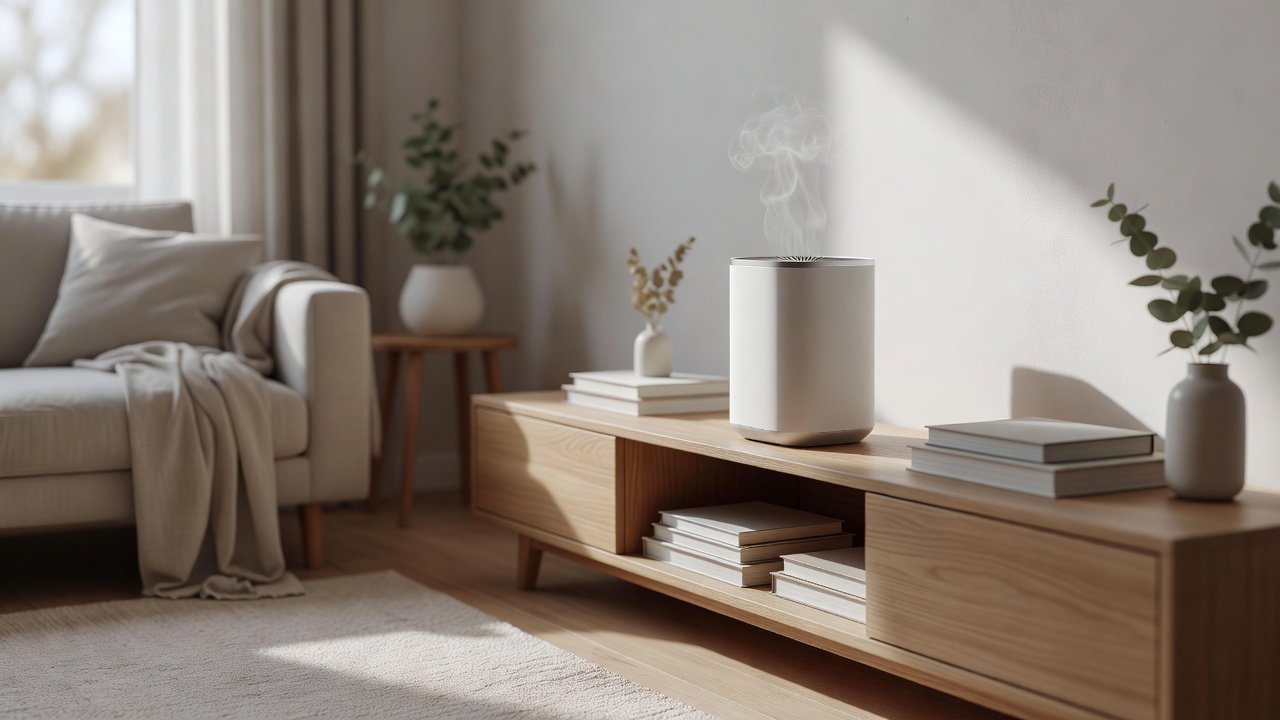
Some purifiers include a tray or pad for essential oils or a cartridge that releases fragrance into the airflow. Others include aroma diffusers that mist scented liquids. A few are marketed as purifying and perfuming at the same time.
The scent is an addition to the purifier, and it does not improve filtration.
Why Fragrance and Clean Air Conflict
Fragrances are mixtures of volatile compounds, and some can react with other indoor chemicals to form new pollutants. Scented products can also trigger headaches, breathing irritation or asthma symptoms in sensitive people.
If your goal is to reduce pollutants, adding fragrance moves in the other direction.
A Worked Example: Fresh Smell for a 250 Square Foot Living Room
You want your living room to smell fresh after cooking. A fragrance feature will add a smell, but the cooking odor molecules remain. A better approach is to run the range hood while you cook and for a few minutes after, open a window if outdoor air is good, wipe the stovetop and counters and run a purifier with a thick carbon bed at medium for 30 minutes. If a lingering smell remains, check trash, drains and fabrics. After a week of these habits, the room will usually smell better without any added scent, and you will have avoided adding fragrance chemicals to the air.
| Odor source | What helps | Why |
|---|---|---|
| Cooking | Range hood, carbon, ventilation | Removes or dilutes molecules |
| Pets | Washing bedding, carbon | Cleans the source |
| Smoke | HEPA, carbon, cleaning | Particles and gases |
| Musty smell | Fix moisture, ventilate | Source is damp |
Essential Oils and Aromatherapy
Essential oils are natural but not harmless. Some can irritate the airways and skin, and they can be toxic to pets, particularly cats. If you use diffusers, follow the maker’s guidance, use them in ventilated rooms and keep pets and children away. Do not put essential oils in a purifier unless the manual allows it, since oils can damage filters and plastic parts.
Fragrance Chemistry in Brief
Fragrances release volatile organic compounds, and some of those compounds can react with ozone to form formaldehyde and ultrafine particles. This is another reason to avoid ozone-generating devices. If you want to limit chemicals in your home, minimizing scented products is a simple step.
Choosing Unscented Alternatives
Look for unscented cleaning products, unscented laundry detergent and fragrance-free personal care products. Open windows regularly. Use a simmer pot of citrus peel on the stove for a short time if you want a natural scent during gatherings, and then ventilate. These options give you control and avoid permanent fragrance sources.
When Your Nose Is the Best Guide
Your sense of smell can tell you when a source needs attention. A lingering stale smell suggests a source to clean. A sharp chemical smell suggests ventilation is needed. A purifier with carbon can help bring odor levels down, and cleaning and ventilation keep them down.
Care for a Purifier With Scent Parts
If the unit has a scent tray or cartridge, clean and replace it as directed. Residue can build up and cause odors or clog parts. Keep the scent feature separate from the filter path where possible. If the scent smells off or stale, remove it and clean the area.
How to Choose
- Choose by CADR, True HEPA and noise first
- Prefer a thick carbon bed for odors
- Skip or minimize fragrance features
- Avoid ionizer and ozone modes
- Ventilate and clean the source of odors
Do
- Match the unit’s rated coverage to your room first
- Run it consistently, not only when the air feels bad
- Leave space around the unit for airflow
- Replace filters on the maker’s schedule
Don’t
- Do not buy on looks or price alone
- Do not block the intake or exhaust
- Do not skip filter changes
- Do not expect a purifier to fix every source of pollution
Honest Limits
- This guide uses manufacturer information and public guidance from the EPA and AHAM, not our own lab tests.
- Features and room ratings change between model years, so confirm on the listing before you buy.
- A purifier is not a medical device and does not replace medical advice or treatment.
Who Should Skip This
Skip scent features if anyone in the home has asthma, allergies or fragrance sensitivities.
Skip ionizer and ozone modes; the EPA advises against ozone-generating devices.
When to See a Professional
If you experience headaches, cough or breathing trouble near fragrance, move to fresh air and talk to a doctor.
If a pet shows signs of distress near essential oils, contact your vet.
Frequently Asked Questions
Do air purifiers with scent clean better?
No. Cleaning depends on CADR and filters. Scent is an added feature.
Is fragrance bad for indoor air?
Fragrances release volatile compounds that can irritate sensitive people and react with other chemicals.
Can I put essential oils in my purifier?
Only if the manual allows it. Oils can damage filters and parts.
How do I get rid of odors instead of covering them?
Clean the source, ventilate and use a purifier with a thick carbon bed.
Are essential oils safe for pets?
Some are toxic, especially to cats. Check with your vet and keep pets away from diffusers.
Does carbon remove all smells?
It adsorbs some odors, but capacity is limited. Replace it when smells return.
Are scented purifiers safe for babies?
Avoid added fragrance around babies. Talk to your pediatrician.
Can fragrance trigger asthma?
It can in some people. Avoid scent features if you are sensitive and follow your doctor’s advice.
Should I avoid ionizer modes?
Some produce ozone, which the EPA advises against.
What should I buy instead?
A filter-only purifier with True HEPA and carbon, sized for your room.
Bottom Line
Fragrance features add chemicals to the air and are not a substitute for odor removal. A purifier with True HEPA and carbon, plus cleaning and ventilation, gives a fresher home.
If you do use scent, keep it minimal and watch for irritation.
Related reading: bed,fan,lw
Sources: EPA, Guide to Air Cleaners in the Home; AHAM Verifide.