
Last updated:
Disclosure: As an Amazon Associate we earn from qualifying purchases. This does not change what we recommend. See our affiliate disclaimer.
Activated carbon is the part of a purifier that handles odors and some gases such as cooking smells and household fumes. A HEPA filter alone does not.
The amount of carbon matters. A thin carbon-coated sheet works briefly, while a thick bed of granular carbon lasts longer and does more.
This guide explains how carbon filters work, how to size a carbon purifier for a large room and which models to compare. The recommendations follow manufacturer information and public guidance, not our own tests.
Carbon helps with
- Cooking, pet and smoke odors
- Some household gases
- A fresher feel in large living areas
Carbon is limited by
- Capacity, since it fills up
- Thin layers that fade fast
- Strong chemicals that need ventilation
Key Takeaways
- Activated carbon adsorbs gases and odor molecules; the amount and thickness of carbon decide how long it works.
- A thin carbon sheet saturates quickly; a thick bed of granular carbon lasts longer and does more.
- Carbon does not capture particles; pair it with a True HEPA filter.
- Size by CADR for the room, then check how much carbon the unit contains and what replacement costs.
- Carbon cannot stop the source: ventilate, clean and remove odor sources first.
- Carbon is not a safe-exposure device for hazardous chemicals; follow safety guidance.
- Avoid ozone and ionizer modes, which the EPA advises against.
Top Picks: Large-Room Purifiers With Carbon Filtration
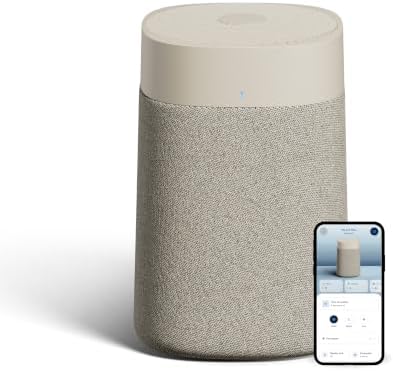
Six models rated for larger rooms. Check each listing for carbon filter details, rated room size and replacement cost.





How Activated Carbon Works
Carbon has a huge surface area with tiny pores. Gas molecules stick to it as air passes through, which is called adsorption.
Once the pores are full, odors pass through again, so the carbon needs replacing.
Thin Carbon vs Thick Carbon
| Type | Capacity | Lifespan |
|---|---|---|
| Carbon-coated mesh or sheet | Low | Short |
| Granular carbon bed | High | Longer |
| Carbon plus other sorbents | Varies | Varies |
Sizing for a Large Room
Choose a unit rated above your floor area using the maker\u2019s listing. AHAM suggests a clean air delivery rate of about two-thirds of the area.
A larger unit lets you run on a lower speed while still passing a lot of air through the carbon.
HEPA and Carbon Together
The best purifiers pair a true HEPA filter for particles with a carbon filter for gases and odors. Neither does the other\u2019s job.
Check both filters on the listing.
What Carbon Cannot Do
- Remove carbon monoxide or radon
- Remove strong chemical fumes effectively
- Replace ventilation
- Work forever without replacement
Placement and Airflow
Place the unit centrally with clear airflow around it. In a large open space, a central position helps more air pass through the filters.
Replacement and Cost
Carbon filters are often the most expensive filter to replace, so compare cost and life.
Heavy odors shorten carbon life.
Noise and Running
Large units can be loud on high. Choose one rated well above your space so you can run on low or medium most of the time.
Carbon Filters and Real-World Odors
Real homes mix odors, so carbon works against a blend of cooking smells, pet odors, candles, cleaning products and furniture off-gassing. Each competes for the same limited surface area, which is why the carbon in a busy kitchen can fill faster than in a quiet bedroom.
A larger bed of carbon gives more capacity, and more airflow through it gives you more contact with the air. That is why large rooms and heavy odor loads point toward bigger units rather than small ones with thin carbon sheets.
Do not judge by the first week alone. Many filters seem to work well when new and fade as they fill, so watch how the room smells after a month or two and plan replacements before the odor returns.
Carbon, VOCs and Ventilation
Carbon can adsorb some volatile organic compounds, the gases given off by paints, cleaning sprays, new furniture and flooring. How well it does depends on the compound and on how much carbon the unit has.
The EPA advises reducing the source and ventilating when you can, because filtration alone is rarely the whole answer. After painting or installing new flooring, open windows and run the purifier on a higher setting, and expect to replace the carbon sooner.
If you are sensitive to fumes or have a health condition, talk to your doctor and avoid relying on a purifier as your only protection.
Adsorption in One Paragraph
Activated carbon is full of microscopic pores that give it a huge internal surface area. Gas molecules stick to that surface by a process called adsorption. Odor molecules, some solvents and many everyday chemicals can be trapped this way. When the surface is full, no more molecules stick and the filter stops working, which is why carbon filters have a limited life.
How quickly this happens depends on how much carbon you have, how concentrated the odor is and how fast air moves through the bed.
A Worked Example: Cooking Odors in a Large Open Room
A 600 square foot open kitchen and living area with a 9 foot ceiling needs a CADR near 400 for particles. For odors, add a carbon bed of meaningful size. A thin layer of carbon fabric may handle light odors but will saturate fast if you cook strongly flavored foods every night. A bed of several pounds of granular carbon in a larger unit lasts far longer.
If you cook often, treat the carbon filter as a consumable and plan to replace it every few months. If your nose says the odor is back, the carbon is probably full.
Types of Carbon Filters
| Type | Typical form | Strength | Limit |
|---|---|---|---|
| Carbon-coated pre-filter | Thin impregnated sheet | Cheap, light odors | Saturates quickly |
| Carbon fabric or cloth | Layer in a filter stack | Moderate odors | Limited capacity |
| Granular carbon bed | Pellets in a tray or pouch | Best capacity | Heavier, costs more |
| Impregnated carbon | Treated for certain gases | Targets specific gases | Check what it targets |
The word carbon on a listing is not enough. Look for the weight or thickness, and read reviews from people with the same odor problem.
What Carbon Cannot Do
Carbon is not a cure for chemical hazards. It does not remove carbon monoxide, radon or most combustion gases. It is not a substitute for a respirator or ventilation when you work with solvents or paints. It does not stop mold growth. And it does not capture particles, so smoke is only partly handled: HEPA captures the particles, carbon helps with some of the smell.
Caring for a Carbon Filter
- Keep the unit away from humid spots like bathrooms, which can saturate carbon faster
- Store spare carbon filters sealed until needed
- Replace on schedule or when odors return
- Do not wash carbon filters unless the maker says so
- Keep the pre-filter clean so dust does not coat the carbon
Choosing Between Models
Compare the weight of carbon listed, the replacement price and the type of carbon. Combine that with the CADR for particles. A powerful fan with a thin carbon layer will move lots of air with little odor removal. A balanced design with a thick carbon bed and a good fan handles both.
Placement for Odor Control
Place the unit near the odor source but not so close that grease or steam reaches the filter. In a kitchen-adjacent space, a spot a few feet from the cooking area works. In a pet room, place it where air flows past the litter box or bed, but not right next to it. Keep doors closed so the unit works on a defined volume.
How to Choose
- Measure the room.
- Pick a unit rated above it.
- Check the amount and type of carbon.
- Confirm a true HEPA filter.
- Compare carbon filter cost and life.
- Plan for replacement in heavy-odor homes.
Do
- Match the unit’s rated coverage to your room first
- Run it consistently, not only when the air feels bad
- Leave space around the unit for airflow
- Replace filters on the maker’s schedule
Don’t
- Do not buy on looks or price alone
- Do not block the intake or exhaust
- Do not skip filter changes
- Do not expect a purifier to fix every source of pollution
Honest Limits
- This guide uses manufacturer information and public guidance from the EPA and AHAM, not our own lab tests.
- Features and room ratings change between model years, so confirm on the listing before you buy.
- A purifier is not a medical device and does not replace medical advice or treatment.
Who Should Skip This
Skip units with only a thin carbon sheet if odors are your main concern.
Skip ozone-based odor removal. The EPA advises against it.
When to See a Professional
If you smell gas, burning or chemical fumes you cannot identify, leave the area and call the appropriate emergency or utility number.
For chronic odors tied to mold, plumbing or hazardous materials, consult a qualified professional.
Frequently Asked Questions
What does an activated carbon filter do?
It adsorbs gas and odor molecules onto its porous surface, reducing some smells and chemicals in the air. It does not capture particles, so it works with a HEPA filter.
How long does a carbon filter last?
It depends on the amount of carbon and the odor load. Thin layers may last weeks to a few months, thicker beds longer. Replace when odors return or on the maker’s schedule.
Is more carbon always better?
For odors, generally yes, as long as the unit still moves enough air. A thick bed in a unit with a weak fan can restrict airflow, so check CADR too.
Can I wash a carbon filter?
Usually not. Washing may clog pores or damage the filter. Follow the maker’s instructions and replace it when it is full.
Does carbon remove smoke?
It helps with smoke odor, but particles need a HEPA filter. Together they handle both the particles and some of the smell.
Can carbon remove VOCs?
It can adsorb some volatile organic compounds, but capacity is limited. Source control and ventilation are more important for VOC exposure.
Where should I put a purifier for odors?
Near the odor source but not so close that steam or grease reaches the filter. Keep doors closed and the intake clear.
Do I still need ventilation?
Yes. Ventilation brings in fresh air and dilutes pollutants. A purifier supports it but does not replace it.
Are ozone odor removers safe?
The EPA advises against ozone-generating devices because ozone can irritate the lungs. Use carbon and ventilation instead.
How do I know when carbon is used up?
When odors come back or the filter reaches the end of its stated life. Keep a note on the calendar and keep a spare on hand.
Bottom Line
For odors, carbon is the key and the amount matters. Choose a large-room purifier with a thick carbon filter and a true HEPA filter.
Plan for carbon replacement and ventilate for strong chemicals.
Related reading: bed,sens,fan
Sources: EPA, Guide to Air Cleaners in the Home; AHAM Verifide.