Last updated:
Disclosure: As an Amazon Associate we earn from qualifying purchases. This does not change what we recommend. See our affiliate disclaimer.
Commercial spaces differ from homes in size, occupancy, ventilation and rules. A purifier for an office, shop or classroom should be sized for the floor area and ceiling height, use true HEPA filtration and fit a maintenance plan. For large or regulated spaces, ask a ventilation professional or your building manager, since air cleaners supplement rather than replace ventilation.
This guide covers sizing, filters, noise, placement, maintenance and what to ask before buying. We have not tested these products ourselves, so confirm specifications on product pages. Nothing here is medical advice.
Consider
- CADR for the space
- True HEPA
- Maintenance plan
Check first
- Building and safety rules
- Ventilation
- Noise limits
Key Takeaways
- Size for floor area and ceiling height
- Choose true HEPA without ozone
- Plan maintenance
- Check building rules
Questions to Ask a Supplier
Ask for independent CADR test results, filter specifications, noise at each speed, filter costs, warranty and support. Ask about ozone emissions and safety certifications.
Request references from similar businesses.
Working With Your HVAC
Portable units supplement central ventilation. Ask your HVAC contractor whether higher-grade filters in the system are possible and what ventilation rates are in place.
Placement Examples
Place units at the edge of open areas with clearance, avoid exits and walkways, secure cords and keep them away from heat sources.
Common Mistakes
Buying too small, ignoring maintenance, placing units in corners and relying on ozone or ionizing features are common mistakes.
Keeping Staff Informed
Tell staff how the units work, who maintains them and who to contact with issues.
How Commercial Spaces Differ
Offices, shops, studios, and classrooms have more people per square foot than homes, more doors opening and closing, higher ceilings, and often a mechanical ventilation system already in place. Occupancy drives carbon dioxide and odors, foot traffic drives dust, and in retail the door is a constant source of outdoor air. A purifier plan for a business has to account for the volume, the occupancy, and the existing ventilation rather than simply scaling up a home approach.
In most commercial spaces the ventilation system does the bulk of the work; portable purifiers fill gaps.
Sizing a Commercial Space
Measure the floor area and ceiling height and multiply to get the volume. Decide how many air changes per hour you want; many guidelines for offices and classrooms suggest several, with more for crowded or sensitive settings. Convert the target to a required clean air delivery rate and divide among several units. A single giant unit in a corner serves the corner; several medium units spread across the floor serve the room.
- Volume equals floor area times ceiling height
- Choose a target air changes per hour
- Required CADR equals volume times target divided by 60
- Split the total across units placed through the space
Features That Matter at Work
True HEPA for particles, a carbon stage if there are odors from printing, cooking, or products, and a washable pre-filter for foot-traffic dust. Noise matters more than at home because people are talking and concentrating; look for the rating at the working speed. Lockable or tamper-resistant controls stop staff and customers from switching units off. Wheels help with cleaning around them. Avoid ozone and ionizer features in occupied spaces.
Placement in Open-Plan Rooms
Place units at the edges of the main working areas, not in corners or behind partitions, with intakes facing the room. Keep them out of walkways and away from exits and fire equipment. In retail, position units away from the door so they are not fighting outdoor air at the threshold. In classrooms, a unit at the front and one at the back serves better than one by the teacher’s desk. Secure cords to avoid trip hazards.
Working With the Building’s Ventilation
Ask the facilities team or an HVAC contractor what outdoor air rate the system delivers, what filter grade it uses, and whether a higher MERV filter is possible. Improving the central filtration often does more than adding portable units. Portable purifiers then target meeting rooms, reception areas, and spaces with specific problems. Document the plan so it survives staff changes.
Maintenance in a Business
- Assign a named person for filter checks
- Clean pre-filters weekly in busy spaces
- Replace carbon when odors return and HEPA on a fixed calendar
- Keep spare filters on site
- Log each change by unit and date
A maintenance log is also useful if staff raise air quality concerns or an inspector asks.
Rules, Records, and Staff
Check local workplace and building regulations on ventilation, and follow any occupational health guidance for your type of business. Tell staff what the units do, who maintains them, and whom to tell if they notice problems. Purifiers support a ventilation plan; they do not replace legal requirements for fresh air. Nothing here is legal advice; consult the relevant authorities for your location.
Final Word
Size commercial purifiers by volume and occupancy, spread several units across the floor, choose true HEPA with carbon and no ozone, and give one person the maintenance log. Treat them as a supplement to the building’s ventilation rather than a substitute, and check the workplace rules that apply to your premises.
Air Purifiers for Large Spaces
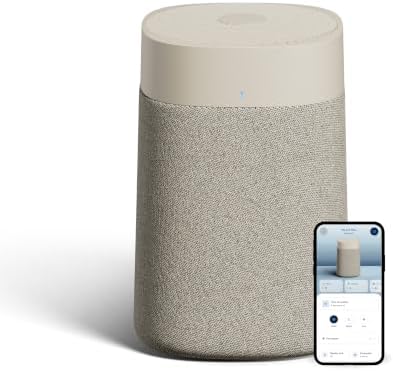
These picks come from the Hostinger affiliate plugin. Specs change by model year, so confirm filter type, CADR, noise and replacement filter costs on the product page.





Start With the Space
Measure floor area and ceiling height and note how many people use the space. Higher ceilings and occupancy raise the airflow you need.
Check whether the space has mechanical ventilation and who is responsible for it.
Sizing With CADR
A common guide is a CADR of about two thirds of the floor area at 8 foot ceilings. Larger spaces may need several units rather than one, placed to cover different zones.
Plan for extra capacity so units can run at lower, quieter speeds.
Filters
Choose true HEPA for particles and add a carbon stage if odors matter. Check replacement costs and availability, since business use wears filters faster.
Noise and Placement
Noise matters in offices and classrooms. Check decibel ratings at working speeds. Place units with clearance and away from workers’ direct airflow.
Rules and Safety
Check local building, fire and workplace rules, and avoid ozone-emitting devices. Ask your facilities team or an HVAC professional about suitability.
Offices
Open-plan offices benefit from several units spread out. Keep desks clear of direct airflow and set quiet speeds.
Review ventilation settings with facilities.
Shops and Retail
Customers come and go and doors open often. Choose units with enough CADR and keep them in less obtrusive spots.
Plan for dust and odors.
Classrooms and Studios
Check occupancy, noise and ventilation. Smaller classrooms may fit a single unit, while larger halls need several.
Follow school guidance.
Maintenance Schedule
Assign someone to check filters monthly and replace them on schedule. Keep a log and stock spares.
Record filter changes.
Costs
Compare purchase price, filter costs and energy use over a year. Several smaller units may cost more to maintain than one larger unit.
Ask about warranties.
How to Choose
- CADR suited to the floor area
- True HEPA filtration
- Reasonable noise at working speed
- Affordable replacement filters
Do
- Match the unit’s rated coverage to your room first
- Run it consistently, not only when the air feels bad
- Leave space around the unit for airflow
- Replace filters on the maker’s schedule
Don’t
- Do not buy on looks or price alone
- Do not block the intake or exhaust
- Do not skip filter changes
- Do not expect a purifier to fix every source of pollution
Honest Limits
- This guide uses manufacturer information and public guidance from the EPA and AHAM, not our own lab tests.
- Features and room ratings change between model years, so confirm on the listing before you buy.
- A purifier is not a medical device and does not replace medical advice or treatment.
Who Should Skip This
When to See a Professional
Frequently Asked Questions
How do I size a unit?
Use CADR of about two thirds of the floor area at 8 foot ceilings, with margin.
Do I need several units?
Large or irregular spaces often do.
Who maintains them?
Assign a person and keep a log.
Are ozone devices okay?
No; the EPA advises against them.
Bottom Line
Size units for the space, choose true HEPA, plan maintenance and check local rules. Ask a professional for large or regulated spaces.
Related reading: sens,fan,bed
Sources: EPA, Guide to Air Cleaners in the Home; AHAM Verifide.