Last updated:
Disclosure: As an Amazon Associate we earn from qualifying purchases. This does not change what we recommend. See our affiliate disclaimer.
A compact air purifier is the easiest way to add filtration to a bedroom without taking over a nightstand or a corner. The catch is that small cases often hide small fans, so the useful question is not how tiny a unit is but how much air it moves and how quiet it is when it does.
This guide explains how to size a compact unit, which features matter in a sleeping space and where compact designs fall short. Product choices come from the table below, and nothing here is based on our own lab tests.
A compact unit fits if
- Your bedroom is under about 200 square feet
- You want a quiet low setting for sleep
- Space on the nightstand or floor is limited
Look at a larger unit if
- The room is open to a hallway or loft
- You have pets that shed heavily
- Smoke or cooking odors reach the bedroom often
Key Takeaways
- Size a compact unit by CADR, about two-thirds of the floor area for standard ceilings.
- A quiet low setting and dimmable lights matter more than a sleek case.
- Small filters load faster, so check replacement price and availability.
- Compact units suit rooms up to roughly 200 square feet; bigger rooms need more airflow.
- Keep intake and exhaust clear, away from bedding and curtains.
- Thin carbon layers fade quickly; do not rely on them for strong odors.
- Avoid ozone and ionizer modes, which the EPA advises against.
Reading a Spec Sheet Without Getting Fooled
Compact purifier listings often lead with big claims: coverage in square feet, a number of air changes per hour or a long list of filter stages. The figures that matter are the CADR for smoke, dust and pollen, the filter type and the noise at low and high speed. Coverage claims are often based on a different assumption, such as one air change per hour, which is far slower than the roughly 4.8 changes per hour AHAM uses for its two-thirds guideline.
When a listing gives an area rating but no CADR, divide the area by 1.5 to estimate the CADR the maker implies. If a unit is advertised for 400 square feet but has a CADR of 100, the numbers do not match the standard rule.
Cost Over Two Years
Compare the purchase price plus two years of filters and electricity. A compact unit that costs $20 less but needs a $35 filter every six months will cost more than a pricier unit with a $25 filter every year. Add up the filter schedule before you decide. Also check that the filters are widely available, since some compact models use proprietary sizes that go out of stock.
Bedroom Habits That Help a Purifier Do Its Job
- Wash bedding weekly in hot water if the fabric allows
- Vacuum with a sealed HEPA vacuum rather than sweeping
- Keep windows closed during high pollen or smoke days
- Leave shoes at the door
- Declutter dusty surfaces around the bed
- Keep pets off the bed if allergies are a concern
These small habits reduce the load on the filter and extend its life.
A Simple Test Before You Commit
After you set up the unit, give it a week. Note the noise on low at bedtime, whether the display bothers you and whether the room feels fresher in the morning. Check the pre-filter after two weeks; a visible layer of dust shows the unit is capturing particles. If the sound is irritating or the light cannot be turned off, use the return window while you still have it.
Keep the box and packing until you are sure. Compact units are easy to return and easy to resell, so a short trial costs little.
Questions Worth Asking Before You Buy
- Does the listing show a CADR for smoke, dust and pollen?
- How much does a replacement filter cost, and how long does it last?
- Is the lowest speed truly quiet, according to independent reviews?
- Can I turn off the display and any ionizer mode?
- Is the warranty at least a year, and who handles claims?
Top Picks: Compact Air Purifiers for Small Rooms
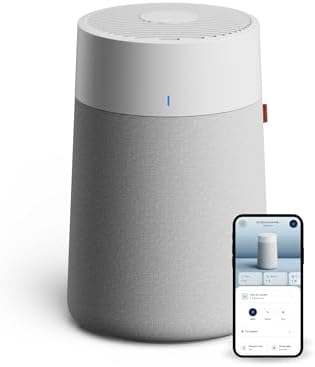
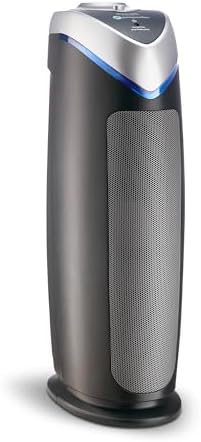
These compact options come from our affiliate table. Check the listing for the current CADR, filter type and replacement cost.




Noise Matters More Than Style
In a bedroom, the lowest speed is the one you will live with. Check whether the maker publishes a decibel figure for low and whether reviewers describe a hum, a click or a whistle. Display lights should dim or turn off.
Filters in Small Cases
True HEPA is the standard for capturing fine particles. Small units tend to have smaller filters, so they load faster and cost more per month of use. Check the price of a replacement set before you buy.
A thin carbon layer can reduce some odors but fades quickly. Do not expect it to handle a strong smell.
Placement in a Small Room
Keep the intake and exhaust clear of curtains and bedding, and leave several inches of space around the unit. A bedside table at a distance of a few feet works well. Avoid corners, which restrict airflow.
What Compact Really Means
Compact usually describes the footprint, not the capacity. Units from a foot tall to about two feet tall can carry very different fans and filters. A small case can be fine in a 120 square foot room and wholly inadequate in a 250 square foot one.
Look for a stated CADR from AHAM or the maker. If a listing gives only an area claim and no CADR, treat the claim with caution.
Sizing a Compact Purifier for a Bedroom
AHAM suggests a CADR of about two-thirds of the floor area for rooms with 8 foot ceilings. A 150 square foot bedroom points to a CADR near 100, and a 200 square foot room points to about 135.
| Bedroom size | Suggested CADR | Notes |
|---|---|---|
| 100 sq ft | 70 or more | Small guest room or nursery |
| 150 sq ft | 100 or more | Typical small bedroom |
| 200 sq ft | 135 or more | Add margin if doors open often |
A Worked Example: 140 Square Foot Bedroom With a Small Nightstand
Take a 140 square foot bedroom with an 8 foot ceiling and a nightstand 14 inches deep. The two-thirds guideline points to a CADR near 95. A compact unit rated 100 to 130 fits, and the extra margin covers the door being opened. Place it on the nightstand or a low stool a few feet from your pillow, with at least six inches of clear space on all sides.
If the only suitable spot is behind a dresser, the unit will underperform. Airflow matters as much as the number on the box.
Compact Features That Are Worth Having
- A low setting that stays quiet in a still room
- A display that dims or turns off at night
- A filter-change indicator you can ignore until it lights up
- A washable pre-filter, which extends the main filter life
- A power cord long enough to reach the outlet without a strip
- A stable base that will not tip if bumped
Features You Can Skip
Voice assistants, fragrance cartridges and decorative lights add cost without improving cleaning. Ionizer modes can produce ozone, and the EPA advises against ozone-generating devices. If a model has an ionizer you can switch off, leave it off.
When to Move Up From Compact
If you wake with a stuffy nose despite a properly sized unit, if the room is open to a hallway or if pets sleep with you, a larger unit with more airflow can run quieter at a lower speed. A bigger fan turning slowly is often more peaceful than a small fan working hard.
Running It Overnight
Run the unit continuously on low or a sleep mode. Starting it an hour before bed on medium clears the room before you sleep. Check the pre-filter every couple of weeks and mark your replacement dates on a calendar.
How to Choose
- Measure the bedroom and find the CADR target
- Check the low speed noise level
- Confirm True HEPA and the replacement filter price
- Look for dimmable lights and a sleep mode
- Leave space around the unit when you place it
Do
- Match the unit’s rated coverage to your room first
- Run it consistently, not only when the air feels bad
- Leave space around the unit for airflow
- Replace filters on the maker’s schedule
Don’t
- Do not buy on looks or price alone
- Do not block the intake or exhaust
- Do not skip filter changes
- Do not expect a purifier to fix every source of pollution
Honest Limits
- This guide uses manufacturer information and public guidance from the EPA and AHAM, not our own lab tests.
- Features and room ratings change between model years, so confirm on the listing before you buy.
- A purifier is not a medical device and does not replace medical advice or treatment.
Who Should Skip This
Skip a compact unit if your bedroom is much larger than 200 square feet.
Skip ionizer and ozone modes; the EPA advises against ozone-generating devices.
When to See a Professional
If you have asthma or allergies that disturb sleep, talk to your doctor. A purifier supports a plan but does not replace treatment.
If a unit smells of burning or overheats, unplug it and contact the maker.
Frequently Asked Questions
Do compact air purifiers work?
They can, if the CADR fits the room. Many small cases move little air, so check the stated CADR rather than the size.
What CADR do I need for a bedroom?
About two-thirds of the floor area for 8 foot ceilings. A 150 square foot room points to a CADR near 100.
Are compact purifiers quiet?
The low setting is often quiet, but noise varies by model. Check reviews and published decibel figures.
How often should I replace the filter?
Follow the maker’s schedule, usually every 6 to 12 months for HEPA. Small filters can load faster in dusty homes.
Where should I place it?
A few feet from the bed on a stable surface, with clear space around the intake and exhaust.
Can it help with odors?
A thin carbon layer may help a little. For strong odors, fix the source and ventilate.
Should I run it all night?
Yes, on a quiet low or sleep setting, if you find the sound comfortable.
Is a HEPA-type filter the same as True HEPA?
No. True HEPA meets a defined standard. HEPA-type is a marketing term.
Do I need a compact unit for each bedroom?
One per room you want treated. Doors should stay closed while they run.
Are ionizer modes safe?
Some produce ozone, which the EPA advises against. Prefer filter-only operation.
Bottom Line
A compact purifier works well when its CADR matches the room and its low speed is quiet. Size first, then noise, then filters.
If your room is larger than about 200 square feet, step up to a larger unit instead of running a compact one on high.
Related reading: bed,fan,lw
Sources: EPA, Guide to Air Cleaners in the Home; AHAM Verifide.