Last updated:
Disclosure: As an Amazon Associate we earn from qualifying purchases. This does not change what we recommend. See our affiliate disclaimer.
People searching for an industrial air purifier usually mean one of two things: a heavy-duty unit for a dusty home workshop or garage, or a high-capacity cleaner for a large room. Consumer-grade larger purifiers can help with fine dust, but they are not designed for hazardous workplaces.
In a real industrial setting, safety rules, ventilation and respirators come first. An air purifier supports good practice but does not replace it, and a general HEPA unit does not remove gases, fumes or hazardous vapors.
This guide explains what heavy-duty means, how to size for a large space, what these units cannot do and which larger-room models to compare. It is general information, not workplace safety advice. Follow OSHA or local rules for your site. Recommendations follow manufacturer information and AHAM and EPA guidance, not our own tests.
Heavy-duty units suit
- Fine dust in workshops
- Large open rooms
- Garages and hobby spaces
- Higher airflow needs
They do not replace
- Ventilation and extraction
- Respirators where required
- Hazard controls for fumes and chemicals
- Professional air monitoring
Key Takeaways
- Heavy-duty purifiers help with fine dust in large rooms and workshops, but they do not replace dust extraction, ventilation or respirators.
- HEPA captures particles, not gases or solvent fumes; carbon helps with some odors but is not a hazard control.
- Size by CADR: about two-thirds of the floor area for standard ceilings, more for tall ceilings or heavy dust.
- Control dust at the source with extraction, sealed work areas and wet cleaning before relying on a room purifier.
- Workshop filters load quickly; use a washable pre-filter and check it often.
- Do not use purifiers around flammable fumes unless they are rated for it, and avoid ozone-producing devices.
- For hazardous workplaces, follow OSHA or local rules and professional advice.
Top Picks: High-Airflow Purifiers for Large Spaces
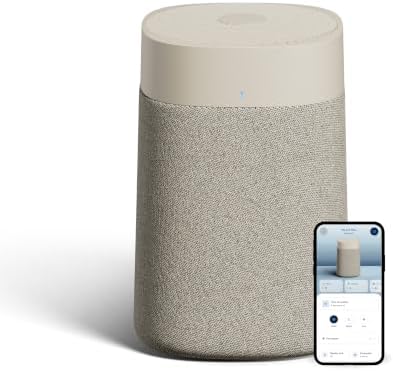
Six larger-room HEPA purifiers. These are consumer models, not certified for hazardous industrial use. Check rated room size and filter costs.





What Heavy-Duty Means
There is no single definition. In practice it means higher airflow, bigger filters and sturdier construction than a typical bedroom unit. Some models are marketed for commercial spaces.
Check the real specifications: CADR, filter type and the maker\u2019s stated room size.
Sizing a Large Space
AHAM\u2019s guideline is a CADR of about two-thirds of the floor area for standard ceilings. A 1,000 square foot workshop would want roughly 670. High ceilings and heavy dust call for more.
Several units can cover a space more evenly than one.
What a HEPA Unit Can and Cannot Do
| Hazard | Purifier role |
|---|---|
| Fine dust | Can reduce with HEPA |
| Wood and drywall dust | Use extraction and respirators at the source |
| Gases and solvent fumes | Not removed by HEPA |
| Odors | Carbon helps a little |
| Hazardous materials | Follow safety rules and use professionals |
Pre-Filters and Heavy Dust
Heavy dust loads clog filters quickly. Choose a unit with a washable or inexpensive pre-filter and check it often.
Filters in workshop use may need replacing sooner than the maker\u2019s usual schedule.
Noise and Placement
Larger units can be loud on high. Place them where air can circulate and away from direct sources of dust where possible.
Keep the intake clear of tool dust plumes and mount or position the unit safely.
Safety Basics
- Avoid ozone-generating devices
- Follow OSHA or local workplace rules
- Use proper respiratory protection where required
- Keep cords and vents clear
- Do not use purifiers around flammable fumes unless rated for it
Maintenance
Plan for filter changes, regular cleaning of the unit and checks for damage. Keep a log if the space is used often.
Other Dust Control
- Capture dust at the tool with a vacuum or extractor
- Seal off the work area
- Clean surfaces with damp cloths or a HEPA vacuum
- Ventilate when conditions allow
What Counts as Heavy-Duty?
Marketing uses the term loosely. In practice, a heavy-duty unit tends to have a stronger fan, a larger filter surface, sturdier housing and a higher CADR than a bedroom unit. Some are floor-standing towers, others are cube-shaped commercial units on wheels.
Treat the term as a starting point, not a guarantee. Look at the CADR, the filter type, the stated room size and the noise level. A heavy-duty label does not make a unit safe for hazardous environments, and many models are designed for offices and large living spaces rather than industrial settings.
Dust in a Home Workshop
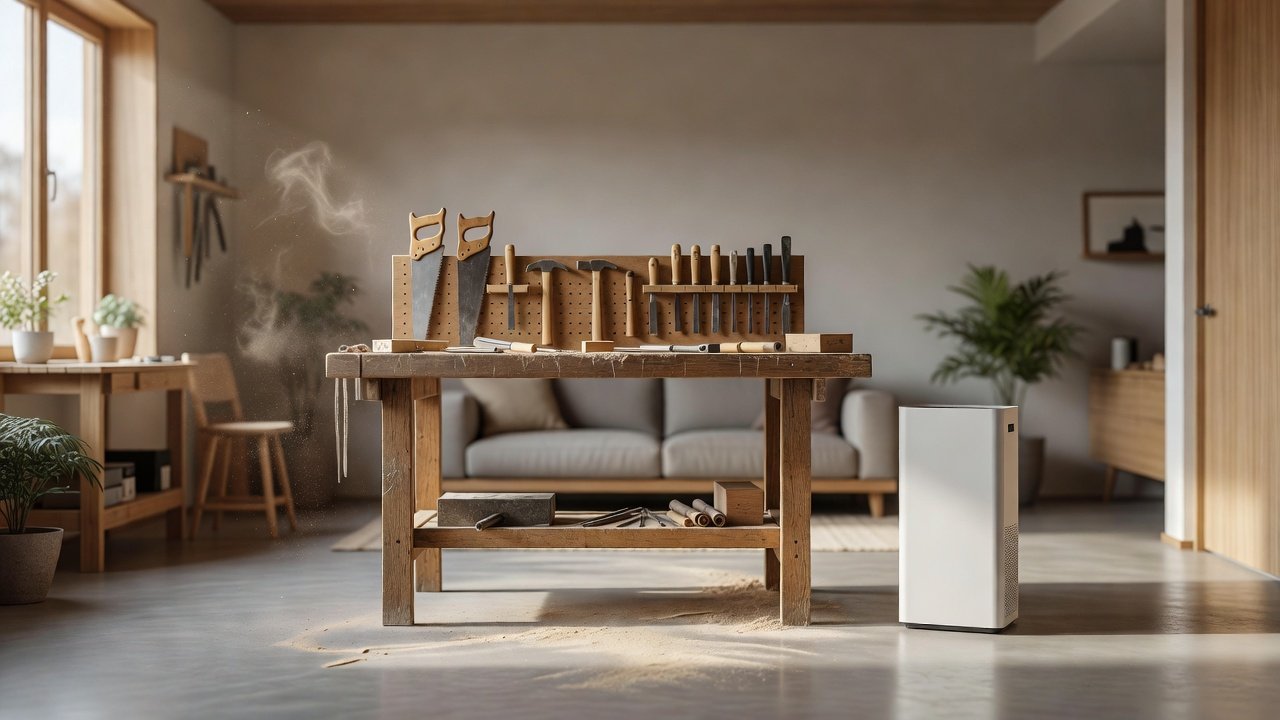
Sanding wood, cutting drywall, grinding metal and running power tools create dust of all sizes. Larger particles fall quickly, but fine particles stay airborne and travel through the house. Those fine particles are the ones that matter for health, and they are the ones a HEPA purifier can help capture.
The best way to deal with workshop dust is to capture it at the tool with a dust collector or vacuum, then use a purifier to clean the air that escapes. Wet cleaning and HEPA vacuuming keep settled dust from returning to the air.
A Worked Example: Sizing for a Two-Car Garage Shop
A typical two-car garage is about 400 to 500 square feet with a 9 or 10 foot ceiling. Two-thirds of 450 is 300, and the taller ceiling adds air volume, so a target near 350 to 400 CADR is sensible. Because workshop dust loads are heavy, adding another 25 to 50 percent gives you room to run on a lower setting.
That could mean one high-capacity unit or two mid-size units at opposite ends of the room. Place them away from the main dust plume, with clear intake space, and let them run after you stop working to clean the lingering fine dust.
Dust Extraction, Respirators and Purifiers
| Control | What it does | Limits |
|---|---|---|
| Tool dust collection | Captures dust at the source | Does not capture everything |
| Respirator, as appropriate | Protects your breathing | Does not clean the room |
| Room HEPA purifier | Reduces fine dust in the air | Not a hazard control, no gases |
| Ventilation | Brings in outdoor air | Can bring in outdoor pollution |
| Wet cleaning, HEPA vacuum | Removes settled dust | Does not clean airborne dust |
These controls work together. A purifier is the last layer, not the first.
Fumes, Solvents and Gases
HEPA filters capture particles, not gases. Paint fumes, solvents, adhesives and combustion gases pass through a HEPA filter. Carbon filters adsorb some gases and odors, but the amount in a typical home purifier is limited and not sized for hazardous exposure.
For fumes, use ventilation and source control, follow the product labels and use appropriate protective equipment. If you work with hazardous chemicals, ask a safety professional. A consumer purifier is not a substitute.
Filters in Dusty Environments
Filters in a workshop clog faster than in a living room. A washable pre-filter takes the heaviest load and should be cleaned often. Check it weekly at first, and then adjust to your usage. Replace HEPA and carbon filters earlier than the maker’s usual schedule if airflow drops.
Keep spare filters on hand. A clogged filter forces the fan to work harder, increases noise and reduces the cleaning you paid for.
Noise, Placement and Power
- Place units where air can flow freely and away from direct dust plumes
- Avoid blocking the intake with benches or walls
- Keep cords out of the work area and use outlets with adequate capacity
- Consider noise: larger units are louder on high
- Position so that exhaust air does not blow dust off surfaces
Maintenance Routine
Clean the unit exterior and intake grilles periodically, check the pre-filter and inspect the housing for cracks or damage. Keep a log of filter changes. After large projects, run the purifier longer and change filters if the airflow is noticeably weaker.
How to Choose
- Work out the room area and target CADR.
- Control dust at the source.
- Choose a HEPA unit with an easy pre-filter.
- Plan filter replacement.
- Avoid ozone devices.
- Follow workplace safety rules.
Do
- Match the unit’s rated coverage to your room first
- Run it consistently, not only when the air feels bad
- Leave space around the unit for airflow
- Replace filters on the maker’s schedule
Don’t
- Do not buy on looks or price alone
- Do not block the intake or exhaust
- Do not skip filter changes
- Do not expect a purifier to fix every source of pollution
Honest Limits
- This guide uses manufacturer information and public guidance from the EPA and AHAM, not our own lab tests.
- Features and room ratings change between model years, so confirm on the listing before you buy.
- A purifier is not a medical device and does not replace medical advice or treatment.
Who Should Skip This
Skip a consumer purifier as your main protection if you work with silica, lead, asbestos, mold remediation or other hazardous materials. Those jobs need proper containment, professional help and appropriate respirators.
Skip very small units for large spaces. They will not move enough air to make a difference.
When to See a Professional
For workplaces, follow OSHA or local regulations. An industrial hygienist can assess exposure and recommend controls. For home projects involving old paint, insulation or suspect materials, check guidance before disturbing them.
If you have cough, wheeze or breathing difficulty after dust exposure, see a doctor. This page is general information, not safety or medical advice.
Frequently Asked Questions
What is an industrial air purifier?
It generally means a heavy-duty air cleaner with high airflow and large filters, used in big rooms or dusty spaces. Consumer models sold under this label are not necessarily rated for hazardous industrial environments, so check what the maker actually claims.
Can a home HEPA purifier be used in a workshop?
It can help reduce fine dust in the air, but it does not replace dust extraction, ventilation or respirators. Expect filters to load faster, use a washable pre-filter and size the unit generously for the space.
Does HEPA remove fumes and solvents?
No. HEPA filters capture particles, not gases. Carbon filters adsorb some gases and odors, but the amount in a typical consumer unit is limited. For fumes, use ventilation, source control and appropriate protective equipment.
What CADR do I need for a workshop?
AHAM’s guideline suggests a CADR near two-thirds of the floor area for standard 8 foot ceilings. Taller ceilings and heavy dust call for more. A 450 square foot garage with a 10 foot ceiling might target around 350 to 400.
How often do filters need changing in a dusty space?
More often than the maker’s typical schedule. Check the pre-filter weekly, clean it as the manual allows, and replace HEPA and carbon filters earlier if airflow drops. Keep spares on hand.
Do I still need a respirator?
Often yes. A room purifier does not protect your breathing zone while you work. Follow workplace rules and the guidance for your materials, and use respiratory protection appropriate for the task.
Are ozone generators okay for workshops?
The EPA advises against ozone-generating air cleaners because ozone can irritate the lungs. Use filter-based purifiers instead and control dust at the source.
Can a purifier handle sawdust?
It can help with fine airborne dust, but heavy sawdust should be captured at the tool with a dust collector or vacuum. A purifier then cleans what escapes, especially the fine particles that stay airborne.
Are heavy-duty purifiers loud?
Larger units can be loud on high. Choose capacity above what you need so you can run them on low, and check the maker’s noise figures. Placement away from where you work also helps.
Where should I put the purifier in a workshop?
Where air can circulate and the intake is clear, away from the main dust plume and not blocked by benches. Two units at opposite ends can cover a long room better than one in a corner.
Bottom Line
Heavy-duty HEPA purifiers can reduce fine dust in large spaces, but they work best after you control dust at the source and ventilate.
For hazardous workplaces, follow safety rules and professional guidance.
Related reading: bed,fan,port
Sources: EPA, Guide to Air Cleaners in the Home; AHAM Verifide.