
Last updated:
Disclosure: As an Amazon Associate we earn from qualifying purchases. This does not change what we recommend. See our affiliate disclaimer.
An inexpensive large-room purifier is a balancing act. Large rooms need a lot of airflow, which usually costs more, and cheap units that claim to cover big rooms often cut corners on fan size or filters.
The smart approach is to choose a unit rated for your room by CADR, accept fewer extras and compare filter costs carefully. A quiet, well-sized basic unit is better than a feature-packed small one.
This guide explains how to size, what to compromise on, how to keep noise down and which larger-room models to compare. Prices change often, so check the current listing. Recommendations follow manufacturer information and public guidance, not our own tests.
Where to save
- Skip Wi-Fi and extras
- Choose simple controls
- Pick a basic filter set
- Compare long-term filter cost
Where not to save
- Airflow for your room size
- A true HEPA-type filter
- A quiet low setting for sleeping
- Filter availability
Key Takeaways
- Large rooms need real airflow, so match the purifier to the room by CADR instead of trusting a bare square-foot claim.
- AHAM suggests a CADR of about two-thirds of the floor area for standard ceilings; add margin for pets, smokers or tall ceilings.
- Buy a unit rated above your room and run it on low: it is quieter and filters last longer.
- Total cost matters: compare the price of replacement filters over two years, not only the sticker price.
- Skip Wi-Fi, apps and decorative extras if budget is tight; keep a true HEPA-type filter and a quiet low setting.
- Two mid-size units can cover a large or oddly shaped room more evenly than one cheap large unit on high.
- Avoid ozone and ionizer modes, which the EPA advises against.
Top Picks: Larger-Room Purifiers to Compare
Six larger-room models. Check the current price, rated room size and replacement filter cost on each listing.




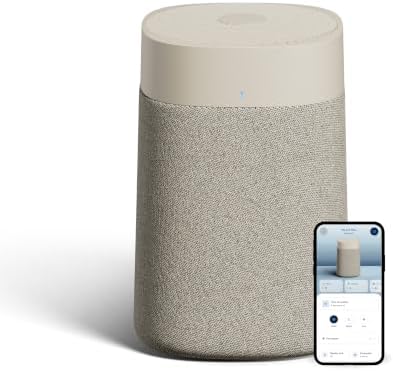

Why Large Rooms Cost More
A bigger fan, bigger filters and a larger housing all cost money. Units rated for large rooms that are very cheap often use small fans or thin filters, or they inflate the room rating.
Use CADR or a rating from a trusted source where you can.
Sizing Basics
AHAM\u2019s rule is a CADR of about two-thirds of the floor area. For a 500 square foot room, that is about 330. Choose a unit rated above your area so it can run on a low, quiet setting.
Where to Compromise
| Feature | Compromise? |
|---|---|
| Airflow for the room | No |
| True HEPA-type filter | No |
| Wi-Fi and app | Yes, skip |
| Sensor and auto mode | Optional |
| Fancy design | Yes, skip |
| Carbon layer | Depends on odor needs |
Quiet Sleep on a Budget
A larger unit running on low is often quieter than a smaller one on high. Check the lowest setting noise in the listing and reviews.
Look for a sleep mode that dims lights.
Filter Costs
Cheaper large units may use filters that cost a lot or are hard to find. Check the replacement price, how often to replace and availability.
Spotting Inflated Claims
If a very cheap unit claims to clean a huge room, check the CADR or verify through AHAM listings. Read reviews for real-world performance.
Two Smaller Units Instead
Two mid-size units can cover a large room and be quieter than one cheap large unit on high. Compare combined CADR and total cost.
Cheap Ways to Help
- Vacuum with a HEPA vacuum
- Use a good HVAC filter
- Wash bedding often
- Keep windows closed on high-pollen days
- Reduce clutter
Why Large Rooms Are Hard to Do on a Budget
A large room has more air to clean, and moving more air takes a stronger fan, a bigger filter and a sturdier housing. Those are the parts that cost money. When a very cheap unit claims to cover a large room, one of three things is usually true: the claim is generous, the fan runs very loudly to meet it, or the filter is thin enough that air passes through with less capture.
That does not mean you cannot shop smart. It means knowing which numbers to trust and where a compromise is acceptable.
Numbers to Trust
CADR, the clean air delivery rate, is the most useful figure because it is measured for smoke, dust and pollen under a standard method. A listing that gives CADR for all three is more reliable than one that only states a room size. AHAM Verifide listings add independent verification.
If a listing gives only a room size in square feet, ask how it was calculated. Makers often assume repeated air changes per hour, which may be lower than you want for allergies. For a typical 8 foot ceiling, a CADR near two-thirds of the floor area gives about 4.8 air changes per hour, which is a common target.
A Worked Sizing Example
Take a 450 square foot living room with an 8 foot ceiling. Two-thirds of 450 is 300, so you would look for a CADR of at least 300. If the ceiling is 10 feet, the room holds 25 percent more air, so aim higher, around 375.
Now add pets or heavy dust. Many people move one size up. The extra margin lets you run the unit on a lower, quieter setting, which is also easier on filters and electricity.
Quiet Operation Without Overspending
Noise grows quickly as fan speed increases. A unit with plenty of capacity running on low is generally quieter than a small unit running on high. That is why buying a little above your target can improve sleep without costing much more.
Look for the lowest setting\u2019s noise level in decibels if the maker lists it, and read reviews for comments about whining, rattling or clicking. Test the unit in the room during the return window.
Filter Costs Over Two Years
Add up the cost of the unit plus two years of filters. Some cheaper large units use proprietary filters that are expensive or hard to find. Others use standard sizes that are widely available. A mid-priced unit with inexpensive filters can cost less overall than a bargain unit with costly ones.
Check how often filters need changing. Many makers suggest every six to twelve months for HEPA filters, depending on use and air quality, and sooner for pre-filters in dusty or pet homes.
Two Units Instead of One
In an open layout or an L-shaped room, one unit may not circulate air evenly. Two mid-size units placed at opposite ends can do a better job and run quieter. Add their CADR values to estimate combined capacity, then compare total cost and filter upkeep.
Make sure both units fit your budget for filters, since you are now replacing two sets.
Features Worth Skipping
- Wi-Fi and app control, unless you will use schedules and alerts
- Ionizer and ozone modes, which the EPA advises against
- Decorative displays that add cost without cleaning more
- Oversized claims about killing viruses or sterilizing a room
Features Worth Paying a Little Extra For
- A true HEPA filter with a clear specification
- A washable or inexpensive pre-filter for hair and dust
- An auto mode that adjusts to air quality
- A sleep mode that dims lights and lowers fan speed
- A filter-change reminder
Care Tips That Save Money
Vacuum the pre-filter regularly, keep the intake clear and avoid placing the unit in a corner or against a wall. Good airflow means less strain on the fan and better cleaning. Replace filters when the maker recommends rather than stretching them, since a clogged filter reduces airflow and can raise noise.
How to Read Reviews of Budget Large-Room Units
Reviews are most useful when they mention room size, run time and noise at specific settings. Look for reviewers who describe a room close to yours. Be wary of reviews posted soon after purchase that praise the box and the look but say nothing about air quality or noise.
Pay attention to comments about filter availability and cost after a few months. Complaints about hard-to-find filters are a red flag. Also check for reports of fans that become louder over time, which can mean poor bearings or a clogged pre-filter.
Warranties and Support
A budget unit with no real warranty is a bigger gamble. Check the length of the warranty, who handles claims and whether the maker responds to questions. A one or two year warranty is common, and longer coverage on the motor is a good sign.
Keep your receipt and register the product if the maker offers it. For large units, find out how returns work before buying, because shipping a heavy box back can be costly.
Using the Purifier Well After You Buy It
- Place it in the main living area where you spend the most time
- Run it on a steady low or medium setting rather than short bursts on high
- Keep doors and windows closed during high pollen or smoke periods
- Check the pre-filter every few weeks
- Replace the main filter on schedule or sooner if airflow weakens
Consistent use matters more than occasional high-speed runs. Most particles are removed gradually, and continuous low-speed running keeps levels down at lower noise.
When a Budget Unit Is Not Enough
If you have severe allergies, asthma or a smoke problem, a budget unit may not give you the margin you want. Ask your doctor about allergy and asthma care, and consider stepping up to a unit with a verified CADR well above your room size.
Budget purifiers are a good fit for general dust and everyday comfort, but they should not be treated as a medical solution.
How to Choose
- Measure the room.
- Calculate target CADR.
- Choose a unit rated above it.
- Compare filter costs.
- Check low-setting noise.
- Skip extras you will not use.
Do
- Match the unit’s rated coverage to your room first
- Run it consistently, not only when the air feels bad
- Leave space around the unit for airflow
- Replace filters on the maker’s schedule
Don’t
- Do not buy on looks or price alone
- Do not block the intake or exhaust
- Do not skip filter changes
- Do not expect a purifier to fix every source of pollution
Honest Limits
- This guide uses manufacturer information and public guidance from the EPA and AHAM, not our own lab tests.
- Features and room ratings change between model years, so confirm on the listing before you buy.
- A purifier is not a medical device and does not replace medical advice or treatment.
Who Should Skip This
If you have severe allergies, asthma, or a smoke problem such as nearby wildfires, a bargain unit may not give you enough margin. Step up to a verified CADR well above your room size, even if it costs more.
If a listing cannot tell you the filter type, the CADR or the cost and availability of replacements, skip it. A low price is not a bargain if you cannot buy filters in a year.
When to See a Professional
If you or a family member has asthma, severe allergies or another breathing condition, talk to your doctor about care. A purifier can lower airborne particles, but it is not a treatment.
If you suspect mold, a gas leak, carbon monoxide or another hazard, a purifier is not the answer. Ventilate, leave the space if needed and contact a professional.
Frequently Asked Questions
Can I get a good air purifier for a large room on a budget?
Yes, if you focus on the basics: a true HEPA-type filter, enough airflow for the room, and filters you can afford to replace. Skip extras such as apps and fancy displays, and check the real CADR rather than only the advertised room size.
What CADR do I need for a large room?
AHAM suggests a CADR of about two-thirds of the floor area for standard 8 foot ceilings. For a 500 square foot room that is about 330. Add margin for pets, smoke or high ceilings so the unit can run on a quieter setting.
Are cheap large-room purifiers loud?
They can be, especially on high, because small fans must work harder to move enough air. A unit rated above your room can run on low and stay quieter. Check the noise level on the lowest setting and read reviews before you buy.
Is it better to buy two smaller units than one big one?
Often yes for open layouts or long rooms. Two mid-size units at opposite ends can mix air more evenly and run quieter than one unit on high. Add their CADR values, then compare total cost and filter upkeep.
What features should I skip to save money?
Wi-Fi and app control, decorative displays and extras such as ionizers are the easiest to skip. Ionizer and ozone modes are best avoided anyway, as the EPA advises against ozone-generating devices. Keep the filter, airflow and a quiet low setting.
Do large-room purifiers have expensive filters?
Sometimes. Filters for larger units are bigger, and some budget brands use proprietary sizes that cost more or are hard to find. Check the replacement price, the replacement schedule and whether filters are in stock before you commit.
How can I check whether a cheap purifier\u2019s claims are real?
Look for CADR numbers for smoke, dust and pollen, and for independent verification such as AHAM Verifide listings. Be cautious about claims that a cheap unit cleans a huge room or kills all viruses without any test data.
Is a true HEPA filter necessary?
For capturing fine particles such as smoke, pollen and dander, a true HEPA-type filter is the best base. Some cheaper units use lower-grade filters that capture less. Check the listing for the filter type and avoid vague terms such as HEPA-like.
Do I need an air quality sensor or auto mode?
No, but auto mode can be useful because it raises and lowers fan speed for you. If your budget is tight, a simple unit with a quiet low setting and a manual dial is a perfectly good choice.
How often should I change filters?
Follow the maker\u2019s guidance, which is often every six to twelve months for HEPA filters, depending on use and air quality. Pre-filters need checking more often in pet or dusty homes. A clogged filter reduces airflow and increases noise.
Bottom Line
A good inexpensive large-room purifier is one with real airflow, a true HEPA-type filter and affordable filters. Skip extras and check the ratings.
Consider two mid-size units for quieter coverage.
Related reading: bed,sens,port
Sources: EPA, Guide to Air Cleaners in the Home; AHAM Verifide.