Last updated:
Disclosure: As an Amazon Associate we earn from qualifying purchases. This does not change what we recommend. See our affiliate disclaimer.
A mini air purifier is attractive because it is cheap, light and easy to place. Whether it helps depends on the size of the space and how close you are to the unit. In a tiny room or at close range, a mini unit can reduce particles meaningfully. In an average bedroom, it often cannot keep up.
This guide shows how to judge a mini purifier by its CADR, what features matter, how to place it and when to choose a bigger unit instead. Choices come from our affiliate table. Our guidance follows EPA and AHAM information and is not based on our own lab tests.
A mini unit fits if
- Your room is under about 100 square feet
- You want a personal-zone unit near a desk or bed
- You travel and need a light unit
Skip mini if
- You want to clean a full-size bedroom
- You have pets or smoke in the room
- You expect it to match a standard-size unit
Key Takeaways
- Mini purifiers have small fans; CADR is often 10 to 50, which suits tiny spaces or close-range use.
- Check the stated CADR; coverage claims alone can be misleading.
- Place the unit close to you; distance reduces benefit quickly.
- Small filters load quickly, so check replacement cost and availability.
- USB power limits airflow; a wall adapter may help.
- A mini unit is a supplement, not a replacement for a properly sized purifier.
- Avoid ozone and ionizer modes, which the EPA advises against.
How to Tell Whether a Mini Unit Is Helping
Run the unit for two weeks in your normal routine and watch for changes. Does the pre-filter or intake show visible dust? Does the air near your bed or desk feel fresher? Do you notice fewer symptoms or less dust on nearby surfaces? These are subjective signals, but they tell you whether the unit is working in your situation. If you see no dust on the filter after a month in a dusty room, the unit may be too small or too far from you.
If you have a particle counter or a simple air quality monitor, compare readings at breathing height with and without the purifier. Consumer monitors are rough, but a clear drop near the unit is a reassuring sign. Do not read too much into small differences.
Budgeting for a Mini Purifier
The purchase price of a mini purifier is small, so the ongoing cost is what matters. A filter that costs a third of the unit price and lasts three months can double your cost over a year. Check the replacement price, the stated lifespan and whether third-party filters exist. Divide the filter price by the months of expected use, and add a few cents a month for electricity.
If the total annual cost approaches that of a compact full-size unit with a higher CADR, buy the larger unit. You will get more cleaning, lower noise at the same effect and fewer filter changes to track.
Mini Purifiers and Pets or Kids
Keep any small unit out of reach of pets and toddlers. Cords can be pulled, small units can be knocked over, and curious animals may chew on cables. Choose a stable base and route the cord safely. Do not place a unit where fur can clog the intake quickly; a small intake chokes fast. If you need cleaning near a pet bed, a larger unit with a pre-filter is a more reliable choice.
Also consider light and sound for sleeping children. A display that stays on, or a fan that clicks, can be disruptive. Test the unit before you rely on it in a nursery.
Top Picks: Mini and Compact Air Purifiers
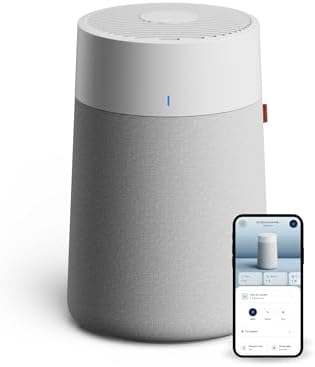
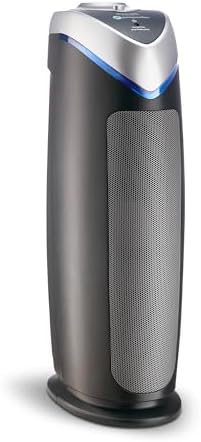
These options come from our affiliate table. Check the listing for the current CADR, filter type and replacement cost.




Noise and Lights
Small fans can be shrill. Look for reviews that describe the sound on low, and check whether you can turn off the display or night light. A unit by your bed should be quiet enough to ignore.
Filters in Mini Units
Look for True HEPA. Mini filters are small and load quickly, so check the replacement price and schedule. A thin carbon layer will not handle strong odors.
Power and Portability
Many minis run on USB. That makes them portable but limits power. Check the cable length, adapter rating and whether the unit runs on a battery. Do not rely on a power bank for overnight use unless the maker supports it.
Placement
Place the unit as close as possible to where you breathe, with the intake clear. A mini unit across the room does little. Keep it off soft surfaces that can block the intake.
What Mini Means in Practice
Mini purifiers are typically under a foot tall and weigh a pound or two. Their fans are small, so their airflow is limited. Many list CADR figures in the range of 10 to 50, which is enough for a closet-sized space or personal use.
Some mini units make bold coverage claims, which are often based on slow air change rates. Always check the CADR.
Sizing a Mini Purifier
The two-thirds guideline still applies: a CADR of 30 serves roughly 45 square feet at the standard air change rate. A room of 100 square feet needs about 65 to 70.
| Space | Size | CADR target |
|---|---|---|
| Car cabin | Small | 20 to 40 (close range) |
| Small office nook | 50 sq ft | 35 or more |
| Small room | 100 sq ft | 70 or more |
| Bedroom | 150 sq ft | 100 or more |
A Worked Example: Dorm Desk and Small Closet Office
Imagine a 60 square foot closet office. A mini unit with a CADR of 40 gives roughly the two-thirds figure for that space, and placing it within an arm’s reach makes it more effective. In a 150 square foot bedroom, the same unit covers roughly a quarter of what the room needs, so it can help near your pillow but will not clean the room. Knowing which case you are in prevents disappointment.
| Situation | Mini unit useful? | Better option |
|---|---|---|
| Closet office, 60 sq ft | Yes | Mini with CADR 40+ |
| Desk in a large room | Personal zone only | Mini or compact |
| Standard bedroom | Limited | Compact unit CADR 100+ |
| Living room | No | Large unit |
Why Small Fans Limit Airflow
Airflow depends on fan size, speed and filter resistance. A small fan pushing air through a small filter can only move so much. Increasing speed raises noise quickly, and small fans can sound shrill. If a listing promises much higher coverage than similar mini units, check whether the figure is a CADR or a marketing estimate.
Features Worth Having in a Mini Unit
- Published CADR from the maker or AHAM
- True HEPA filter
- Dimmable or switchable display
- Stable base and sturdy build
- Wall adapter rather than only USB-A power
- Replaceable filter available from several sellers
Mini Units for Travel
In hotel rooms, a mini unit placed on the nightstand can cut particles near you. It will not clean the whole room, and hotels have their own air handling. Pack the unit in a protective case, bring a spare filter if you can and check airline rules for any batteries.
Mini Units in Cars
Compact car purifiers may help a little in the cabin, but airflow is small and the cabin is leaky. Never place a unit where it blocks controls or views, and secure it so it cannot move in a stop. A fresh cabin air filter and recirculation mode often matter more.
Care for Mini Units
Wipe the case with a dry cloth, check the intake for lint and dust and replace the filter on schedule. Small filters can clog fast in dusty rooms. A unit that sounds louder than before or shows weaker airflow likely needs a new filter.
When to Step Up From a Mini
If you notice little change, if the room is larger than the unit’s rating or if you have pets or smoke sources, step up to a compact or full-size unit. A larger fan on a lower speed is often quieter and more effective than a mini unit on high.
How to Choose
- Find the stated CADR
- Match it to the room size or close-range use
- Check the noise level on low
- Confirm True HEPA and the cost of replacement filters
- Place it close to you with clear airflow
Do
- Match the unit’s rated coverage to your room first
- Run it consistently, not only when the air feels bad
- Leave space around the unit for airflow
- Replace filters on the maker’s schedule
Don’t
- Do not buy on looks or price alone
- Do not block the intake or exhaust
- Do not skip filter changes
- Do not expect a purifier to fix every source of pollution
Honest Limits
- This guide uses manufacturer information and public guidance from the EPA and AHAM, not our own lab tests.
- Features and room ratings change between model years, so confirm on the listing before you buy.
- A purifier is not a medical device and does not replace medical advice or treatment.
Who Should Skip This
Skip mini units as your main purifier for standard bedrooms or living rooms.
Skip ionizer and ozone modes; the EPA advises against ozone-generating devices.
When to See a Professional
If you have asthma or allergies, talk to your doctor about a plan. A mini purifier is a small supplement.
If a unit overheats or smells of burning, unplug it and contact the maker.
Frequently Asked Questions
Do mini air purifiers work?
They can reduce particles near the unit, especially in tiny spaces, but small fans limit room-wide cleaning.
What CADR do mini purifiers have?
Often 10 to 50, though figures vary. Check the stated CADR for your model.
Can a mini unit clean a bedroom?
Only a very small bedroom. For standard bedrooms, choose a unit with CADR near 100 or more.
Where should I put it?
As close as possible to where you breathe, with the intake clear of obstacles.
Are mini purifiers quiet?
Some are, but small fans can be shrill. Check reviews for sound on low.
Do they need filter changes?
Yes. Small filters load quickly, so follow the schedule and check them often.
Can I run it from a power bank?
Some can, but check the manual. Overnight use may drain the bank.
Do mini units remove odors?
Thin carbon layers help a little. Strong odors need more carbon.
Are ionizer modes safe?
Some produce ozone, which the EPA advises against.
Is a mini purifier worth buying?
If you need a personal-zone cleaner or a tiny-space unit, yes. For larger rooms, buy a bigger unit.
Bottom Line
A mini air purifier can be useful for tiny rooms and close-range cleaning, but it cannot match a standard-size unit.
Check the CADR before you buy, place the unit close and keep expectations realistic.
Related reading: bed,port,fan
Sources: EPA, Guide to Air Cleaners in the Home; AHAM Verifide.