Last updated:
Disclosure: As an Amazon Associate we earn from qualifying purchases. This does not change what we recommend. See our affiliate disclaimer.
A quiet air purifier is one you can leave running without noticing it. That matters most in bedrooms, nurseries and home offices, where fan noise makes people turn the unit off, which defeats the point.
Noise depends on how much air the unit moves. A purifier that is sized well above the room can run on a low, nearly silent setting. One that is too small has to run loud to keep up.
This guide explains how noise is measured, what the numbers mean, how to get a quiet setup and which models to compare. Recommendations follow manufacturer information and public guidance from the EPA and AHAM, not our own tests.
To get a quiet setup
- Choose a unit rated above your room
- Run it on a low setting
- Look for a sleep mode
- Keep filters clean
Common noise traps
- A unit that is too small and runs on high
- A clogged filter that strains the fan
- Placing it on a hollow table that vibrates
- Trusting one decibel number
Key Takeaways
- Noise claims depend on measurement: decibel levels are usually taken at a set distance and speed, and low-speed figures are what matter at night.
- A bigger purifier running on low is usually quieter than a small one on high.
- Sound quality matters as much as volume: whines, clicks and rattles are more annoying than steady airflow.
- Sleep modes that cut fan speed and dim lights make bedroom use practical.
- Placement affects perceived noise: avoid hard surfaces and vibration.
- Maintenance keeps noise down: dirty filters make fans work harder and sound louder.
- Avoid ozone and ionizer modes, which the EPA advises against.
Top Picks: Quiet Compact Air Purifiers
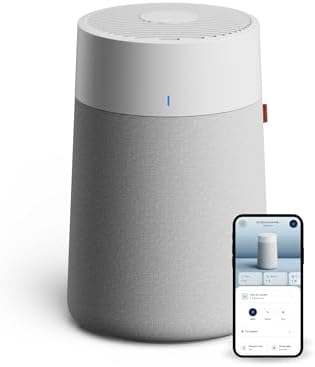
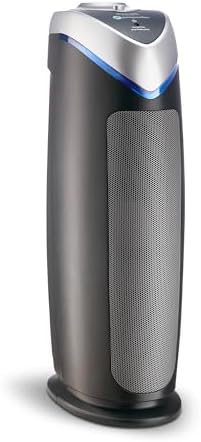
Six models that suit quiet use in bedrooms and offices. Check each listing for the lowest-setting noise and sleep mode details.




How Noise Is Measured
Makers list noise in decibels (dB), often at the lowest and highest settings. A lower number is quieter, and a drop of 10 dB sounds roughly half as loud.
Brands measure at different distances and in different conditions, so compare numbers with care and read recent buyer reviews for real-world impressions.
What Decibel Levels Feel Like
| Level | Roughly like |
|---|---|
| Around 25 dB | A very quiet room, a soft whisper |
| Around 35 dB | A quiet library or bedroom at night |
| Around 45 dB | A quiet conversation or a refrigerator |
| Around 55 dB or more | Normal conversation or a running dishwasher |
Why Size Matters More Than a Quiet Label
A small purifier running flat out is louder than a large one running on low, even if the large one sounds louder on its highest setting. The right comparison is noise at the speed you will use.
AHAM suggests a CADR of about two-thirds of the floor area, so pick a unit rated above your room and run it on a lower speed.
Sleep Modes and Lights
Sleep mode usually drops the fan to its quietest setting and dims or turns off the lights. Some also lower the sensor sensitivity so the fan does not ramp up during the night.
Check that you can turn off the display fully if light disturbs you.
Sound Quality, Not Just Level
Some fans hum smoothly and others whine or rattle. A steady low hum can be soothing, but a high-pitched whine is irritating even at low volume. Reviews often mention sound character.
If you can, listen to a unit in a store or check videos.
Placement and Vibration
Place the purifier on a solid surface, away from the bed and walls that reflect sound, and not on a hollow table. A small rubber pad can reduce vibration.
Keep It Quiet Over Time
- Clean the pre-filter regularly
- Replace filters on schedule
- Keep the intake clear
- Check the fan for dust build-up
- Do not run it on a soft surface
Quiet vs Effective
A quiet purifier is only useful if it is also big enough. Choose a unit rated above your room so the quiet setting still cleans well.
Why Quiet Is Hard to Judge Online
Spec sheets list noise in decibels, but they rarely say how it was measured. A figure of 25 dB at 3 feet is not the same as 25 dB at 1 meter, and a figure at the lowest setting says little about what you will hear when the unit works hard. Some makers quote the best-case number only.
To compare fairly, check the distance, the fan setting and whether the number is for the lowest speed. When a listing hides these details, treat the claim with caution.
A Worked Example: Same Room, Two Purifiers
Imagine a 250 square foot bedroom that needs a CADR around 165. Purifier A has a CADR of 170, so it must run near its highest speed to meet the target. Purifier B has a CADR of 350, so it can deliver the same clean air on a low setting.
Even if both lists claim similar top-speed noise, B will usually be quieter in practice because its fan spins slower. That is why capacity matters for noise as much as for cleaning power.
Types of Noise You Will Notice
| Noise type | What causes it | What to try |
|---|---|---|
| Steady whoosh | Air moving through filters | Lower speed, larger unit |
| High-pitched whine | Small fan or motor | Try another model, check mounting |
| Rattle or buzz | Loose parts or vibration | Move the unit, place on a mat |
| Clicks | Filter door or sensor | Reseat filter, check seals |
| Beeps | Alerts and controls | Turn off sounds if possible |
A steady low whoosh fades into the background for most people. High-pitched whines and clicks do not.
Sleep Mode, Lights and Displays
A good sleep mode lowers the fan speed and turns off or dims lights. Check whether the display can be turned off completely, because even small lights can disturb light sleepers. Also check beeps when changing settings and alerts that can sound at night.
Placement and Vibration
- Place on a stable, flat surface
- Avoid putting it directly on a thin shelf or hollow table
- Leave space around the intake and outlet
- Use a rubber mat if vibration is an issue
- Keep it a few feet from the bed
- Avoid corners that can amplify sound
Maintenance and Noise
As filters load with dust, airflow drops and fans work harder, which raises noise. Clean pre-filters on schedule and replace HEPA filters when recommended. A well-maintained unit stays quiet longer. If a unit becomes suddenly louder, check for a loose filter, an obstructed intake or an object in the fan area.
Quiet Versus Effective
Quiet purifiers should still clean the room. Do not trade away CADR to save noise on paper. The ideal combination is a unit with a high CADR for your room, so that it can run quietly on low and still deliver enough clean air. That is the principle behind buying above your target size.
Comparing Quiet Features Before You Buy
- Does the listing give noise at the lowest setting and the measurement distance?
- Is there a sleep mode and can lights be turned off?
- Are alerts and beeps adjustable?
- Is the pre-filter easy to clean?
- Are reviews mentioning whine, rattle or clicks?
- Is there a return policy for noisy units?
How to Choose
- Measure the room.
- Choose a unit rated above it.
- Check low-setting noise in the listing and reviews.
- Confirm there is a sleep mode.
- Check that lights can be turned off.
- Compare filter costs.
Do
- Match the unit’s rated coverage to your room first
- Run it consistently, not only when the air feels bad
- Leave space around the unit for airflow
- Replace filters on the maker’s schedule
Don’t
- Do not buy on looks or price alone
- Do not block the intake or exhaust
- Do not skip filter changes
- Do not expect a purifier to fix every source of pollution
Honest Limits
- This guide uses manufacturer information and public guidance from the EPA and AHAM, not our own lab tests.
- Features and room ratings change between model years, so confirm on the listing before you buy.
- A purifier is not a medical device and does not replace medical advice or treatment.
Who Should Skip This
Skip units that only list top-speed noise or give no measurement details.
Skip very small units for large rooms. They will have to run on high and be louder.
When to See a Professional
If noise or sleep problems persist, consider other causes and talk to a doctor. A quiet purifier can help with background noise but is not a treatment for sleep disorders.
If a unit makes grinding, burning or electrical sounds, unplug it and contact the maker.
Frequently Asked Questions
How is air purifier noise measured?
Usually in decibels at a stated distance and fan speed. A figure on the lowest setting is the most useful for bedrooms. Compare listings that state the same distance and speed.
What decibel level is quiet enough for sleeping?
Many people find units in the mid-20s to low-30s dB on the lowest setting unobtrusive, but sensitivity varies. Sound quality matters too, so whines and clicks can bother you more than a steady hum.
Is a bigger purifier quieter?
Often yes at the same airflow. A higher-capacity unit can run on a lower fan speed and deliver the same clean air with less noise, as long as the fan and housing are well designed.
What is the difference between loud and annoying?
Volume is one thing, but a high-pitched whine, a rattle or clicks are more annoying than a steady low hum. Read reviews for descriptions of sound quality, not just loudness.
Do sleep modes make a difference?
Yes. A good sleep mode lowers fan speed and turns off lights, which can make a purifier suitable for bedrooms. Check whether the display can be fully turned off.
Why did my purifier get louder over time?
Dirty filters, blocked intakes, loose parts or worn bearings can all raise noise. Clean the pre-filter, replace filters on schedule and check for obstructions.
Where should I place a purifier for a quiet bedroom?
On a stable surface a few feet from the bed, with clear space around the intake and outlet. Avoid hollow furniture that amplifies vibration, and try a rubber mat if you hear buzzing.
Can I use white noise with a purifier?
Yes. Some people use a purifier’s steady hum as white noise. If you prefer a separate sound machine, choose a purifier that stays quiet on its lowest setting.
Are ionizers quieter or better?
No. The EPA advises against ozone-generating devices, and ionizers do not make a unit quieter. Choose a filter-based purifier and focus on airflow and noise figures.
How can I test a purifier for noise?
Run it in the room for a few nights on its lowest setting and note any whines, clicks or rattles. Buy from a seller with a return policy so you can send it back if it bothers you.
Bottom Line
A quiet purifier is one that is sized above your room and run on a low setting with clean filters. Check low-setting noise and sleep mode rather than relying on one number.
Oversizing slightly is the simplest way to a quiet setup.
Related reading: fan,sens,bed
Sources: EPA, Guide to Air Cleaners in the Home; AHAM Verifide.