
Last updated:
Disclosure: As an Amazon Associate we earn from qualifying purchases. This does not change what we recommend. See our affiliate disclaimer.
Residential air purifiers are the units made for homes rather than offices. In large living areas with pets, the key features are strong airflow, a true HEPA filter, a carbon layer for odor and a pre-filter that is easy to clean.
The most common mistake is buying a unit that is too small. A purifier rated for a bedroom will struggle in an open living space with pets, and it will be loud on high speed.
This guide explains how to size a residential purifier, what pet homes need and which larger-room models to compare. Recommendations follow manufacturer information and public guidance from the EPA and AHAM, not our own tests.
Look for
- Rated room size above your area
- True HEPA and carbon layers
- An easy-to-clean pre-filter
- A quiet low setting
Avoid
- Undersized units
- Ozone-producing devices
- Filters that are hard to find
- Assuming a purifier replaces cleaning
Key Takeaways
- Residential large-room purifiers need high CADR, a washable pre-filter and carbon if pets are involved.
- AHAM’s two-thirds guideline gives roughly 330 CADR for 500 square feet and 530 for 800 square feet; add margin for pets and allergies.
- Pet allergens come from dander, saliva and urine proteins carried on tiny particles; a HEPA filter captures many of them but cleaning still matters.
- Place the unit where air flows freely and where pets spend time, not tucked behind furniture.
- Compare filter costs: pet homes change pre-filters often and HEPA filters on schedule.
- Quiet low-speed operation lets you run the unit all day without noticing it.
- Avoid ozone and ionizer modes, which the EPA advises against.
Top Picks: Residential Purifiers for Large Rooms
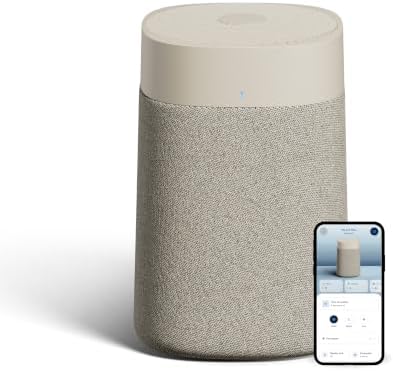
Six models rated for larger spaces. Check each listing for rated room size, filter details and replacement cost.





Why Residential Large Rooms Are Tough
Open living spaces are big, have pets and people moving through, and are often connected to kitchens. More air volume means a purifier has more to do, and pet hair clogs the pre-filter.
Choose a unit with enough airflow for the space and plan to maintain it.
Sizing
Check the maker\u2019s rated room size and choose a unit rated above your floor area. AHAM suggests a clean air delivery rate of about two-thirds of the floor area for standard ceilings.
For high ceilings or lots of pets, size up further so the unit can run on a quiet setting.
Features That Matter in Pet Homes
| Feature | Why it matters |
|---|---|
| True HEPA filter | Captures dander and fine dust |
| Carbon layer | Reduces some pet odor |
| Washable or easy pre-filter | Catches hair and fluff |
| High airflow | Covers a large space |
| Quiet low setting | Run it all day |
Placement
Put the purifier in the main living area with clear airflow, away from walls and curtains and away from litter boxes. Avoid placing it behind furniture.
A central location lets air circulate around the room.
Noise and Running Costs
Large units are louder on high. Running a larger unit on a lower speed saves power and noise. Filters are the main recurring cost.
Maintenance in a Pet Home
- Clean the pre-filter weekly or as advised
- Replace HEPA and carbon on schedule
- Keep spare filters on hand
- Vacuum around the unit
When One Unit Is Not Enough
For a house with a large open plan plus bedrooms, consider a second unit for a bedroom. Closed doors split a home into separate air spaces.
Other Steps for Pet Allergens
- Brush pets regularly
- Wash pet bedding often
- Use a HEPA vacuum
- Keep pets out of the bedroom if you have allergies
- Talk to your doctor about allergies
What Pet Allergens Are and How They Travel
People often blame pet hair, but allergic reactions are usually triggered by proteins in dander, saliva and urine. Those proteins ride on microscopic particles that can stay airborne for hours and settle on furniture, bedding and carpets. When you brush a cat or a dog shakes, the particles go up and spread through a room.
A HEPA filter can capture many of the airborne particles that carry allergens. It cannot remove what has already settled, which is why cleaning habits matter alongside the purifier.
A Worked Sizing Example for a Pet Home
Say you have a 600 square foot living area with a 9 foot ceiling and two dogs. Two-thirds of 600 is 400. The taller ceiling adds about 12 percent more air, so go to about 450. Add 20 to 30 percent for pets and shedding, and a target around 550 to 600 CADR gives you room to run the unit on a quiet setting.
| Space | Rough CADR for pets |
|---|---|
| 400 sq ft | About 330 to 350 |
| 500 sq ft | About 400 to 430 |
| 700 sq ft | About 560 to 600 |
| 900 sq ft | About 720 to 780 |
These figures add margin to AHAM’s basic guidance. If one unit does not reach the target, consider two units on opposite sides of the room.
Filter Stack: What a Pet Home Needs
| Layer | Job | Pet-home tip |
|---|---|---|
| Washable pre-filter | Catches hair and large dust | Clean every two to four weeks |
| True HEPA | Captures fine dander | Replace on schedule |
| Carbon | Reduces some odors | Choose a thicker carbon layer |
| Housing and seals | Stops air bypassing the filter | Look for good seals |
A thick pre-filter that is easy to remove makes upkeep far easier. In a pet home you will clean it often, so make sure you can do so without tools.
Odors: Where Carbon Helps and Where It Does Not
Pet odors come from dander, urine, litter boxes, wet fur and bedding. Carbon filters adsorb some odor molecules, and a thicker carbon layer lasts longer. A purifier will not fix a litter box that needs scooping or a dog bed that needs washing, so clean the source first.
Choose a unit with real carbon, not just a thin sheet, if odors are a major concern. Replace carbon filters on schedule, because they stop working when saturated.
Placement and Pet Behavior
- Place the unit where pets spend time, but out of reach of chewing or tipping
- Keep intakes clear of furniture and curtains
- Avoid placing it near the litter box, which can clog the pre-filter
- Raise it slightly off the floor if your pet is a heavy shedder
- Use a stable base in homes with large or excitable pets
In homes with climbing cats or large dogs, consider a sturdy tower with a wide base.
Cleaning Habits That Reduce Allergens
- Vacuum with a sealed HEPA vacuum at least weekly
- Wash pet bedding and your bedding often in hot water
- Brush pets outdoors when possible
- Use washable covers on furniture
- Wipe hard floors with a damp cloth instead of sweeping
- Keep pets off beds if you are sensitive
Running Costs and Filter Life
In a pet home, filters get more work. Plan for pre-filter cleaning or replacement every few weeks, HEPA filter replacement roughly every six to twelve months and carbon filter replacement on the maker’s schedule. Add that up with the electricity, and compare units by total cost over two years.
Allergy Care and Realistic Expectations
A purifier can lower airborne pet allergens, but it is one part of a plan. If you have asthma or allergic symptoms, talk to a doctor or allergist about care. Pets can be wonderful family members, and an informed plan lets you enjoy them while managing exposure.
How to Choose
- Measure the floor area and ceiling height.
- Choose a unit rated above it.
- Require true HEPA, carbon and an easy pre-filter.
- Check low-setting noise.
- Compare filter cost.
- Plan a second unit for bedrooms if needed.
Do
- Match the unit’s rated coverage to your room first
- Run it consistently, not only when the air feels bad
- Leave space around the unit for airflow
- Replace filters on the maker’s schedule
Don’t
- Do not buy on looks or price alone
- Do not block the intake or exhaust
- Do not skip filter changes
- Do not expect a purifier to fix every source of pollution
Honest Limits
- This guide uses manufacturer information and public guidance from the EPA and AHAM, not our own lab tests.
- Features and room ratings change between model years, so confirm on the listing before you buy.
- A purifier is not a medical device and does not replace medical advice or treatment.
Who Should Skip This
Skip a small bedroom purifier for a large pet-filled living area. It will run on high and struggle.
Skip ozone, plasma or ionizer features. Pets and people have sensitive lungs, and the EPA advises against ozone-generating devices.
When to See a Professional
If you have asthma, wheezing, severe allergic symptoms or a pet-related reaction, see a doctor or allergist. They can recommend testing and treatment.
If you notice persistent urine odors, mold or moisture, address the source and consult a professional where needed.
Frequently Asked Questions
Do air purifiers help with pet allergies?
They can reduce airborne dander and other particles that carry pet allergens, especially with a true HEPA filter. They do not remove settled allergens, so combine one with regular cleaning and talk to your doctor about allergy care.
What size purifier do I need for a large pet room?
Use AHAM’s guideline of a CADR near two-thirds of the floor area, then add 20 to 30 percent for pets and shedding. A 700 square foot room may call for a CADR around 560 to 600.
Do I need carbon for pet odors?
A carbon layer can reduce some odors, and a thicker layer lasts longer. It will not fix a dirty litter box or bedding, so clean the source and use carbon as support.
How often should I clean the pre-filter?
In a pet home, every two to four weeks is common, and more often for heavy shedders. A clogged pre-filter reduces airflow and makes the unit louder, so check it regularly.
Where should I put the purifier in a pet home?
Where pets spend time, with clear airflow and out of reach of chewing or tipping. Avoid putting it right beside a litter box or in a corner behind furniture.
Are ionizers a good idea for pet homes?
No. The EPA advises against ozone-generating devices, and some ionizers create ozone as a by-product. Choose a filter-based purifier and keep any ionizer mode switched off.
Will a purifier remove pet hair?
It captures hair that is carried into the filter, mostly in the pre-filter, but it does not clean up hair on floors and furniture. You still need to vacuum and groom pets regularly.
How long do filters last with pets?
Pre-filters need frequent cleaning, HEPA filters often last six to twelve months, and carbon filters depend on odor load. Follow the maker’s guidance and replace sooner if airflow drops.
Is one large unit enough for an open living area?
Sometimes, if the CADR meets your target and placement is good. For long or L-shaped rooms, two units on opposite sides can cover the space better and run quieter.
Can I run the purifier all day?
Yes. Most are designed for continuous use, and running on a low or medium setting is often the most effective way to keep particles down. Choose a unit that is quiet on its lowest setting.
Bottom Line
For large rooms with pets, size up, choose true HEPA with carbon and an easy pre-filter, and run the unit on a low setting all day.
Maintain the filters and clean the sources for best results.
Related reading: bed,sens,port
Sources: EPA, Guide to Air Cleaners in the Home; AHAM Verifide.