Last updated:
Disclosure: As an Amazon Associate we earn from qualifying purchases. This does not change what we recommend. See our affiliate disclaimer.
A tabletop air purifier sits on a desk, nightstand or counter and cleans the air in your immediate area. It is a good fit for a personal space and a poor fit for a large room, and understanding that difference saves money and disappointment.
This guide explains what tabletop units can realistically do, how to compare CADR on small units, what noise to expect and where they work best. Product choices come from our affiliate table, and our guidance relies on EPA and AHAM information rather than our own testing.
A tabletop unit fits if
- You want cleaner air near your desk or bed
- The room is small or you can sit close to the unit
- You value a small footprint and low noise
Choose a floor unit if
- The room is over about 150 square feet
- You want to treat the whole space
- You have pets or smoke sources in the room
Key Takeaways
- Tabletop purifiers clean the air near you; they are not whole-room solutions for larger rooms.
- Expect CADR from about 20 to 130; match it to a small room or close-range use.
- Noise and display lights matter because the unit is close to you.
- Small filters load faster, so check replacement cost and availability.
- Place the unit within a few feet of your breathing zone with clear airflow.
- USB power is convenient but check the stated CADR; low power often means low airflow.
- Avoid ozone and ionizer modes, which the EPA advises against.
Who Benefits Most From a Tabletop Unit
Tabletop units suit renters in small rooms, students at a desk, remote workers who spend long hours in one spot and travelers who want a familiar personal-zone unit in a hotel or guest room. They also work as supplements in a room that already has a larger purifier, adding extra cleaning near a bed or reading chair. If you sit in a fixed position for hours, a small unit close to you can matter more than a big unit across the room.
They suit people who value low noise and a minimal footprint over maximum airflow. They do not suit people who want to clear smoke from a large living room or handle a pet-filled space. Match the tool to the job and you will be happy; stretch it beyond that and you will not.
A Buying Checklist for Tabletop Units
- Published CADR or airflow figure
- True HEPA filter, not HEPA-type
- Noise at the lowest speed
- Filter price and availability for the next two years
- Display that can be dimmed or turned off
- Stable base and a cord that suits your outlet
- No ozone or ionizer mode you cannot disable
- A return window so you can test the sound at night
Common Tabletop Mistakes
People often place a small unit across the room, where its effect is minimal, or tuck it behind a monitor where airflow is blocked. Others buy a unit for a large room because the listing says it covers a large area at one air change per hour. The remedy is simple: place it close, give it room to breathe and check the CADR against your space. Also remember to replace the filter on time, since a loaded small filter loses airflow faster than a large one.
Top Picks: Compact and Tabletop Air Purifiers
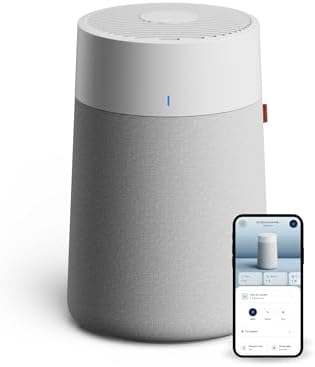
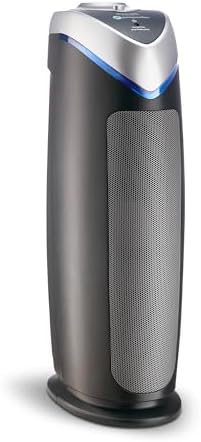
These options come from our affiliate table. Check the listing for the current CADR, filter type and replacement cost.




Noise and Light
Tabletop units are close to your ears, so noise matters. Look for a quiet low setting and a way to turn off the display. A faint hum is fine; a whistle or rattle is not. Read reviews for sound descriptions.
Filters in a Small Package
True HEPA is the standard for fine particles. Small filters load quickly and often cost more per month of use. Check the price of replacements and the expected lifespan before buying. A thin carbon layer will not handle strong odors.
Placement for Best Results
Place the unit within a few feet of where you sit or sleep, on a stable surface with clear space around it. Do not tuck it behind objects or in a corner, and do not point the exhaust directly at your face.
Power and Portability
Many tabletop units use USB or a small adapter. Check that the cord is long enough for your outlet and that the adapter is the right rating. A handle or compact size makes them easy to move between rooms.
What a Tabletop Purifier Is Good For
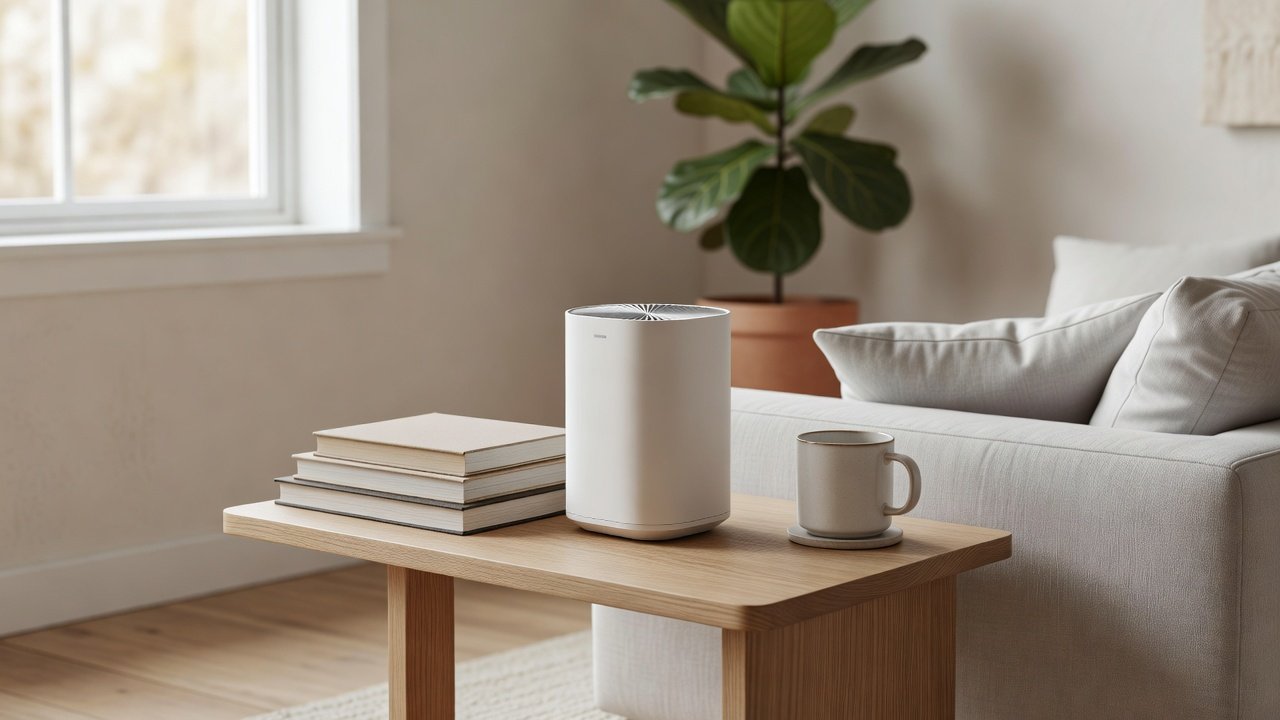
A tabletop unit works best as a personal-zone cleaner. Placed within a few feet of your head, it can reduce particles you breathe, even if the whole room is not cleaned. It suits desks, nightstands and small side tables.
It is not meant to clean a living room. Small fans and small filters limit airflow, and distance from the unit quickly reduces its benefit.
CADR Expectations for Small Units
Tabletop purifiers usually have CADR in the range of about 20 to 100. A figure near 100 can cover a small bedroom; a figure near 30 is only meaningful for a very small space or close-range use.
| Tabletop CADR | Room it can serve | Best use |
|---|---|---|
| 20 to 40 | Personal zone only | Desk, close range |
| 50 to 80 | Up to about 100 sq ft | Small bedroom or office |
| 90 to 130 | Up to about 150 to 190 sq ft | Bedroom with margin |
A Worked Example: Desk in a 110 Square Foot Home Office
In a 110 square foot home office with an 8 foot ceiling, the two-thirds guideline points to a CADR near 75. A tabletop unit rated 80 to 100 placed two feet from your keyboard covers the room reasonably and cleans the air you breathe most. If your unit is rated 30, it will reduce particles only in your immediate area. Both outcomes can be fine, as long as you know which you are buying.
| Space | Size | Tabletop suitability |
|---|---|---|
| Desk in shared office | Large | Personal zone only |
| Home office | 110 sq ft | Good with CADR 80+ |
| Nightstand | Bedroom 150 sq ft | Good with CADR 100+ |
| Kitchen counter | Open plan | Poor; choose a floor unit |
Close-Range Benefits and Limits
Particles are concentrated near sources such as your own body, bedding or desk. A unit placed within a few feet of you can reduce what you breathe even if the room average does not change much. But it cannot do much about pollutants that arrive from far away, and its effect fades with distance.
Using a Tabletop Unit Together With Other Steps
- Keep surfaces clean with damp wiping
- Wash bedding weekly
- Ventilate when outdoor air is good
- Vacuum with a sealed HEPA vacuum
- Leave space around the unit for airflow
- Use a larger unit if the room is big
USB Power: Convenience and Trade-Offs
USB-powered purifiers are easy to place and often quiet, but USB ports supply limited power, which usually means small fans and low airflow. If a unit runs from a laptop port, it may also drain the laptop battery. Check the specifications and prefer a wall adapter with adequate power for steady operation.
Care and Cleaning
Wipe the exterior with a dry cloth, vacuum the pre-filter if there is one and replace the main filter on the maker’s schedule. Dust builds up quickly on small units on a desk, so inspect the intake every couple of weeks. A clogged intake reduces already modest airflow.
Tabletop Versus Floor Units: Cost Comparison
A tabletop unit costs less up front, but filters often cost nearly as much as those for larger units while treating much less air. Calculate cost per cubic foot of CADR: a larger unit often delivers a lower cost per unit of airflow and quieter operation at the same effective output. For rooms over 150 square feet, a floor unit usually makes more sense.
Travel and Shared Spaces
Tabletop units travel well, so you can use one at a desk during the day and on a nightstand at night. In shared offices, ask neighbors before running a unit with a fan sound. Be aware of facility rules on appliances.
How to Choose
- Decide whether you need personal-zone or room cleaning
- Check the stated CADR
- Check noise at the lowest speed
- Confirm True HEPA and the price of replacements
- Place it close to you with clear airflow
Do
- Match the unit’s rated coverage to your room first
- Run it consistently, not only when the air feels bad
- Leave space around the unit for airflow
- Replace filters on the maker’s schedule
Don’t
- Do not buy on looks or price alone
- Do not block the intake or exhaust
- Do not skip filter changes
- Do not expect a purifier to fix every source of pollution
Honest Limits
- This guide uses manufacturer information and public guidance from the EPA and AHAM, not our own lab tests.
- Features and room ratings change between model years, so confirm on the listing before you buy.
- A purifier is not a medical device and does not replace medical advice or treatment.
Who Should Skip This
Skip tabletop units if the room is over about 150 square feet and you want to treat the whole space.
Skip ionizer and ozone modes; the EPA advises against ozone-generating devices.
When to See a Professional
If you have asthma or allergies, talk to your doctor about a plan. A tabletop purifier is a small supplement.
If a unit overheats or smells of burning, unplug it and contact the maker.
Frequently Asked Questions
Do tabletop air purifiers work?
They can reduce particles near the unit, especially at close range. Their small fans limit room-wide cleaning.
What CADR is good for a tabletop unit?
About 80 to 130 for a small bedroom. Lower figures suit personal-zone use only.
Are they quiet?
Many have quiet low settings, but check reviews because the unit sits close to you.
How close should I place it?
Within a few feet of where you sit or sleep, with clear space around the intake and exhaust.
Can I use one for a whole room?
Only a small room with sufficient CADR. For larger rooms, use a floor unit.
How often do filters need replacing?
Follow the maker, usually every 6 to 12 months, sooner in dusty or smoky conditions.
Can I power it from USB?
Many can, but check airflow and power requirements; low power often means low airflow.
Do tabletop units remove odors?
Thin carbon layers may help a little. Strong odors need more carbon.
Are ionizer modes safe?
Some produce ozone, which the EPA advises against.
Is a tabletop unit enough for allergies?
It can help near you, but it is a supplement. Cleaning and medical advice matter.
Bottom Line
A tabletop air purifier is a personal-zone tool. It works when it is close to you and sized for a small space.
For anything larger than a small bedroom, step up to a floor unit.
Related reading: bed,port,fan
Sources: EPA, Guide to Air Cleaners in the Home; AHAM Verifide.