Last updated:
As an Amazon Associate we earn from qualifying purchases. This does not change what we recommend. See our affiliate disclaimer.
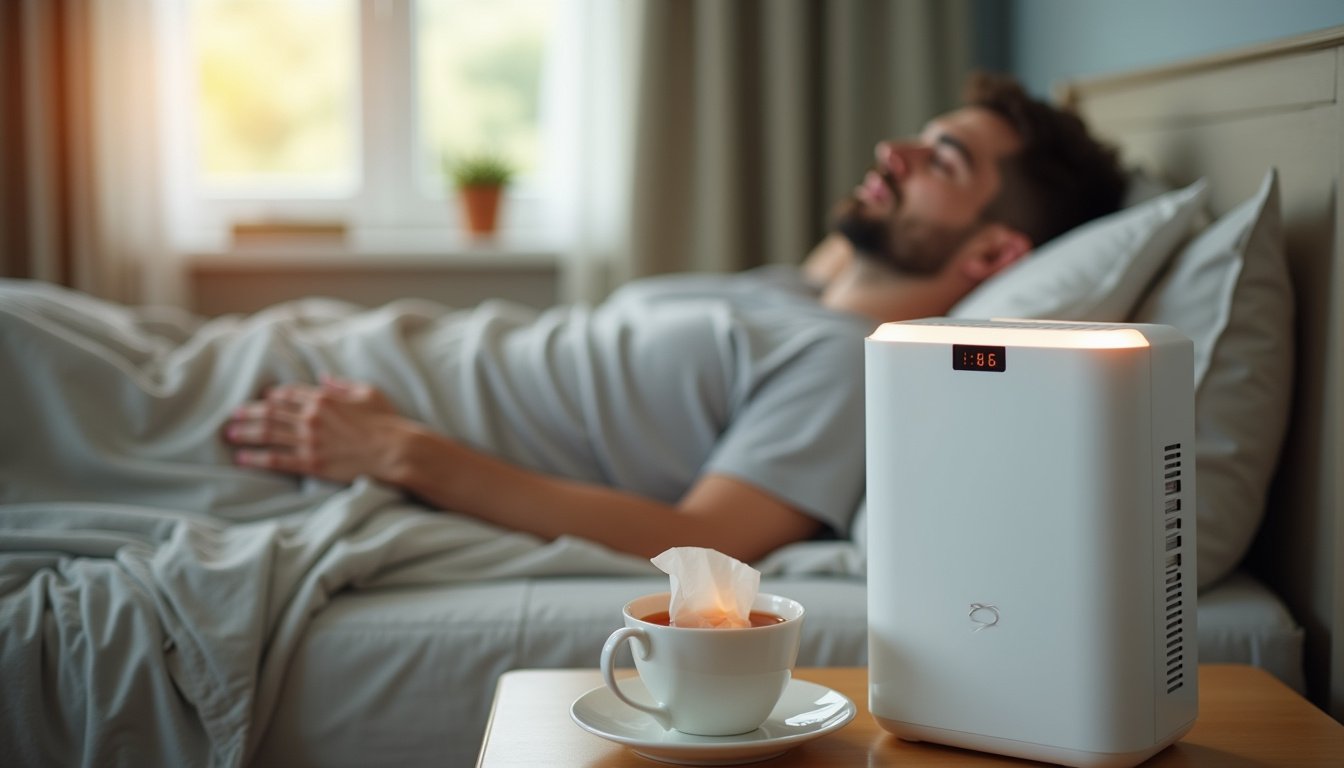
Someone in the house has a cold, flu season is starting, or a vulnerable visitor is coming, and the air purifier in the corner suddenly looks like it might matter. The marketing says it captures 99.97 percent of particles. Viruses are particles. So is the room safe, or is that wishful thinking?
Air purifiers help with viruses in a specific, limited way: a true HEPA filter captures the respiratory aerosols that carry viruses through the air, and a correctly sized unit running continuously lowers the concentration of those aerosols in a room. Viruses travel inside droplets and aerosols of saliva and mucus, mostly 0.5 to 10 microns, which HEPA captures at well above its 99.97 percent rating at 0.3 microns. The EPA and CDC both say portable HEPA air cleaners can reduce airborne contaminants including viruses when used alongside other measures. The limits are just as specific. A purifier cannot stop transmission across a dinner table, where aerosols reach the next person before any filter does; it cannot clean surfaces or hands; it works only in the room it sits in and only at the rate its fan moves air, so an undersized unit on low does very little. It is one layer, added to ventilation, distance and staying home when sick, and a worthwhile one when a household shares air with someone infectious. Nothing here is medical advice; questions about infection risk belong with a doctor or public health guidance.
In short: HEPA captures the aerosols viruses ride on, which lowers the dose in a room over time. Size it for the room, run it continuously, and treat it as one layer among several.
The EPA states that portable HEPA air cleaners can help reduce airborne contaminants including viruses in a home and that by themselves they are not enough to protect people. The CDC’s ventilation guidance lists portable HEPA cleaners as a way to add clean air to a room, with effectiveness depending on CADR relative to room size.
This guide is research-based, drawn from EPA and CDC guidance, ASHRAE ventilation recommendations and maker specifications. We have not tested the units in the comparison table and quote no prices or ratings. Nothing here is medical advice.
A purifier helps against viruses when
- It has a true HEPA filter and the CADR suits the room
- It runs continuously on medium or higher while people share the room
- It is placed in the open, in the room where the sick person or the gathering is
- It is one layer alongside ventilation, distance and staying home when sick
It does little when
- It is undersized, on low, or behind furniture
- People are close together; aerosols reach them before the filter
- The expectation is that it makes a shared room safe on its own
- It is an ionizer, ozone generator or unproven technology rather than HEPA
Key Takeaways
- Viruses travel in respiratory aerosols of 0.5 to 10 microns, which true HEPA captures at above its 99.97 percent rating at 0.3 microns.
- A sized, continuously running purifier lowers the concentration of infectious aerosols in a room over time; it does not make the room safe.
- Close-range transmission happens before any filter can act; distance and ventilation address that, not the purifier.
- Aim for a CADR of at least two thirds of the room’s square footage, and more for a sick room; the CDC suggests several air changes per hour.
- Place the unit in the open, in the room where air is shared, and keep it running; intermittent use achieves little.
- Ionizers, ozone generators and UV add-ons are not substitutes for HEPA and some carry ozone risks the EPA cautions against.
- Nothing here is medical advice; infection risk questions belong with a doctor or public health guidance.
HEPA Purifiers Sized for a Shared Room
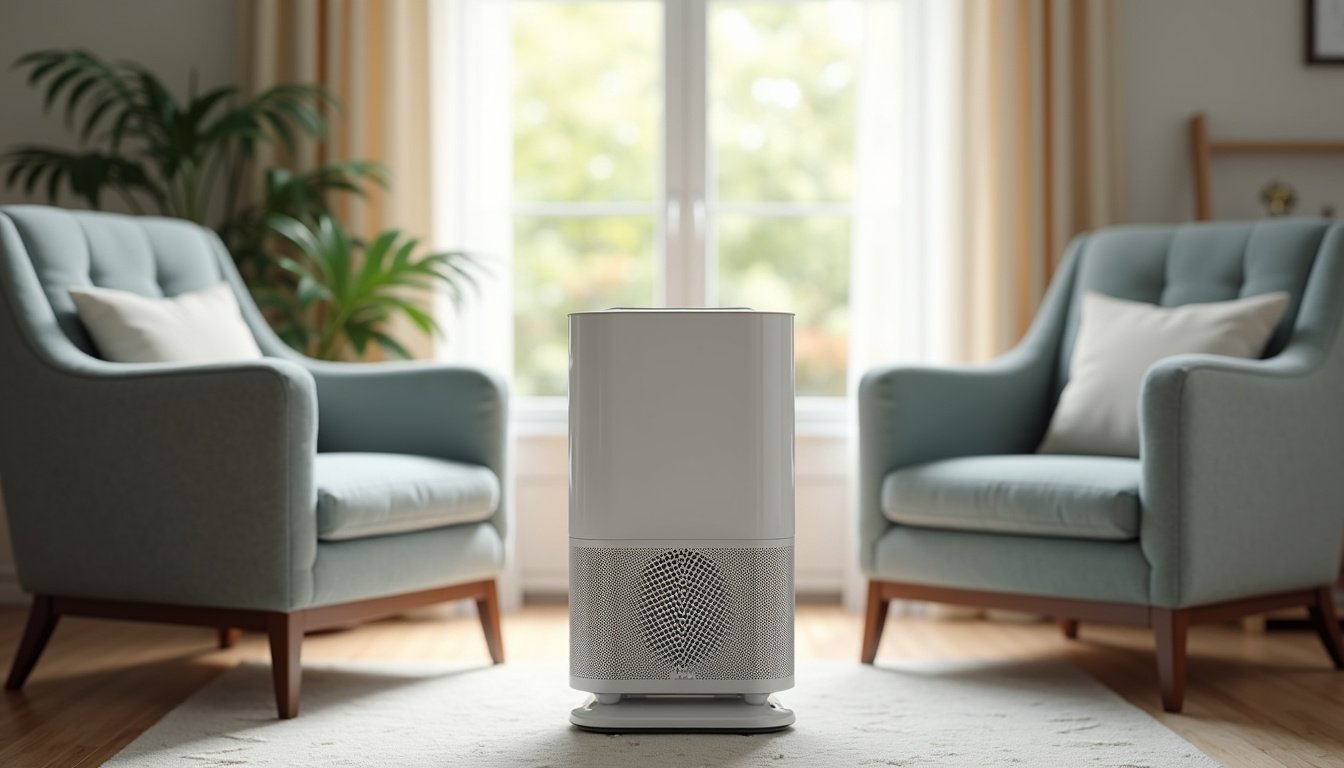
These widely reviewed true HEPA units list CADR figures high enough to deliver several air changes an hour in a bedroom or living room on medium, which is the setting you can leave running all day. Match the maker-listed CADR to your room and run it continuously.






How This Guide Approaches the Question
We looked at how viruses travel through air, what HEPA captures at those sizes, what the EPA, CDC and ASHRAE say about portable air cleaners for infection control, and how sizing, placement and runtime decide whether a unit does anything useful. Product details in the table come from maker specifications.
The most useful mental model is dose over time. A purifier does not block a cough; it steadily removes what a cough leaves hanging in the air, so the longer people share a room, the more a running purifier matters.
How Viruses Travel Through Air
A bare virus particle is tiny, 0.02 to 0.3 microns, but it is almost never airborne bare. Breathing, talking, coughing and sneezing release droplets and aerosols of saliva and mucus, and viruses ride inside them. Large droplets fall within a few feet. Smaller aerosols, roughly 0.5 to 10 microns, stay suspended for minutes to hours, drift on room air currents, and build up in a closed room while an infectious person keeps breathing. These aerosols are what a purifier can act on, and their size puts them squarely in the range HEPA captures best.
| Particle | Size (microns) | Behavior | HEPA capture |
|---|---|---|---|
| Bare virus | 0.02 to 0.3 | Rarely airborne alone | Above 99.97 percent even at 0.3 |
| Fine respiratory aerosol | 0.5 to 5 | Suspended for hours; drifts room-wide | Well above 99.97 percent |
| Coarse aerosol | 5 to 10 | Suspended minutes; settles slowly | Near total |
| Large droplet | Over 10 | Falls within a few feet | Captured if it reaches the filter; usually settles first |
HEPA’s 99.97 percent rating applies to 0.3 microns because that is the hardest size to catch; particles both smaller and larger are captured at higher rates by diffusion and impaction. There is no size at which viruses or their aerosols slip through intact HEPA media. The questions are how much air the filter sees, and how fast.
What the Evidence Supports, and What It Does Not
The EPA says HEPA air cleaners can help reduce airborne contaminants including viruses when used with best practices, and that on their own they are not enough to protect people. The CDC’s ventilation guidance recommends portable HEPA cleaners to add clean air to rooms and ties effectiveness to CADR and room size. Chamber and room studies measure substantial reductions in aerosol concentrations with a sized unit running; what no study can promise is that any individual will avoid infection, because that depends on distance, duration, the infectious person’s output and factors a purifier does not touch.
The practical reading is that a purifier earns its place when people must share a room with someone infectious for a long time, a caregiver and a sick child, a household isolating one member, a gathering in a closed room in winter, and that it adds little in brief, close-contact moments.
Sizing: Air Changes Per Hour
The measure that matters is how many times an hour the purifier cleans the room’s volume, called air changes per hour. AHAM’s two-thirds rule, CADR of at least two thirds of the room’s square footage, gives about five air changes at an eight-foot ceiling, which is the usual consumer target. For a room with an infectious person, public health guidance leans higher, and the arithmetic is simple: CADR in cubic feet per minute times 60, divided by room volume in cubic feet.
| Room | Floor area (sq ft) | Volume at 8 ft (cu ft) | CADR for 5 ACH | CADR for 6 ACH |
|---|---|---|---|---|
| Small bedroom | 120 | 960 | 80 | 96 |
| Standard bedroom | 168 | 1,344 | 112 | 134 |
| Large bedroom | 220 | 1,760 | 147 | 176 |
| Living room | 300 | 2,400 | 200 | 240 |
| Open-plan space | 500 | 4,000 | 333 | 400 |
Worked example: a sick family member isolates in a 12 by 14 foot bedroom, 168 square feet, 1,344 cubic feet. A unit with a smoke CADR of 150 gives 150 times 60 divided by 1,344, about 6.7 air changes an hour on its top setting, around 5 on medium. The door stays mostly closed, the window opens for a few minutes a few times a day, and the purifier runs around the clock; a second unit in the hallway or living room covers the rest of the household.
Use the smoke CADR, the lowest of the three listed figures and the closest to fine aerosol size. Prefer a unit that reaches the target on medium, since the high setting is loud enough that people switch it off.
Placement and Runtime
A purifier only cleans air that reaches it. Put it in the room where air is being shared, in the open, a few feet from walls and furniture with intake and outlet clear, roughly between the people in the room rather than in a far corner. In a sick room, position it so its outlet does not blow directly from the patient toward the door or toward a caregiver; the goal is to pull room air through the filter, not to push the patient’s exhaled air across the room. Run it continuously while the room is occupied and for an hour or two afterward; aerosols linger after people leave.
- In the room where the sick person is, or where the group gathers; not the hallway.
- In the open, intake and outlet unobstructed, a few feet from walls.
- Not aimed so that the outlet carries air from the patient toward others.
- Continuous operation on medium or higher; auto mode may idle since sensors respond to particle mass, not infectious risk.
- Keep running an hour or two after the room empties.
- Door mostly closed so the unit works on one room’s air, with brief window ventilation several times a day.
Ventilation and the Other Layers
Filtration and ventilation do the same job by different means: ventilation dilutes aerosols with outdoor air, filtration removes them. ASHRAE and CDC guidance combines the two, and the sum matters, so a purifier delivering four air changes plus a window and exhaust fan giving two is a six-change room. Where windows cannot be opened in winter, the purifier carries more of the load. The other layers, distance, time, staying home when sick, masks where appropriate and vaccination where applicable, address close-range and surface routes the purifier never touches. Nothing here is medical advice.
Technologies to Be Cautious About
HEPA is the proven mechanism for aerosols. Several add-ons are marketed for viruses with weaker support. Ionizers and electrostatic devices can reduce particles but may produce ozone and move particles to surfaces rather than removing them. Ozone generators are sold as sanitizers; the EPA cautions against intentional ozone indoors, which irritates lungs at concentrations well below what would affect a virus. UV-C lamps inside purifiers expose air for a fraction of a second at low intensity, which is far less than what laboratory inactivation requires; the HEPA in the same unit does the work. Photocatalytic and plasma devices have mixed evidence and can emit byproducts. A plain HEPA unit with a sufficient CADR is the choice guidance supports.
| Technology | Evidence for airborne virus reduction | Concerns |
|---|---|---|
| True HEPA | Strong; captures aerosols of all sizes | Needs correct CADR and continuous running |
| Ionizer | Mixed; moves particles to surfaces | Possible ozone; re-suspension |
| Ozone generator | Not supported for occupied rooms | Lung irritant; EPA cautions against |
| UV-C inside purifier | Weak at consumer intensity and dwell time | Marketing value; HEPA does the work |
| Photocatalytic oxidation | Mixed | Possible byproducts such as formaldehyde |
| HVAC MERV 13 filter | Good when the fan runs | Depends on fan runtime and duct leaks |
A Household Plan When Someone Is Sick
Put the sick person in one room with the door closed and a purifier sized for at least five air changes running continuously. Put a second purifier in the main shared room. Open windows briefly several times a day in both. Keep visits to the sick room short and at distance, and run the purifier for an hour or two after anyone leaves. Replace the HEPA filter on the maker’s schedule afterward; there is no special disposal, since captured viruses do not survive long on dry filter media, but bag the filter at the machine as usual.
Worked example: a two-bedroom apartment isolates one adult in the 150 square foot second bedroom with a 130 CADR unit running on high, about 6.5 air changes, and runs a 200 CADR unit in the 280 square foot living room, about 5.4 changes on high. Windows open for ten minutes three times a day. The rest of the household keeps to the living room and kitchen. Whether that prevents anyone else catching the illness is not something the purifiers can promise; it lowers the airborne dose in both rooms, which is what they can do.
How to Use a Purifier Against Airborne Viruses in 6 Steps
- Measure the room and multiply length by width by ceiling height for cubic feet.
- Choose a true HEPA unit whose smoke CADR times 60, divided by that volume, gives at least five air changes an hour, preferably on medium.
- Place it in the open in the room where air is shared, roughly between people, with its outlet not carrying air from the sick person toward others.
- Run it continuously while the room is occupied and for an hour or two afterward.
- Add ventilation: windows open briefly several times a day, exhaust fans on, HVAC fresh air where available.
- Keep the other layers: isolate the sick person, keep visits short and at distance, wash hands, and follow a doctor’s advice on medical measures.
Do and Do Not
Do
- Use true HEPA sized by smoke CADR for at least five air changes.
- Run it continuously, not intermittently.
- Put it in the room where air is shared.
- Combine it with ventilation and distance.
- Keep a second unit in the main shared room when isolating someone.
Do not
- Do not treat a purifier as making a shared room safe.
- Do not rely on ionizers, ozone or UV add-ons instead of HEPA.
- Do not run it on low or in auto mode and expect much.
- Do not place it in a hallway or behind furniture.
- Do not skip ventilation because the purifier is on.
Who Should Skip This
If the exposure is brief and close, a conversation across a table or a short visit, a purifier changes little; distance, a short visit and ventilation matter there, and the purifier’s value is in long shared occupancy.
If the room already has a forced-air system with a MERV 13 filter and the fan running continuously, plus open windows, it may already reach several air changes; a portable unit still helps in the sick room, where the door is closed.
Honest Limits
- Evidence supports reduced aerosol concentrations, not prevention of any particular infection.
- CADR figures are maker-listed under AHAM conditions and we have not verified them.
- Air change targets vary by guidance and by how long and how closely people share a room.
- Close-range transmission is outside what any room filter can address.
- Household ventilation rates are hard to measure without instruments; the figures here are estimates.
- Nothing here is medical advice; questions about risk, vaccination and treatment belong with a doctor.
When to See a Professional
See a doctor for anything medical: symptoms, who is at higher risk, vaccination and treatment. Air cleaning is an environmental measure, not a medical one, and nothing on this page is medical advice.
Call an HVAC professional to assess whether your forced-air system can take a MERV 13 filter and increase fresh air intake, which raises whole-house air changes alongside portable units.
Frequently Asked Questions
Can air purifiers help with viruses?
Yes, in a limited way. A true HEPA filter captures the respiratory aerosols that carry viruses, mostly 0.5 to 10 microns, at above its 99.97 percent rating, and a sized unit running continuously lowers their concentration in a room. It does not make a shared room safe or stop close-range transmission.
Can a virus pass through a HEPA filter?
Not in practice. Bare viruses are tiny, but they travel inside far larger aerosols of saliva and mucus, and HEPA captures particles both smaller and larger than its 0.3 micron test size at rates above 99.97 percent. No size slips through intact HEPA media; the only limit is how much air reaches the filter.
What size air purifier do I need for a sick room?
One giving at least five air changes an hour, more if possible. Multiply the smoke CADR by 60 and divide by the room’s cubic feet; a 150 CADR unit in a 12 by 14 foot room with 8 foot ceilings gives about 6.7 changes on high. Prefer a unit that hits the target on medium.
Where should I put the purifier when someone is sick?
In the sick room, in the open a few feet from walls, door mostly closed, with the outlet positioned so it does not carry the patient’s exhaled air toward a caregiver or the door. Run it continuously and for an hour or two after anyone leaves.
Does the air purifier need to run all the time?
Yes while the room is occupied and for a while after. Aerosols build up continuously while an infectious person breathes and linger after they leave, so intermittent running achieves little. Use a fixed medium or high setting; auto mode may idle because sensors respond to particle mass, not infectious risk.
Is a purifier enough on its own?
No. The EPA says HEPA cleaners can reduce airborne contaminants including viruses but are not enough by themselves. Distance, short visits, ventilation, isolating the sick person, hand hygiene and medical measures per a doctor address routes the purifier never touches. Treat it as one layer that lowers dose over time. Nothing here is medical advice.
Do UV, ionizer or ozone purifiers kill viruses?
Not reliably in consumer units. UV-C lamps inside purifiers expose air for a fraction of a second at low intensity, far below laboratory inactivation doses; the HEPA stage does the work. Ionizers move particles to surfaces and may emit ozone, and the EPA cautions against ozone generators indoors, which irritate lungs at any useful concentration.
Does opening a window do the same thing?
It does the same job differently: ventilation dilutes aerosols with outdoor air while filtration removes them, and the two add up. A purifier giving four air changes plus a window and exhaust fan giving two is a six-change room.
Will a HVAC filter protect the whole house?
A MERV 13 filter in a forced-air system removes aerosols from all the air passing through it, but only while the fan runs and only to the extent ducts do not leak. Setting the fan to on rather than auto helps.
Do I need to do anything special with the filter afterward?
No. Viruses captured on dry filter media do not survive long, and there is no special disposal route. Replace the HEPA on the maker’s schedule, bag it at the machine without shaking as you would any used filter, and put it in household trash. Washing hands after handling it is ordinary good practice.
Bottom Line
Air purifiers help with viruses by doing one thing well: a true HEPA filter captures the respiratory aerosols viruses travel in, and a unit sized for several air changes an hour, running continuously in the room where air is shared, lowers the concentration of those aerosols over time. That is a real, measurable contribution, and public health guidance supports it as one layer among several.
It is not a barrier. Close-range transmission, surfaces and other rooms are outside its reach, and an undersized unit on low or in a hallway does almost nothing. Size it by CADR, place it in the open, run it around the clock, add ventilation, and keep the other layers. Questions about risk and medical measures belong with a doctor; nothing here is medical advice.
Related reading: Air purifier CADR explained, Do air purifiers help with colds and flu, Air purifier vs opening a window.