Last updated:
As an Amazon Associate we earn from qualifying purchases. This does not change what we recommend. See our affiliate disclaimer.
The pitch is irresistible: a machine in the corner that quietly eats the fur before it reaches the sofa. Anyone who has run a finger along a baseboard in a house with a shedding dog wants that to be true. The honest answer splits in two, because pet hair and the invisible stuff that comes off a pet behave in completely different ways.
Air purifiers help with pet hair only a little, and they help with pet dander a great deal. Hair is large and heavy by airborne standards; a shed hair drifts for seconds, lands on the floor or the couch, and stays there until something moves it. A purifier can only capture what passes through its intake, so it catches the hair that happens to float by, typically from an animal shaking nearby, and its pre-filter fills with fur as evidence. It does nothing for the hair already on the rug. Dander is different: the flakes of dried skin, saliva and urine proteins that pets shed are small enough to hang in the air for hours and to resuspend every time someone sits down, and those are exactly what a true HEPA filter captures. For a household bothered by fur on surfaces, the tools are a sealed vacuum, washable covers, a grooming routine and a lint roller; for a household bothered by sneezing, itchy eyes and the smell of pet, a HEPA and carbon purifier sized to the room does real work. Most homes want both.
In short: a purifier catches airborne dander, odor and the fur that floats past, not the hair on the floor. Pair it with vacuuming, grooming and covers, and expect the pre-filter to fill with fur.
The EPA notes that HEPA filtration removes airborne particles including pet dander and that large particles such as hair settle quickly and are addressed by cleaning. Allergy organizations identify dander, saliva and urine proteins, not hair, as the allergens, and recommend HEPA filtration alongside vacuuming and washing.
This guide is research-based, drawn from EPA guidance on air cleaners and particles, allergy organization material and maker specifications. We have not tested the units in the table and quote no prices or ratings. Nothing here is medical advice.
A purifier helps with
- Airborne dander, the skin, saliva and urine proteins that cause allergy symptoms
- Fur fragments and dust that float with the dander
- Pet odor, if the unit has a real activated carbon stage
- The hair that drifts past the intake, which fills the pre-filter
A purifier does not help with
- Hair already on floors, furniture, bedding and clothes
- Fur on the far side of the room that never becomes airborne
- Shedding itself, which grooming and diet address
- Tumbleweeds of fur in corners, which a vacuum handles in seconds
Key Takeaways
- Pet hair settles within seconds; a purifier only catches the small fraction that floats past its intake.
- Pet dander, the real allergen, stays airborne for hours and is exactly what a true HEPA filter captures.
- A pre-filter that fills with fur shows the unit is catching floating hair; it does not mean the floor is cleaner.
- Place the unit near where the pet sleeps or shakes to catch the most hair and dander at the source.
- A vacuum with a HEPA bag, washable covers and regular grooming do for hair what a purifier does for dander.
- Activated carbon in meaningful quantity handles pet odor; HEPA alone does not.
- Nothing here is medical advice; pet allergies belong with an allergist.
HEPA Purifiers Built for Pet Households
These widely reviewed units combine true HEPA for dander with a washable pre-filter that traps floating fur before it reaches the main media and a carbon stage for odor, and they run quietly enough to sit near a pet bed. Compare the maker-listed CADR against the room and rinse the pre-filter often.


How This Guide Approaches the Question
We looked at how pet hair and pet dander behave in air, at what a HEPA purifier can physically capture, at where to place it for the most benefit, and at the cleaning and grooming measures that address the hair a purifier cannot. Product details in the table come from maker specifications.
The split to keep in mind: hair is a floor problem, dander is an air problem. The purifier is the air tool.
Hair Versus Dander: Two Different Problems
A pet hair is tens of microns thick and millimeters to centimeters long, and it falls through still air at a rate measured in centimeters per second; a shed hair is on the floor within seconds to a minute. Once down, it stays unless a draft, a footstep or a shaking dog lifts it briefly. Dander is the fine material shed from skin along with dried saliva and urine proteins: flakes from a few microns down to under one micron, which settle slowly, stay suspended for hours, and resuspend with every disturbance. Dander, not hair, carries the proteins that trigger pet allergies, which is why short-haired and hairless pets cause symptoms too.
| Material | Typical size | Time airborne | Reaches a purifier? | Addressed by |
|---|---|---|---|---|
| Pet hair | 30 to 100 microns thick, millimeters long | Seconds to a minute | Only if shed near the intake | Vacuum, lint roller, grooming, covers |
| Fur fragments and broken hair | 10 to 50 microns | Minutes | Some | Purifier pre-filter; vacuuming |
| Dander flakes | 1 to 10 microns | Hours | Yes | HEPA purifier; washing; vacuuming |
| Dander allergen particles | Under 1 to 5 microns | Hours to days | Yes | HEPA purifier |
| Saliva and urine protein residue | Attached to dander and dust | Hours | Yes | HEPA purifier; washing bedding |
| Pet odor compounds | Gas molecules | Indefinite | Passes HEPA; carbon adsorbs | Activated carbon; source cleaning |
What the Purifier Actually Catches
A true HEPA filter captures at least 99.97 percent of particles at 0.3 microns and higher proportions of both larger and smaller particles, so every dander flake and allergen particle that reaches it is caught. The pre-filter, a mesh or foam in front of the HEPA, stops hair and large fur fragments before they clog the fine media; in a pet household it greys and furs over within weeks, which owners read as proof the purifier is eating the hair. It is proof the purifier is eating the hair that floated past, which is a small share of what the pet sheds. The dander it catches is the share that matters for allergies and for the fine grey film that settles on dark surfaces.
Clean air delivery rate, CADR, governs how much air the unit processes; AHAM’s rule of two thirds of the room’s square footage is the minimum, and pet households benefit from more, both for faster dander removal and because a larger unit on medium is quieter near a sleeping animal.
Where to Put It
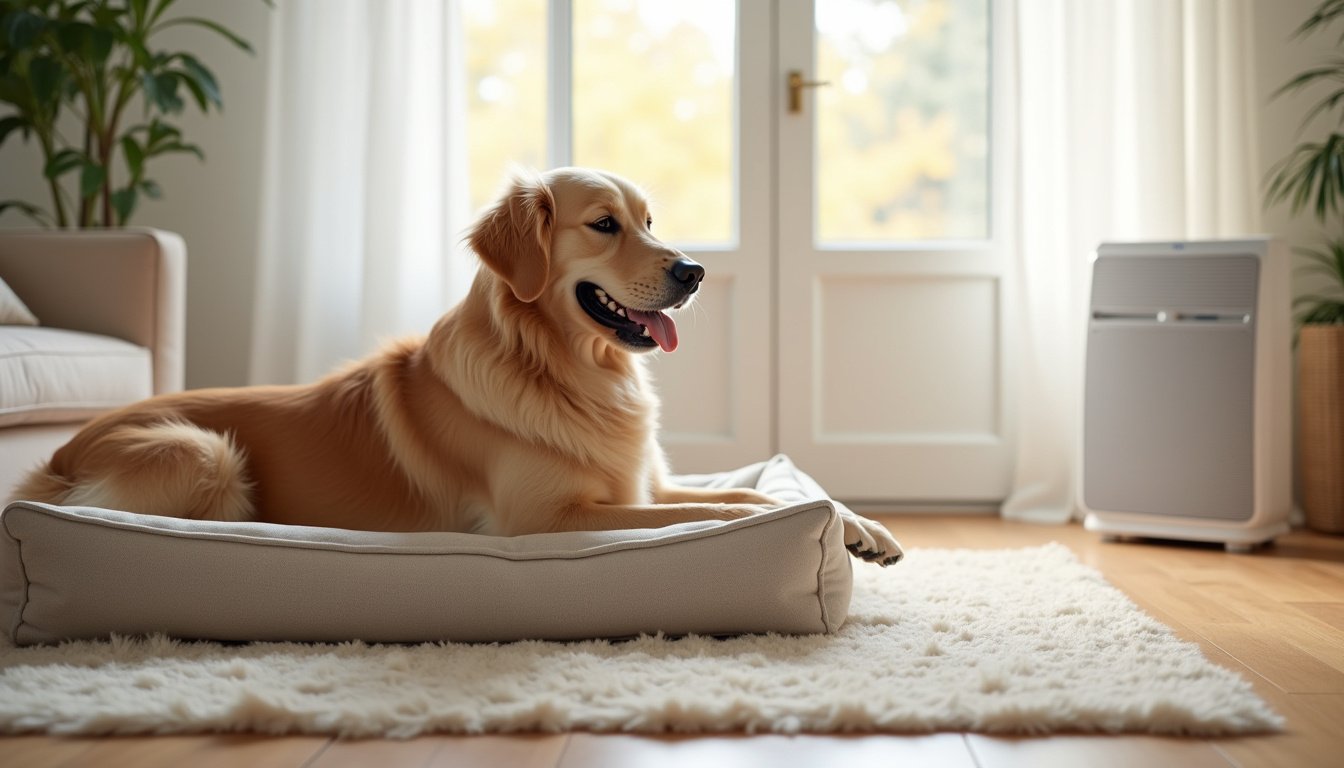
Hair and dander both start at the animal, and both are at their most airborne in the first seconds after a shake, a scratch or a jump off the sofa. A purifier placed within a few feet of where the pet sleeps, grooms or shakes off catches far more of both than one across the room, because it meets the cloud before it settles. The bedroom, if the pet sleeps there or is excluded from it, is the other priority, since eight hours of breathing is the longest exposure of the day. Keep intake and outlet clear, and avoid aiming the outlet across a rug, which lifts settled hair into the air for a moment without capturing much of it.
- Within three to five feet of the pet bed, crate or favourite spot, intake facing it.
- In the bedroom of anyone with symptoms, with the pet ideally kept out of that room.
- Clear space around intake and outlet; not behind furniture or in a corner.
- Outlet aimed upward or away from rugs and upholstery.
- On medium continuously; high for an hour after grooming or a big shake-off.
The Tools for Hair
The hair on the floor, the sofa and the bed is a cleaning problem, and the tools for it are old and effective. A vacuum with a sealed body and a HEPA bag or filter removes hair without blowing dander back out of the exhaust, which cheaper vacuums do; a rubber broom or squeegee pulls hair out of carpet pile that a vacuum skims over; washable covers on sofas and pet beds move the hair to the washing machine; a damp rubber glove or lint roller lifts it from upholstery; and hard floors are swept or dry-mopped before vacuuming so the hair is not blown around. Grooming the animal outdoors or in a bathroom, two or three times a week in shedding season, removes hair before it is shed into the house at all.
| Tool | Handles | Note |
|---|---|---|
| Sealed vacuum with HEPA bag or filter | Hair and dander on floors and upholstery | Exhaust does not resuspend dander; vacuum twice weekly in season |
| Rubber broom or carpet rake | Hair embedded in carpet pile | Pulls up what vacuums skim |
| Washable covers and pet beds | Hair and dander on furniture | Wash hot weekly |
| Lint roller or damp rubber glove | Hair on clothes and upholstery | Quick daily pass |
| Regular grooming, outdoors or in a bathroom | Shedding at source | Two to three times weekly in season |
| Door mat and paw wipe | Dirt and pollen carried in on fur | Reduces what the purifier and vacuum face |
| HEPA purifier near the pet | Airborne dander, odor, floating fur | The air tool, not the floor tool |
Dander, Allergies and What to Expect
For a household where someone sneezes, itches or wheezes around the pet, the purifier earns its place. Dander allergen stays airborne for hours and is resuspended every time a cushion is sat on, so a HEPA unit running continuously in the bedroom and the main living space lowers the airborne load measurably. Whether that eases a particular person’s symptoms depends on their sensitivity and on the rest of the routine: washing bedding weekly in hot water, keeping the pet out of the bedroom, HEPA vacuuming, and wiping hard surfaces where dander collects. Allergy organizations recommend the combination, not the purifier alone, and the decision about managing a pet allergy is one for an allergist. Nothing here is medical advice.
Worked example: a family with a shedding retriever puts a HEPA and carbon unit rated 200 CFM beside the dog’s bed in the living room and a smaller unit in a child’s bedroom from which the dog is now excluded. The living room pre-filter mats with fur in ten days and is rinsed; the sofa gets washable covers; the dog is brushed outside twice a week. Fur on the floor is still a vacuuming job, but the grey film on the television is gone, and the bedroom reads clean on a particle meter by morning.
Pet Odor
Pet smell is gas, not particles, and HEPA passes it untouched. Only activated carbon adsorbs it, and the amount matters: the carbon-coated sheet bundled with many filters holds a few grams and saturates in weeks around pets, while a bed of granular carbon measured in pounds keeps working for months. For a household whose complaint is the smell of dog or litter box, choose a unit by carbon weight, place it near the source, replace the carbon every two to three months, and address the source itself: washed beds, scooped litter, enzyme cleaner on accidents. Our guide on purifiers that are not removing pet odor covers the detail.
Keeping the Unit Healthy in a Pet Home
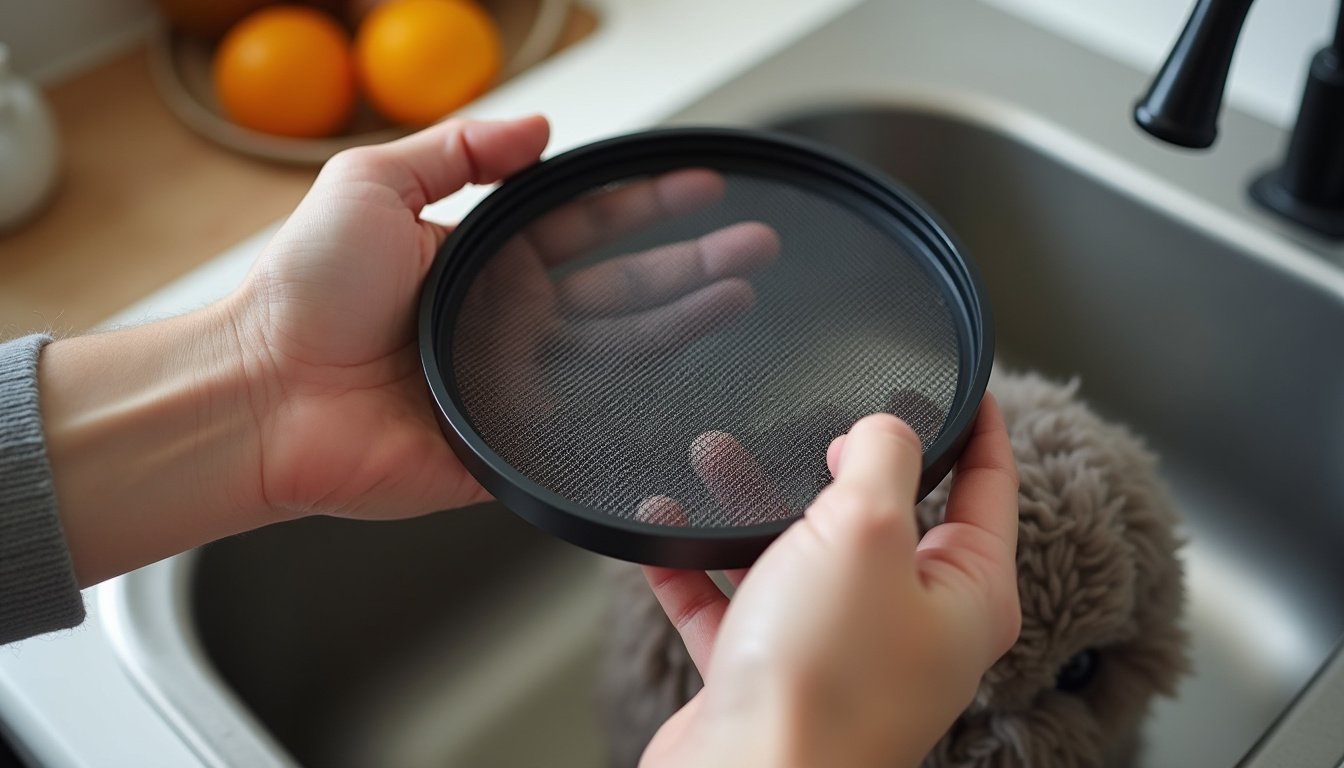
Pets are hard on purifiers. Fur mats the pre-filter fast, starving the HEPA of air and making the motor work harder; dander loads the HEPA sooner than in a pet-free home; and a unit on the floor beside a dog bed collects hair in its grilles. Rinse the pre-filter every one to two weeks in shedding season and dry it flat; vacuum the grilles monthly with a brush; expect the HEPA to need replacing toward the early end of the maker’s interval, judged by its color and by airflow at the outlet rather than by the indicator light; and keep the unit a few inches off thick carpet so its intake is not drinking from the fur layer.
| Pet-home maintenance | Interval | Why |
|---|---|---|
| Rinse pre-filter | Every 1 to 2 weeks in shedding season | Fur mats it fast and starves the HEPA |
| Vacuum grilles with a brush | Monthly | Hair collects at intakes |
| Inspect HEPA color and airflow | Monthly | Dander loads it sooner than in pet-free homes |
| Replace HEPA | Early end of maker’s interval | Judge by media, not the light |
| Replace carbon | Every 2 to 3 months | Saturates with odor |
| Raise unit off thick carpet | Once | Keeps intake out of the fur layer |
How to Deal With Pet Hair and Dander in 6 Steps
- Separate the problem: hair on surfaces is a cleaning job; sneezing, itching and grey film are an air job for a HEPA purifier.
- Choose a true HEPA unit with a washable pre-filter and real carbon, with a CADR of at least two thirds of the room’s square footage, more for heavy shedders.
- Place it within a few feet of where the pet sleeps or shakes, intake facing the spot, and a second unit in the bedroom of anyone with symptoms.
- Run it continuously on medium; rinse the pre-filter every one to two weeks in shedding season and replace the HEPA toward the early end of its interval.
- Vacuum twice weekly with a sealed HEPA vacuum, use washable covers, hot-wash bedding weekly and groom the pet outdoors.
- Keep the pet out of the bedroom of anyone with allergies and talk to an allergist about symptoms; nothing here is medical advice.
Do and Do Not
Do
- Use the purifier for dander and odor.
- Place it near the pet’s spot.
- Rinse the pre-filter often.
- Vacuum with a sealed HEPA vacuum.
- Groom the pet outside the house.
Do not
- Do not expect the purifier to clear hair from floors or furniture.
- Do not aim the outlet across rugs.
- Do not wash or blow out the HEPA filter.
- Do not rely on a carbon-coated sheet for pet odor.
- Do not treat the purifier as allergy treatment; see an allergist.
Who Should Skip This
If the complaint is fur on the sofa and floor with no sneezing or smell, skip the purifier question; a sealed HEPA vacuum, washable covers, a rubber broom and outdoor grooming solve it and a purifier would barely touch it.
If the complaint is allergy symptoms, skip worrying about hair; the dander is the issue, and a HEPA unit in the bedroom with the pet excluded is the first move, alongside an allergist.
Honest Limits
- Settling times and particle sizes are typical ranges, not measurements of any home.
- CADR figures are maker-listed and unverified by us.
- How much lower airborne dander eases a given person’s symptoms is individual and a medical question.
- Carbon capacity for odor depends on weight, humidity and odor load.
- Pre-filter and HEPA life in pet homes vary widely.
- Nothing here is medical advice.
When to See a Professional
See an allergist about pet allergy symptoms, for testing and treatment options and advice on whether environmental measures are enough; nothing on this page is medical advice.
Ask a veterinarian about excessive shedding, which can have dietary or health causes, and about a grooming and bathing routine suited to the animal.
Frequently Asked Questions
Do air purifiers help with pet hair?
Only a little. Shed hair falls to the floor within seconds and stays there, so a purifier catches just the fraction that floats past its intake, mostly from a pet shaking nearby. Its pre-filter fills with that fur.
Do air purifiers help with pet dander?
Yes, substantially. Dander, the skin flakes carrying the proteins that cause pet allergies, is one to ten microns and stays airborne for hours, exactly what a true HEPA filter captures. A unit sized to the room and run continuously lowers airborne dander measurably; how that affects symptoms is a question for an allergist.
Why is my purifier’s pre-filter covered in fur?
Because it is placed where hair floats by, usually near the pet’s bed or favourite spot, and the pre-filter is doing its job of stopping fur before it clogs the HEPA. It does not mean the floor is any cleaner.
Where should I put an air purifier for pet hair and dander?
Within three to five feet of where the pet sleeps, grooms or shakes off, intake facing the spot, since hair and dander are most airborne in the seconds after a shake. Put a second unit in the bedroom of anyone with symptoms, ideally with the pet kept out, and aim outlets away from rugs.
What size purifier do I need for a pet household?
A CADR of at least two thirds of the room’s square footage, and more for heavy shedders or allergy sufferers, so the unit can run on medium and still turn the room’s air over several times an hour.
Will an air purifier stop my house smelling of dog?
Only if it has a meaningful activated carbon stage, measured in pounds rather than a coated sheet, placed near the source and replaced every two to three months. HEPA passes odor untouched. Washing beds weekly, cleaning accidents with enzyme cleaner and grooming the dog do more for smell than any filter.
Does a purifier reduce pet hair on furniture?
Not noticeably. Hair lands on furniture within seconds of being shed and a purifier cannot reach it. Washable covers, a lint roller or damp rubber glove, a sealed HEPA vacuum with an upholstery tool and grooming the pet outdoors are the tools. The purifier reduces the dander that settles with the hair.
How often should I change filters with pets?
Rinse the pre-filter every one to two weeks in shedding season and dry it flat. Replace the HEPA toward the early end of the maker’s interval, judged by grey or brown media and falling airflow rather than the indicator light, which is a timer.
Can a purifier help with pet allergies?
It lowers airborne dander in the room it serves, which allergy organizations recommend alongside keeping the pet out of the bedroom, hot-washing bedding weekly and sealed HEPA vacuuming. Whether that eases a particular person’s symptoms is individual and a matter for an allergist. Nothing here is medical advice.
Should I vacuum or run the purifier for pet hair?
Both, for different jobs. A sealed vacuum with a HEPA bag removes hair and settled dander from floors and furniture without blowing dander back out; the purifier removes the dander and fur fragments that are airborne, especially the cloud raised by vacuuming. Run the purifier on high during and after vacuuming.
Bottom Line
Air purifiers help with pet hair only at the margins, because hair is on the floor within seconds and a purifier only cleans what reaches its intake. What they help with substantially is pet dander, the small, long-floating flakes that carry the allergens and settle as grey film, and pet odor if the unit carries real carbon. A HEPA unit near the pet’s spot and another in the bedroom lowers the airborne load, and its fur-matted pre-filter is a side effect, not the point.
The hair is a cleaning job: a sealed HEPA vacuum, washable covers, a rubber broom, outdoor grooming. Pair the two and the house is cleaner in both the ways that matter; expect either alone to disappoint. Allergy symptoms belong with an allergist, and nothing here is medical advice.
Related reading: Best air purifier for pet dander, Air purifier not removing pet odor, How to clean air purifier pre-filter.