Last updated:
Disclosure: As an Amazon Associate we earn from qualifying purchases. This does not change what we recommend. See our affiliate disclaimer.
Children breathe more air relative to their body size than adults, their lungs are still developing and they spend much of their time at home, often playing near floors where dust and allergens collect. That makes indoor air quality especially relevant to them. The most important steps are to keep the home smoke-free, control moisture and allergens, ventilate, choose low-emission products and consider filtration where it helps.
We have not tested these products ourselves. This article is general information, not medical advice. Talk to your pediatrician about asthma, allergies and any breathing or sleep concerns. Seek urgent care for severe breathing difficulty.
Top priorities
- Smoke-free home
- Control dust mites, mold and pests
- Ventilation and low-emission products
Supportive tools
- HEPA purifier in the bedroom
- Humidity control
- Regular cleaning
Key Takeaways
- Keep the home smoke-free
- Control dust mites, mold and pests
- Ventilate and choose low-emission products
- Use a quiet HEPA purifier in the bedroom if needed
A Parent’s Weekly Air Checklist
Wash bedding and soft toys in hot water, vacuum with a sealed HEPA vacuum, damp-dust surfaces and check bathrooms for mold and leaks. Run exhaust fans while cooking and showering, check humidity and open windows briefly when outdoor air is clean. Check the purifier’s pre-filter, replace filters on schedule and keep cords tidy. Keep shoes at the door and change out of outdoor clothes. Ask visitors not to smoke indoors or near the child. A weekly routine keeps small problems from building up and teaches children good habits.
Picking a Purifier for a Child’s Room
Choose a CADR for the room size, a quiet low speed, a dimmable display and a child lock. Make sure the unit is stable and the cord and air outlet are out of reach. Place it with clearance and away from beds and cribs. Confirm specifications on the product page and avoid ozone-generating devices.
Toys, Fabrics and Chemicals
New toys, mattresses and furniture can have a chemical smell. Air them out before use, wash fabrics and choose products with low-emission labels where possible. Avoid scented products near children.
Pets and Children
Pets add dander and allergens. Keep pets out of bedrooms if allergy symptoms occur, groom pets, wash pet bedding and vacuum often. Talk to your pediatrician about allergy testing.
Travel, Cars and Public Spaces
Keep cars smoke-free, ventilate during use and avoid idling near children. When traveling, ask for smoke-free rooms. Take medication and your asthma plan along.
Working With Professionals
Pediatricians, allergists and public health resources can guide you. Bring a list of symptoms, triggers and home changes, and ask what to prioritize.
Asthma and Children: A Home Action Plan
If your child has asthma, work with the pediatrician on an action plan that lists medications, triggers and when to seek care. At home, focus on removing or reducing known triggers: keep the home smoke-free, wash bedding in hot water, use covers if dust mites are a trigger, keep pets out of the bedroom if needed, fix moisture and mold and use a quiet purifier. Share the plan with caregivers and schools. Keep rescue medication where adults can find it and check expiry dates. Review the plan regularly as the child grows.
Pollen and Seasonal Allergies in Kids
Pollen can trigger sneezing, itchy eyes and wheeze. Keep windows closed on high-pollen days, wash hands and face after outdoor play, change clothes and bathe before bed in pollen season. A purifier in the bedroom lowers airborne pollen. Ask your pediatrician about treatment.
Wildfire Smoke and Children
Children are more affected by smoke. Keep them indoors with windows closed during smoke events, run a HEPA purifier in a room they use, set AC to recirculate and follow local advice about outdoor play. Ask your pediatrician about asthma plans and symptoms to watch.
Practical Steps for Families
Keep smoke out of the home entirely, use fragrance-free products, vent cooking outdoors, hold humidity between 30 and 50 percent, wash bedding and soft toys regularly, and run a quiet true HEPA purifier without ozone in children’s bedrooms, placed out of reach with cords secured. Test for radon and keep carbon monoxide alarms working. Ask your paediatrician about anything specific to your child; a purifier supports a healthy home and treats nothing. Nothing here is medical advice.
Quiet, Child-Friendly Air Purifiers
These picks come from the Hostinger affiliate plugin. Specs change by model year, so confirm filter type, CADR, noise and replacement filter costs on the product page before you buy.






Why Children Are More Vulnerable
Children’s lungs and immune systems are still developing, they breathe faster than adults and they spend time close to the floor and in contact with surfaces. Exposure to smoke, allergens and certain chemicals can affect their breathing and may contribute to asthma symptoms.
Secondhand Smoke and Combustion
Secondhand smoke has no safe level of exposure and is linked to respiratory infections, asthma problems and ear infections in children. Keep the home and car smoke-free. Install carbon monoxide alarms, service heating appliances and use the range hood.
Allergens, Dust Mites and Pets
Dust mites, pet dander, pollen and cockroach allergens can trigger asthma and allergy symptoms. Wash bedding weekly in hot water, use allergen covers if advised, limit stuffed toys, vacuum with a sealed HEPA vacuum and keep pets out of bedrooms if they are a trigger.
Mold, Damp and Chemicals
Damp homes with mold are associated with respiratory symptoms. Fix leaks and keep humidity roughly 30 to 50 percent. Choose low-VOC paints and furnishings for nurseries, ventilate and avoid fragranced sprays and harsh cleaners.
Where an Air Purifier Fits
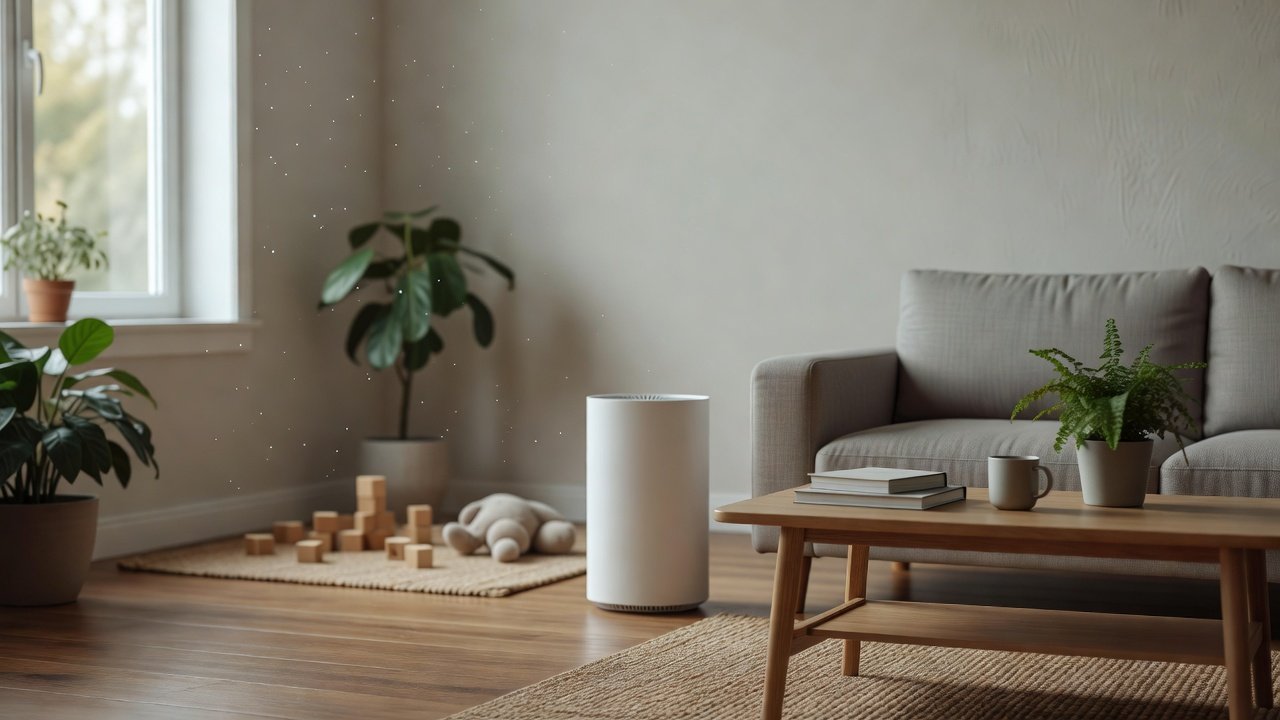
A quiet true HEPA purifier in the child’s bedroom can lower airborne dust, dander and pollen. Choose a unit with a child lock, stable base and quiet low speed, keep cords out of reach and avoid ozone-producing devices.
Nursery and Bedroom Setup
Choose low-emission paints and furniture well ahead of time, ventilate, wash new bedding and keep the room uncluttered. Keep humidity in range and place a purifier with clearance away from the crib or bed. Keep cords out of reach.
Cleaning Safely Around Kids
Choose fragrance-free, low-emission cleaners, store products locked away and ventilate. Do not mix chemicals. Clean floors and toys regularly with a damp cloth and a HEPA vacuum. Keep kids out of the room while cleaning.
School, Daycare and Outdoor Air
Air quality at school and daycare matters too. Ask about ventilation and maintenance. On high-pollution or smoke days, follow local guidance about outdoor play and keep medication handy for asthma.
Signs to Watch For
Persistent cough, wheeze, night-time symptoms, frequent colds, itchy eyes or skin flares may be linked to the environment or other causes. Talk to your pediatrician, who can evaluate symptoms and advise on testing and treatment.
Teaching Habits
Show children to wash hands, take shoes off at the door and tell adults if they smell smoke or fumes. Make cleaning and airing a regular family routine.
How to Choose
- True HEPA filtration
- Quiet low speed
- Child lock and stable design
- Safe placement with cord management
Do
- Match the unit’s rated coverage to your room first
- Run it consistently, not only when the air feels bad
- Leave space around the unit for airflow
- Replace filters on the maker’s schedule
Don’t
- Do not buy on looks or price alone
- Do not block the intake or exhaust
- Do not skip filter changes
- Do not expect a purifier to fix every source of pollution
Honest Limits
- This guide uses manufacturer information and public guidance from the EPA and AHAM, not our own lab tests.
- Features and room ratings change between model years, so confirm on the listing before you buy.
- A purifier is not a medical device and does not replace medical advice or treatment.
Who Should Skip This
When to See a Professional
Frequently Asked Questions
Can poor air cause asthma in children?
It can trigger or worsen symptoms; ask your pediatrician.
Is a purifier safe for a nursery?
Choose a quiet filter-based unit with safe placement and no ozone.
What humidity is best?
About 30 to 50 percent.
When should I see a doctor?
For persistent or severe symptoms.
Bottom Line
Poor indoor air quality can affect children through smoke, allergens, mold and chemicals. Keep the home smoke-free, control moisture and allergens, ventilate and choose low-emission products. A quiet HEPA purifier in the bedroom can help with airborne particles, and your pediatrician can advise on asthma, allergies and symptoms.
Related reading: sens,fan,bed
Sources: EPA, Guide to Air Cleaners in the Home; AHAM Verifide.