Last updated:
Disclosure: As an Amazon Associate we earn from qualifying purchases. This does not change what we recommend. See our affiliate disclaimer.
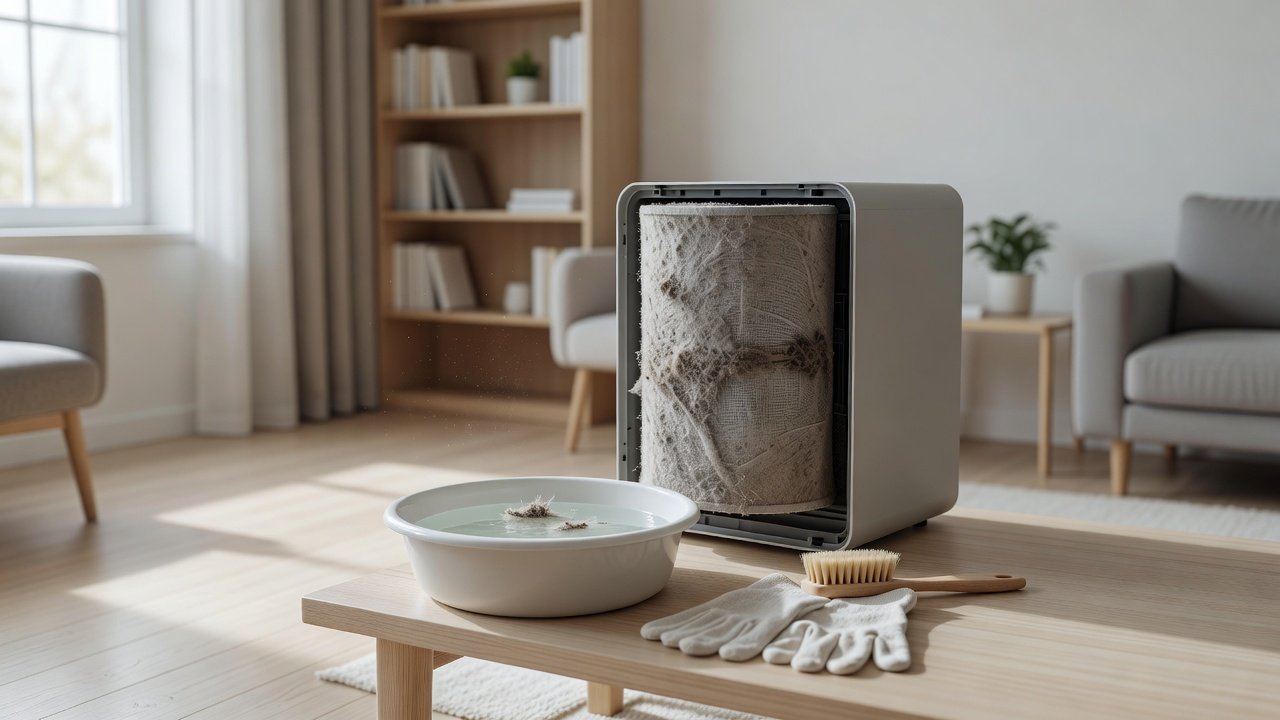
A clogged filter is one of the most common reasons an air purifier gets noisy, weak or smelly. The key question is which part is clogged. Washable pre-filters and exterior vents can be cleaned, while HEPA and carbon filters are replaced rather than washed. Knowing the difference saves money and keeps the unit working as designed.
We have not tested these products ourselves, so follow your manual. Unplug the unit before touching any filter, keep liquids away from electronics and stop using the unit if you smell burning or see damage.
Can be cleaned
- Washable pre-filters
- Exterior vents and grilles
- Housing surfaces
Replace instead
- HEPA filters
- Activated carbon filters
- Damaged or moldy filters
Key Takeaways
- Clean pre-filters and vents; replace HEPA and carbon filters
- Vacuum gently with a soft brush and dry parts fully
- Replace filters that are moldy, damaged or loaded
- Keep humidity around 30 to 50 percent
A Quick Diagnostic Checklist
If airflow is weak, first check that the vents are clear and the unit is not pressed against a wall or curtain. Then inspect the pre-filter, followed by the main filter. Check the fan for debris with the unit unplugged and a flashlight, without inserting tools. Confirm the filter indicator has been reset after any change. Run the unit on its highest speed for a minute to compare airflow with a previous reading. If nothing improves, contact the manufacturer with the model number and what you checked.
Choosing Replacement Filters Carefully
Use the filter specified for your model to ensure the correct size and seal. Generic filters may fit loosely and allow air to bypass the media. Check that a replacement has the same layers, such as pre-filter, HEPA and carbon. Read independent reviews, keep packaging sealed until use and note the purchase date. If the price seems too good to be true, check the seller’s reputation before you buy.
Room Size and Filter Life
A unit that is too small for the room runs at high speed constantly, loading the filter faster and making more noise. AHAM CADR ratings suggest choosing a unit with a CADR of about two-thirds of the room’s floor area for typical 8-foot ceilings. A correctly sized unit can run on a lower speed, which tends to be quieter and can extend filter life.
Dust Sources You Can Reduce
Reduce the dust load by vacuuming with a good filter, washing bedding, keeping pets off beds, using door mats and keeping windows closed in dusty or high-pollen periods. Less dust in the air means less on the filter. Place the unit where air can circulate freely, and keep it away from bathroom steam and kitchen grease.
When a Clean Filter Still Feels Weak
If you have cleaned the pre-filter and replaced the main filter but airflow still feels weak, look beyond the filter. Check that the fan blades are free of dust and hair with the unit unplugged, that the intake and outlet are not blocked and that the unit is on a speed suited to the room. Make sure the filter is seated with its gasket in place so air does not leak around it. A unit that is too small for the room may also feel weak even when everything is clean. If problems continue, contact support with the model number.
Why Not Use Compressed Air or Water Jets
It is tempting to blast dust out of a filter with compressed air or a strong water jet. On HEPA media this can tear or deform the fine fibers and create gaps that let particles through. It also pushes dust deeper into the filter and can blow it back into the room. Stick to gentle vacuuming of washable pre-filters and replace the main filter on schedule. If a filter looks too dirty to vacuum, it is usually time to replace it.
A Seasonal Filter Routine
Build a simple seasonal routine: spring and fall for a full check of filters, fan area and vents, and a quick look at the pre-filter monthly. Before wildfire or pollen seasons, have a spare filter on hand. After renovation or heavy cleaning, check the pre-filter within a week because dust loads quickly. Record each check in a log so you know when the next one is due and can spot changes in how fast filters clog.
Air Purifiers With Easy-to-Clean Pre-Filters
These picks come from the Hostinger affiliate plugin. Specs change by model year, so confirm filter type, CADR and replacement costs on the product page before you buy.






Signs of a Clogged Filter
Reduced airflow from the vents, a louder fan, a filter indicator that stays on, a musty smell and visible dust or hair on the filter surface all suggest clogging. A filter that looks gray or black across its surface is loaded. Compare with the new filter if you have a spare. If airflow remains weak after cleaning the pre-filter, the main filter likely needs replacement.
What You Can Clean: Pre-Filters and Vents
Many units have a mesh or foam pre-filter that catches large particles. With the unit unplugged, vacuum it with a soft brush attachment or rinse it if the manual allows, then dry it completely before reinstalling. Vacuum the exterior vents and wipe the housing with a lightly dampened cloth. These steps often restore much of the lost airflow.
What You Should Not Clean: HEPA and Carbon
HEPA media is delicate, and washing, baking or blowing compressed air on it can damage the fibers and reduce its capture efficiency. Carbon filters saturate with gases and cannot be rinsed back to life. Both are replaced on the maker’s schedule or when they are visibly loaded or no longer controlling odors.
Step-by-Step Clog Recovery
Unplug the unit and open the cover. Remove the pre-filter and clean it as above. Vacuum dust from the housing and fan area without touching the blades. Inspect the main filter for heavy dust, damage or mold. Replace it if it is loaded. Reinstall everything dry, close the cover until it clicks and run the unit to check airflow and noise.
Why Filters Clog Faster in Some Homes
Pets, smoking, cooking, construction dust, open windows in dusty seasons and high use all load filters faster. Placing the unit away from the floor and walls, vacuuming regularly and using a pre-filter extend the life of the main filter. If you notice frequent clogging, consider a larger unit running at a lower speed.
How Often to Check for Clogging
Check the pre-filter every two to four weeks in dusty homes and every month or two otherwise. Look at the main filter at each seasonal change. If you have pets or smokers in the home, check more often. A quick look takes a minute and prevents large drops in performance.
Using a Vacuum Correctly
Use a soft brush attachment on low suction and hold it slightly above delicate mesh so you do not pull it out of shape. Work in one direction to avoid pushing dust deeper. For foam, press gently. Empty the vacuum afterward so dust does not go back into the room.
Drying Washable Pre-Filters
If your manual allows rinsing, use cool water and gentle pressure and avoid soaps unless the manual says they are safe. Shake out excess water and let the part air dry fully, away from direct heat. Do not use a hair dryer on high heat or an oven. Reinstalling a damp filter can lead to odors and mold.
Mold and Moisture Warning Signs
A musty smell, dark spots or a damp feel means moisture has got into the filter. Replace moldy filters rather than cleaning them and find the moisture source. Keep room humidity between roughly 30 and 50 percent. For large mold problems the EPA suggests professional help for areas above about 10 square feet.
Replacement Schedule Basics
Most HEPA filters last six to twelve months in typical homes, and carbon filters often less, but this varies by model and use. Follow the maker’s guidance and the filter indicator, and log each change. Buy the exact filter specified for your model to ensure a proper seal.
How to Choose
- Look for a removable pre-filter
- Check the replacement filter cost
- Match the CADR to the room
- Prefer true HEPA filters
Do
- Match the unit’s rated coverage to your room first
- Run it consistently, not only when the air feels bad
- Leave space around the unit for airflow
- Replace filters on the maker’s schedule
Don’t
- Do not buy on looks or price alone
- Do not block the intake or exhaust
- Do not skip filter changes
- Do not expect a purifier to fix every source of pollution
Honest Limits
- This guide uses manufacturer information and public guidance from the EPA and AHAM, not our own lab tests.
- Features and room ratings change between model years, so confirm on the listing before you buy.
- A purifier is not a medical device and does not replace medical advice or treatment.
Who Should Skip This
When to See a Professional
Frequently Asked Questions
Can I wash a HEPA filter?
Do not wash HEPA filters unless the manual says the model is washable. Replace them.
Can I vacuum a HEPA filter?
Some makers allow a gentle vacuum of the surface. Check your manual.
How do I know the filter is clogged?
Weak airflow, loud fan and an indicator light are common signs.
How often should I replace it?
Follow the manual and indicator, often every six to twelve months.
Bottom Line
Clean the washable pre-filter and vents, vacuum the housing and replace HEPA and carbon filters rather than washing them. If airflow stays weak after cleaning, replace the main filter and check that the unit is the right size for the room.
Related reading: sens,fan,bed
Sources: EPA, Guide to Air Cleaners in the Home; AHAM Verifide.