Last updated:
Disclosure: As an Amazon Associate we earn from qualifying purchases. This does not change what we recommend. See our affiliate disclaimer.
The honest answer to cleaning a HEPA filter is that most true HEPA filters are not meant to be cleaned. The dense paper-like web of fibers that captures particles at 0.3 micrometers is easily damaged by water, brushing and pressure, and a damaged filter can look clean while capturing less. Some products labeled washable HEPA-type or permanent are exceptions, and the manufacturer will say so.
This guide explains how to tell which kind you have, what gentle care is acceptable and when to replace. We have not tested these products ourselves, so follow your manual. If the manual says to replace the HEPA filter, do not wash it.
Usually acceptable
- Cleaning the pre-filter
- Washing a filter the manual calls washable
- A very light vacuum of the surface if the manual allows
Usually not acceptable
- Washing a true HEPA filter
- Compressed air or hard brushing
- Chemicals, steam or heat
Key Takeaways
- Most true HEPA filters are replaced, not washed
- Clean the pre-filter to extend HEPA life
- Wash only filters the manual calls washable, and dry them fully
- Replace filters that are loaded, damp or damaged
Understanding HEPA Ratings
True HEPA captures 99.97 percent of particles at 0.3 micrometers. H13 and H14 are European grades with higher or similar efficiency. Terms such as HEPA-type or HEPA-like are not the same standard. Check what the manufacturer states and look for test information.
Storing Spare HEPA Filters
Keep spares in sealed packaging, flat or upright as the maker advises, in a cool, dry place away from strong odors and moisture. Do not store them in garages or attics. Check packaging for damage when you buy.
Cleaning Around the Filter
Keep the unit’s housing and pre-filter clean, since dust there loads the HEPA filter. Vacuum the compartment at each change and wipe the housing. A clean path to the filter keeps airflow healthy.
Signs Your HEPA Filter Is Failing
Weaker airflow, a louder fan, visible dust at the outlet, an odor that persists or an indicator light are signs. Check the seating and the pre-filter first. If all is well, replace the HEPA filter.
Why the 0.3 Micrometer Number Matters
Particles around 0.3 micrometers are the hardest for a filter to catch, because they are too small to be caught by simple impact and too large to be pulled in by diffusion as readily as the smallest particles. A true HEPA filter must capture at least 99.97 percent at that size. Damage to the media shows up first as lower capture of such particles, which is why a washed filter can look fine while performing worse.
Pleats, Frames and Gaskets: The Three Parts That Fail
The media can tear, the pleats can collapse and the frame or gasket can leak. Most owners notice none of these directly. That is why a conservative approach, replacing instead of repairing, is the sensible default. Handle filters gently, store them flat or as directed and treat the gasket as part of the filter.
Pre-Filter Options That Protect a HEPA Filter
Foam, mesh and fabric pre-filters catch hair, lint and large dust. Some owners add a thin cut-to-size outer pre-filter if the manufacturer allows. Make sure any add-on does not choke airflow or leave loose fibers. A washable pre-filter is usually the simplest way to save money on HEPA filters over the years.
What Not to Try
Do not wash a true HEPA filter in a dishwasher, bake it, steam it, spray it with disinfectant, rub it with a brush or blow on it with compressed air. None of these is reliably safe, and each can reduce performance in ways you cannot see. When a filter is spent, replace it.
Planning Your Filter Budget
Look at the replacement cost, the expected life in your home and the number of filters in the unit. A set that costs more but lasts longer may be cheaper per month. Keep a spare set, watch for sales from reputable sellers and plan replacements before the filter is exhausted.
If You Are Replacing the Whole Unit
Choose a model with a true HEPA filter, a washable pre-filter, a CADR suited to the room and affordable filters. Check the noise level at the speed you will use and the warranty. A thoughtful purchase saves money and time in maintenance.
HEPA Air Purifiers to Consider
Look for true HEPA filtration, a washable pre-filter and affordable replacement filters. These picks come from the Hostinger affiliate plugin. Specs change by model year, so confirm filter type, CADR and replacement costs on the product page.






Identify Your Filter Type
Check the manual, the filter label and the manufacturer’s product page. A filter described as true HEPA or H13 is generally a replace-only part. A filter described as washable, permanent or HEPA-type may be designed for cleaning with specific steps. If you cannot tell, ask the manufacturer with your model number.
Why True HEPA Should Not Be Washed
Water can collapse the fine fibers, weaken the pleats and loosen the media from the frame. Even if it dries, it may no longer perform as rated. Washing can also leave moisture inside that supports mold. Manufacturers who say to replace the filter have tested the part for that approach.
What You Can Do for a True HEPA Filter
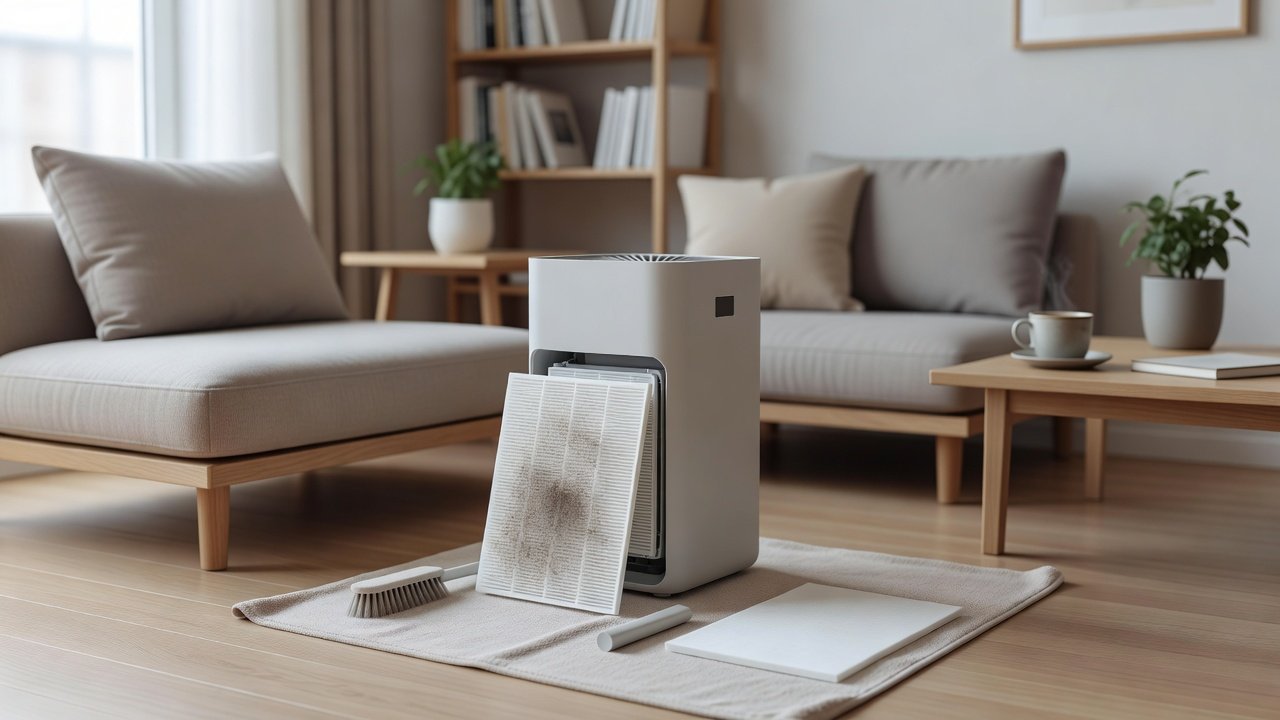
Keep the pre-filter clean so the HEPA lasts longer. If the manual allows, a very gentle vacuum with a soft brush on the outer surface may remove loose lint. Do not press, tap hard or blow on it. Then replace the filter on schedule. This is the reliable path.
If Your Filter Is Washable
Follow the manual exactly. Typically that means a gentle rinse with lukewarm water, no soap unless allowed, no scrubbing, and complete air drying for a day or more before reinstalling. Do not use heat. Replace the filter if it is torn, discolored or smells after drying.
When to Replace
Replace the filter on the manufacturer’s schedule, or sooner if airflow drops, it is gray, matted, damp or damaged, or the indicator says so. Using the correct replacement ensures a good seal. Keep spare filters and record the install date.
Handling a HEPA Filter Correctly
Hold the filter by its frame, keep it level and avoid touching the media. Do not drop it or knock it against surfaces. Place it in a bag for disposal. Handle the new filter the same way and remove the packaging only when you are ready to install.
Checking a HEPA Filter for Damage
Look for torn media, crushed pleats, loose or cracked frames and gaps in the gasket. Hold the filter to a light, if the manual permits, to see whether light passes in places. Do not poke the media. If you see damage, replace the filter.
Extending Filter Life Safely
Use a good pre-filter, run the unit at moderate speeds, avoid heavy dust sources, vacuum and damp-dust the room, keep humidity moderate and avoid running the unit in smoke or construction dust unless necessary. These habits help the HEPA filter last as long as it can.
Washable HEPA-Type Filters: Care Notes
If your filter is designed to be washed, follow the interval in the manual and do not exceed it. Washable filters still wear out and need replacement, often after a year or two. Dry them thoroughly and check for any odor or damage before reuse.
Costs and Alternatives
Replacement filters cost money, but they are cheaper than damaging a unit or breathing poorly filtered air. Compare multipacks, check compatible options carefully and weigh washable designs against true HEPA performance. Choose what fits your budget and needs.
How to Choose
- Choose a true HEPA filter
- Prefer a washable pre-filter to extend filter life
- Compare replacement filter costs
- Match the CADR to the room size
Do
- Match the unit’s rated coverage to your room first
- Run it consistently, not only when the air feels bad
- Leave space around the unit for airflow
- Replace filters on the maker’s schedule
Don’t
- Do not buy on looks or price alone
- Do not block the intake or exhaust
- Do not skip filter changes
- Do not expect a purifier to fix every source of pollution
Honest Limits
- This guide uses manufacturer information and public guidance from the EPA and AHAM, not our own lab tests.
- Features and room ratings change between model years, so confirm on the listing before you buy.
- A purifier is not a medical device and does not replace medical advice or treatment.
Who Should Skip This
When to See a Professional
Frequently Asked Questions
Can I wash a HEPA filter?
Only if the manufacturer says it is washable. Most true HEPA filters are replaced.
Can I vacuum it?
A very gentle pass on the surface may be allowed by some manuals. Do not press or blow on it.
How do I make a HEPA filter last longer?
Keep the pre-filter clean, run the unit at moderate speeds and control dust at the source.
How do I know it is time to replace it?
Check the schedule, the indicator and the filter’s condition and airflow.
Bottom Line
Most true HEPA filters should be replaced, not washed. Keep the pre-filter clean to extend filter life, follow the manual for any washable filter and replace loaded, damp or damaged filters. Avoid compressed air, soaking, chemicals and heat.
Related reading: sens,fan,bed
Sources: EPA, Guide to Air Cleaners in the Home; AHAM Verifide.