Last updated:
Disclosure: As an Amazon Associate we earn from qualifying purchases. This does not change what we recommend. See our affiliate disclaimer.
A purifier that has run through a wildfire event, a cooking fire or a smoky neighborhood has done hard work. Its filters are loaded with soot and fine particles, the carbon layer is often saturated with smoke odors and the casing and sensor may be coated with a sticky film. Cleaning and resetting the unit properly afterward restores performance and prevents a smoky smell from lingering in your room.
This guide explains what to clean, what to replace, how to handle used filters safely and how to get the room ready. It is general information. We have not tested these products ourselves, and procedures differ by model, so follow your manual. After a house fire, have electrical equipment checked before using it.
Usually needed
- Replace loaded HEPA and saturated carbon
- Wash or replace the pre-filter
- Wipe the casing and sensor
Be careful
- Handling soot-laden filters without protection
- Shaking filters indoors
- Running a unit that smells burnt
Key Takeaways
- After smoke, replace loaded HEPA and saturated carbon filters, and wash or replace the pre-filter.
- Wear a mask and gloves, avoid shaking used filters and bag them straight away.
- Wipe the casing and sensor, let everything dry and reset the filter timer.
- Have a unit inspected or replaced if it was in a house fire or exposed to heat or water.
- Avoid ozone generators and heavy fragrances; the EPA advises against ozone-emitting air cleaners.
Sizing a Purifier for Smoke Events
For smoke, smoke CADR is the number to use. The AHAM two-thirds rule gives a target of about 133 for a 200 square foot room and about 200 for a 300 square foot room at eight-foot ceilings. During heavy smoke, a unit sized close to the limit will clean slowly and run on high, which is loud and loads filters quickly. A unit with some headroom can run on medium and still keep up. If you have high ceilings, add roughly 12 percent per extra foot.
If one purifier cannot cover your living space, choose one room to protect, such as a bedroom, and close the door. A clean-air room is more achievable than whole-house filtration with a single portable unit.
Monitoring Air Quality During an Event
Local air quality reports and independent monitors can help you decide when to run the purifier on high and when windows can be opened. The unit’s built-in indicator can show relative changes but is not a precise measurement. Compare indoor and outdoor readings if you have a monitor. Keep track of how quickly the pre-filter darkens. If it darkens in days, plan to replace it quickly and keep your spare filters stocked.
A Short Aftercare Checklist
Unplug and ventilate. Mask and gloves on. Remove and bag the filters. Replace loaded HEPA and saturated carbon. Wash or replace the pre-filter. Vacuum and wipe the compartment and casing. Clean the sensor with a dry swab. Reassemble, reset the timer and test. Wash hands. Log the date. Verify details for your model on the manufacturer’s page, and contact the manufacturer for damaged units or burnt smells.
After-Smoke Checklist
Inspect the pre-filter and HEPA immediately after any smoke event; a week of heavy smoke can use months of filter life. Vacuum or rinse the pre-filter, replace a grey HEPA, and replace carbon if the smell lingers at the outlet. Wipe the housing, which collects a tar film. Run the unit on high for an hour in a ventilated room after cleaning. Keep a spare set before smoke season so this never waits on delivery.
Air Purifiers to Compare
The table below lists purifiers from our affiliate partner. For smoke-prone areas, compare smoke CADR, carbon layers, filter cost and availability of spare filters.
What Smoke Does to a Purifier
Smoke contains fine particles that load HEPA filters quickly, plus gases and odors that saturate carbon. Soot and tar can coat the pre-filter, fan and casing, leaving a sticky, smelly film. During a heavy event, filters can load in days or weeks, which reduces airflow and cleaning speed. A unit that kept running through the event may smell smoky even after the air clears.
If the unit was exposed to smoke from a fire in your home, or to heat or water, have it inspected or replace it before using it again, because heat and soot can damage electronics.
Step-by-Step After a Smoke Event
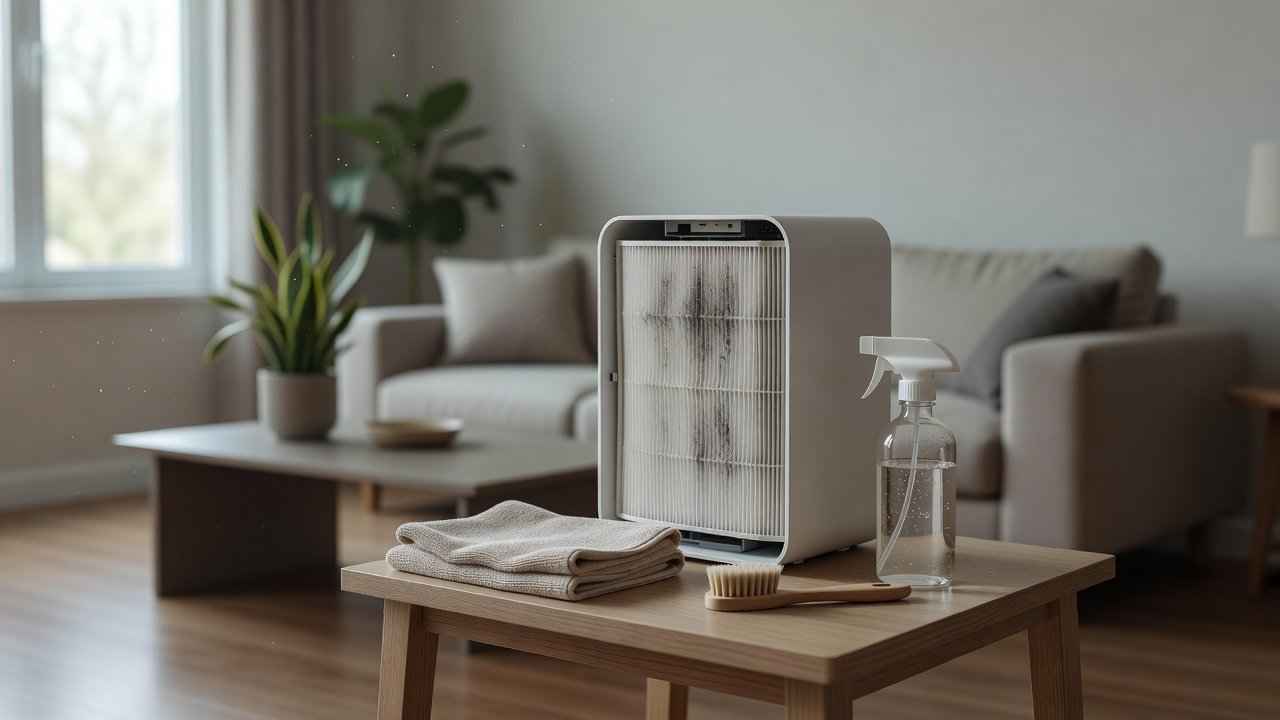
Unplug the unit and move it to a ventilated area. Wear a mask and gloves if soot is heavy. Open the cover and remove the filters gently without shaking them. Place used filters directly in a sealed bag. Vacuum the pre-filter if it is washable or vacuumable, or replace it if it is sticky or stained. Replace the HEPA filter if it is dark or the event was severe. Replace the carbon filter if smoke odors linger.
Vacuum the compartment with a soft brush attachment and wipe with a damp cloth. Wipe the casing and grille with mild soap and a wrung-out cloth. Clean the sensor window with a dry swab if the manual allows. Let everything dry, then reassemble, reset the filter timer and run the unit.
| Part | After smoke | Action |
|---|---|---|
| Pre-filter | Sticky, stained | Wash if allowed or replace |
| HEPA filter | Dark, loaded | Replace |
| Carbon filter | Saturated, smoky smell | Replace |
| Casing and grille | Sooty film | Wipe with mild soap, dry |
| Sensor | Sticky or dirty | Dry swab per manual |
Wildfire Smoke Versus Other Smoke
Wildfire smoke is mostly fine particles from burning vegetation and structures, carried long distances. It loads HEPA filters quickly and can last for days or weeks. Cooking smoke is shorter but greasier. Tobacco smoke leaves a persistent odor and sticky film. Each leaves different residues, but all justify checking filters afterward. In a wildfire season, keep spare filters on hand, close windows on smoky days and run the unit continuously on a speed that fits the room.
Follow local air quality guidance. Staying indoors with windows closed, running a properly sized purifier and avoiding adding indoor sources such as candles or frying can help during smoke events. This article is not medical advice. If you have a respiratory condition, follow your clinician’s plan.
Getting Smoke Smell Out of the Room
A smoky smell can linger in the room even after the purifier is cleaned. Ventilate when outdoor air is clean. Wash fabrics such as curtains and bedding as their care labels allow, vacuum carpets and upholstery with a HEPA-filtered vacuum and wipe hard surfaces. Run a clean purifier with fresh carbon. Avoid masking odors with fragrances or ozone generators, since the EPA advises against ozone-emitting air cleaners and strong fragrances can irritate.
Handling Used Filters Safely
Soot-laden filters can release fine dust if shaken or crushed. Wear a mask and gloves, work outdoors or near an open window and slide the filter straight into a bag. Seal the bag and dispose of it according to local rules. Wash hands and wipe the surfaces where you set the filter. Do not vacuum a loaded HEPA filter unless the manual allows it, and do not wash filters that are not washable.
When to Replace the Whole Unit
If the unit was exposed to fire, extreme heat or water, if the casing is warped, if the fan is damaged or the unit smells burnt, replace it or have it professionally inspected. Check the warranty and your insurance. Do not use a unit with scorched wiring or a damaged cord. If you decide to replace it, compare smoke CADR and spare filter availability before buying.
Preparing for the Next Smoke Event
Keep spare filters, a log of filter dates, a hygrometer and a plan for sealing windows. Know your room size and the CADR you need. Test the unit before the season. Clean the pre-filter and check the sensor. Keep a carbon monoxide alarm working. Check local air quality alerts and have a clean-air room ready if you can. A little preparation makes the next event easier.
How to Choose
- Choose a high smoke CADR for your room size.
- Look for a substantial carbon layer and spare filters.
- Check filter cost and interval, since smoke loads filters fast.
- Check that filters are easy to buy during peak season.
- Avoid ozone-generating modes; the EPA advises against ozone-emitting air cleaners.
Do
- Match the unit’s rated coverage to your room first
- Run it consistently, not only when the air feels bad
- Leave space around the unit for airflow
- Replace filters on the maker’s schedule
Don’t
- Do not buy on looks or price alone
- Do not block the intake or exhaust
- Do not skip filter changes
- Do not expect a purifier to fix every source of pollution
Honest Limits
- This guide uses manufacturer information and public guidance from the EPA and AHAM, not our own lab tests.
- Features and room ratings change between model years, so confirm on the listing before you buy.
- A purifier is not a medical device and does not replace medical advice or treatment.
Who Should Skip This
When to See a Professional
Frequently Asked Questions
Should I replace filters after wildfire smoke?
Often yes, especially if the HEPA is dark or loaded and the carbon holds smoke odors. Check airflow and smell.
Can I wash a smoky pre-filter?
If the manual says it is washable, yes. If it remains sticky or stained, replace it.
How do I get the smoke smell out of my purifier?
Replace the carbon filter, clean the housing and casing and ventilate the room.
Is it safe to use a purifier after a house fire?
Have it inspected or replace it, since heat, soot and water can damage electronics.
Can I use an ozone machine for smoke odor?
The EPA advises against ozone-emitting air cleaners. Use ventilation, cleaning and a properly maintained purifier.
Bottom Line
After smoke, replace loaded HEPA and carbon filters, clean the pre-filter and casing and handle used filters carefully.
Have a unit inspected if it was in a house fire or exposed to heat or water.
Related reading: sens,fan,bed
Sources: EPA, Guide to Air Cleaners in the Home; AHAM Verifide.