Last updated:
Disclosure: As an Amazon Associate we earn from qualifying purchases. This does not change what we recommend. See our affiliate disclaimer.
Cooking smells such as fried food, fish, curry and garlic can cling to an air purifier’s filters and housing. If your unit now smells of food, the culprit is usually a saturated carbon filter, a greasy pre-filter or residue on the housing. Some parts can be cleaned and others must be replaced.
We have not tested these products ourselves, so follow your manual. Unplug the unit first, keep liquids away from electronics and never wash HEPA or carbon filters.
Can be cleaned
- Washable pre-filter
- Exterior housing
- Vents
Replace
- Saturated carbon filter
- Greasy HEPA filter
- Foam that stays smelly
Key Takeaways
- Clean the housing and pre-filter; replace carbon and greasy HEPA
- Ventilate while cooking and keep the unit away from the stove
- Avoid fragrance sprays near the purifier
- Allow a new carbon filter time to settle
Step-by-Step Odor Cleanup
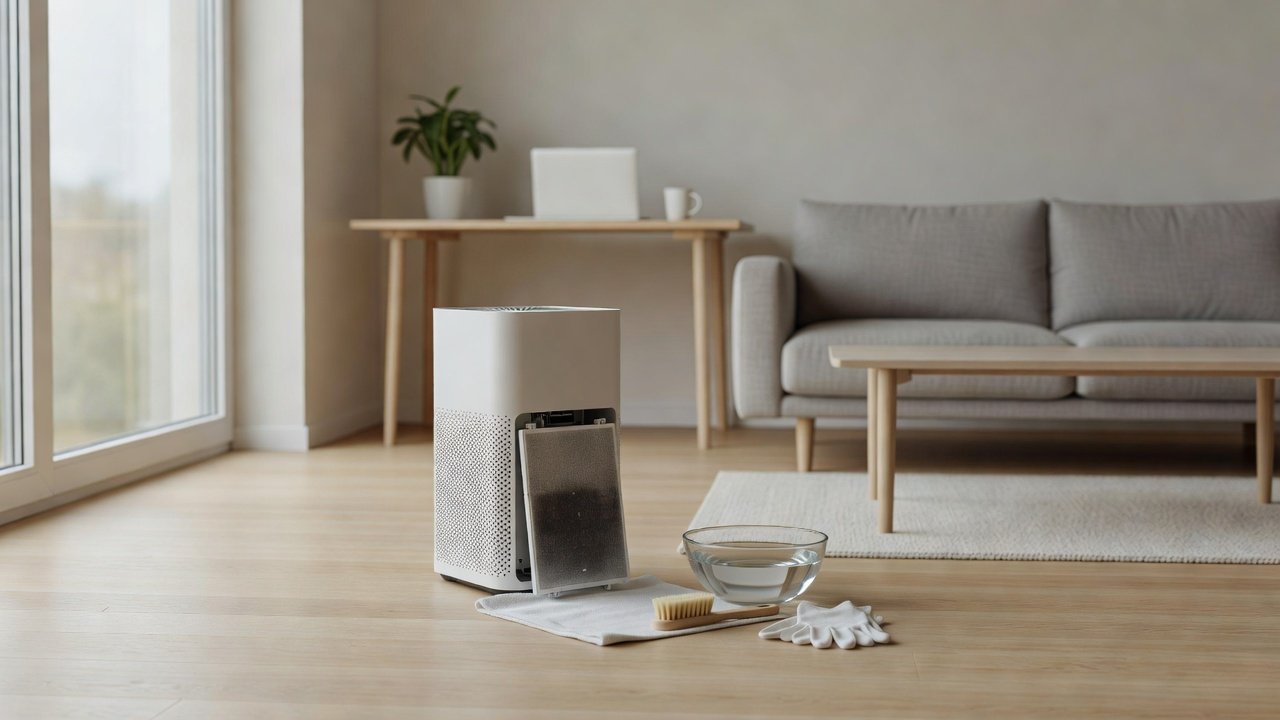
Unplug the unit and remove the filters. Vacuum the pre-filter and wash it if the manual allows. Wipe the housing and vents with a mild soapy cloth and rinse with a clean damp cloth. Let everything dry fully. Replace the carbon filter and any greasy HEPA filter. Reinstall, close the cover and run the unit in a ventilated room. Note the date and re-check the smell in a day or two. If it persists, look for another source in the home.
Why Carbon Saturates Faster in Kitchens
Activated carbon has a finite capacity to adsorb gases. Heavy cooking, especially frying, loads it quickly. Once saturated, it cannot capture more and may release stored odors. This is why kitchen-adjacent purifiers often need more frequent carbon replacement. Buying spare filters ahead of time helps.
Cooking Habits That Reduce Odors
Use the range hood, cover pans, open windows, wash dishes quickly, empty trash and clean the stove regularly. Cooking with less smoke and avoiding burnt food helps. Less grease in the air means cleaner filters and fewer odors. A small change can extend filter life.
What to Do If the Odor Comes From Elsewhere
Sometimes the smell is not from the purifier but from fabrics, garbage, drains or the fridge. Check these sources. A purifier cannot fix them. Clean fabrics, empty trash and clean drains. If the smell goes away when the purifier is off, the unit is likely contributing.
Choosing a Better Unit for Cooking Odors
If food odors are a constant issue, look for a purifier with a generous activated carbon filter, a washable pre-filter and a CADR suited to the room size. Check how much carbon the filter contains and what the replacement costs, since carbon needs frequent changing in kitchens. Read independent reviews about odor control, and consider pairing the purifier with a good range hood and ventilation habits.
Pet Food, Litter and Other Odor Sources
Not all food odors come from cooking. Pet food, litter boxes, trash cans and compost bins also contribute. Keep these sealed and clean, and avoid placing the purifier right next to them. Move the unit to a spot with steady airflow and clean the sources to reduce the load on the filters.
Keeping the Unit Fresh Between Cleanings
Wipe the exterior weekly, vacuum the vents and pre-filter monthly and check the carbon filter every few months. Run the unit continuously on a low speed when cooking is frequent, and increase the speed while cooking. Log filter changes so you know when to replace them, and keep a spare carbon filter on hand.
Frequently Overlooked Spots That Hold Odor
Odors hide in places people forget: the gasket around the filter, the inside of the cover, the fan guard area and the plastic seams. Wipe the gasket and the inside of the cover with a barely damp cloth and dry it. Vacuum the area with a soft brush attachment. These small spots can keep a smell going even after you replace the filter, so include them in your cleaning routine and let them dry fully.
Timeline for Odor Recovery
After you clean and replace the carbon filter, give the unit a day or two before judging the result. A new carbon filter may have a faint odor at first and needs time to settle. Run the unit continuously on a medium speed in a ventilated room. If the smell is gone in a few days, keep your new maintenance schedule. If it returns quickly, check for a new source of odor in the home.
Air Purifiers With Carbon Filters for Odors
These picks come from the Hostinger affiliate plugin. Specs change by model year, so confirm filter type, CADR and replacement costs on the product page before you buy.






Why Purifiers Pick Up Food Odors
Cooking releases smoke, grease particles and gases. Carbon filters adsorb many gases and odors, and pre-filters catch grease and large particles. Over time these fill up, and a saturated carbon filter can release odors back. Greasy dust can also coat housings and fans.
Start With the Source and the Room
Use the stove fan, open a window while cooking and keep the purifier away from the stove, because greasy air loads filters quickly. Clean the kitchen surfaces and ventilation filters. A purifier will work better when the source is controlled.
Cleaning the Housing and Pre-Filter
Unplug the unit. Wipe the housing with a cloth dampened with a little mild dish soap in water, wrung out well, then wipe with a clean damp cloth and dry. Rinse a washable pre-filter if the manual allows, using mild soap for grease and rinsing thoroughly, and dry completely.
Replace Saturated Carbon and Greasy Filters
Carbon filters cannot be cleaned back to life. If the smell remains after cleaning the pre-filter and housing, replace the carbon filter. A HEPA filter coated in grease should be replaced too, since grease clogs the media. Use the exact filter model for your unit.
Airing Out and Testing
After cleaning and replacing filters, run the unit in a ventilated room and check for odor. If a smell persists, check that all parts are dry, the filter is seated correctly and there is no leftover residue. Give a new carbon filter a day or two to settle.
Grease Residue on the Housing
Grease leaves a sticky film that attracts dust. A drop of dish soap on a barely damp cloth cuts grease. Wipe, rinse with a clean damp cloth and dry. Avoid harsh solvents on plastic. Keep liquids away from vents and controls.
Smoke and Fish Smells
Strong smells like smoke and fish can linger. Replace carbon filters sooner after heavy odor events. Ventilate the room and wash fabrics near the kitchen. A larger carbon filter can help, but it still has limited capacity.
Placement Relative to the Kitchen
Place the purifier a few feet from the cooking area but in the same airflow path, away from direct steam and splatter. In open-plan homes, a unit between the kitchen and living area can help while keeping it out of heavy grease.
Odor-Neutralizing Sprays: Skip Them
Fragrance sprays can load filters and cover rather than remove odors. Avoid spraying near the purifier. Let the unit and ventilation do the work, and clean the source of the smell.
How Often to Replace Carbon in Cooking Homes
In homes with frequent cooking, carbon filters may need replacing sooner than the typical schedule. Replace when odors return or the indicator says so. Keep a log of dates and any odor events.
How to Choose
- Look for a substantial carbon layer
- Check replacement filter costs
- Choose a washable pre-filter for grease
- Match the CADR to the room
Do
- Match the unit’s rated coverage to your room first
- Run it consistently, not only when the air feels bad
- Leave space around the unit for airflow
- Replace filters on the maker’s schedule
Don’t
- Do not buy on looks or price alone
- Do not block the intake or exhaust
- Do not skip filter changes
- Do not expect a purifier to fix every source of pollution
Honest Limits
- This guide uses manufacturer information and public guidance from the EPA and AHAM, not our own lab tests.
- Features and room ratings change between model years, so confirm on the listing before you buy.
- A purifier is not a medical device and does not replace medical advice or treatment.
Who Should Skip This
When to See a Professional
Frequently Asked Questions
Can I wash the carbon filter?
No. Replace carbon filters.
Can I wash a greasy HEPA filter?
Do not wash HEPA. Replace it.
How do I remove the smell from the housing?
Wipe with mild soap and a damp cloth, then dry.
How often should I replace carbon?
Follow the manual and replace sooner after strong odors.
Bottom Line
To clean an air purifier that smells like food, wipe the housing, wash the washable pre-filter and replace saturated carbon and greasy HEPA filters rather than washing them. Control odors at the source with ventilation and keep the unit away from the stove.
Related reading: sens,fan,bed
Sources: EPA, Guide to Air Cleaners in the Home; AHAM Verifide.