Last updated:
Disclosure: As an Amazon Associate we earn from qualifying purchases. This does not change what we recommend. See our affiliate disclaimer.
Synthetic carpet can affect indoor air in two ways. New carpet, padding and adhesives can release volatile organic compounds, the chemicals behind that “new carpet” smell, and carpet of any age holds dust, pet dander, pollen and other particles that get released again when you walk across it or vacuum. Fixing the problem means ventilating after installation, cleaning in a way that removes rather than stirs up particles and using filtration to catch what stays airborne.
We have not tested these products ourselves, so use manufacturer information and your own judgment. Nothing here is medical advice. If you develop persistent symptoms after a carpet installation, talk to a clinician and ask the retailer for product emissions information.
What helps most
- Ventilating after installation
- Frequent HEPA-vacuuming
- A HEPA and carbon purifier
What does not
- Air fresheners or fragrance sprays
- Ozone devices
- Skipping ventilation
Key Takeaways
- New carpet can release VOCs; ventilate
- Old carpet holds dust, dander and allergens
- Vacuum weekly with a sealed HEPA vacuum
- Add HEPA and carbon filtration, not ozone devices
A Weekly Carpet Care Routine
Vacuum slowly in overlapping passes, empty the canister outdoors, replace filters on schedule and check the brush roll for hair. Spot clean spills right away with a mild cleaner and blot rather than scrub. Rotate furniture occasionally to reduce wear. Once or twice a year, use hot water extraction or hire a professional, and ensure the carpet dries completely, using fans and ventilation. A consistent routine keeps dust levels lower than occasional deep cleans alone.
Backing, Padding and Adhesives
VOC sources are not just the carpet pile. Backing, padding and adhesives contribute. Ask what is used and whether it is low-emission. Request that the installer use minimal adhesive and ventilate the space. Keep the room closed off from the rest of the home if possible while the product cures, and run exhaust fans to the outside.
Pets and Carpets
Pets shed hair, dander and drag in outdoor particles. A washable pre-filter on the purifier helps keep hair out of the main filter. Groom pets regularly, wash pet bedding and vacuum frequently. Odors can build in carpet and padding, so clean accidents promptly with an enzyme cleaner and avoid scented sprays.
Allergies, Asthma and Carpet
Some people with allergies or asthma notice symptoms in carpeted rooms. A combination of reducing carpet in bedrooms, cleaning, humidity control and filtration may help. Medical guidance belongs with your clinician. Keep a note of when symptoms are worst, which helps your clinician and helps you test changes one at a time.
Rugs Versus Wall-to-Wall Carpet
Washable area rugs on hard flooring are easier to clean and can be laundered or taken outside. Wall-to-wall carpet holds more and is harder to clean fully. If you are redecorating, consider where carpet is worth the trade-off, such as a nursery or a living area, and where hard floors work better.
Cleaning Products to Avoid
Strongly fragranced deodorizers, powders that must be vacuumed out and harsh solvents add chemicals or particles to the air. Choose simple methods: baking soda is sometimes used, but vacuum it thoroughly. Test cleaners in an inconspicuous spot. Ventilate when cleaning.
Quick Reference
New synthetic carpet off-gasses for weeks; ventilate and run a carbon-stage purifier. Established carpet holds dust and mites; vacuum slowly with a sealed HEPA vacuum, keep humidity under 50 percent, and run a true HEPA unit on high after vacuuming and low otherwise. Hard flooring in bedrooms helps the most sensitive people.
Air Purifiers for Carpeted Homes
These picks come from the Hostinger affiliate plugin. Specs change by model year, so confirm filter type, CADR, noise and replacement filter costs on the product page before you buy.






Why Synthetic Carpet Affects Indoor Air
Synthetic carpet is typically made from nylon, polyester or polypropylene, with backing and padding bonded using adhesives. New materials can release VOCs for days or weeks. Over the years, the pile traps dust mites, pet dander, pollen, soil and cooking particles. Walking on carpet resuspends those particles into the breathing zone, which matters most for children playing on the floor.
Ventilate During and After Installation
Ask the installer to unroll and air out the carpet before installation if possible, and keep windows open, run fans and use exhaust ventilation during and for several days after. Keep the room unoccupied while adhesives cure, particularly for babies, pregnant people and anyone sensitive. Look for carpet and adhesives with low-emission labels such as the Carpet and Rug Institute Green Label Plus.
Vacuum and Clean the Right Way
Vacuum at least weekly, more often with pets, using a vacuum with a sealed system and HEPA filter so fine particles are not blown back into the room. Slow passes remove more than quick ones. Deep clean with hot water extraction as the manufacturer allows, and let the carpet dry fully within a day or so to avoid mold. Avoid heavily scented cleaners.
Control Moisture
Damp carpet can grow mold and feed dust mites. Keep humidity around 30 to 50 percent, fix leaks, dry spills promptly and use a dehumidifier in damp basements. Carpet in bathrooms or basements that stay damp is often a poor choice.
Add Filtration
A purifier with true HEPA filtration captures airborne particles that carpet releases. For new-carpet odors and VOCs, a unit with a substantial activated carbon stage may help reduce some gases, but it does not replace ventilation or source control. Check the carbon amount and replacement schedule.
Choosing Low-Emission Carpet
If you are installing new carpet, ask for emissions information and low-VOC adhesives and padding. Look for labels such as Green Label Plus. Compare options such as hard flooring in bedrooms for people with allergies. Ask about tack strips and tackless installation, which can use less adhesive. Keep the old carpet out of the home promptly if it is removed, since it may hold years of dust.
Dust Mites, Pet Dander and Carpet
Carpet is a reservoir for dust mite allergens and pet dander. Washing bedding in hot water, keeping humidity down and vacuuming regularly lower the load. Encasing mattresses helps in bedrooms. A purifier addresses airborne particles but not what is deep in the pile, so cleaning matters.
Shoes Off and Entry Mats
Soil carried in on shoes is one of the main sources of carpet dust, including outdoor pollutants. A doormat outside and one inside, a shoes-off rule and a quick vacuum of the entry area reduce what reaches the carpet. It is one of the cheapest air-quality improvements.
When to Consider Replacing Carpet
If carpet is very old, stained, smells musty or has been wet, replacement may be better than cleaning. Hard flooring with washable rugs is easier to keep clean for people with allergies. If you replace it, ventilate well and use low-emission materials.
Where to Put the Purifier
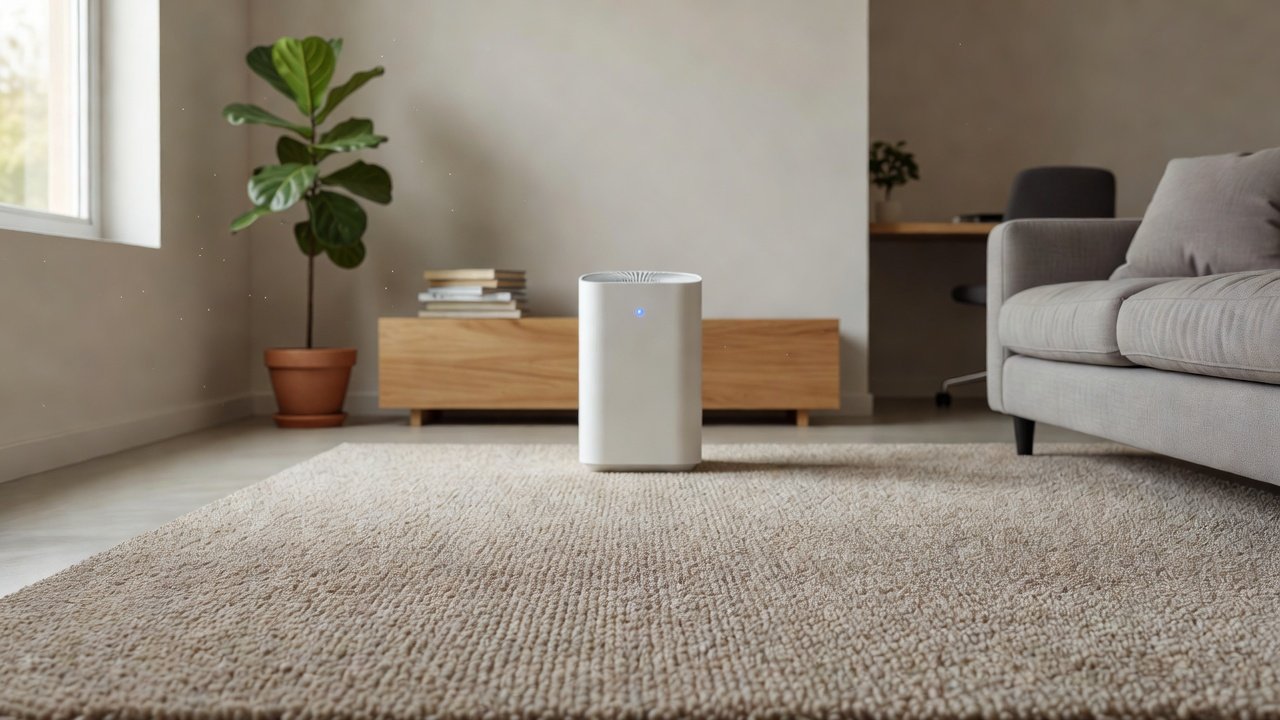
Place the unit in the room with the most carpet or where children play, with several inches of clearance. Run it during and after vacuuming for an hour or two. A larger unit on a lower speed is usually quieter. Keep windows closed in high-pollen periods and use the purifier to capture what you stir up.
How to Choose
- True HEPA for dust, dander and pollen
- A substantial carbon stage if VOC odors are a concern
- CADR matched to the room
- A washable pre-filter if you have pets
Do
- Match the unit’s rated coverage to your room first
- Run it consistently, not only when the air feels bad
- Leave space around the unit for airflow
- Replace filters on the maker’s schedule
Don’t
- Do not buy on looks or price alone
- Do not block the intake or exhaust
- Do not skip filter changes
- Do not expect a purifier to fix every source of pollution
Honest Limits
- This guide uses manufacturer information and public guidance from the EPA and AHAM, not our own lab tests.
- Features and room ratings change between model years, so confirm on the listing before you buy.
- A purifier is not a medical device and does not replace medical advice or treatment.
Who Should Skip This
When to See a Professional
Frequently Asked Questions
How long does new carpet smell last?
It varies; ventilate for days and ask for low-emission products.
Can a purifier remove carpet fumes?
A carbon stage may reduce some gases, but ventilation is the main fix.
How often should I vacuum?
At least weekly, more with pets.
Is hard flooring better for allergies?
Many people find it easier to keep clean.
Bottom Line
To improve air quality in a home with synthetic carpet, ventilate heavily after installation, choose low-emission products, vacuum with a sealed HEPA vacuum, control moisture and add a HEPA and carbon air purifier. Avoid fragranced products and ozone devices, and consider hard flooring in rooms that stay damp.
Related reading: sens,fan,bed
Sources: EPA, Guide to Air Cleaners in the Home; AHAM Verifide.