Last updated:
Disclosure: As an Amazon Associate we earn from qualifying purchases. This does not change what we recommend. See our affiliate disclaimer.
High indoor humidity makes a home feel sticky and supports mold, dust mites and musty odors. Public health guidance generally suggests keeping relative humidity between about 30 and 50 percent. The first job is to measure it, the second is to find the moisture sources, and then to lower it with ventilation, air conditioning, dehumidifiers and everyday habits. An air purifier does not reduce humidity, though it can capture airborne spores once moisture is under control.
We have not tested these products ourselves, so follow equipment manuals. Nothing here is medical advice. If you see widespread mold, have persistent leaks or suspect structural water problems, involve a professional.
Ways to lower humidity
- Exhaust fans and airing
- Air conditioning and dehumidifiers
- Fixing leaks and drying fast
What does not lower it
- Air purifiers
- Houseplants
- Fragranced sprays
Key Takeaways
- Aim for about 30 to 50 percent humidity
- Measure with a hygrometer
- Fix leaks and ventilate
- Use dehumidifiers in damp spaces; purifiers do not lower humidity
A Moisture Audit Walkthrough
Walk the home with a flashlight and a hygrometer. Check ceilings for stains, windows for condensation, under sinks for leaks, around the base of toilets and tubs, the laundry area, the basement walls and floor and the attic. Note musty smells and humidity readings in each area. Check the outside for gutters, downspouts and grading. Take photos and list actions in order of priority. Fix leaks and drainage first, then ventilation, then add equipment. Repeat after heavy rain and each season to see how your fixes hold up.
Humid Climates and Summer Strategies
In humid regions, rely on air conditioning set to a comfortable temperature and run long enough to remove moisture, as short cycling cools without drying. Keep windows closed during humid periods, use ceiling fans for comfort and consider whole-home dehumidification if needed.
Drying Laundry and Wet Items
Dry laundry outdoors or in a vented dryer. If you must dry indoors, use a ventilated room with a dehumidifier. Hang wet coats and shoes in an area with airflow. Wipe up spills promptly and dry wet carpets quickly.
Signs of Over-Dry Air
In winter, humidity can fall too low. Signs include static, dry skin and irritated airways. Use a humidifier carefully, clean it as directed and stay under about 50 percent to avoid condensation and mold.
Moisture and Building Issues
Persistent moisture may signal problems with the roof, drainage, plumbing or insulation. Consult qualified professionals for roof repairs, waterproofing and ventilation. Do not ignore leaks or recurring damp.
Tracking Results
Log hygrometer readings for a few weeks before and after changes. Look for trends and adjust. Share logs with professionals if you ask for help.
Understanding Relative Humidity
Relative humidity is the amount of moisture in the air as a percentage of what the air can hold at that temperature. Warm air holds more moisture, so cold surfaces such as windows and exterior walls reach saturation first and show condensation. That is why humidity that seems fine in the middle of the room can cause trouble at cold corners. A hygrometer near problem areas and attention to insulation and airflow help prevent condensation and mold.
When Humidity Is Too Low
Over-correcting can leave the air too dry, which irritates airways, dries skin and increases static. If readings drop below about 30 percent, reduce dehumidifier use or use a clean humidifier carefully. Keep humidity within the moderate range and check it regularly.
Choosing Between Portable and Whole-Home Dehumidifiers
Portable units suit basements, bathrooms and single rooms. Whole-home units connect to the HVAC system and handle larger areas. Consider capacity, energy rating, noise, drainage and cost. A professional can size and install a whole-home system. Maintenance matters for either type.
Humidity Control Checklist
- Measure with a hygrometer; aim for 30 to 50 percent
- Run exhaust fans during and after showers and cooking, vented outdoors
- Fix leaks, condensation, and drainage around the foundation
- Use a dehumidifier in damp rooms, set to about 45 percent, with a continuous drain if possible
- Vent dryers outdoors and avoid drying laundry indoors in damp seasons
- Keep furniture off exterior walls and store items off basement floors
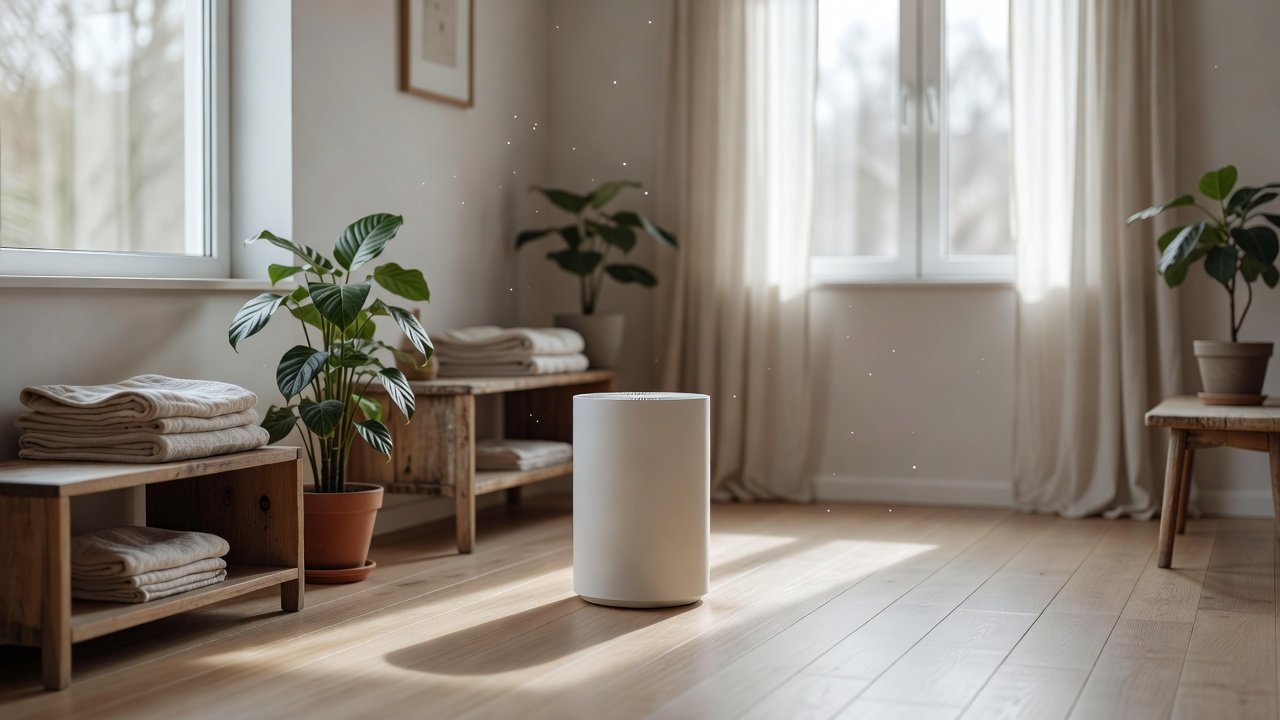
A purifier does not change humidity; a dehumidifier does.
Why It Matters for Air Quality
Above 50 percent, mold grows on damp surfaces and dust mites thrive in bedding and carpet, and both release allergens the purifier then has to catch. Below 30 percent, airways and skin dry out and static makes dust cling. Holding the middle range reduces the sources, which is cheaper and more effective than filtering their output. Clean any dehumidifier tank and filter regularly so it does not become a mold source itself.
Air Purifiers to Use Once Moisture Is Controlled
These picks come from the Hostinger affiliate plugin. Specs change by model year, so confirm filter type, CADR, noise and replacement filter costs on the product page before you buy.






Measure Humidity First
A hygrometer shows relative humidity and costs little. Place it away from windows and vents, check several rooms and note readings at different times. Basements and bathrooms often run higher. A reading above about 60 percent for long periods raises the risk of mold and dust mites.
Find the Moisture Sources
Common sources include showers, cooking, drying laundry indoors, leaks, damp basements, poor drainage and humid outdoor air. Check under sinks, around windows and in crawl spaces. Fix leaks quickly and dry wet materials within a day or two.
Ventilate and Use Exhaust Fans
Run bathroom fans during and after showers and use the range hood when cooking, both vented outdoors. Vent clothes dryers outdoors. Open windows when outdoor air is drier than indoor air, but not in humid weather.
Air Conditioning and Dehumidifiers
Air conditioners remove moisture as they cool. In damp spaces such as basements, a dehumidifier can keep humidity in range. Choose capacity suited to the space, empty the tank or use a drain hose and clean the unit as directed. Place it away from walls for good airflow.
Everyday Habits
Cover pots when cooking, avoid drying laundry indoors, wipe condensation from windows, keep furniture a little away from exterior walls and keep gutters and drainage in good order. Small habits add up over a season.
Basements and Crawl Spaces
These areas are prone to dampness. Improve drainage outside, seal cracks, use a dehumidifier sized for the space and avoid storing items on the floor. In crawl spaces, ask a professional about vapor barriers and ventilation.
Bathrooms and Kitchens
Run exhaust fans longer, wipe surfaces, use mats that dry and fix leaks. In kitchens, cover pots and use the hood. Check under sinks and behind appliances regularly.
Bedrooms and Condensation
Windows with condensation and damp corners in bedrooms signal moisture. Improve ventilation, avoid drying clothes in the room, keep furniture away from cold walls and consider a small dehumidifier if needed.
Choosing and Using a Dehumidifier
Match capacity to space, check the energy rating and noise level and choose a model with a humidistat and auto shutoff. Clean the filter and tank regularly to avoid mold, keep it away from curtains and walls and empty water promptly.
Humidity and Health
High humidity supports dust mites and mold, which can bother people with allergies or asthma. Very low humidity can irritate airways. Talk to a clinician about what suits your health needs and keep humidity in a moderate range.
How to Choose
- True HEPA filtration
- CADR suited to the room
- Carbon for musty odors
- No ozone generation
Do
- Match the unit’s rated coverage to your room first
- Run it consistently, not only when the air feels bad
- Leave space around the unit for airflow
- Replace filters on the maker’s schedule
Don’t
- Do not buy on looks or price alone
- Do not block the intake or exhaust
- Do not skip filter changes
- Do not expect a purifier to fix every source of pollution
Honest Limits
- This guide uses manufacturer information and public guidance from the EPA and AHAM, not our own lab tests.
- Features and room ratings change between model years, so confirm on the listing before you buy.
- A purifier is not a medical device and does not replace medical advice or treatment.
Who Should Skip This
When to See a Professional
Frequently Asked Questions
What humidity is ideal?
About 30 to 50 percent.
Does a purifier reduce humidity?
No.
How do I measure humidity?
With a hygrometer.
Do I need a dehumidifier?
Often in basements or damp climates.
Bottom Line
To reduce indoor humidity, measure it with a hygrometer, find and fix moisture sources, ventilate with exhaust fans, use air conditioning or a dehumidifier in damp spaces and adopt habits such as covering pots and venting dryers. Aim for roughly 30 to 50 percent. A purifier does not lower humidity.
Related reading: sens,fan,bed
Sources: EPA, Guide to Air Cleaners in the Home; AHAM Verifide.