Last updated:
Disclosure: As an Amazon Associate we earn from qualifying purchases. This does not change what we recommend. See our affiliate disclaimer.
Hard water stains look like white or chalky marks and usually appear on units that use water, such as combination air purifier humidifiers, or on housings that were wiped with tap water and left to dry. The minerals left behind are harmless but unsightly and, in a water tank, they can build into scale. The key is to remove them gently without letting liquid reach electronics.
We have not tested these products ourselves, so follow your manual. Unplug the unit first, never soak the unit and never use cleaners on filters or inside vents.
Safe to try
- Barely damp cloth with mild soap
- Diluted white vinegar on water-tank parts if the manual allows
- Soft brush
Avoid
- Soaking the housing
- Abrasive scrubbing
- Mixing cleaners
Key Takeaways
- Use a barely damp soapy cloth on the exterior
- Descale removable water tanks only as the manual allows
- Never soak the unit or use descalers on filters
- Prevent buildup with distilled water and dry surfaces
Choosing the Right Cloth and Technique
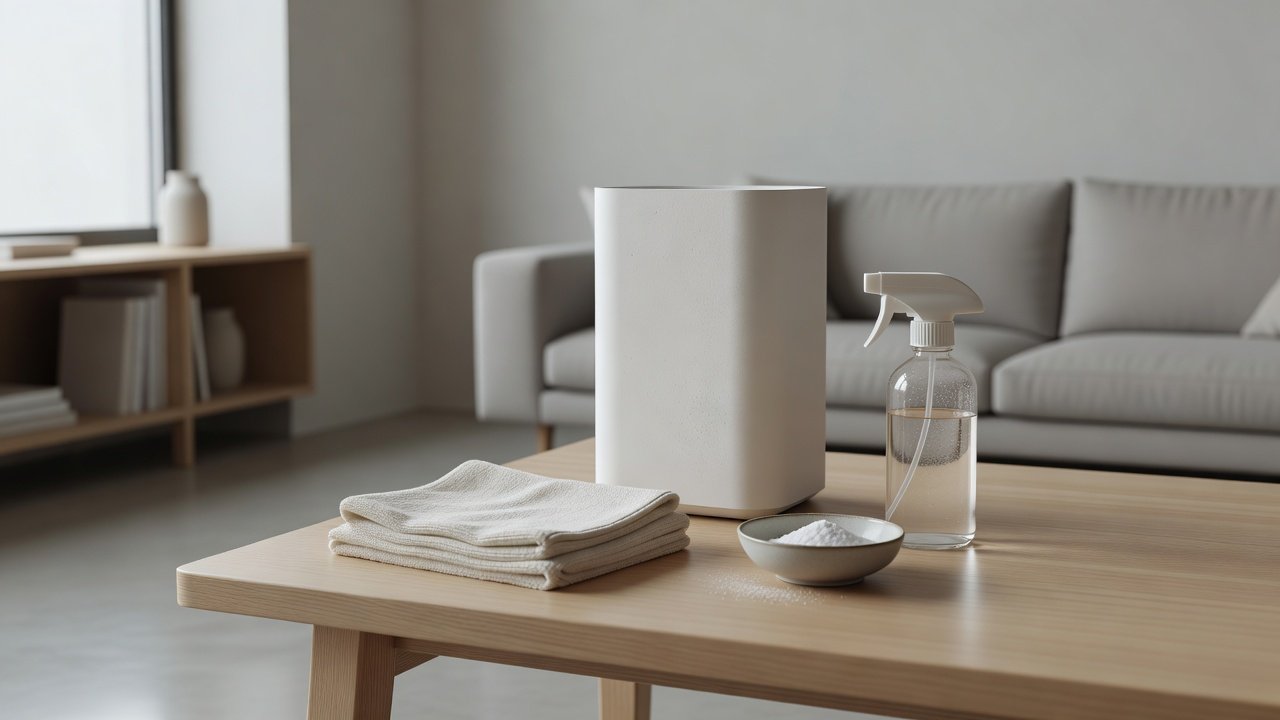
Use a clean microfiber cloth, barely damp, and wipe in one direction. Rub gently in small circles for stubborn spots. Rinse the cloth often. Do not use rough sponges. Finish by drying the surface with a clean dry cloth, which prevents new spots. Work in a small area at a time so the surface does not dry with soap residue.
Why Wiping With Tap Water Leaves Marks
Tap water contains minerals. When it dries, it leaves a thin film. For a cleaner finish, wipe with a damp cloth and then dry immediately, or use distilled water for the final wipe. This is especially helpful in hard water areas and on dark housings where residue shows.
Combination Humidifier Purifier Care
If your unit also humidifies, follow the manual for cleaning tanks, wicks and trays on schedule. Scale and slime can build quickly. Replace wicks as directed. Clean more often in hard water areas. Do not run the unit with an empty tank or stale water.
Mineral Dust From Ultrasonic Humidifiers
Some ultrasonic humidifiers release white mineral dust. If your unit does this, use distilled water or a demineralization cartridge if allowed, and keep the unit away from the purifier intake. White dust can load filters. Clean the surrounding area.
Cleaning Schedule for Water-Using Units
Rinse the tank daily or every few days, descale every few weeks depending on water hardness and replace wicks or cartridges on schedule. Wipe the exterior weekly and vacuum vents monthly. Keep a log so the schedule is easy to follow. Dry the tank when you are not using the unit.
When to Replace Parts
Replace tanks, trays or wicks that are cracked, heavily scaled or smelly. Contact the manufacturer for parts. Do not use damaged tanks. If stains and scale keep coming back quickly, consider a water softening approach for the water you use.
Safety Notes
Always unplug the unit before cleaning. Do not mix vinegar with bleach. Ventilate while you work. Keep cleaning products away from children and pets. Wash your hands after cleaning.
Choosing Low-Maintenance Models
If hard water is a problem, choose a model with a smooth, easy-clean tank and affordable replacement wicks. Check independent reviews for scale complaints. A model that does not use water avoids the issue entirely.
Hard Water Basics in Plain Terms
Water hardness varies by region and can be checked with a simple test kit or by asking your water utility. Harder water leaves more mineral residue. If you live in a hard-water area, expect to wipe surfaces dry after cleaning, descale water parts more often and use distilled water where allowed. Understanding your water helps you choose the right routine and avoid chasing stains.
Preventing Hard Water Marks
Mineral deposits on a purifier come from ultrasonic humidifier mist settling on the housing or from washing parts in hard tap water and letting them air dry with droplets on them. Use distilled water in humidifiers and keep them a couple of metres away, wipe washed parts dry with a cloth rather than drip-drying, and clean the housing with a cloth lightly dampened with diluted white vinegar, then wipe with water and dry. Keep vinegar away from electronics, grilles with electrical parts, and filter media.
Air Purifiers With Easy-Clean Surfaces
These picks come from the Hostinger affiliate plugin. Specs change by model year, so confirm filter type, CADR and replacement costs on the product page before you buy.






What Hard Water Stains Are
Hard water contains dissolved minerals such as calcium and magnesium. When water evaporates, the minerals stay behind as a white film or crust. On an air purifier housing, this can appear after wiping with tap water. In a water tank or humidifier tray, it builds as scale.
Exterior Stains: Start Gentle
For housing stains, unplug the unit and wipe with a cloth barely dampened with a little mild dish soap and water, then wipe with a clean damp cloth and dry. Use light pressure. Test on a hidden spot first. Keep liquid away from vents, buttons and seams.
Water Tanks and Trays: Descaling
If your unit has a removable water tank or tray and the manual allows, a diluted white vinegar solution can dissolve scale. Soak only the tank or tray, not the unit, then rinse very thoroughly and dry. Check the manual for approved descaling products and amounts. Never mix vinegar with bleach or other cleaners.
What Not to Use
Avoid abrasive pads, metal scrapers, strong acids and bleach, which can scratch or damage plastic and may produce fumes. Do not soak the main unit or pour liquid into vents. Do not use descalers on filters or inside the electronics area.
Prevention
Wipe surfaces dry after cleaning, use distilled or demineralized water in water tanks if the maker suggests it and clean tanks regularly. Avoid leaving water standing in trays. Keep the exterior dry and dusted.
Descaling Step by Step
Remove the tank or tray and empty it. Mix a small amount of white vinegar with water as the manual advises, soak the part for a short time, scrub gently with a soft brush and rinse several times with clean water until there is no smell of vinegar. Dry fully before reinstalling. Never use this on filters or the main unit.
Distilled Water and Scale Prevention
Using distilled or demineralized water, if the maker allows, reduces mineral buildup. Change water often and do not leave it standing. Rinse and dry the tank between uses. Check the manual for recommended water types.
Stains on Plastic Versus Metal Parts
Plastic can scratch or cloud under harsh cleaners. Metal contacts can corrode. Keep descalers off electrical contacts. If a stain is on a metal part, wipe gently with a damp cloth and dry. If you see corrosion, contact the manufacturer.
Stains That Will Not Come Off
If a stain remains after gentle cleaning, it may be etched into the plastic or be a different kind of stain. Do not escalate to harsh methods. Accept a mild stain or contact the manufacturer about a replacement part.
Keeping Water Away From Electronics
Use damp, not wet, cloths. Wring them out. Keep the unit unplugged and dry before use. If liquid reaches vents or controls, let the unit dry for a day and contact support if it behaves oddly.
How to Choose
- Look for smooth wipe-clean housings
- Check the manual for descaling instructions
- Compare replacement filter costs
- Match the CADR to the room
Do
- Match the unit’s rated coverage to your room first
- Run it consistently, not only when the air feels bad
- Leave space around the unit for airflow
- Replace filters on the maker’s schedule
Don’t
- Do not buy on looks or price alone
- Do not block the intake or exhaust
- Do not skip filter changes
- Do not expect a purifier to fix every source of pollution
Honest Limits
- This guide uses manufacturer information and public guidance from the EPA and AHAM, not our own lab tests.
- Features and room ratings change between model years, so confirm on the listing before you buy.
- A purifier is not a medical device and does not replace medical advice or treatment.
Who Should Skip This
When to See a Professional
Frequently Asked Questions
Can I use vinegar on the housing?
Use mild soap on the exterior. Vinegar is for removable water tanks if allowed.
Can I soak the unit?
No. Never soak the unit.
How do I prevent stains?
Wipe dry, and use distilled water in tanks if allowed.
What if stains stay?
Do not use harsh methods. Contact the manufacturer.
Bottom Line
Remove hard water stains from an air purifier by wiping the exterior with a barely damp soapy cloth and descaling removable water tanks only if the manual allows, using diluted vinegar and a thorough rinse. Avoid soaking, abrasives and mixing cleaners, and keep liquid away from vents and electronics.
Related reading: sens,fan,bed
Sources: EPA, Guide to Air Cleaners in the Home; AHAM Verifide.