Last updated:
Disclosure: As an Amazon Associate we earn from qualifying purchases. This does not change what we recommend. See our affiliate disclaimer.
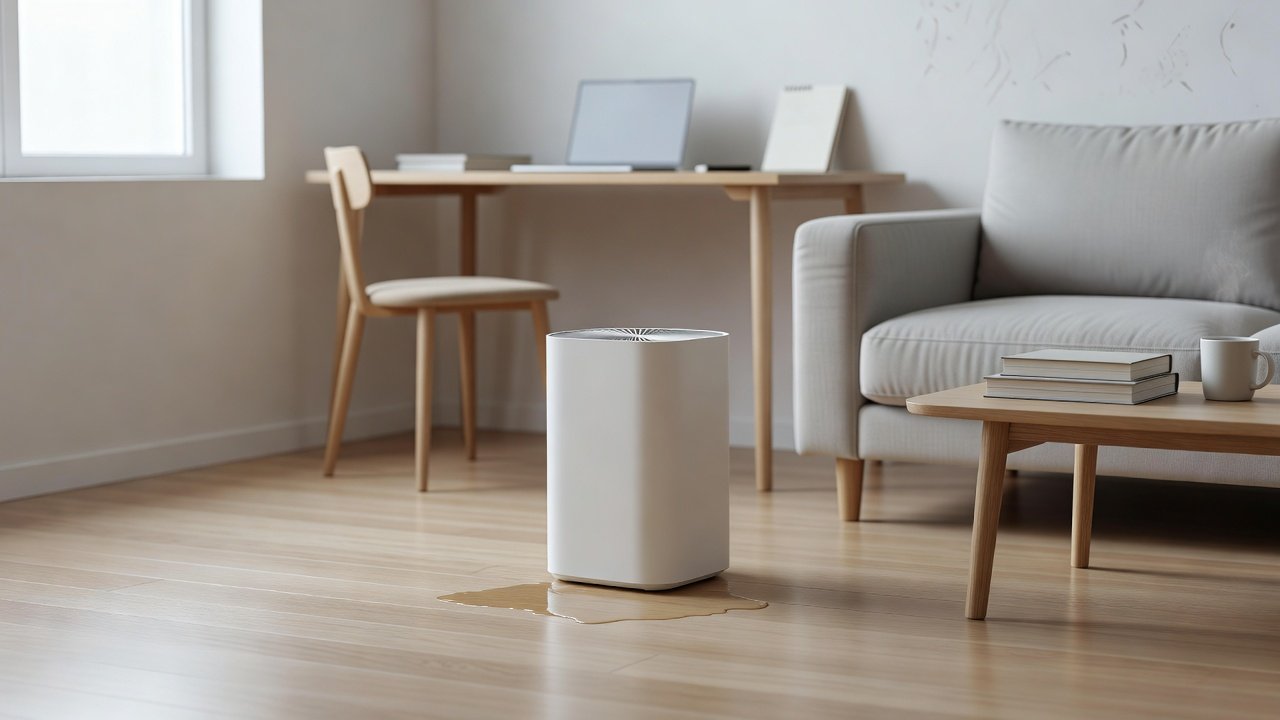
A standard air purifier has no water in it, so water on or under the unit needs a quick explanation. The cause may be a combination air purifier humidifier with a tank, condensation in a very humid or cold room, a spill, a leak from something nearby or, in some units, an evaporative wick. Water and electricity do not mix, so the first step is always to unplug the unit.
We have not tested these products ourselves, so follow your manual. Unplug the unit if it is safe to do so, keep away from standing water and do not run the unit until it is completely dry and checked.
Do first
- Unplug if safe
- Move the unit away from water
- Dry surfaces
Do not
- Run the unit wet
- Touch it while standing in water
- Open sealed parts
Key Takeaways
- Unplug and move the unit away from water
- Check whether it is a humidifier combination model
- Dry fully and replace damp filters before testing
- Contact the manufacturer if it behaves oddly after getting wet
Step-by-Step After a Leak
Unplug the unit if it is safe, or switch off the breaker. Move the unit to a dry, ventilated place. Remove the filters and the tank if present. Wipe surfaces and let everything dry for at least a day. Replace filters that are damp or smell musty. Inspect the cord, plug and outlet for moisture. Reassemble and test on low, listening and smelling for anything unusual. If anything seems wrong, unplug and contact support. Log what happened and when.
Combination Units: Water Tank Care
If your unit humidifies, clean the tank and tray on the manual’s schedule, use clean water and replace wicks when due. Empty the tank when not in use. Do not leave water standing. Check seals for wear. These habits reduce leaks and mold.
When the Water Is Not From the Purifier
If water appears under the unit but the unit is dry, check for leaks above, in walls or from nearby appliances. If you have a basement or bathroom, check for plumbing leaks. A moisture meter or a plumber can help. Keep the purifier away from the wet area.
Choosing a Safer Setup
If you want to avoid leaks, choose a purifier without a water tank and run a separate humidifier away from it. Place the unit on a stable, level surface and keep cords up and away from water. Use a hygrometer to keep humidity moderate.
Reading the Manual for Water Parts
If your unit includes a humidifier, the manual lists how to fill, clean and maintain the tank and wick, how often to descale and what water to use. Following it prevents leaks and mold. If you lost the manual, search the model number on the manufacturer’s site. Keep a copy in your phone. Note the maximum fill line and the cleaning schedule.
Comparing Leak-Prone and Leak-Free Designs
Units without water tanks avoid leak risk entirely. Combination units add convenience but add parts that need care. Consider whether you need a humidifier. If so, a separate humidifier placed away from the purifier is often easier to maintain and keeps moisture away from filters and electronics.
Immediate Steps
- Unplug the unit at the wall without touching wet parts
- Move it away from the puddle and dry the exterior
- Remove the filters and set them aside to assess
- Leave the unit unplugged for at least a day to dry inside
- Check above and around for the water source: air conditioner, window, radiator, plant, spill
A standard purifier has no water inside it; the source is external or a combination unit’s tank.
Assessing the Damage
If water only touched the base and the unit was off, drying is usually enough. If it reached the controls or motor while running, odd behaviour, a burning smell, or a tripped breaker afterward means the unit should not be used again. Replace any filter that got wet; a damp HEPA grows mold and a wet carbon stage has lost capacity.
Combination Units
For purifier-humidifier combinations, check the tank for cracks, the cap seal, the float, and the level of the unit. Do not overfill. Clean the base weekly. If leaks continue after those checks, stop the humidification stage and contact the manufacturer.
Air Purifiers Without Water Tanks
These picks come from the Hostinger affiliate plugin. Specs change by model year, so confirm filter type, CADR and replacement costs on the product page before you buy.






Safety First
If the unit or the floor is wet, do not touch the unit while standing in water. If it is safe, unplug it or switch off the breaker. Move the unit to a dry area, mop up water and let the unit dry before inspecting it.
Is It a Water-Using Model?
Combination air purifier humidifiers have tanks, trays and wicks. Leaks can come from a tank that is not seated, a cracked tank, a worn seal, an overfilled tank or a tray that overflowed. Check the manual and the tank for cracks and seals.
Condensation and Humidity
In very humid rooms or when a cold unit meets warm air, condensation can form on surfaces. If the room is damp, use a dehumidifier and improve ventilation. If the unit sits near a cold window or wall, move it.
Spills and Other Sources
Check for a spill, a leaking plant, a nearby humidifier, a leaking pipe or a dripping window. The water may not be from the purifier at all. Find the source and fix it.
Dry, Inspect and Test Cautiously
Let the unit dry in a ventilated area for at least a day. Replace damp filters. Check the cord and plug for moisture or damage. Test the unit on low only when fully dry. If it smells burnt, trips the breaker or acts oddly, stop and contact the manufacturer.
Cleaning Up Safely
Dry the floor and the unit with towels. Remove filters and let them dry or replace them. Do not use a hair dryer on high heat. Keep the unit unplugged until completely dry. Check nearby outlets and cords for moisture.
Tank, Seal and Tray Checks
Inspect the tank for cracks and the seal for wear. Make sure the tank sits fully in place and is not overfilled. Check the tray for cracks and blockages. Replace damaged parts from the manufacturer.
Mold Risk After a Leak
Moisture can lead to mold in filters and housing. Replace damp or musty filters. Dry the area fully. Keep humidity around 30 to 50 percent. For widespread mold, the EPA suggests professional help for areas above about 10 square feet.
Preventing Future Leaks
Fill tanks only to the line, keep the unit level, clean tanks and trays on schedule, replace worn seals and keep the unit away from windows with condensation. Check the area under the unit regularly.
When to Contact Support
If the unit leaks even when seated and filled properly, has a cracked tank or housing or has been affected by water inside the electronics, contact the manufacturer. Ask about warranty and parts.
How to Choose
- Choose models with no water tank if you want to avoid leaks
- Check seals and tank design on combination units
- Compare replacement filter costs
- Match the CADR to the room
Do
- Match the unit’s rated coverage to your room first
- Run it consistently, not only when the air feels bad
- Leave space around the unit for airflow
- Replace filters on the maker’s schedule
Don’t
- Do not buy on looks or price alone
- Do not block the intake or exhaust
- Do not skip filter changes
- Do not expect a purifier to fix every source of pollution
Honest Limits
- This guide uses manufacturer information and public guidance from the EPA and AHAM, not our own lab tests.
- Features and room ratings change between model years, so confirm on the listing before you buy.
- A purifier is not a medical device and does not replace medical advice or treatment.
Who Should Skip This
When to See a Professional
Frequently Asked Questions
Why is my purifier leaking?
It may be a water-using model, condensation, a spill or a nearby leak.
Is it safe to run it?
Not until it is completely dry and checked.
Do I need new filters?
Replace damp filters.
When should I call support?
If it leaks when used correctly or behaves oddly.
Bottom Line
If an air purifier is leaking water, unplug it if safe, move it away, dry it and replace damp filters before testing it on low. Most purifiers do not use water, so check for a combination humidifier model, condensation, spills or a leak nearby, and contact the manufacturer if the unit behaves oddly.
Related reading: sens,fan,bed
Sources: EPA, Guide to Air Cleaners in the Home; AHAM Verifide.